
Olive Minani (Burundian) came to New Zealand in 2009, with her husband, Martino, and their six children. When civil war broke out in Burundi, Africa, they left their farm and escaped to Tanzania, where they spent 15 years in a refugee camp.
Nowadays, Olive and her family cultivate their market garden and sell fresh produce at markets throughout Auckland. With the arrival of her grandchildren, there are now three generations of Minanis settled in the country.
— Words from Grow: Wāhine Finding Connection Through Food by Sophie Merkens
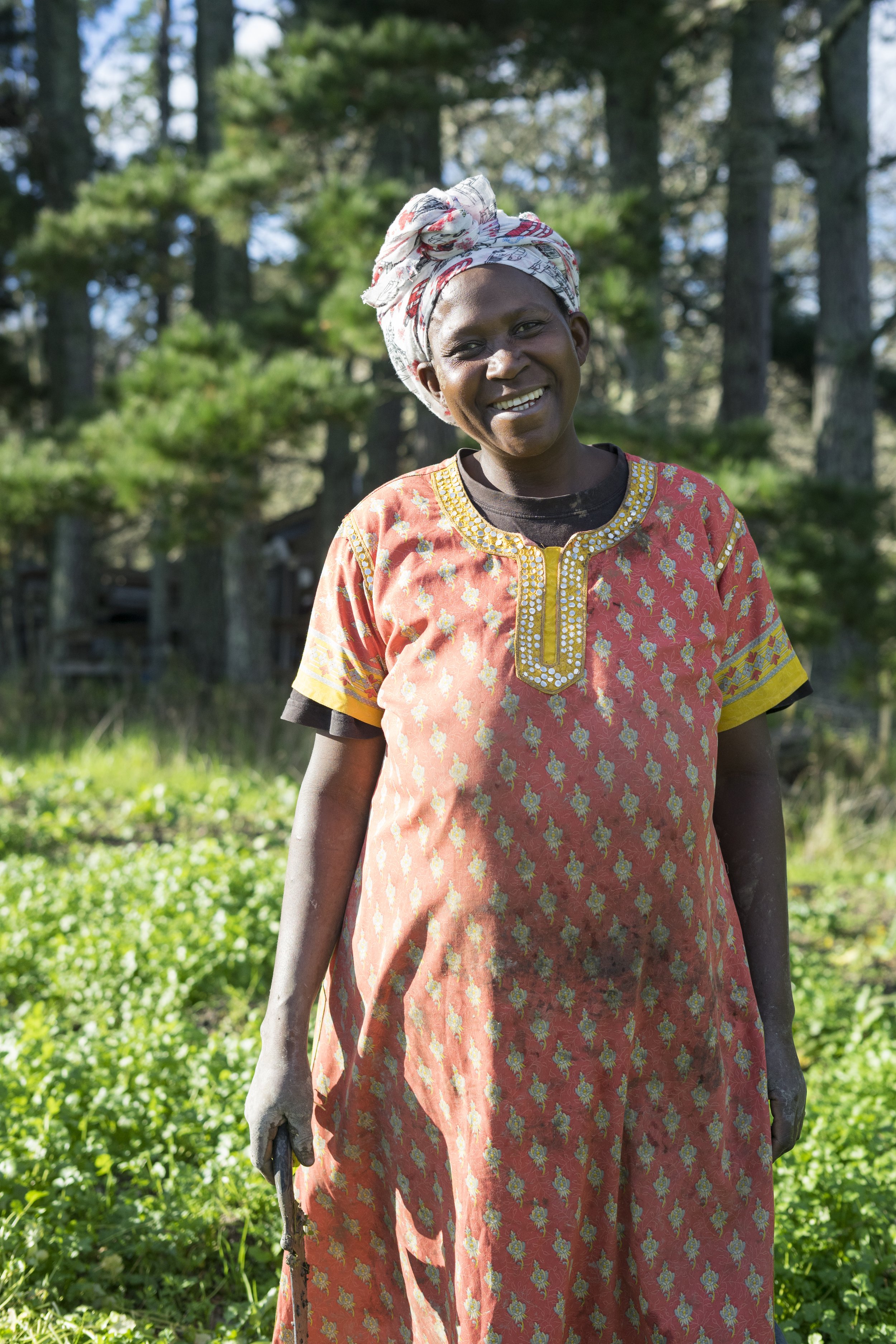
Olive Minani in her market garden in Whenuapai, Auckland
— Words by Sophie Merkens
I met Olive, Martino, and their oldest daughter, Euphrasie, at their three-acre farm, just off the northwestern motorway, with aircraft from nearby Whenuapai passing overhead – a far cry from their old five-hectare village farm in Burundi.
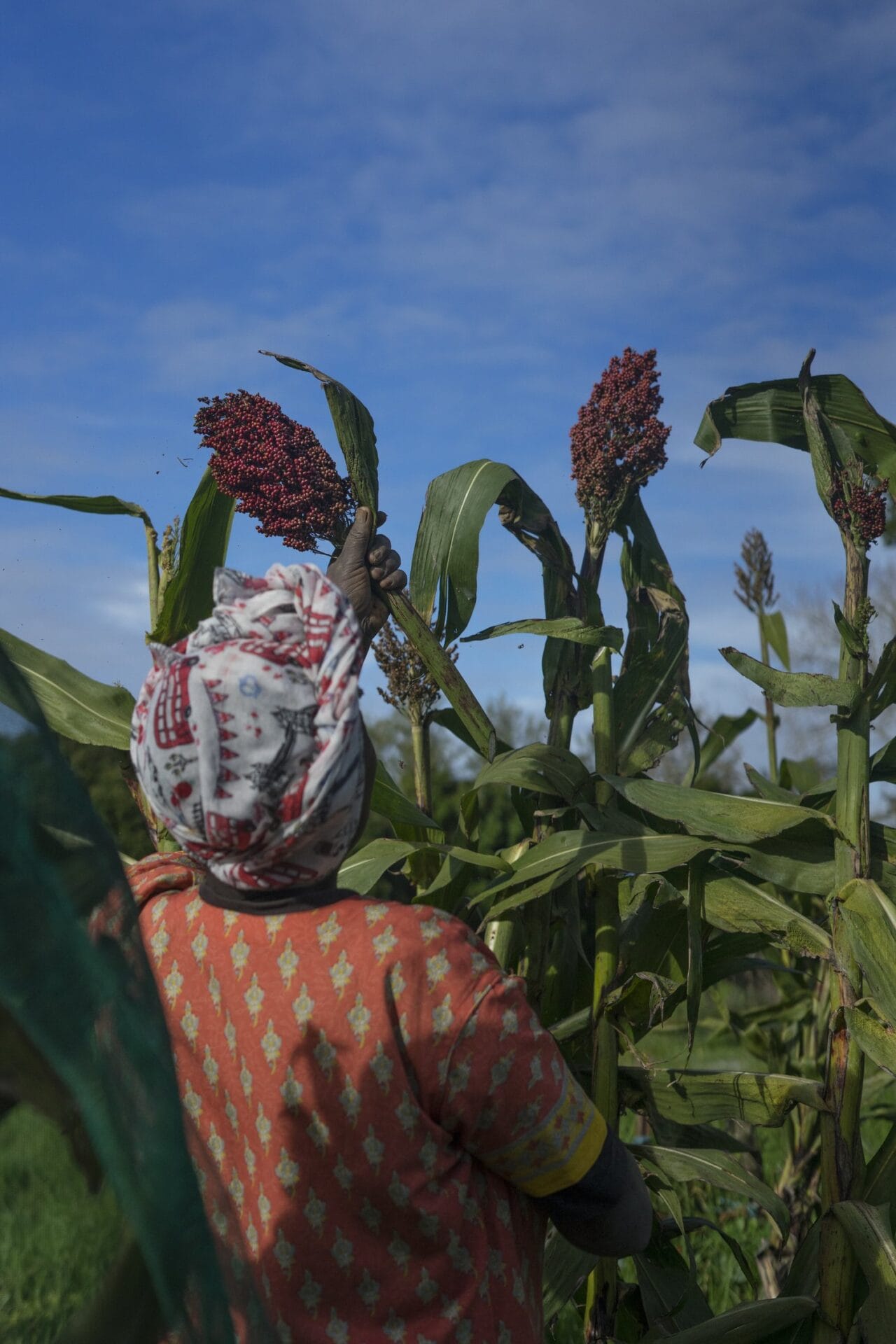
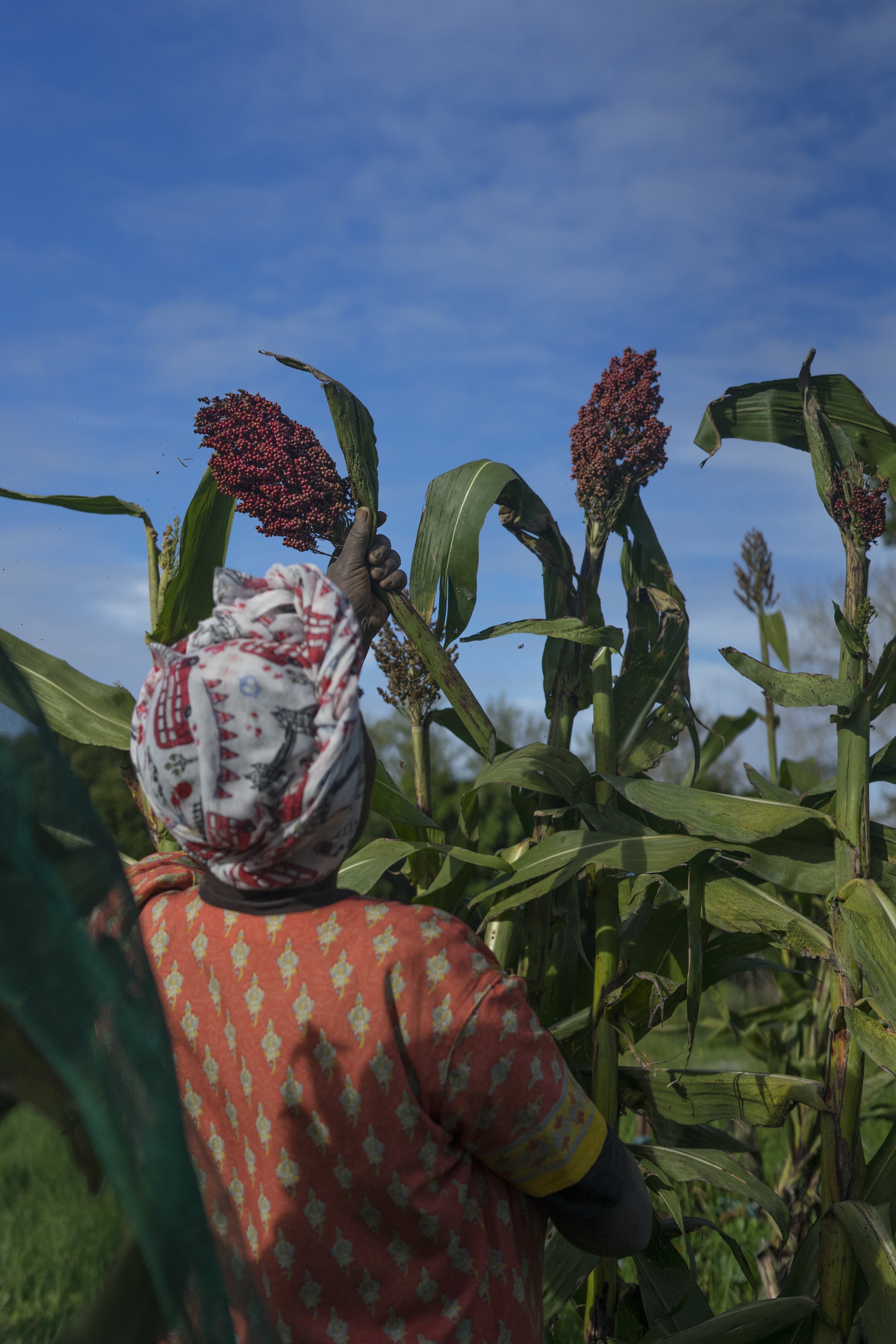
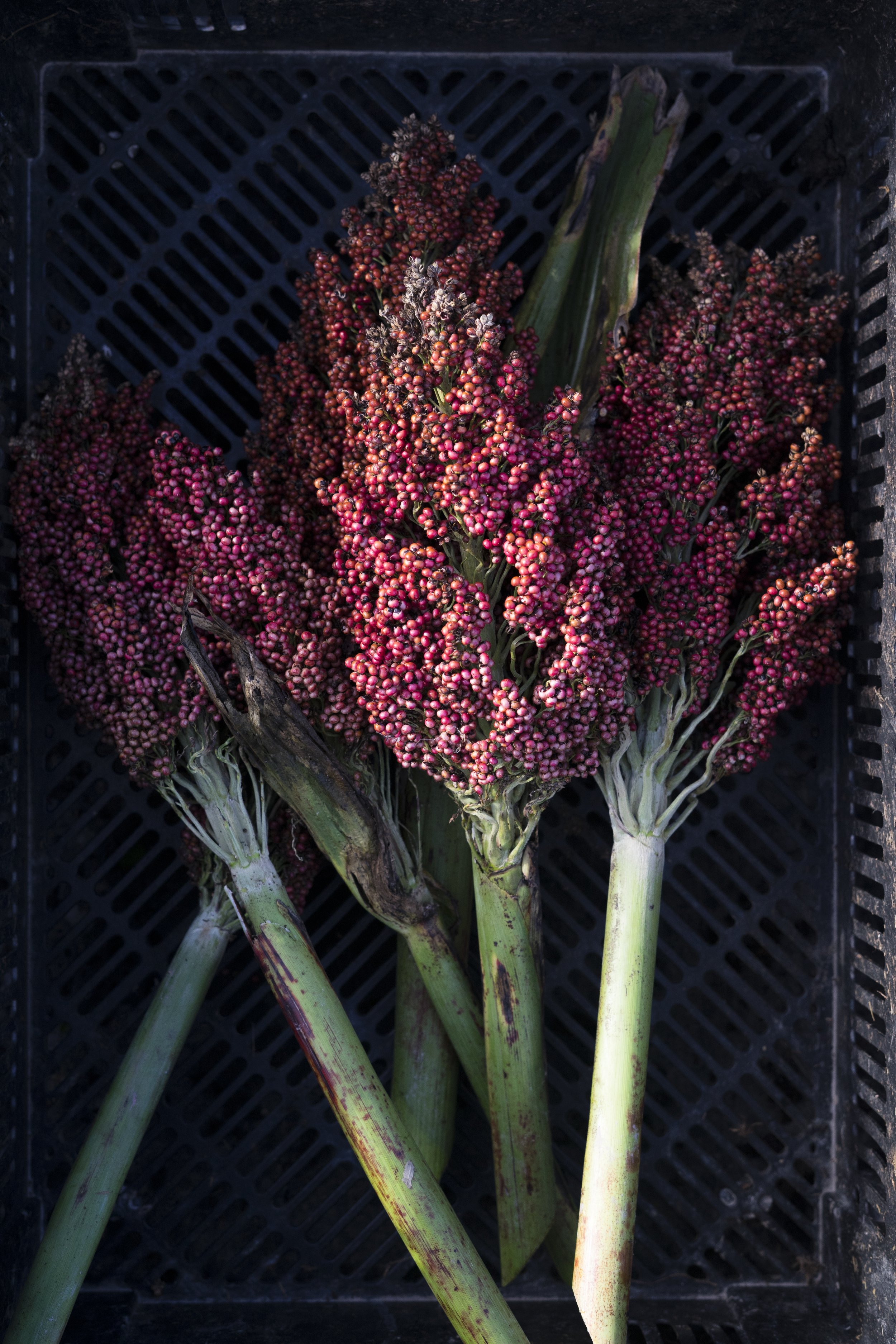
As Olive harvested sorghum with her trusty butcher’s knife, she told me that learning to live and work in New Zealand was a steep learning curve. Not only did she have to learn English and a completely new culture, but she also had to learn how to garden here. She didn’t know what to plant or about our seasons, as Burundi has wet and dry seasons.
The Minani farm began as she wanted somewhere to grow the family’s own food. They weren’t getting the nutrients they needed from supermarket food, and they craved vegetables free from pesticides (a new concept to them).
There were many trials and errors, but nowadays they grow and sell wonderful produce: varieties from Olive’s homeland in Africa, as well as her new home here in Aotearoa. I chatted to Olive whilst she harvested bunches of fresh coriander, working side by side with her husband and daughter.
Where did you grow up, and how did you come to be here?
I grew up in a village in Burundi. My parents taught me how to grow food.
Then in Burundi there was too much war, so we went to a camp in Tanzania. We stayed there for 15 years, but we couldn’t do anything. We couldn’t go out to garden or grow food because there was no land. We could do nothing, just sit. It was a hard life.
When we came here as refugees, we didn’t know any English. I went to school to learn how to speak to other people. While I was studying, I found a job picking strawberries, then picking grapes, where I’d talk to more people. I asked how I could find a small section to plant vegetables. One lady helped us find this place. At the beginning, it was just a garden for our family.
What food did you grow in Burundi?
The main food was beans, cassava, sweet potatoes and corn. We would make ugali with corn, a kind of porridge. As a child, my favourite food was beans; they are very good.
Back home, we didn’t eat much meat, so beans were our main protein. My favourite food is still beans with cassava. We are lucky to buy cassava here from Fiji and Samoa.
What most surprises you about food and gardening in New Zealand?
I wanted to plant a small garden to eat fresh, healthy food with no sprays. When we first came to New Zealand, we had very low iron, but we didn’t understand why, as we were eating vegetables.
When we got this land, we started off planting and eating lots of silverbeet. It tasted really different, better. You can feel that you’re eating different vegetables than the ones from the supermarket.
“Gardening here is very difficult. In my country, when we plant vegetables, we never use chemicals or fertilisers. Everything just grew fast. But here, people use fertilisers and spray their crops all the time, which is not good for your health.”
In Africa we had animals. We would collect the cow and goat manure for the garden. That was our way of fertilising our soil. When we came here, we tried buying compost, but it was expensive and didn’t work. Manure is amazing; it’s the main ingredient for our soil.
“The seasons are so different here. In Africa you plant in the wet season, so you don’t have to water your plants; the rain from the heavens waters them until you harvest.”
But here, in summer, it’s a drought. If you don’t water, then everything will die. That was a challenge. Affording the water bill is something we still struggle with. In the future, we will set up irrigation and have a good plan of our crops, which will make things easier.
Do you have good relationships with your customers?
Absolutely. They always come back. If we miss a market day, they’ll phone us. They really enjoy our produce. People will travel from the north all the way to our stall at the Saturday Ōtara market.
Our customers really like everything that we grow. They follow the quality and the taste. So many have told us that they can taste the difference, so we have to believe it. It’s actually working.
What advice do you have for somebody who’s beginning to grow food?
They have to love the job. If they don’t, then they can’t do it. They have to be strong and committed. Otherwise, in the middle, when it’s hard and there’s challenges, then they’ll stop.
–
— A note from Sophie:
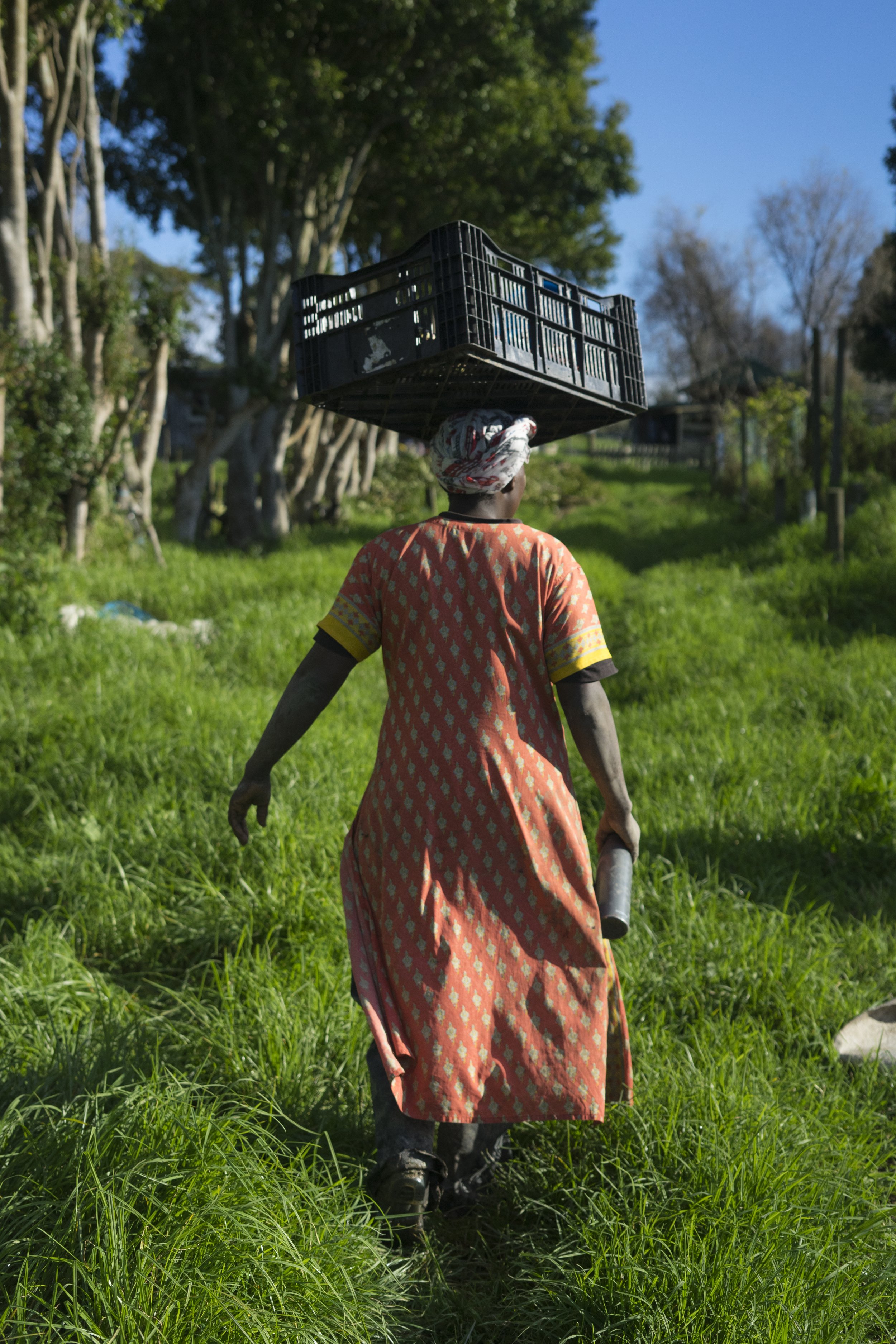
I spent a couple of hours at the farm with the Minani family. Olive laughed at my surprise over her carrying freshly harvested produce in a basket on her head. She smiled her huge smile and told me that she’s strong, that she can easily carry 50 kilograms (yes, 50!) balanced on her head and walk for kilometres. I don’t doubt her. She’s obviously one strong woman.
— About the book
Sophie Merkens takes us on a journey across Aotearoa, meeting 35 inspiring women who find meaning and connection through food. From mothers, gardeners, hunters, chefs and hobbyists, their conversations dive deep into how food influences their lives. Grow – Wāhine Finding Connection Through Food is a refreshingly honest and insightful book about women, food and connection.
Food is a central force of people’s lives, work and travels: it’s often the only shared language. Meet women who know which mushrooms to pick, how to preserve the olives growing along public land, how to make rosewater from blooms, and how to make ‘coffee’ from roasted dandelion roots. Meet women who make it a priority to grow, nourish and connect.
— Grow: Wāhine Finding Connection Through Food by Sophie Merkens, RRP $59.99, https://beatnikpublishing.com