
— This is an abridged extract from The Secret Life of Fungi by Jay Lichter
I’ve dedicated a lot of my time to finding and photographing the unsung heroes of our living world, the pioneering architects that make it all possible: fungi. They’ve been on the planet long before anything else, and — given their incredible ability to adapt to just about any situation — they will probably be here long afterwards.
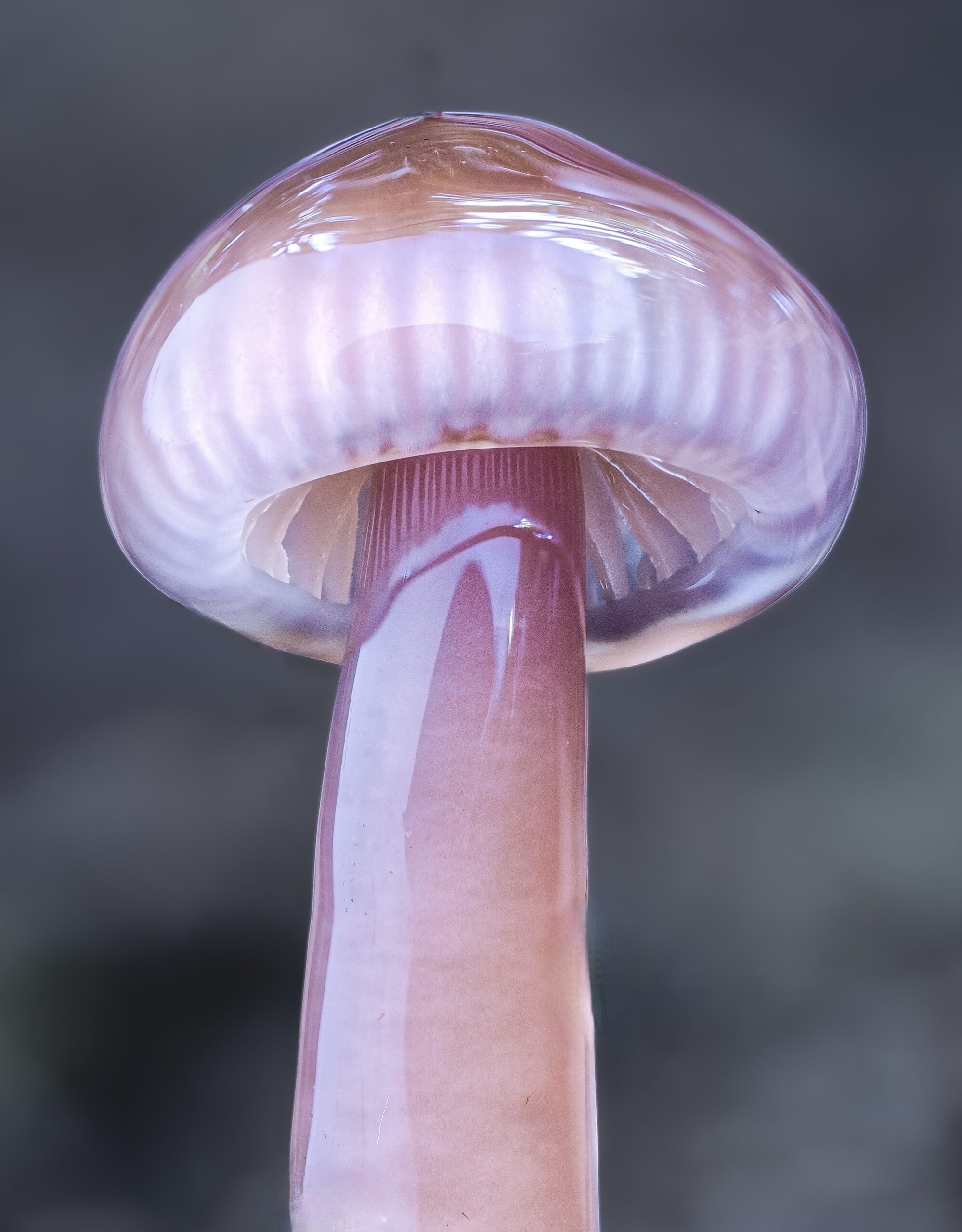
For around half a billion years fungi toiled away, working their magic on the barren Early Cambrian Earth, breaking down rocks into the nutrient-dense soil that facilitated all plant life and thus laying the foundations for all terrestrial life. Hats off to fungi for creating an environment in which trees can grow to produce the paper of this page and, well, the world as we know it. Without them, you and I might have been some sort of axolotl-like creature weightlessly bouncing across the bottom of a murky lake somewhere. So next time you fill your paper bag with button mushrooms at the supermarket, be sure to acknowledge the groundwork their predecessors put in to make our world possible.
Without them? To put it simply, we’d be screwed. Fungi are the fabric that ties together just about everything we need, appreciate and love. And that’s not even metaphorically speaking! The vegetative body of a fungus is a fabric of tiny hairs, called hyphae, that are mere micrometres in diameter. Yes, micrometres — a thousand of these are required to form a single millimetre. The root-like network formed by these tiny filaments is called mycelium, and it lives in the soil, in wood, in and around the roots of plants, and just about anywhere else you can think of. This hidden yet ever-present dimension of the fungal kingdom is somewhat comparable to an apple tree, and the mushrooms we see above ground are like apples — the fruit of the tree. So ubiquitous are these tiny fungal filaments that there can be as many as several kilometres’ worth in a single teaspoon of soil. In a complex ecosystem like a forest, this number can skyrocket to hundreds of kilometres’ worth of hyphae under every step you take. And there’s still more going on at the microscopic level, and everywhere else you can possibly imagine. On every surface, floating in the air, in the ocean, inside every plant and even inside you there are fungi. It’s estimated that on any given day we are breathing in up to 100,000 fungal spores.
Aside from being solely to thank for literally everything, one can’t deny that fungi are just, well, fun. Their ephemeral nature still bewilders me: the way they seemingly pop out of nowhere, and disappear just as quickly, offers us but a brief glimpse into their complex lives — just the tip of an unfathomably massive iceberg that we are only just beginning to understand.
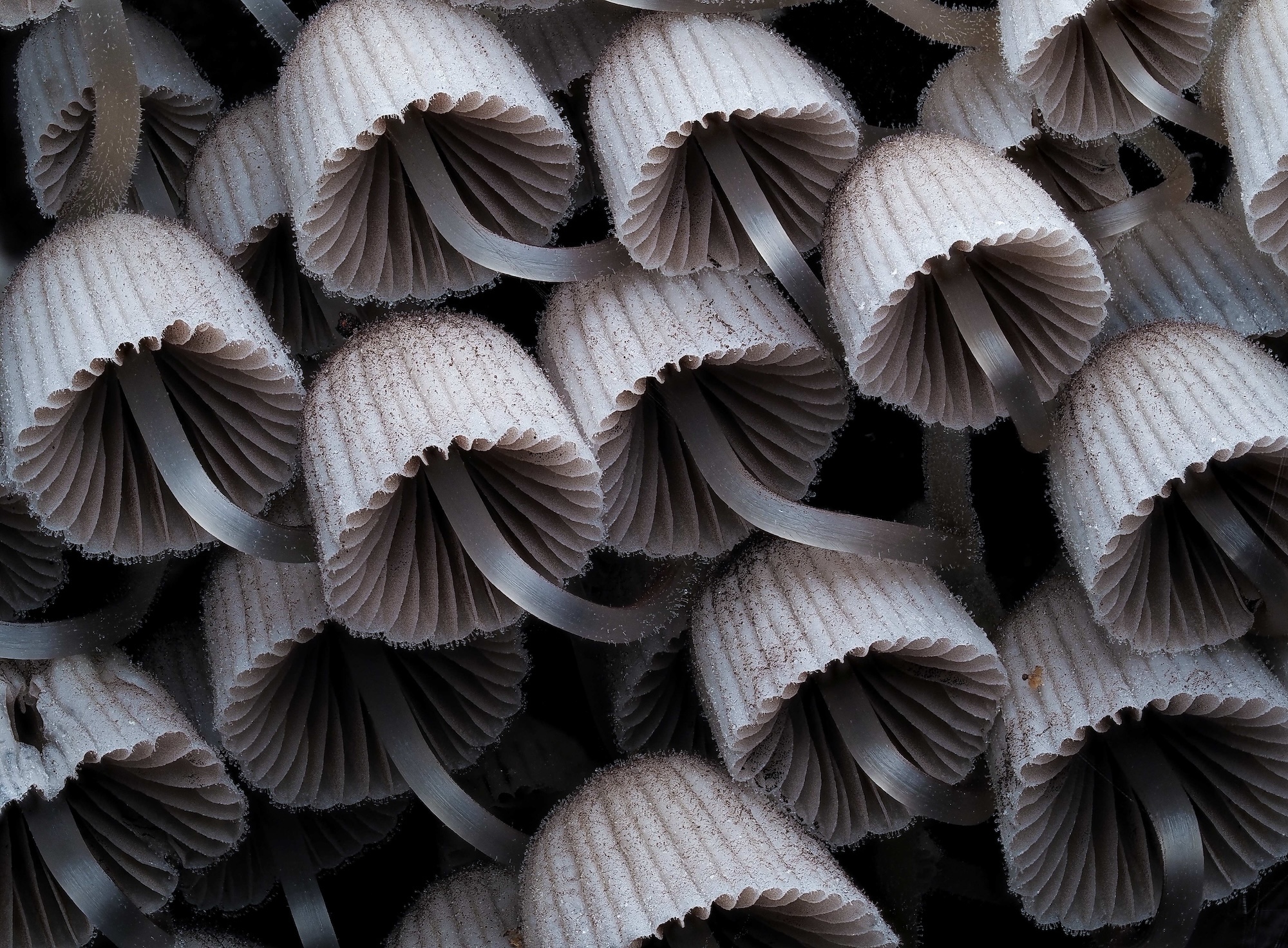
As well as being ‘The Great Recylers’ of our planet, breaking down organic material and returning vital nutrients to the soil, fungi also form mycorrhizal networks with trees and other plants. This association is a form of symbiosis, in which the fungal mycelium will swap precious resources with the trees or other plants in a mutually beneficial exchange. Trees and other plants, which are capable of photosynthesis, will provide the fungus with carbohydrates. In return, the fungus serves as an extension of the tree roots, greatly increasing the uptake of water, and it also provides essential nutrients such as phosphorus and nitrogen (among others) from the soil which the plant struggles to obtain on its own. Many fungi have a vast library of enzymes that can alter these otherwise unavailable nutrients to a form that’s accessible to plants. Not only that, but fungi can also produce compounds that protect against diseases. It is estimated that 80% to 95% of plant species worldwide are reliant on these mycorrhizal associations for their survival.
Science aside (incredible as that may be), one can’t deny the beauty and quirkiness of fungi. There is just something about finding them that draws me in with treasure-hunt-esque allure. When it comes to appeasing the expectations or convenience of humans, fungi really could not care less: they turn up when, where and however they want, in drab browns, tans and greys or brilliant fluorescent colours of the rainbow, completely indifferent to how beautiful, disgusting or strange they might look to us. They’re just doing their thing; and just as quickly as they appear, they are gone again. Even after a few years of tireless searching, I still find new things in new places all the time. If you’re patient enough (and unfazed by the prospect of getting a little dirt on your shoes), you’ll find that even the most unassuming locations are exploding with fungal life.
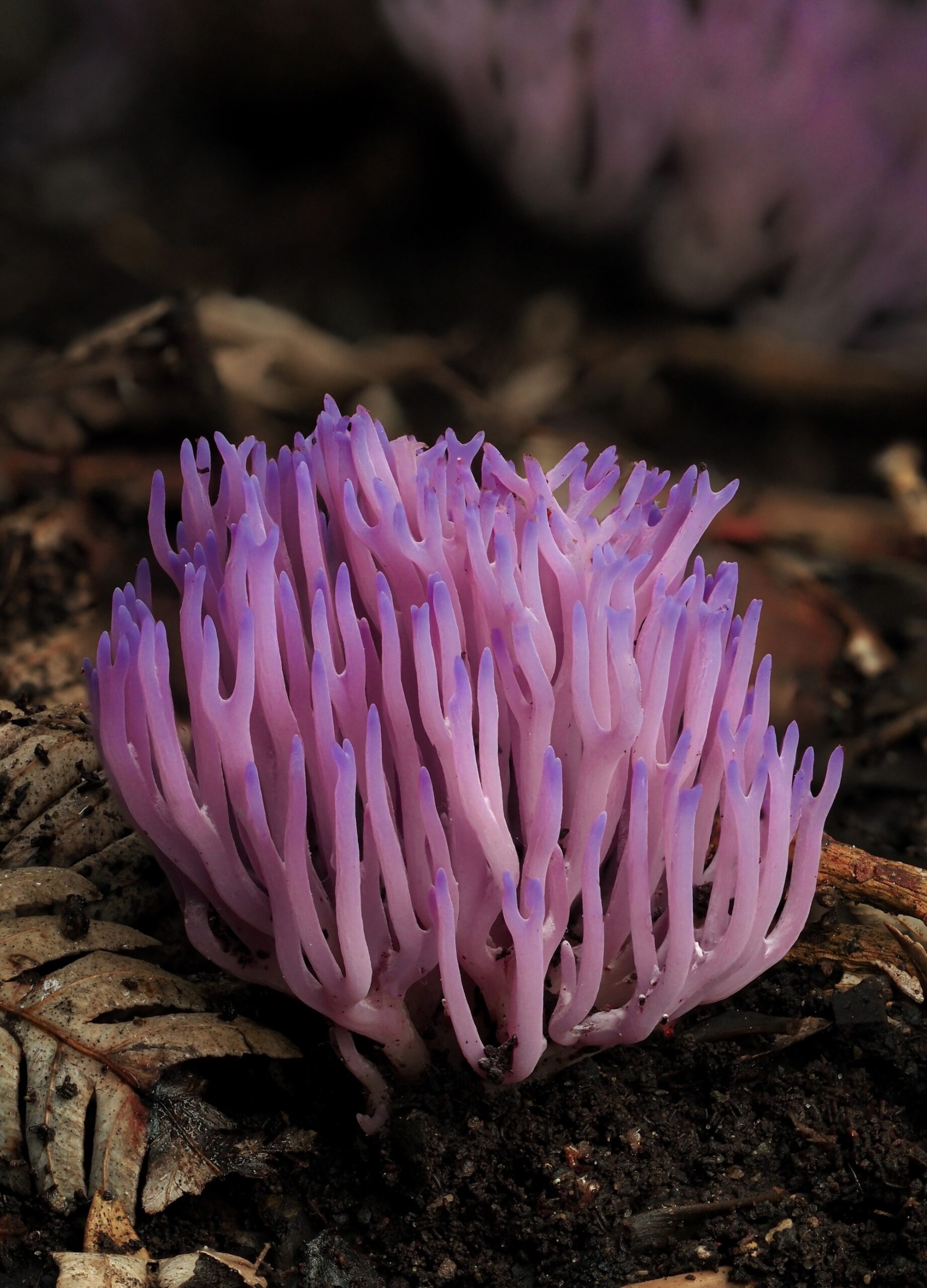
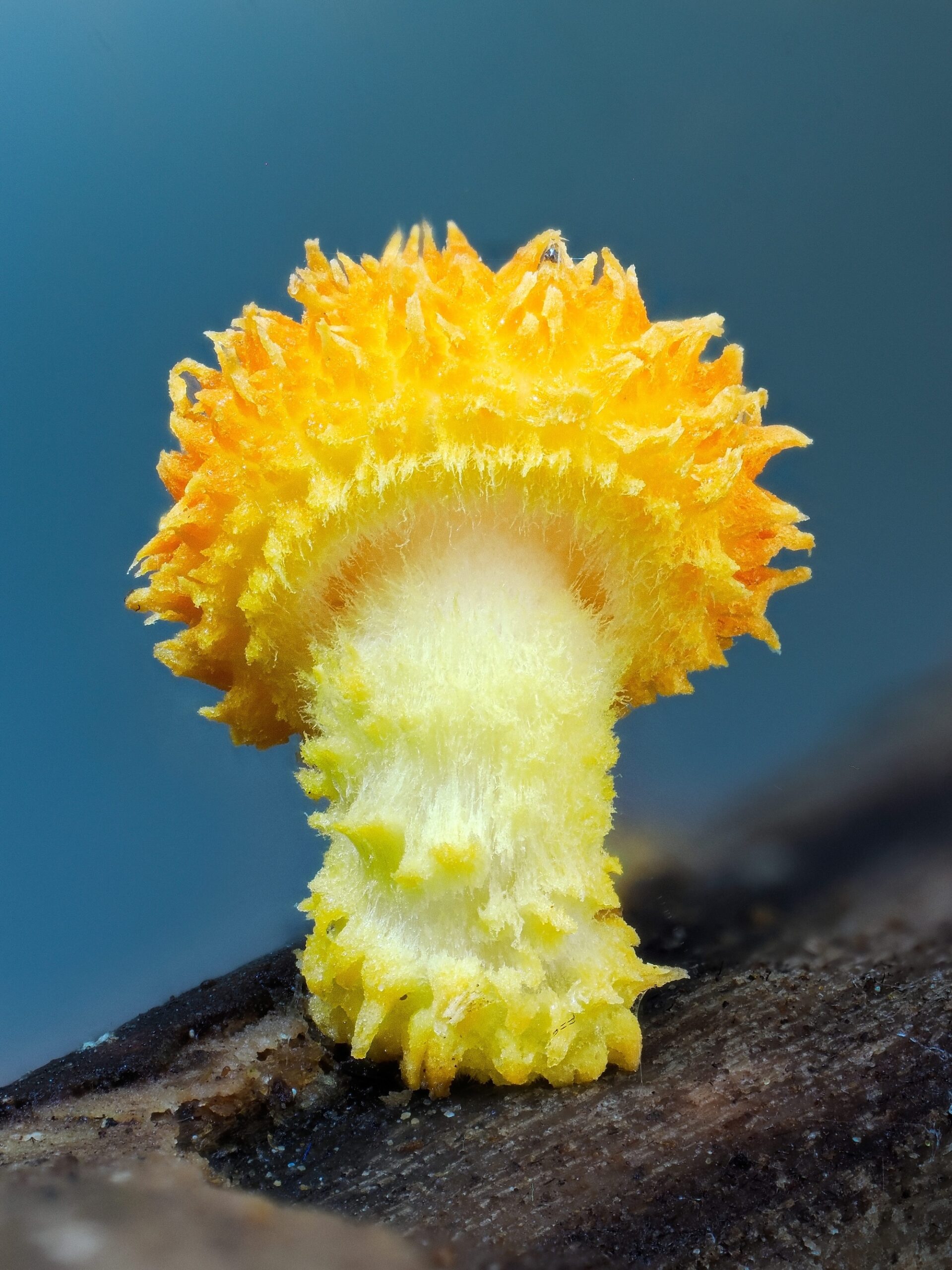
I have focused my interest somewhat on the boundary of what is visible to the naked eye and what is not. Despite only photographing what are termed ‘macro fungi’ (big stuff), I predominantly spend my time trying to find the smallest specimens possible. This means spending countless hours shuffling around in the moss, mud and undergrowth of the autumnal bush, getting tangled up in supplejack vines, slipping down hills and achieving awkward contortionist poses bordering on the acrobatic. Extremely thorough stick, leaf and log inspection, plus constant ground scanning is essential. Combine all of these, and after a while you will be able to sniff fungi out (sometimes literally) from a mile away.
Finding the 1.5mm fruiting body of a fungus or slime mould in somewhere as expansive and chaotic as the Waitākere Ranges might sound like a tall order — but knowing when and where to look, and what to look for, make finding these impossibly tiny needles in an impossibly huge haystack a lot easier. You might even grow to enjoy it!
When? Fungi season is around autumn, but I’m a firm believer that you can usually find some pretty interesting stuff regardless of the season if you look hard enough. There are a few prerequisites for fungal activity — all you really need are a food source and some moisture.
Where? Pretty much anywhere. Pristine native bush and beech forests are my favourite spots to hunt for these tiny treasures — not so much due to the richness and diversity of species (although this certainly is true), but mainly because they are such a pleasant place to be. I have also found some pretty incredible stuff in carparks, residential gardens and on bits of dead trees in vacant lots. Where possible, I am a big fan of ‘off-roading’ and will venture off the walking track — though of course this must not be done in kauri dieback areas or other environmentally sensitive locations. Always follow the rules set out by the Department of Conservation or local authority — and always make sure you can make it back to the track!
What? Usually the ground is a good place to start, but fungi also grow on tree trunks and branches so don’t have your blinders on too tightly. Rotting or fallen wood is where I usually focus most of my attention, as this is also a favoured location for other fun things like slime moulds and tiny invertebrates. Soil, moss and rotten wood are where fungi are most commonly found, and there is certainly no shortage of these on your average bush walk. What’s most important is to slow right down and take the time to carefully look around; only then will they show themselves.
It’s worth noting that when trying to identify a fungi, picking the fruiting bodies themselves is okay as long as they’re not removed from their environment. And handling even the most poisonous mushrooms is perfectly safe so long as you don’t eat them.
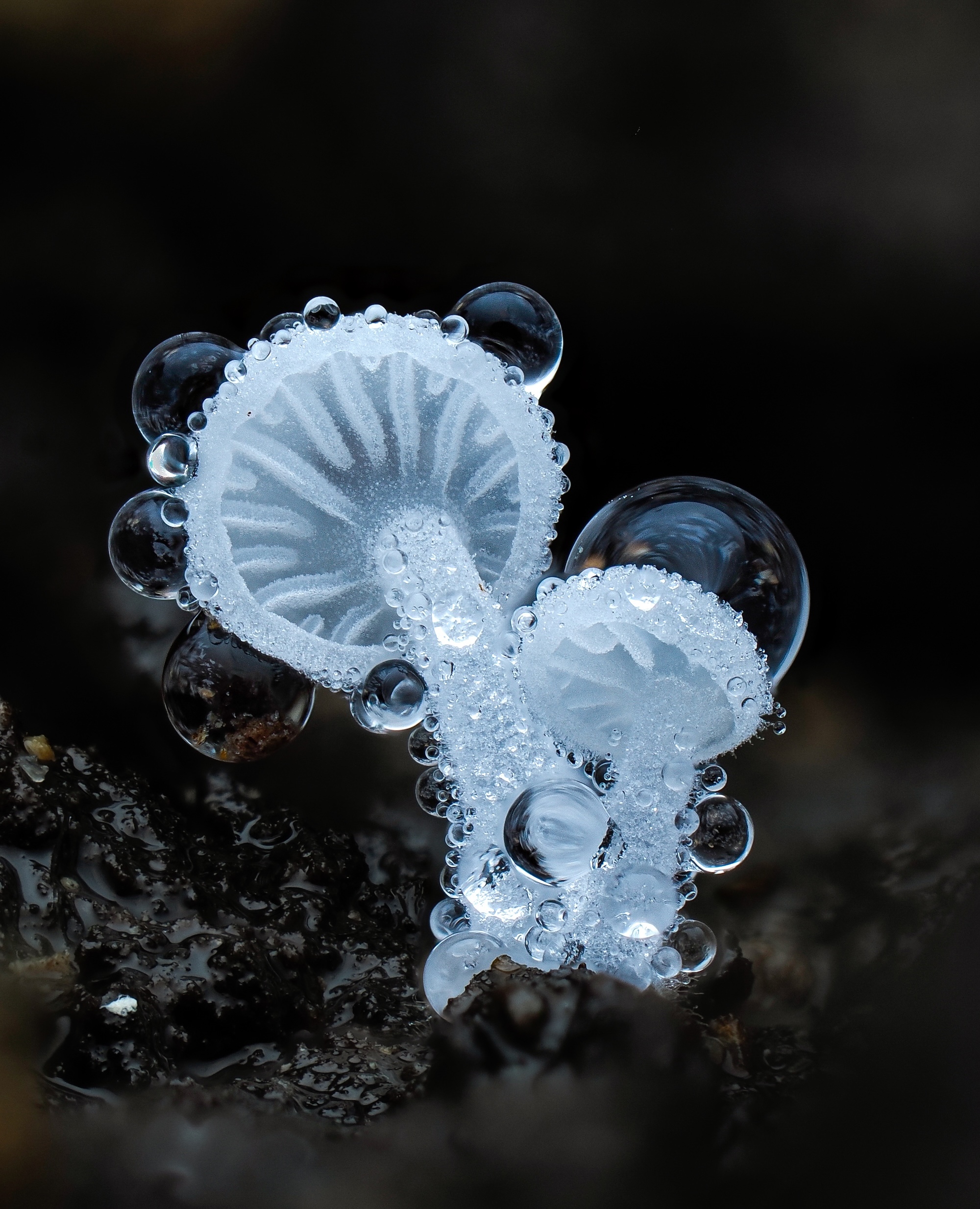
Calling one of my expeditions a bush walk is probably a bit of an overstatement. I really don’t cover a whole lot of ground and I’m certainly not the best company if an actual hike is the objective. I can very easily spend an hour sitting in exactly the same spot, sifting through various bits and bobs on the hunt for a good shot. I’ve found this technique quite useful when it comes to maximising the time I can spend taking photos. Quite often I will spend an entire eight-hour day ‘out in the bush’, yet when it comes time to leave (or when all my batteries are dead), I can typically make it back to the car in less than ten minutes at a leisurely stroll.
While it’s rather a long and laborious process finding, framing and photographing all these tiny treasures, it’s one I find so infinitely satisfying. For me, the fact that we really know so little about the fungal kingdom makes it even more exciting. Some scientists have estimated the total number of fungus species to be around 2.5 to 5 million, but only 150,000 species have been formally described! If these estimates are accurate, it means that over 90% of the world’s fungal biodiversity is still totally new to science. In Aotearoa, our 80 million years’ worth of isolated evolution is responsible for many of our incredibly beautiful, unique and alien-like fungi, a lot of which are not found anywhere else in the world. I encourage you to get out into the bush — new species really could be hiding under the next log.
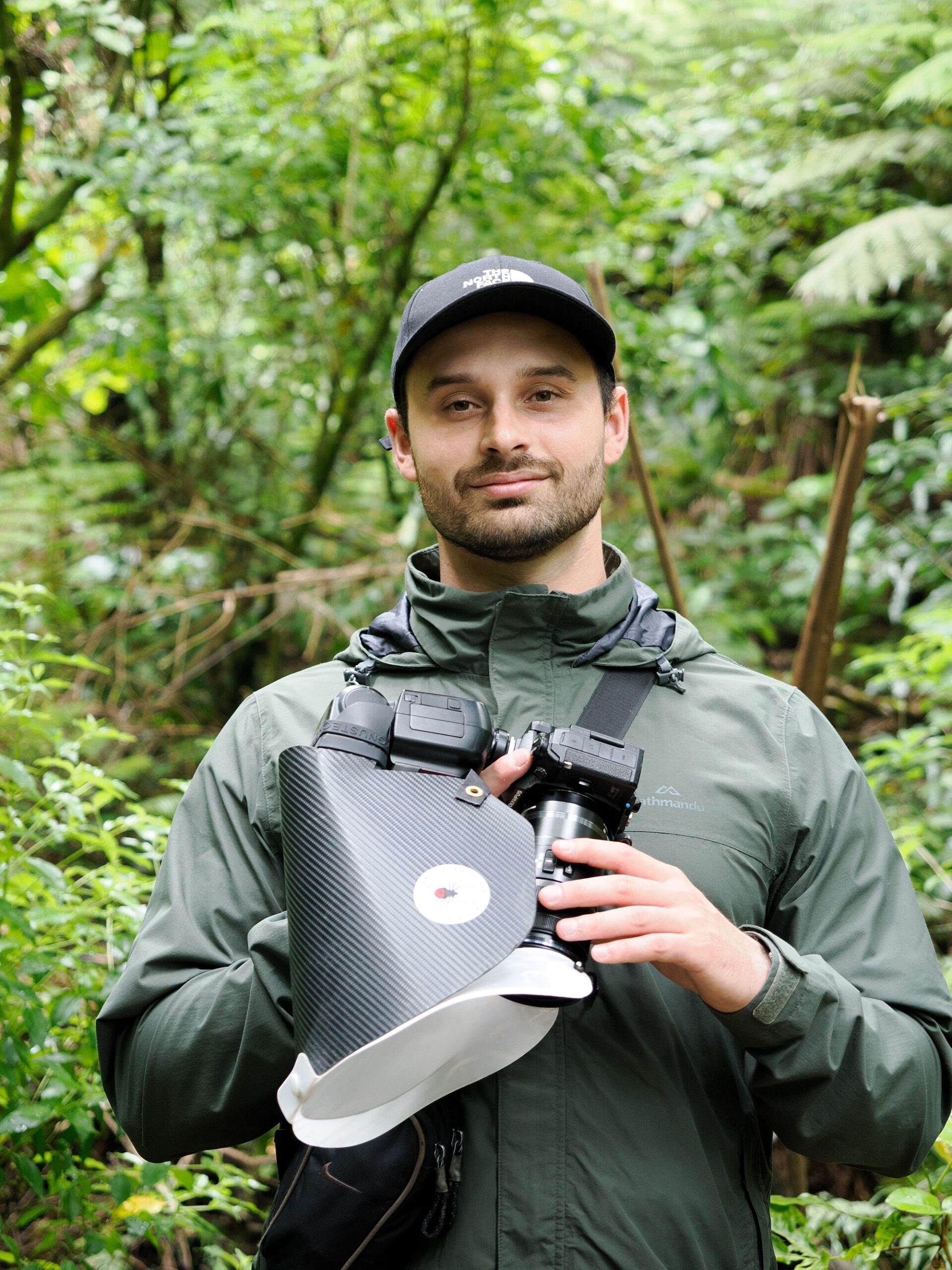
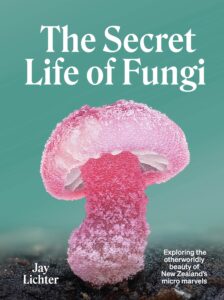
The Secret Life of Fungi by Jay Lichter
Images and text extracted from The Secret Life of Fungi by Jay Lichter, published by Allen & Unwin Aotearoa New Zealand, RRP $49.99. Photography by Jay Lichter.