
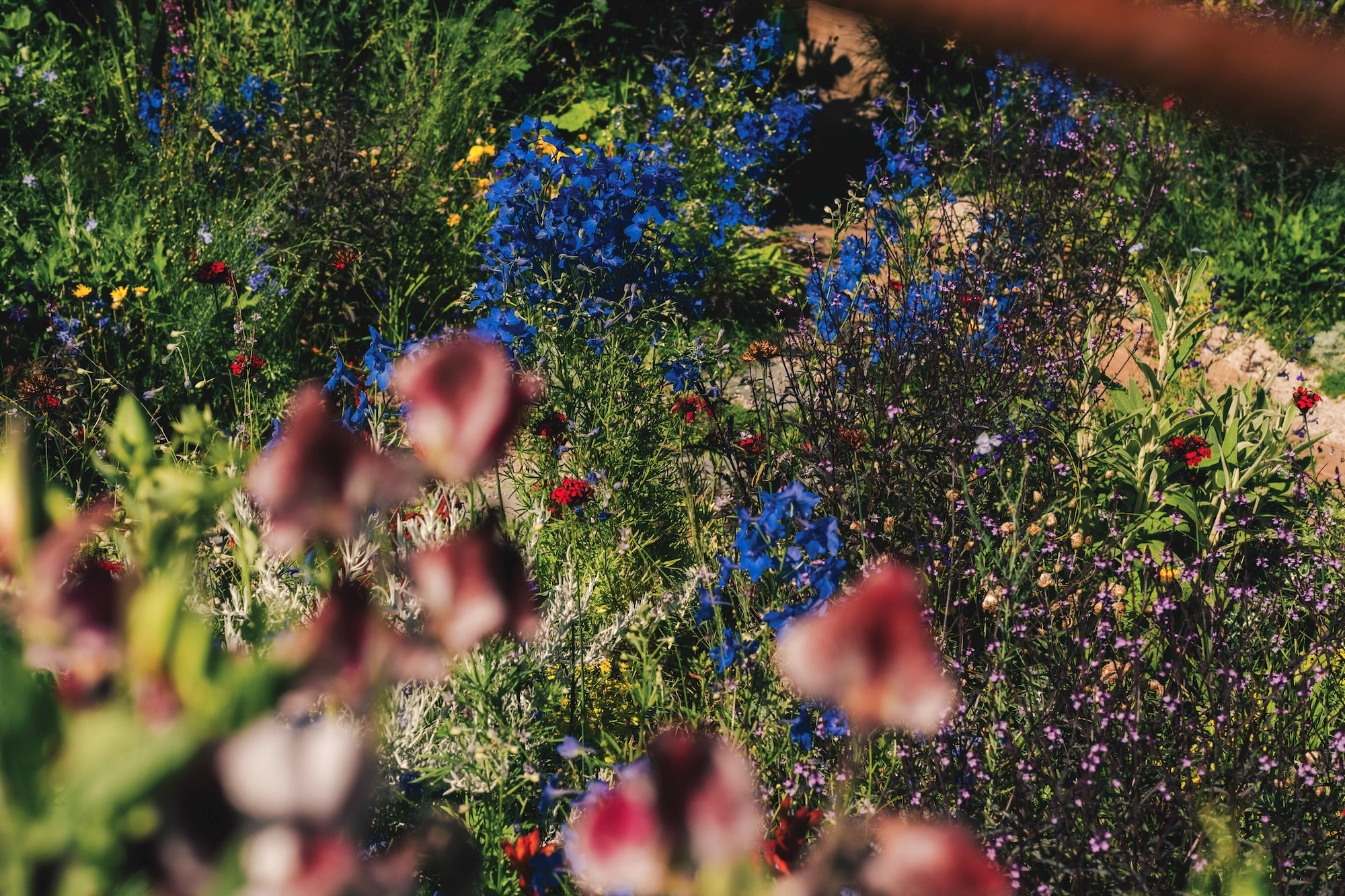
— An excerpt from Flower Power: Designing Gardens for Year-Round Wonder by Jac Semmler
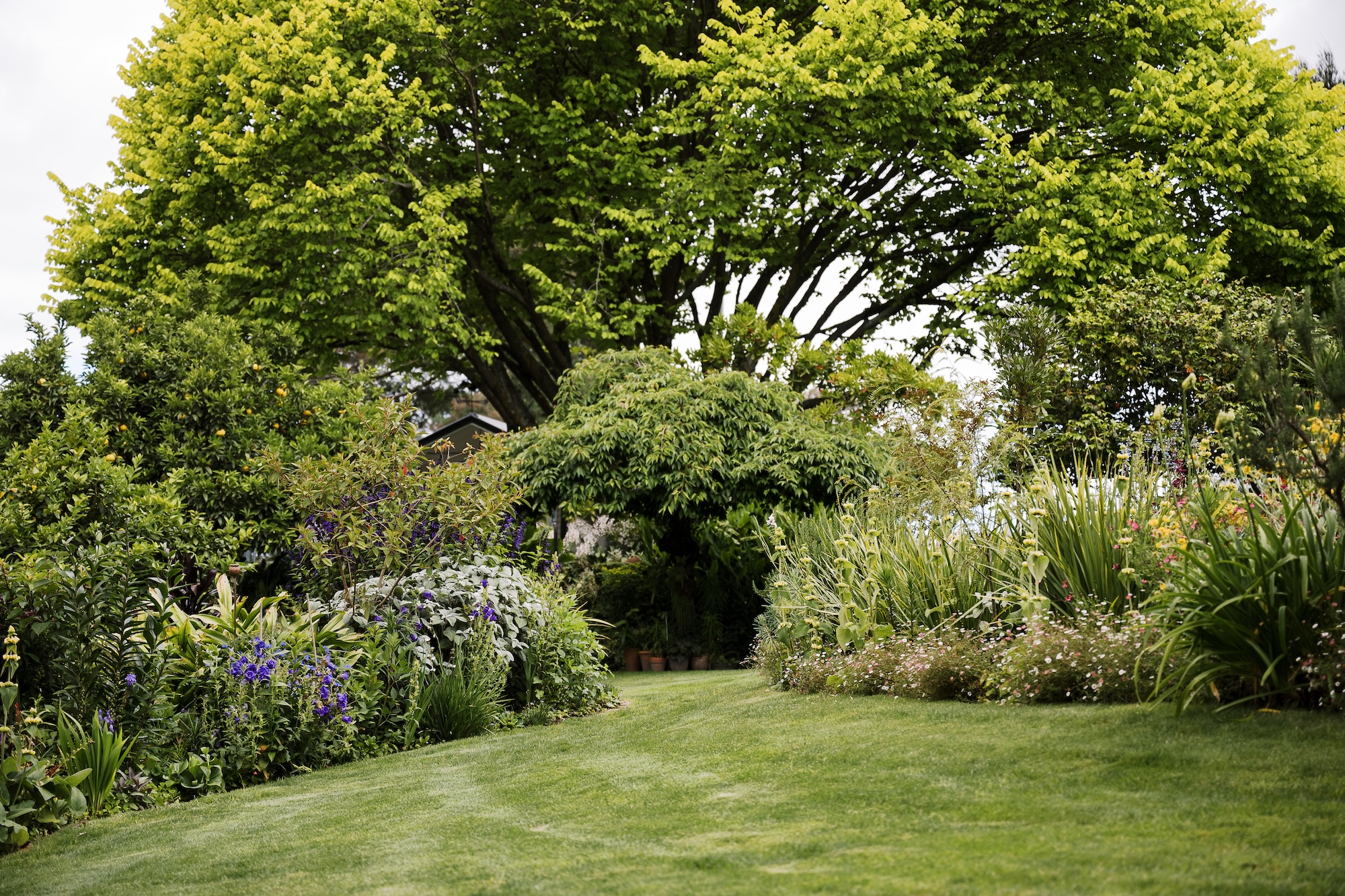
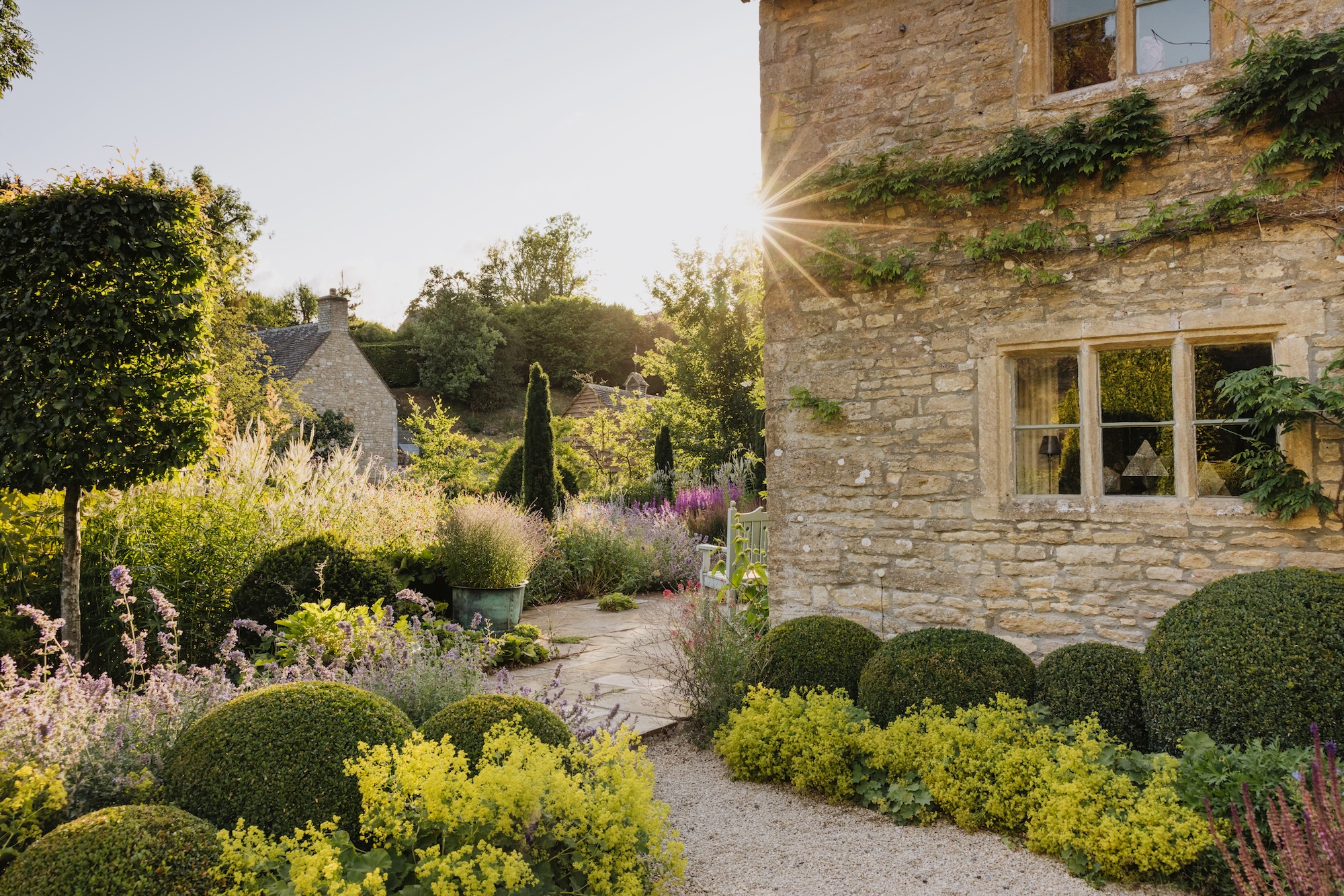
The most powerful force in a planting, after the climate and conditions are considered, really must be time. This is how the plants mature and grow together, and the seasonal peaks that happen through the garden’s cycles.
—
The following is an example of how the articulation of a garden ‘atmosphere’ can be crafted into a starting point for planting design.
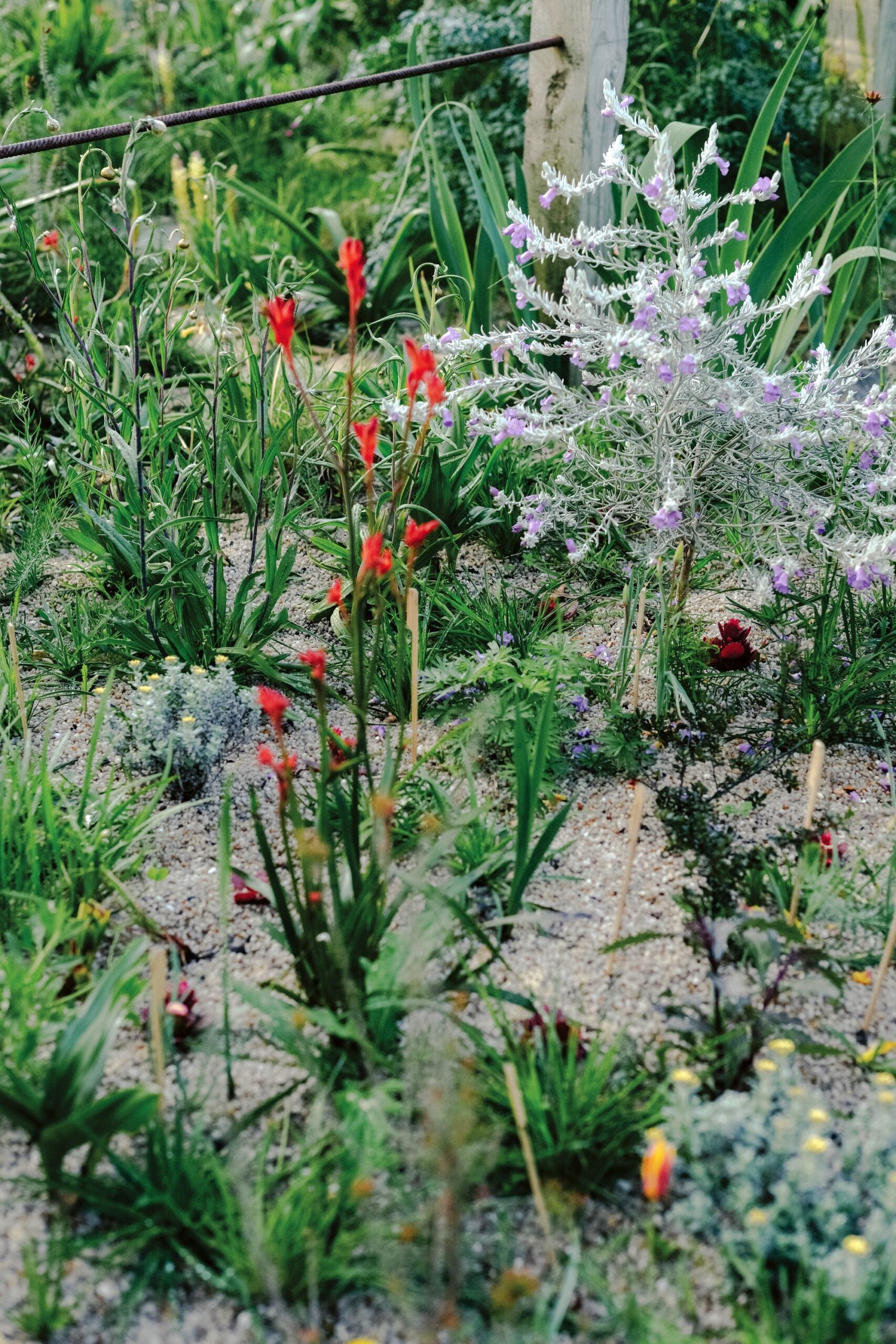
In this case, the atmosphere is described as ‘structures & electric softness’ – shrubs, evergreen perennials and dry-tolerant plants that have electric foliage.
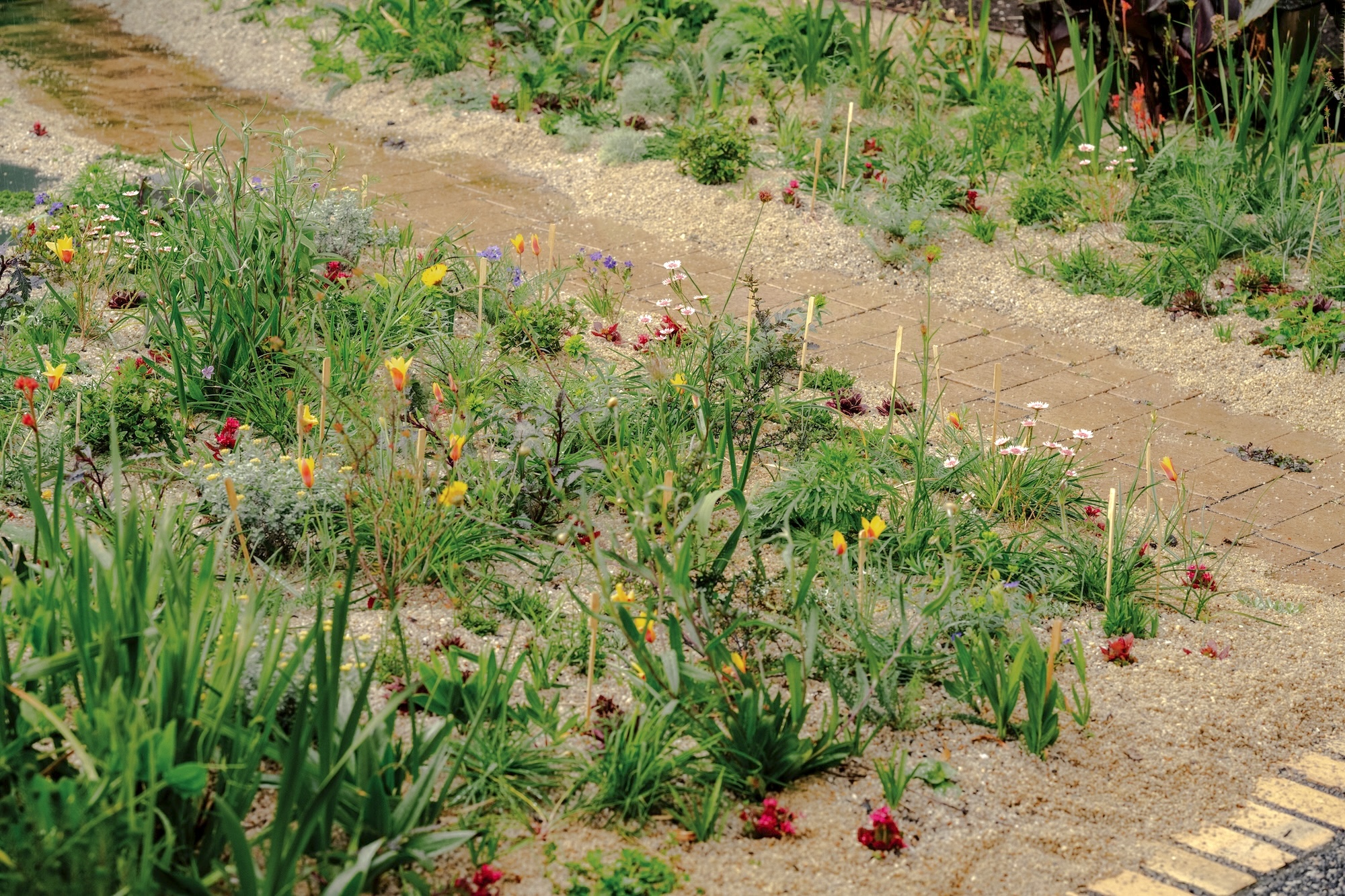
Planting style: Structures & electric softness
Case study of a drought-tolerant garden
A garden composed of structural plants, such as wood shrubs, feels harsh at times. These shrubs have evolved to survive and thrive in the extremes of dry summer climates. Their adaptations include small leathery leaves and minimal foliage, and their gnarled cragginess feels raw and rough.
But you can also find hardy shrubs in dry environments that are imbued with a sense of softness. The silver foliage of the Emu bush (Eremophila nivea) is one example that reflects heat and light, with fine-haired leaves that capture moisture and reduce evaporation. These plants are pliable and their leaves have a velvety texture.
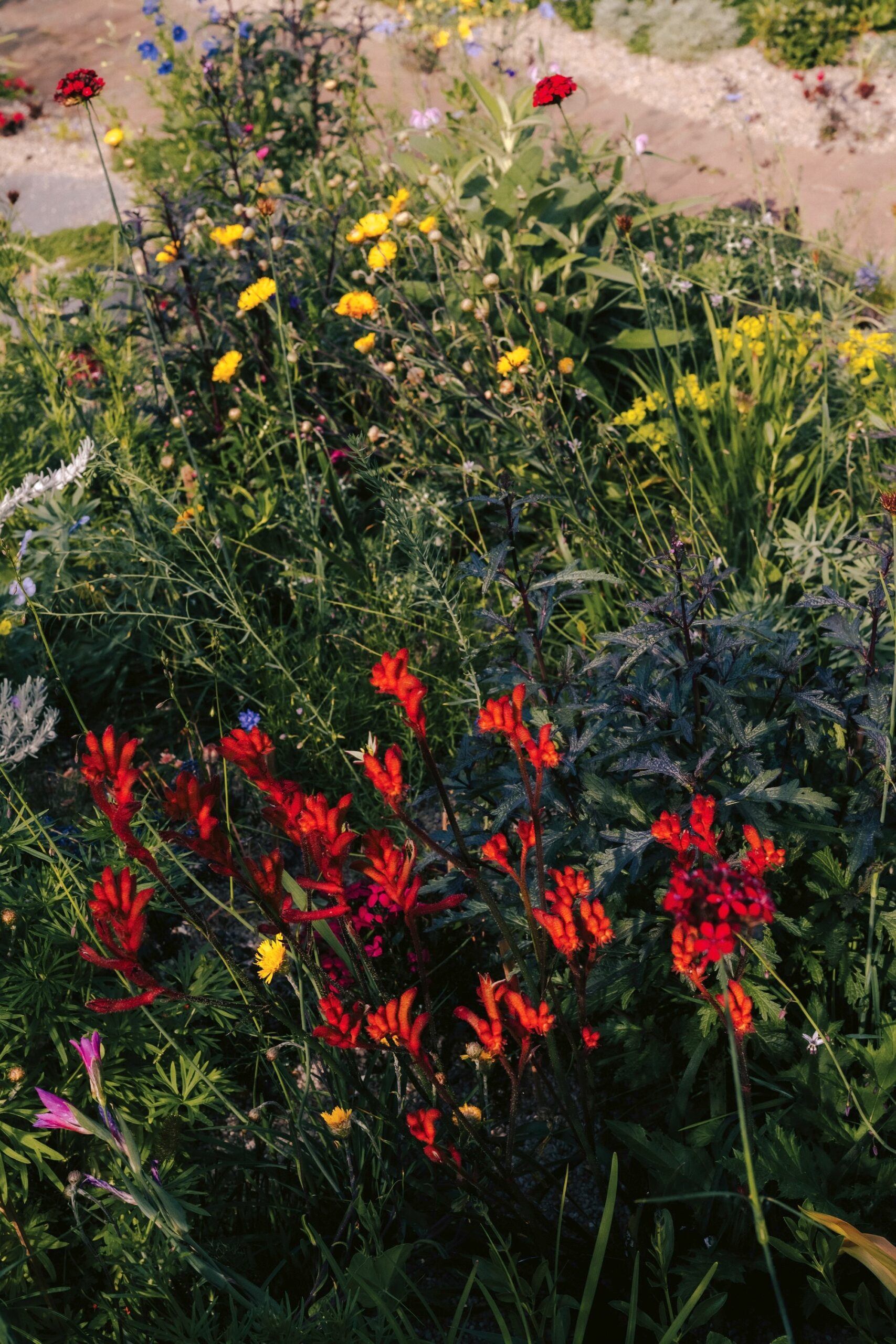
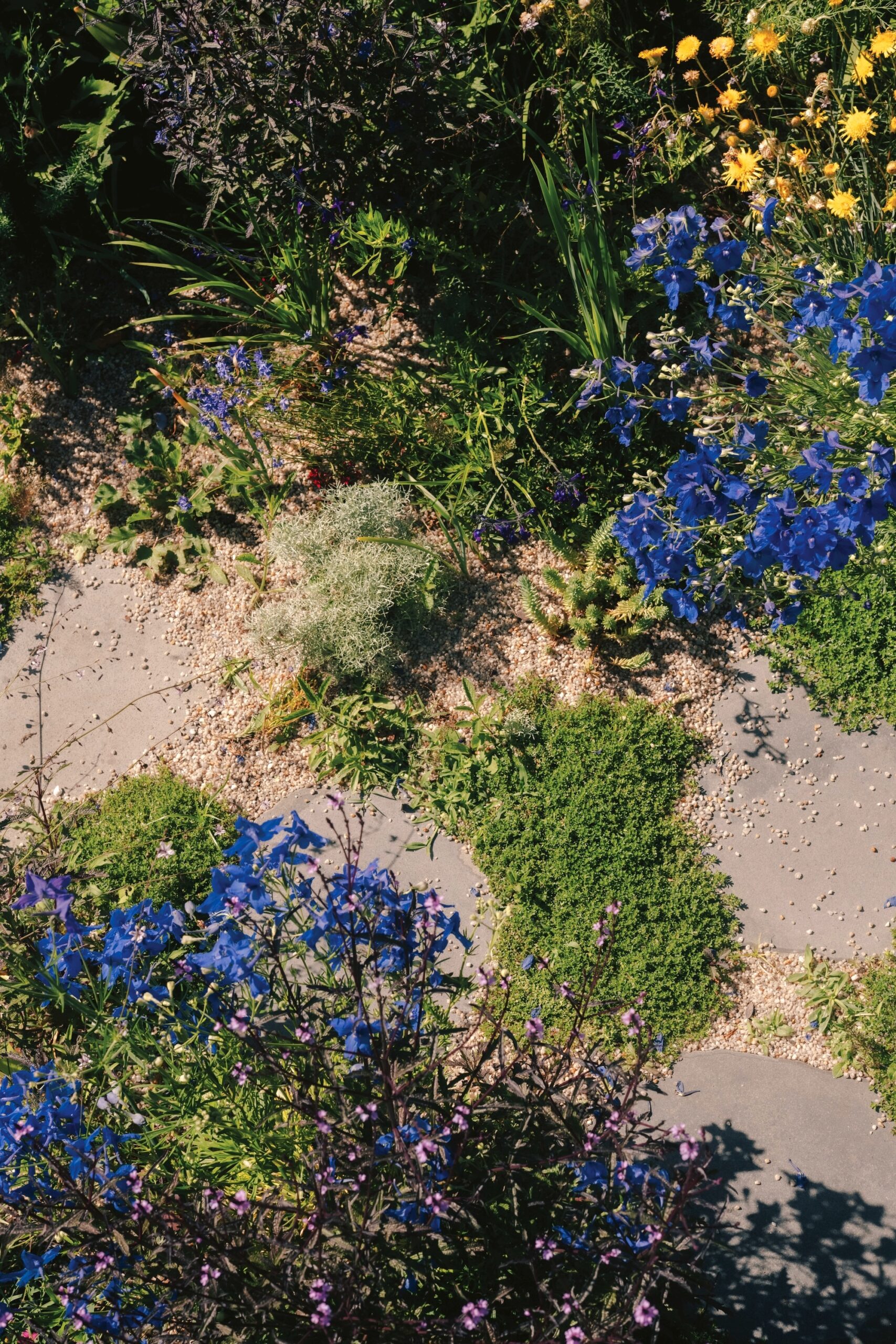
Choosing shrubs and evergreen perennials with these qualities will still create a permanent structure for your garden, but the experience will be more delicate. The planting design can be further accentuated with a percentage of dry-tolerant plants that have electric foliage and flower colours like dazzling blues and limes that spill over into the dry tolerant silvers and shrubs.
Plant list
- Blue bonnet (Lupin texensis)
- Blue larkspur (Delphinium ‘Blue Butterfly’)
- Blue spurge (Euphorbia ‘Blue Haze’)
- Emu bush (Eremophila nivea)
- Greek mountain tea (Sideritis syriaca)
- Greek sage (Salvia fruticosa ‘Greek Skies’)
- Kangaroo paw (Anigozanthos ‘Bush Coral’)
- Madeira germander (Teucrium betonicum)
- White cloud (Echeveria ‘Cante’)
Plants in the same wheelhouse
- Society garlic (Tulbaghia violacea ‘John May’)
- Stonecrop (Hylotelephium spectabile ‘Matrona’)
- Yarrow (Achillea ‘Coronation Gold’)
Contrasting foliage
- Australian fuchsia (Correa ‘Chocolate Mound’)
- Beard tongue (Penstemon barbatus)
- Conebushes (Isopogon latifolius ‘Dazzler’)
- Smoke bush (Cotinus coggygria ‘Grace’)
- Verbena (Verbena ‘Bampton’)
Some annual fun for the mix
- Blue lace flower (Trachymene coerulea)
- Chia sage (Salvia columbariae)
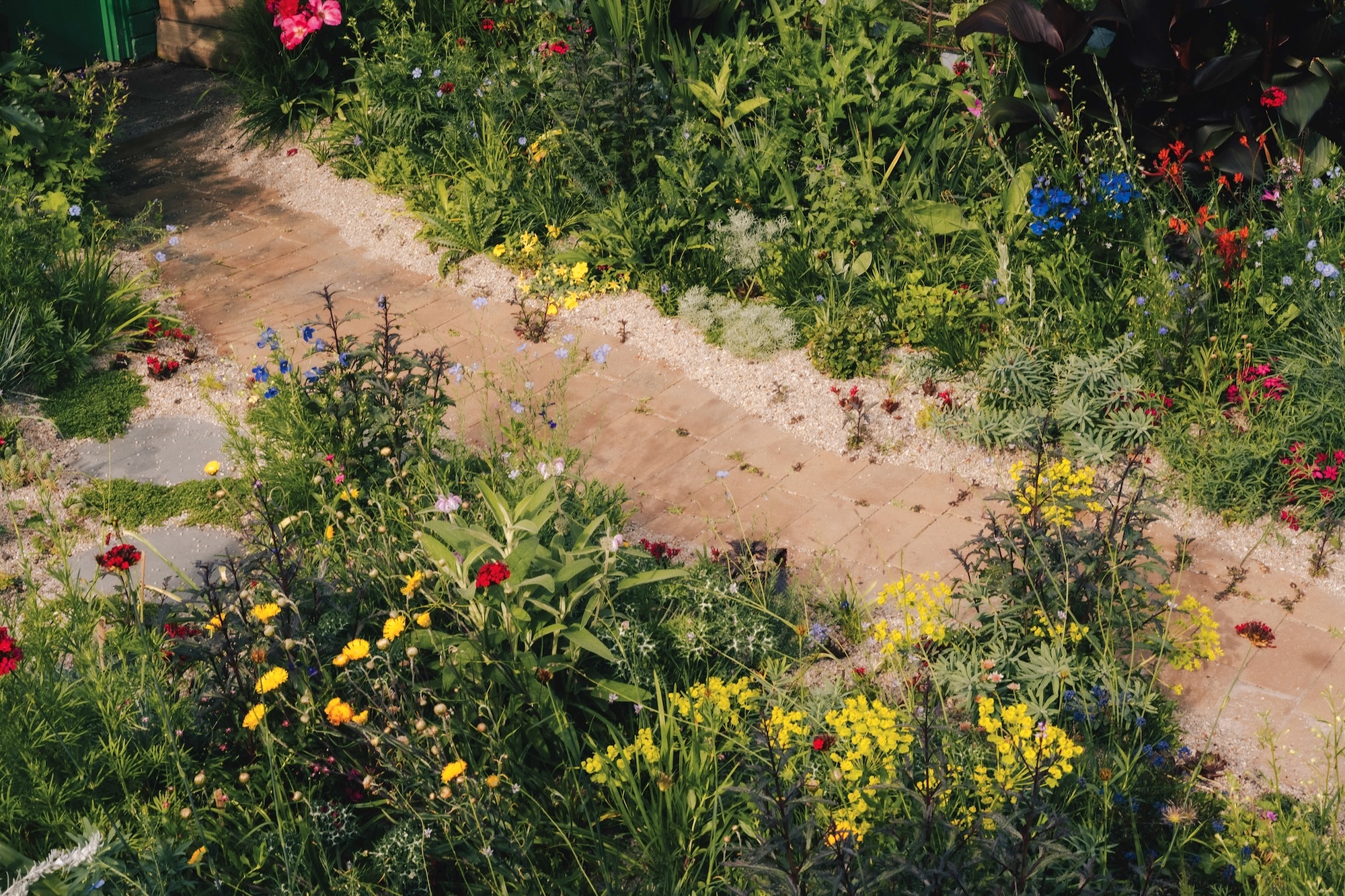
Garden case study
Year one
Time in a garden is a daily cycle, a series of seasonal shifts and an annual turnaround. The first year provides information to the gardener as they monitor the establishment of plants with curiosity and consider any early editing (some surprise thugs by chance?). It’s the prime opportunity to avoid unwanted plants entering the system while there are areas yet to be naturally covered in plants.
Weather extremes in the first year will test the establishment of the planting, be it the severity of the summer dry, or the cold and wet of winter, or the tropical dry through to wet.
Through a layered planting of plants bulbs and seeds, the first growing season reveals the colour composition and textures while the second year is more about proving the survival of species within the mix.
Duration
8 months
Key learnings
Herbaceous perennials easily swamp slower-growing woody shrubs in successional mixes
Hero palette over time
Yellow, red, electric blues, purples, orange and vibrant greens
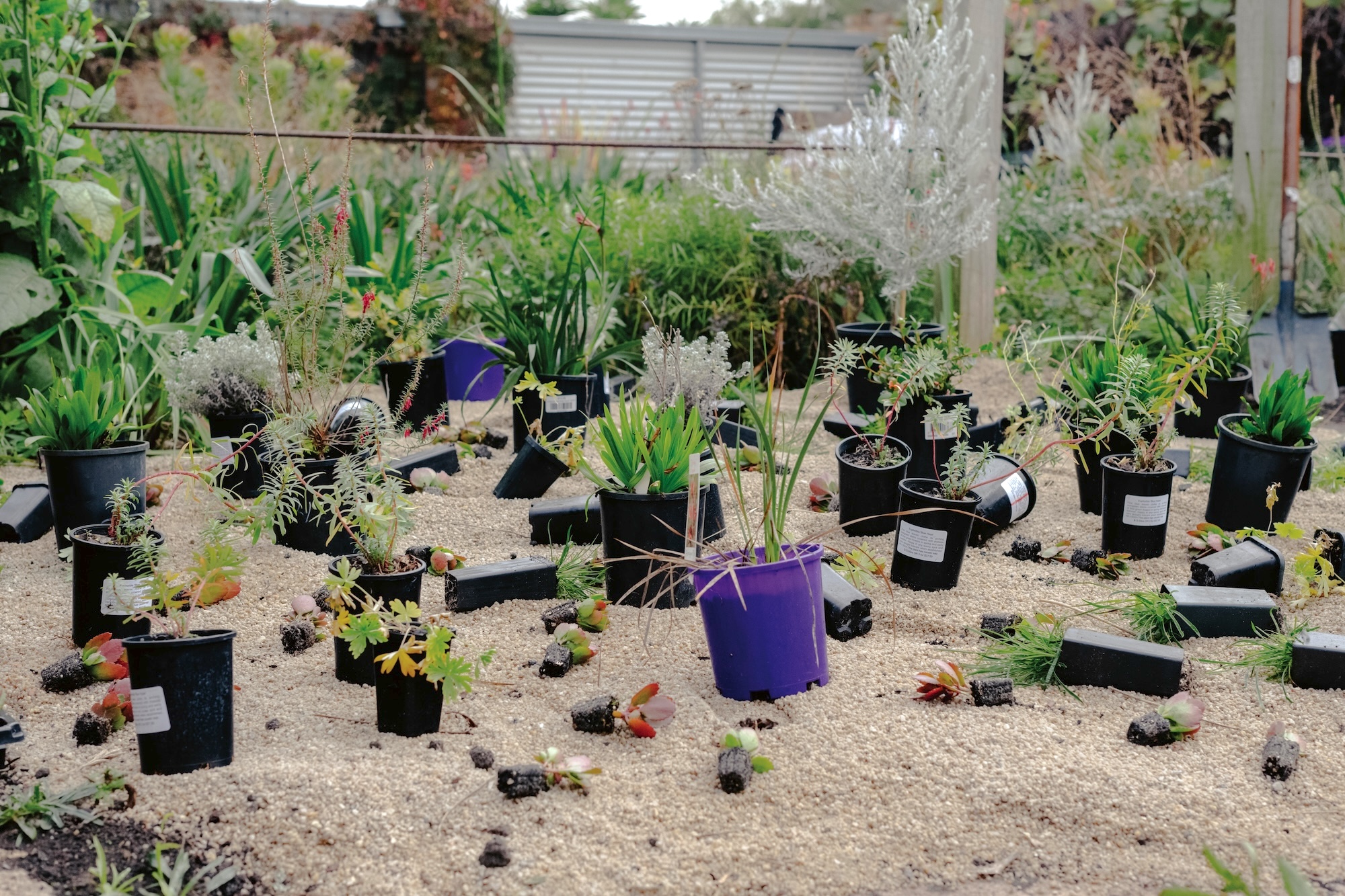


More by Jac Semmler [Super Bloom]
Gardening as an art form | Super Bloom
How to grow & care for Rudbeckia (Coneflowers)
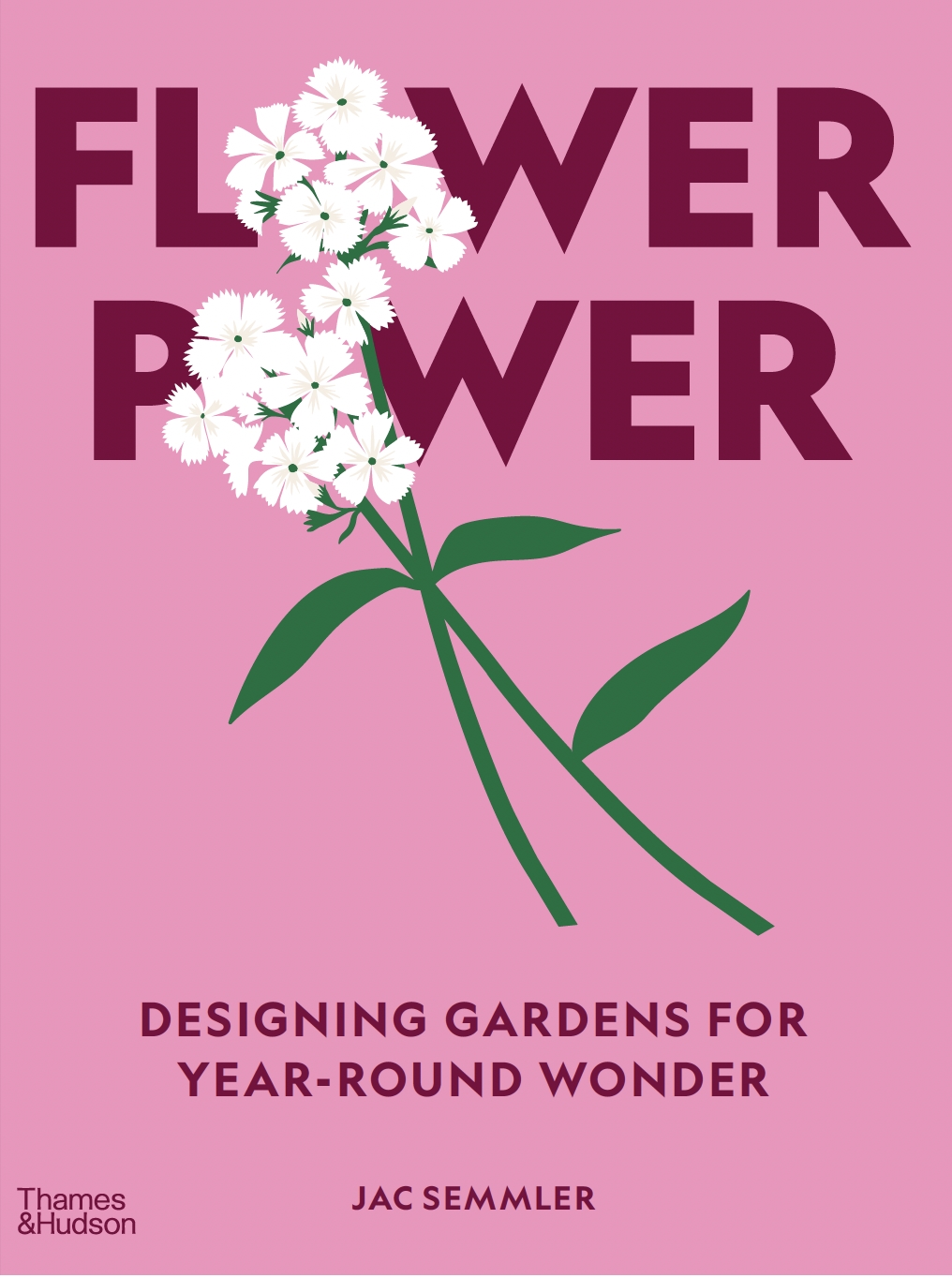
Flower Power: Designing Gardens for Year-Round Wonder by Jac Semmler
Flower Power by Jac Semmler, photography by Sarah Pannell, published by Thames & Hudson Australia, NZD$95.00, available now.