
— This is an extract from Let’s Go Native: From Back Yard to Bush: Landscaping with Native Plants by Guy Hessell
There are many native plantings suitable for small sections. Small gardens tend to look better, or more to scale, with plants that have smaller leaves, and while it is harder to have outdoor rooms in small gardens, careful selection of a few plant species that are visually interesting will work really well here. A single sculpture or large pot can work well, too.
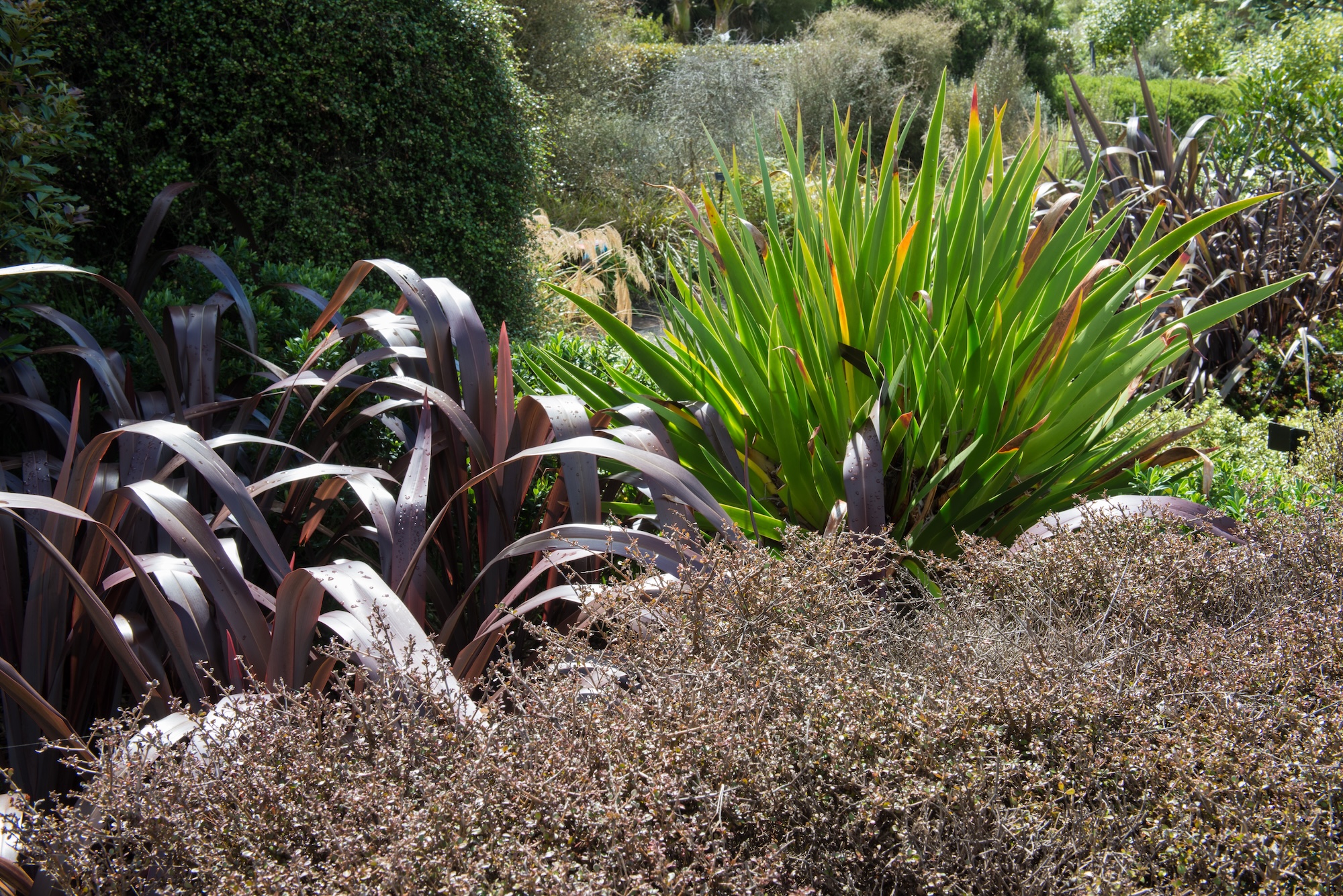
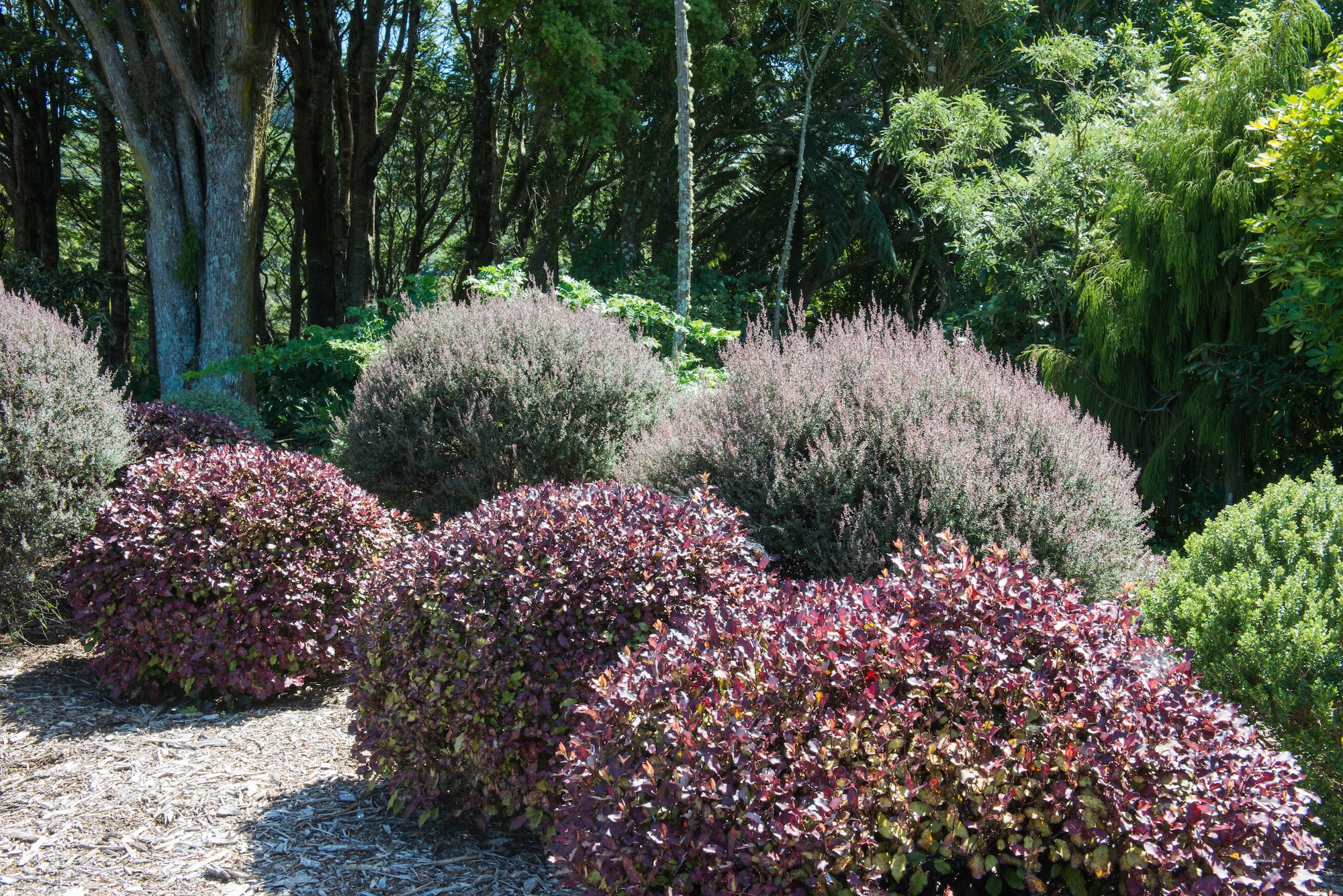
Phormium cookianum ‘Emerald Green’ (dwarf mountain flax) grow to around 1m high with a similar spread, or ‘Emerald Gem’ that are slightly smaller, the ‘Mini-Mes’ of flaxes, are great in a small garden setting. The Phormium cookianum flax overleaf are about 18 months old and show the general form of an ‘Emerald Green’.
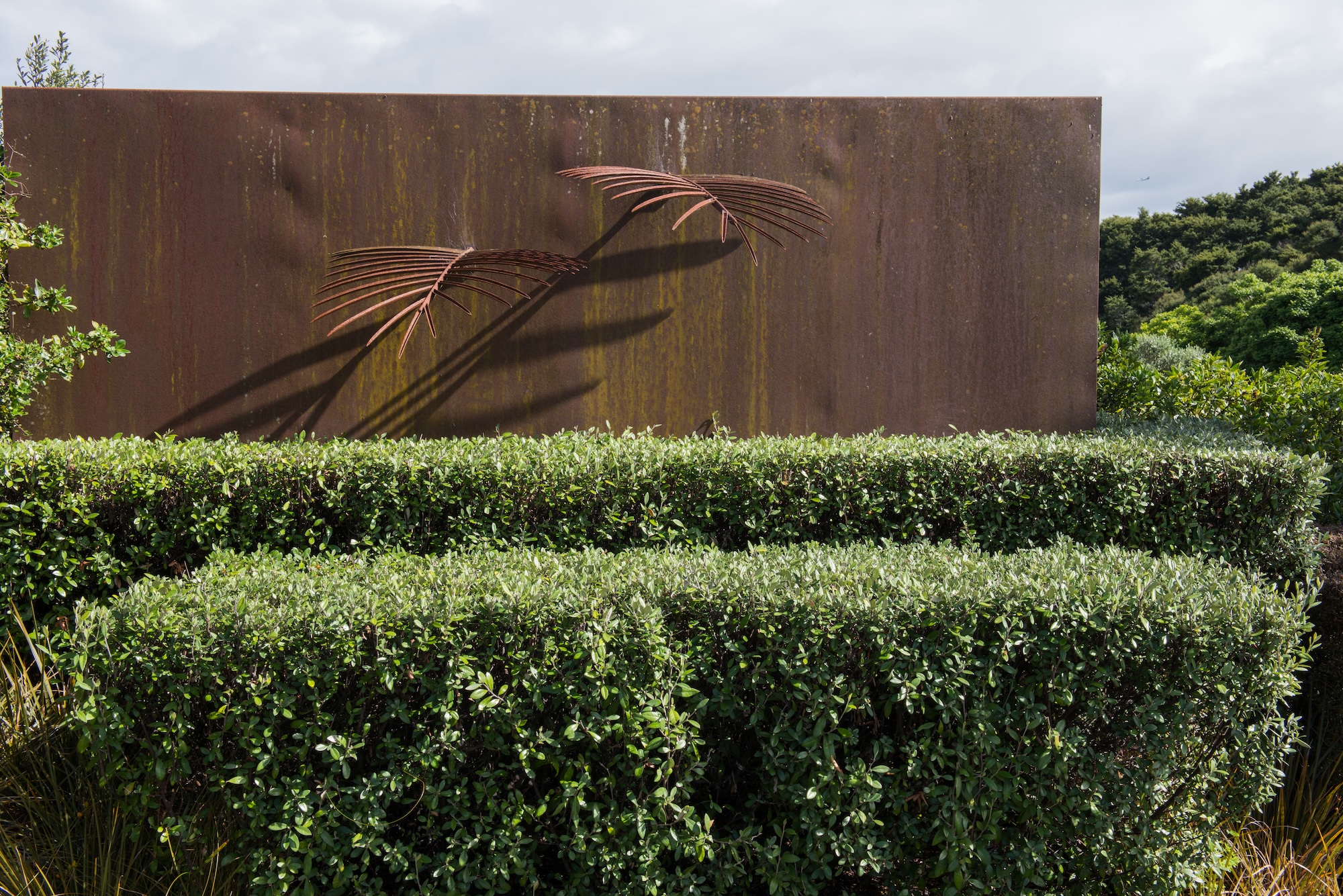
Corokia x virgata is a good option for a formal, single height-designed hedge and trims well.
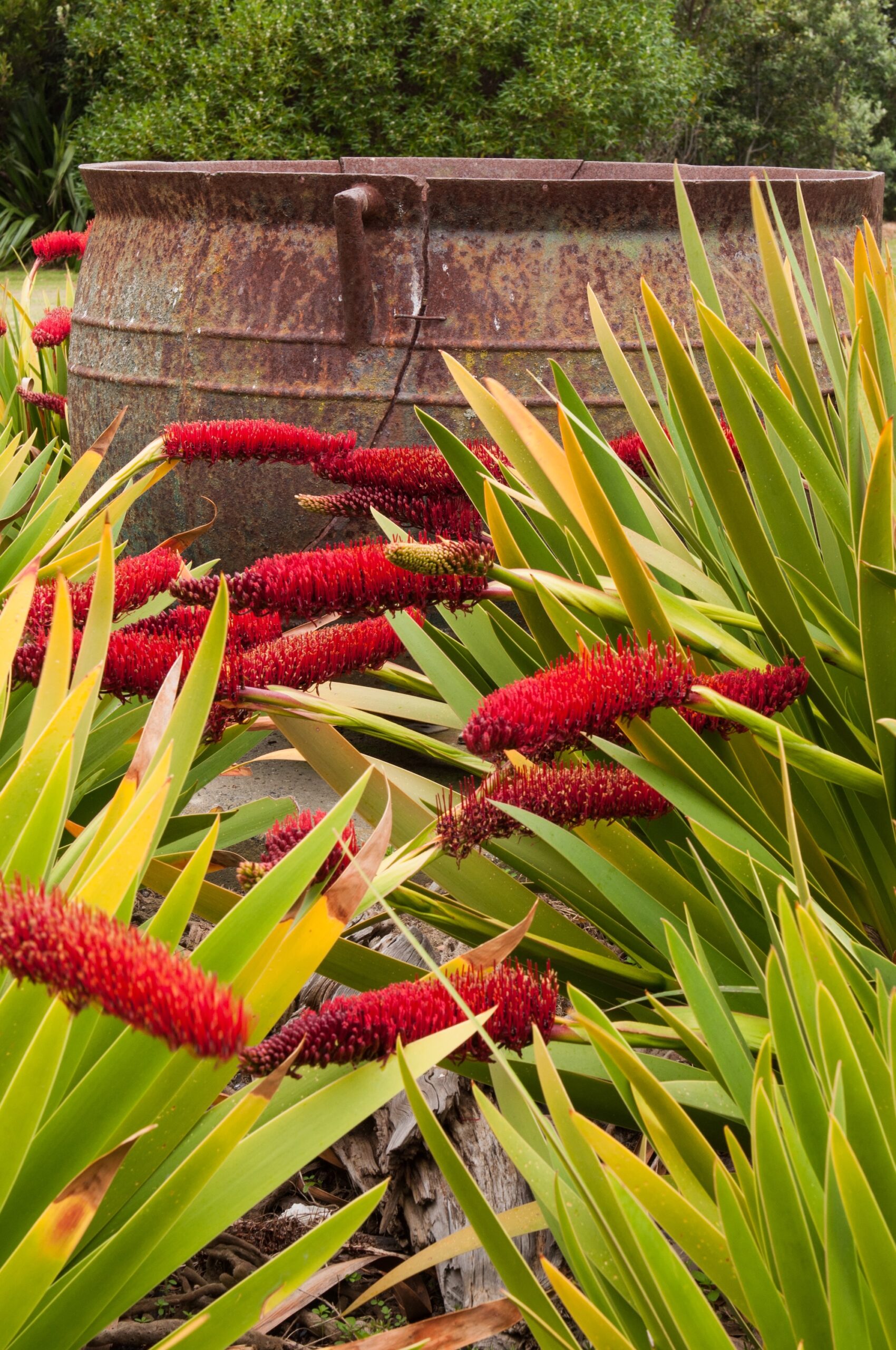
Xeronema callistemon (Poor Knights lily) is a slow grower at the start. They can take up to 15 years to start flowering, but I have seen them flower a lot earlier than that, depending on the site characteristics. It is well worth the wait to see them flowering; they are spectacular. They require a dry, free-draining site in full sun to light shade and are not frost tolerant. They will grow to around 1m high, but surprisingly they can grow to 4m in width if left unchecked.
At Whangārei Quarry Gardens we used to make a mix of 50 per cent sea water and 50 per cent tap water and apply this to Poor Knights lillies during the growth and flowering period, especially if the leaves were yellowing. This simulated conditions in their natural habitat on the Poor Knights Islands and worked well.
Brachyglottis greyi is a reasonably hardy plant and good for contrast — the parent plant is almost identical to this species (overleaf ). It can be grown easily from cuttings. They are frost hardy, and like a full sun to partially shady position, but needs well-drained soil. They grow to 1 metre in height with the same spread.

Garden design plan: Small formal garden with NZ natives
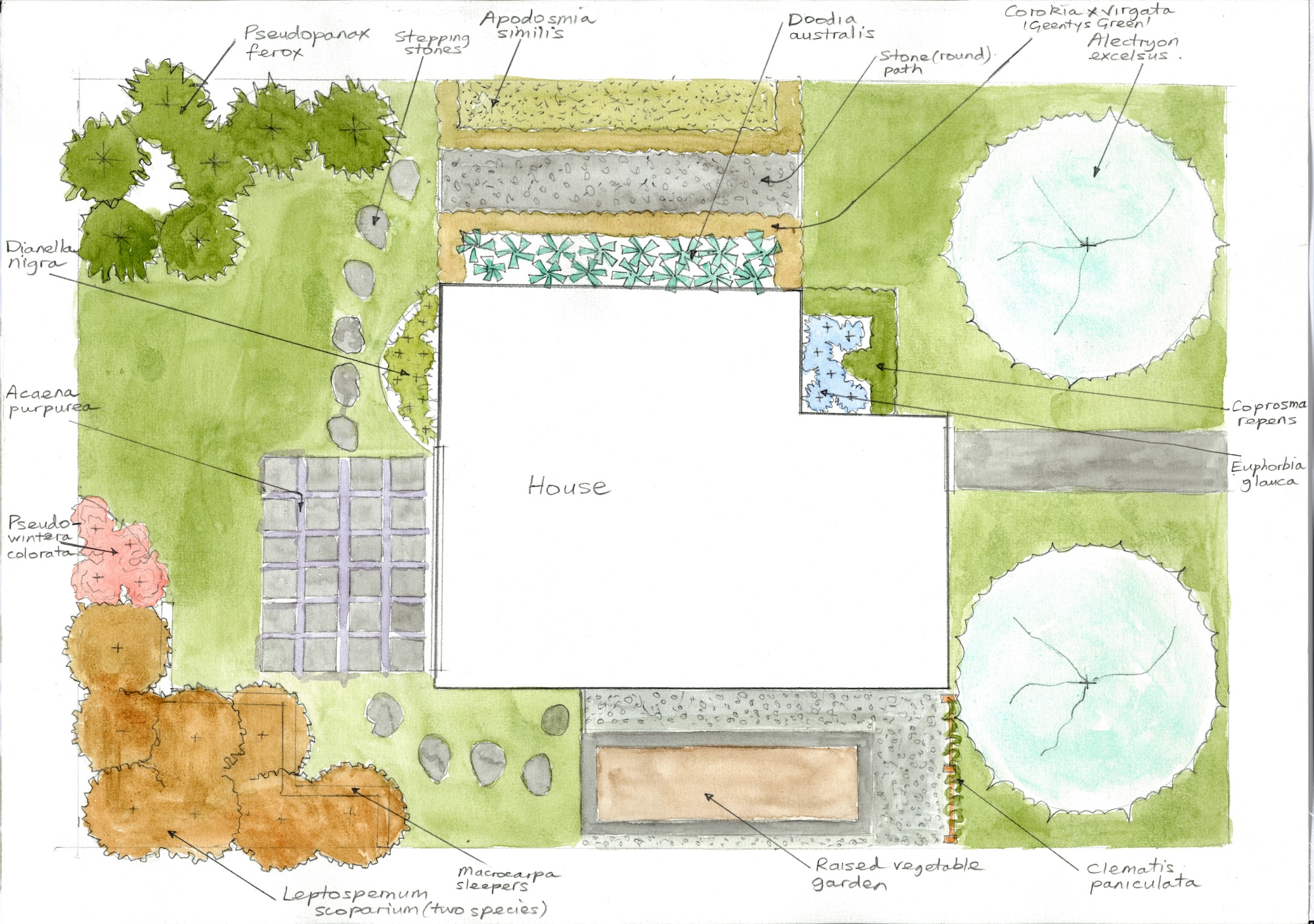
There are some fascinating colour and texture combinations in this plan, which really highlight how striking and contrasting New Zealand native plants can be. Planted alongside each other, they can make quite a vibrant formal garden.
It is important in any design to make it obvious where the entrance is. In some gardens it can be confusing if the plants hide the ‘door’.
Note: plant height and width dimensions can vary greatly depending on what literature you read. In addition, local growing conditions can result in plants growing smaller or larger than described. Any plant dimensions are therefore approximations.
NZ native plants for a small garden:
- Acaena inermis ‘purpurea’ (purple bidibidi) is a handy ground cover with a small purple-coloured leaf. It needs regular watering in summer as it can easily die off in patches. In this plan, it will wander over the pavers to hide the squareness of them and will need occasional trimming. It grows to around 10cm tall with a 90cm spread, yet I have seen it spread naturally over larger areas over time.
- Alectryon excelsus (tītoki) naturally have a single trunk which keeps a formal look. The leaf shape is an attractive feature of this tree, and it is used here as a statement as you enterthe property. You could underplant them with small flax such as Phormium cookianum ‘Emerald Green’(dwarf mountain flax). They can grow to around 6m in height, with a 3m spread, but can be pruned shorter to suit your site. It likes a sheltered site with not too much soil moisture and can cope with a few light frosts. The berries are poisonous. [ Fact: when the leaves of Alectryon excelsus (tītoki) are bruised and boiled, the liquid can be rubbed on the skin and was used as a good insecticide by Māori ]
- Apodasmia similis (oioi) is a jointed rush, and a useful plant for filling bare areas that are either wet or dry. They will grow in water, too. They sometimes need cutting back to keep a site’s formal look as the fine leaves can get quite long. They move well in the wind and spread laterally. It is used on this plan as a contrasting plant to the Doodia australis (rasp fern) opposite as well as the Corokia hedge. They can grow to around 1m high with a 1.5m spread.
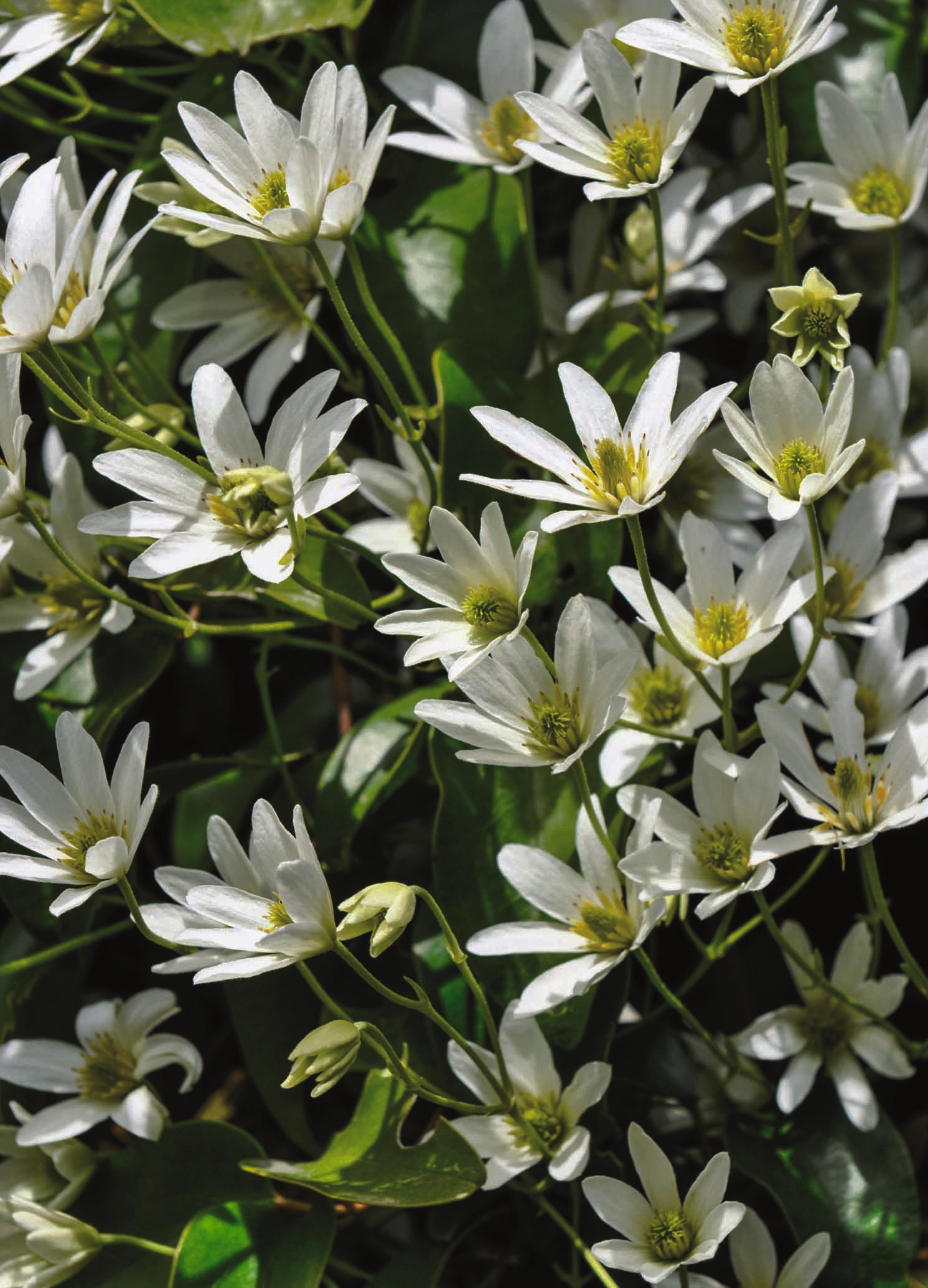
- Clematis paniculata (sweet autumn clematis) is seen with its white flower across New Zealand bush in spring and can grow to 6–9m tall with a 3–4m spread, but can be pruned to your desired size. They like to be planted in sunny positions, and can be great as a screen climber to help hide a vegetable garden as in this plan. It is a common evergreen climber used in landscaping.
- Coprosma repens (mirror bush), planted for its glossy leaf, is a great hedging plant. It can cope with a range of conditions, from sun to partial shade but it does prefer well-drained soil. In this plan I would prune to just under 1m in winter. Be wary as all parts of the plant can be poisonous to dogs if ingested. It can reach up to 3–5m tall if left to grow, with a 3m spread.
- Corokia x virgata ‘Geentys Green’ (korokio) is a very popular, reliable and fast-growing hedging plant. It prunes into a formal shape easily, and I’ve kept it to just under 1m in this plan. In spring, it grows small yellow flowers. It likes full sun with well-drained soil. It can grow to around 2m high with a 1.5m spread.
- Doodia australis (rasp fern) is a compact, attractive fern that can cope with semi shade through to full sun. The new fronds are pink and grow to around 50cm.
- Dianella nigra (New Zealand blueberry), with its very attractive purple berry, is a perfect feature. It is a very hardy plant and can cope with sunny, dry conditions as well as shade. The purple berry, when present, will match the purple foliage of the Acaena inermis ‘purpurea’ ground cover in the adjacent pavers, but will contrast with the green leaves of the blueberry. Remember to keep it well-watered. The berries can be poisonous if eaten in large quantities. It grows to around 60cm in height.
- Euphorbia glauca (New Zealand sea spurge), an attractive plant with a light green to blue-grey foliage, can spread laterally through the garden and grow to around 1m tall. A hardy plant, it is well suited to dry, sunny sites, but can handle partial shade, too. It is a great contrasting plant to the shiny green leaf of the Coprosma repens hedge that it is planted behind it in this plan. It can grow to around 1m tall.
- Leptospernum scoparium (mānuka) is a fast-growing tree that can cope with almost all conditions, from wetland areas to dry sites, full sun to partial shade and windy sites, but try to avoid heavy frost areas. Some bushier cultivars can grow to approximately 2–5m in height. [ Fact: Leptospermum scoparium (mānuka) was given the common name ‘tea tree’ by Captain Cook after he and his crew boiled the leaves to make tea. The branches also made excellent household brooms. ]
- Pseudopanax ferox (toothed Lancewood) is a great contrasting plant with a wavy leaf margin. The juvenile form adds great structure to a garden setting, it can grow in poor soils and in most light conditions but they do not like wet soils. It’s adult form is typically a round-headed tree after 10–15 years of growth, which is completely different to the commonly recognised juvenile form. It can grow to between 4–8m high with a 3m spread.
- Pseudowintera colorata (horopito) is grown for its blotchy red leaves and can be pruned into formal ball shapes. Being a slow grower, it requires little maintenance. It likes rich, moist soils with full sun to partial shade and can reach 2–3m in height.
An undeveloped garden can easily be transformed with some simple ideas. This is something I would sketch in front of a client at the first meeting. Adding a path can make a smaller garden seem bigger, distracting from a narrow plot.
The destination can be hard to hide in a small garden, so create a corner that conceals a surprise, such as a sculpture or an attractive raised garden.
Build narrower, shorter paths in smaller gardens, just to keep everything in scale. It also saves wasting valuable space.
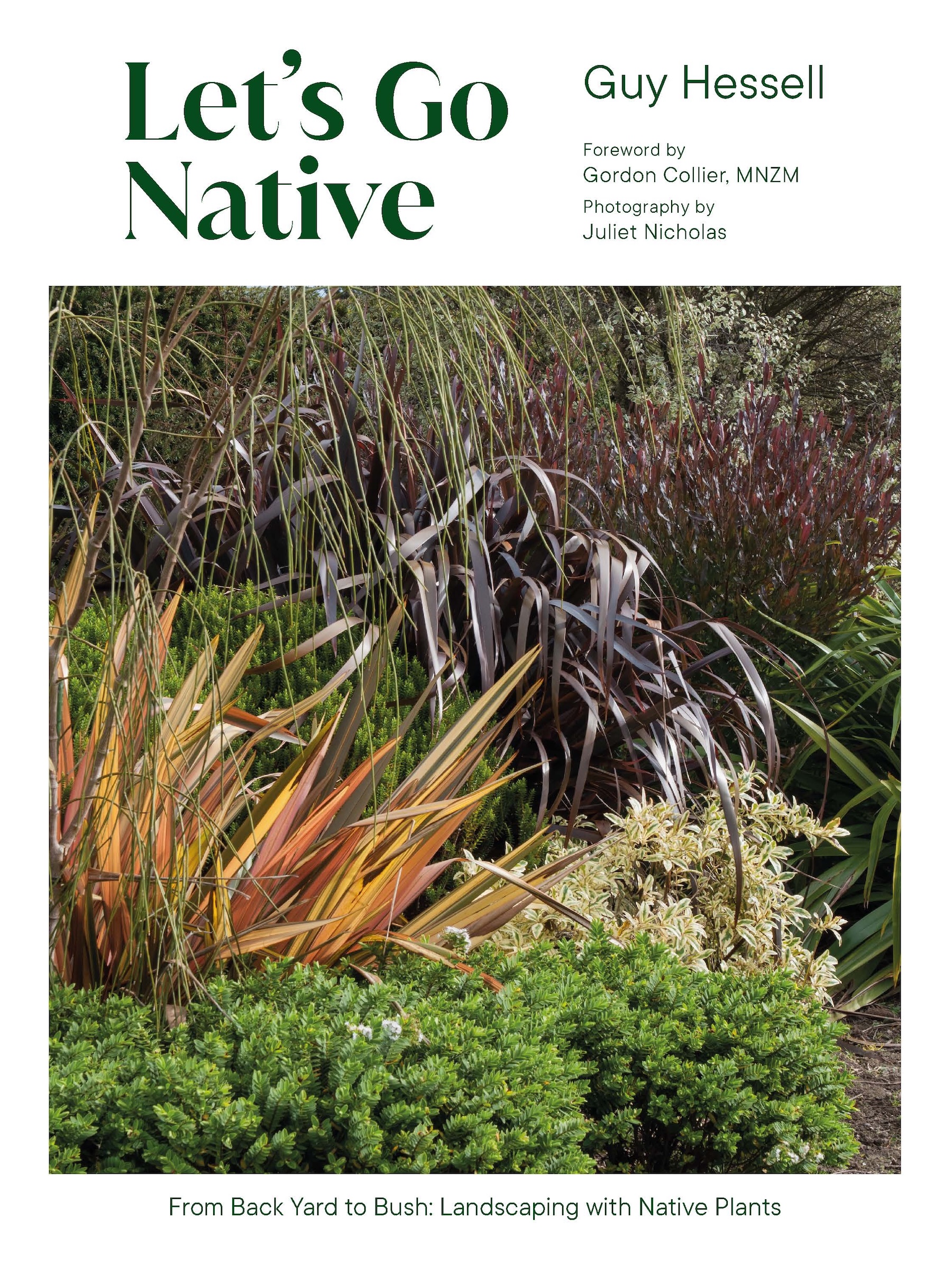
Let’s Go Native: From Back Yard to Bush: Landscaping with Native Plants by Guy Hessell
Let’s Go Native: From Back Yard to Bush: Landscaping with Native Plants by Guy Hessell, foreword by Gordon Collier, MNZM, photography by Juliet Nicholas, published by Bateman Books, May 2026
Buy Now