
— This is an edited extract from Pretty Dirty: The Life of Flowers, From Creation to Compost by Melanie Cecilia Stapleton
Whether you’re a professional florist or a flower lover at home, this is a guide intended to send you on a more adventurous path of designing with the botanical medium. It is not to tell you how to design, but to give you some tools and ideas as to how I think about making.
The practical side of flower arranging makes it possible to get into a flow and just let your intuition and the materials take the lead. I like to think of making flowers as theatre – a little smoke and mirrors. Event floristry is undoubtedly about creating an atmosphere, taking the audience on a journey and telling a story. Perhaps a dance, but ultimately a performance. I don’t think of my work as ‘perfect’ floristry. In fact, I hope that I can continue to make work that sits outside of conventional floristry.
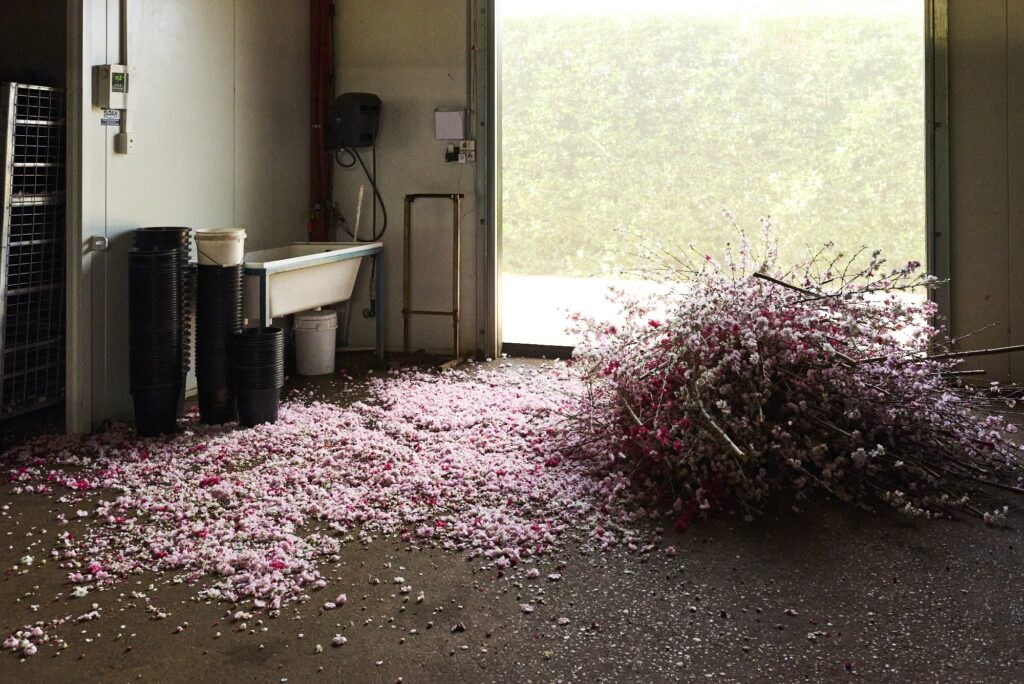
I also really love mess – life can be messy and social media has us all thinking that everything should be in order all the time. I have a messy life, I’m imperfect and so are the arrangements I make.
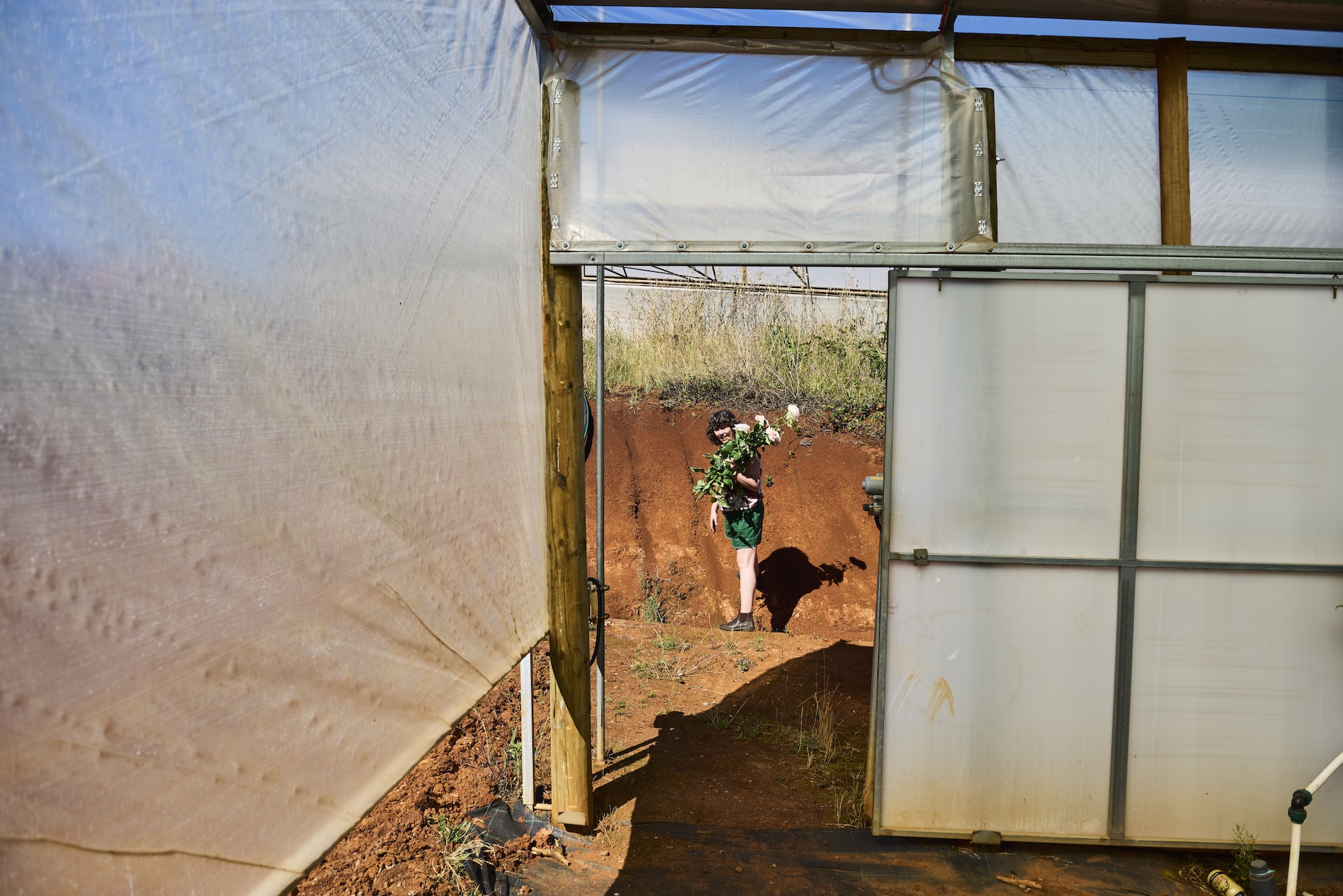
I love the physicality of making flowers at scale; you can throw your whole body into a relationship with this momentary natural world and come out, scratched and muddy, with twigs in your hair.
Large work can be showy and expensive and wonderful, so equally I relish making small, humble, thoughtful arrangements. Finding beauty in the individuality of each flower or plant no matter how spiky or difficult.
Making a simple vase arrangement requires a different mindset compared with creating an installation piece, but the practicalities remain the same.
Adventures in rule breaking in floral design: How Melanie Cecilia Stapleton likes to make…
Vessels
Choose a vessel, anything that holds water. Perhaps you have a favourite vase or maybe it’s a jam jar or a bucket. The vessel is one of the most important parts of an arrangement: it contains the water, the very substance that sustains the flowers.
Whether you can see the vessel or whether it’s hidden behind flowers by design, I prefer something with weight to it. If the vessel is to be seen, I think of it as an element in the design. If it is a feature vase or one with a loud appearance, maybe it only needs one type of flower artfully arranged. The shape and style of the vessel will speak to the mechanics you use and to the flowers you put in it.
Mechanics
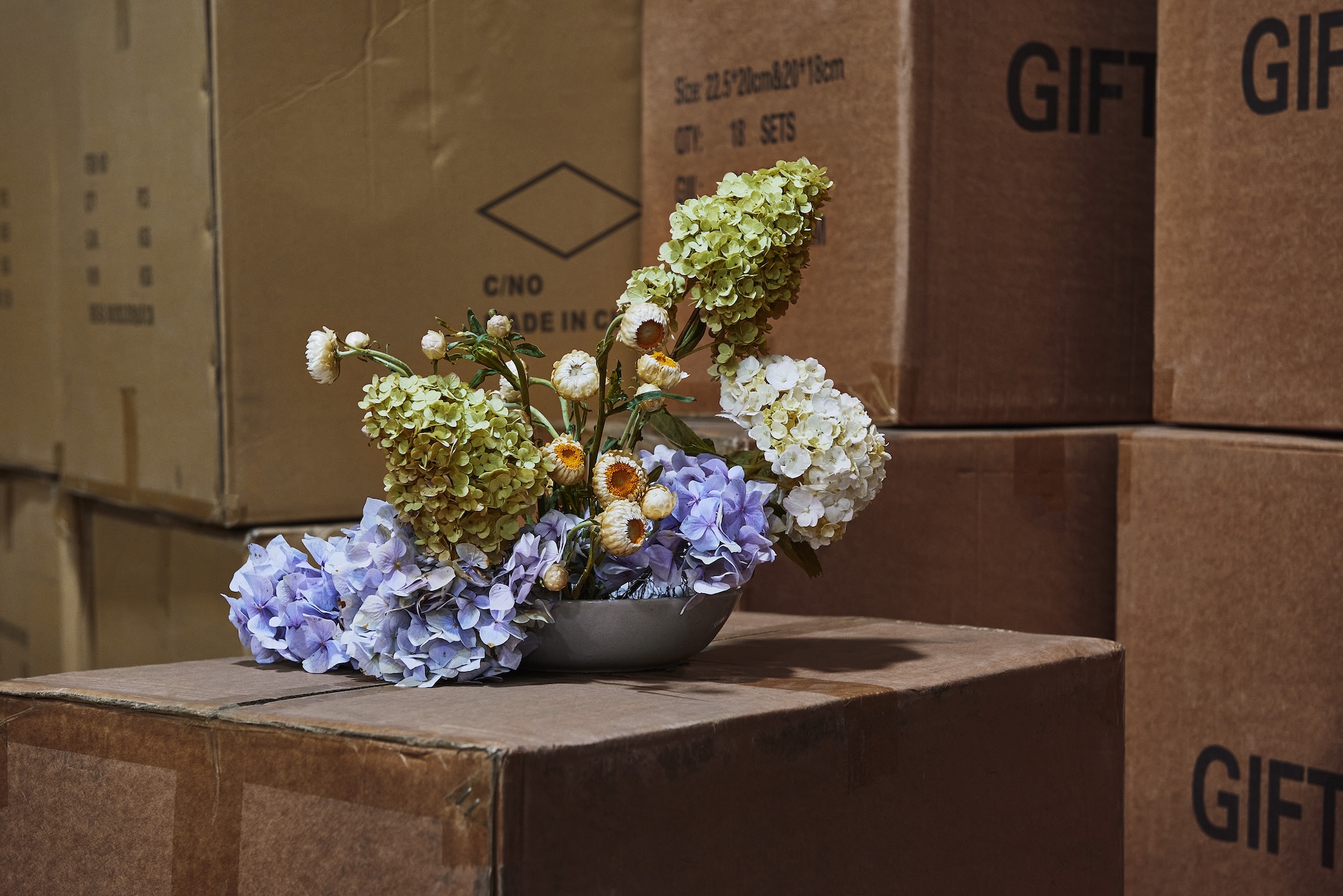
The tools and techniques used to support and secure your flowers are called ‘mechanics’ in floristry. A tall cylinder vase may need no mechanics other than the stems of the flowers themselves. A low bowl vessel with a wide mouth will need some extra structure.
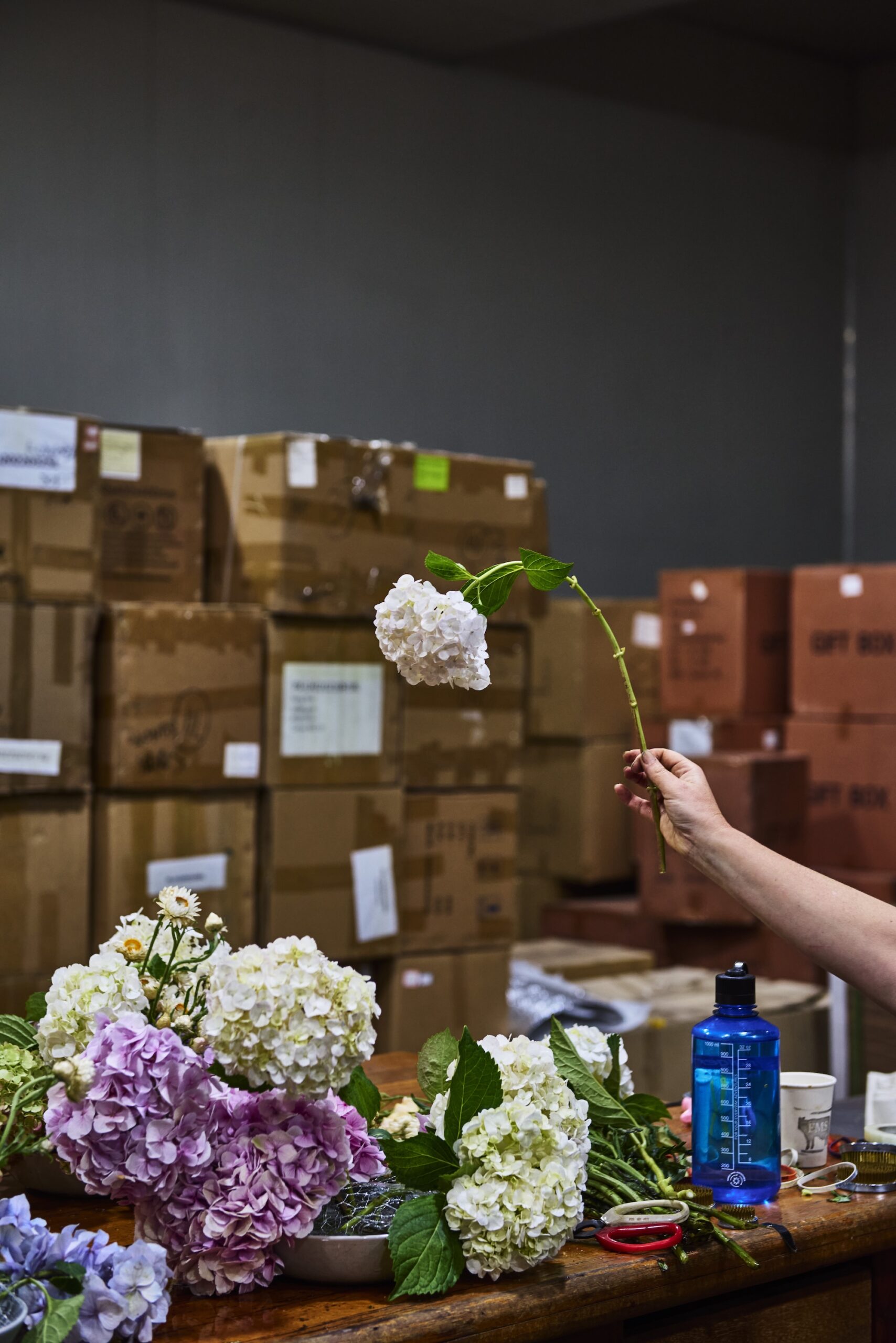
I make a little pillow of chicken wire, so the stems go through at least two layers of wire and are well supported. I like a firm-grade wire to make the pillow that is pushed into the vessel tightly, so it doesn’t move around. Depending on the design, I like to have some chicken wire protruding from the vessel, if I’m able to cover it well with my materials. I tape it down using clear florist tape, which is plastic, so I’ll avoid this step if the wire stays in place without it.
For some vessels I use a kenzan, otherwise known as a pin holder or a flower frog. In Japanese, the word literally translates as ‘sword mountains’. Kenzans have a heavy metal base with little spikes sticking up so you can poke stems onto them and they will stay put. They have a lovely weight and feel to them and sometimes I use them in conjunction with chicken wire.
There are a couple of ikebana techniques that I’ve learnt in the last year: always add the stem to the kenzan straight up and down, then gently angle the stem to where you want it. Another ikebana trick is using a cross of thin flexible branches inside the vase or splitting your flower stem carefully in two and interlocking the stem into another slender but strong fixture.
I always prefer to use the natural armature of branches or vines as support, because then the mechanics can become part of the design.
I love to use Muehlenbeckia, commonly called Maidenhair plant or vine. I’m particularly fond of using Muehlenbeckia astonii or another New Zealand native plant, Corokia (sometimes even called the wire-netting plant), in this way. Its flexible, divaricating and interlacing stems create a beautiful natural chicken wire.
Materials
My choice of materials is always based on the seasons and, of course, the client brief. Sourcing materials is my favourite part of making – each flower or branch or bramble has its own personality. I often choose what is readily available to me, or what has caught my eye in the local environment. Sometimes the pursuit of the perfect ingredient can take me on all kinds of adventures and requires a keen eye and good relationships. I like to put together materials that would never grow together in nature. I think the fun and beauty of floral art is not to mimic a garden but to create a dreamscape of nature. Intrigue and unexpected combinations at every turn.
I believe it’s important to reflect the land you are on in the work made, even in some small way. When I work on events in a location that I’m not familiar with, I like to spend time there first to soak in some of the essence of a place. That way the work can reflect and respect the land, the geographical nuances and energy.
Using local growers and local collaborators is a priority. Pay attention to the plants and flowers that grow readily in your local environment; take note of weeds and those plants that grow on the margins. In your own garden, let veggies go to seed, wait to cut back summer plants, start to notice interesting foliage – there just might be something magic in a faded perennial.
I enjoy making arrangements where my materials are very limited. Using just one or two types of flowers feels, for me, like black and white photography – your eye has a chance to really hone form and shape.
Form
The form of the actual flower has already been determined, but every flower is different. Like a fingerprint, no two are the same.
How it is placed in concert with other flowers and foliage, and within the vessel, comes along the way. When I choose a stem, I feel into the form: the natural fall, how it dances with gravity, the back and front of the flower, and which way it wants to go without me imposing a shape or idea on the flower. With practice, the flower tells you where it wants to go. This might happen in an instant or after a longer contemplation.
I would also offer this to anyone arranging flowers at home: really take the time to contemplate each material. See how heavy it is, how it smells, how it feels when you squish the stem. Can you look really closely at the petals and the texture of them? Do they remind you of anything? Is it woody or fleshy? Maybe pull a flower apart and examine each part closely. This is a great exercise for kids and adults and I often use it in workshops so people start to feel into each flower and don’t get so carried away with the design or outcome.
In traditional floristry we are taught about focal flowers, filler flowers and line flowers. I don’t follow any of these rules. I never think of foliage as a base and I do not subscribe to the idea of filler flowers at all. I work to give every material equal value. I think of foliage in the same way that I think about a flower or a berry or a branch: each material harnessing its own particular potency, not simply as a support for a focal flower.
It is a common design principle to use materials in threes or odd numbers. It’s a good guide if you are putting flowers in a vase at home. I would love you to embrace some imperfect design too – perhaps try putting two stems in a vase and contemplate whether three would be better. I love an unruly branch floating out where it’s not meant to be. It can be beautiful, and remarkable, and does not need to be pretty or perfect. It can be wild and rebellious and riotous.
Balance
Making sure that your arrangement doesn’t fall over is simple physics. The visual weight of a flower or arrangement is equally as important.
Some flowers have a heavy, solid look, such as an artichoke or a protea, while others look airy and light, such as cosmos or Japanese anemone. Colour balance is also something to consider – a dynamic intentional imbalance can be interesting and compelling, while using only one colour or tone can give another feeling altogether.
Negative space
The space in between the flowers is just as important as the material mass itself.
Allowing space can convey a sense of movement or lightness. I like the idea that a butterfly could easily fly through an arrangement. Equally, if I am making a more sculptural solid form, the shapes and silhouette it creates are essential.
In ikebana this space is called ma and is an integral part of the form. Open spaces create breathing room and allow each element to be appreciated.
Texture & colour
I believe that all colours can go together. That’s not to say all colours should go together but, with the right consideration and conversation among the flowers, anything is possible.
I love yellow, so I’m always trying to convince clients to add a little yellow into their colour palette. Yellow always goes in my opinion.
I don’t know that much about colour theory, but I know that nature holds infinite combinations of colours. I refer to the environment and my intuition, not the colour wheel, when using colour. The different physical characteristics of flowers – the texture, shape and colours – can change the feeling of the work dramatically. Combining vastly different textures can make for a dynamic interaction of materials – think pairing spiky banksia with voluptuous garden roses or tropical shiny heliconia with fluffy dahlias.
Editing
Editing is the means by which we reduce the material down to its essence, removing leaves or parts of a stem to accentuate the form. Often I might remove the leaves of a branch to reveal the fruits or the elegant shape of the branch itself.
In ikebana this technique is called hana-kiri, where you trim and shape the stems and branches to create the desired lines, forms and balance. Many ikebana teachers have said to me that ikebana is the practice of less less and Western floristry is about more more. I think this has been true in the past but, as contemporary floristry takes more cues and inspiration from ikebana and vice versa, the boundaries are becoming blurred.
—
“I love the physicality of making flowers at scale; you can throw your whole body into a relationship with this momentary natural world and come out, scratched and muddy, with twigs in your hair.”
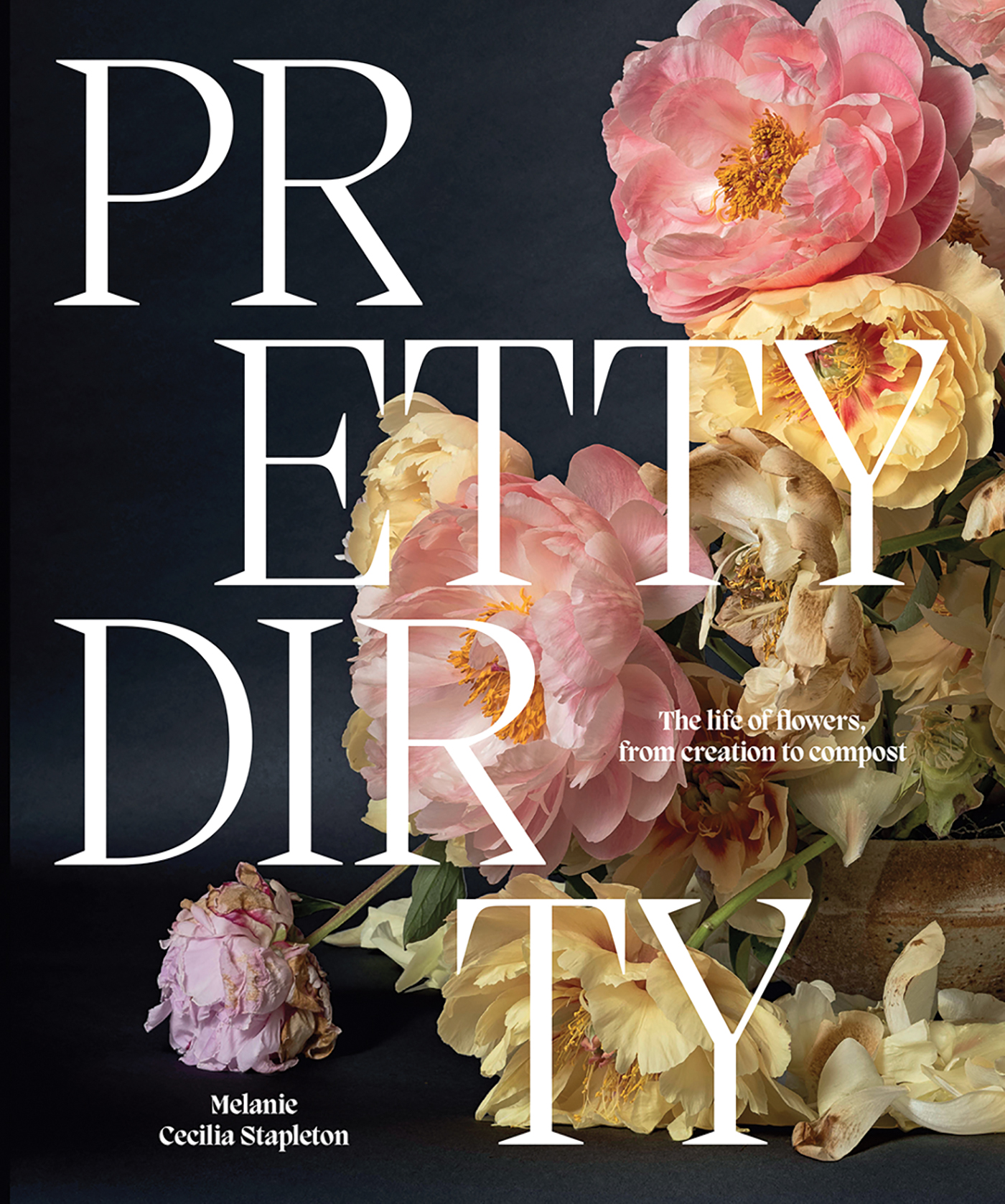
Pretty Dirty: The Life of Flowers, From Creation to Compost by Melanie Cecilia Stapleton
This is an edited extract from Pretty Dirty by Melanie Cecilia Stapleton published by Hardie Grant Books