
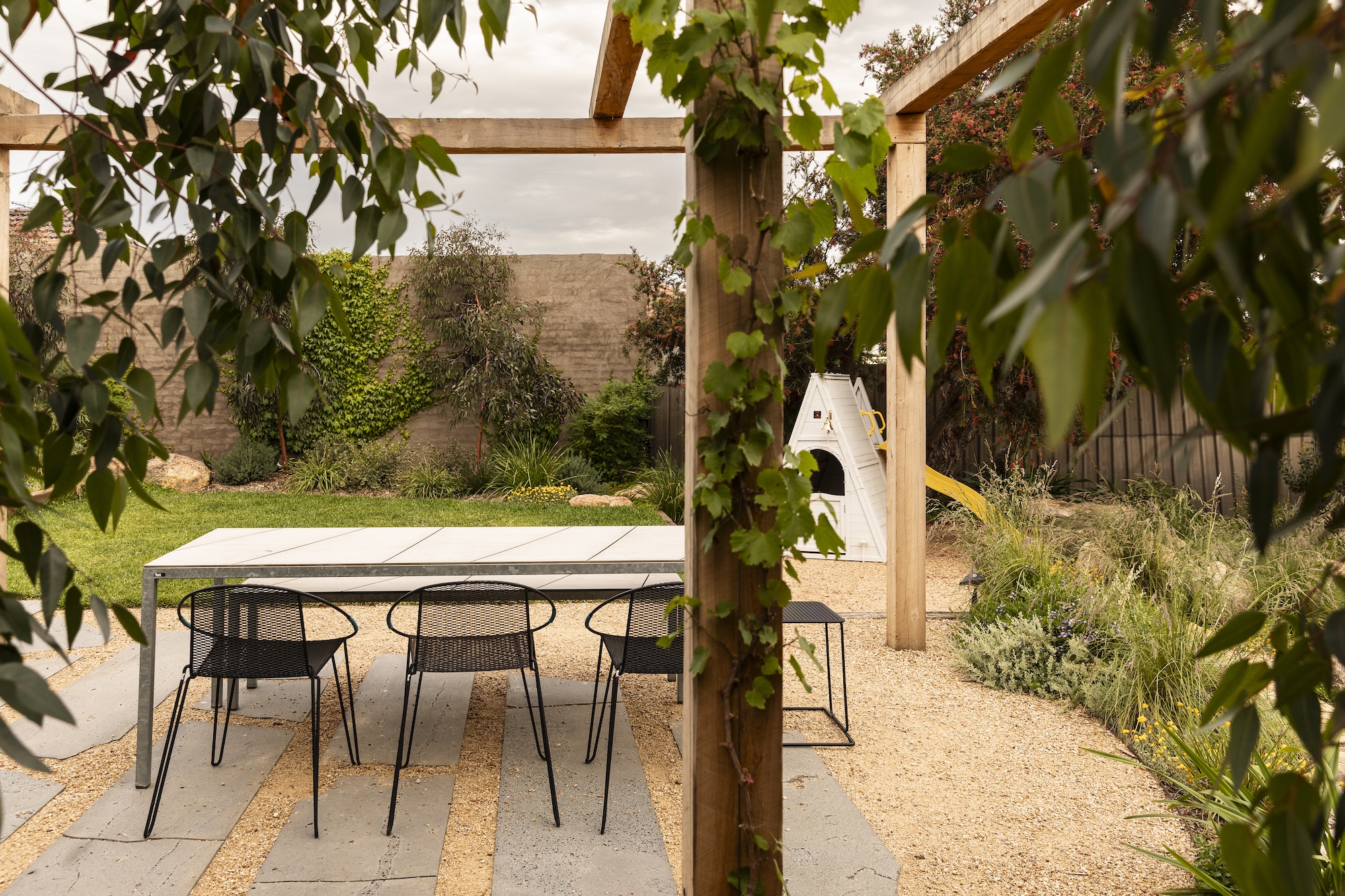
Landscape design by Ben Saunders Landscapes
Located in Thornbury, Victoria, this garden by Ben Saunders Landscapes sits on an elevated site with expansive views towards the city. Created in 2023, the design focuses on a contemporary native garden that responds to the site along with the young family’s desire for a garden that invites playfulness and outdoor enjoyment. The garden was arranged to flow naturally across the property and balance function with nature – offering shade, privacy and habitat for local wildlife.
The plan
The main challenge was to create a sense of being in a natural world within a fenced space, surrounded by large homes. When Ben first visited, the home was in the final stages of a renovation, and the garden was mostly an open worksite with a tired Pittosporum hedge and a rolling, weedy lawn at the back. A well-established Callistemon (bottlebrush) stood out as a key feature.
Choosing the right trees and boundary shrubs was key to giving the property its own unique environment. Once established, they would work to connect the garden to the surrounding natural environment.
—
“As always, part of our design looks at how we can get clients into their gardens and stay out there enjoying them.” – Ben Saunders


Connection to nature
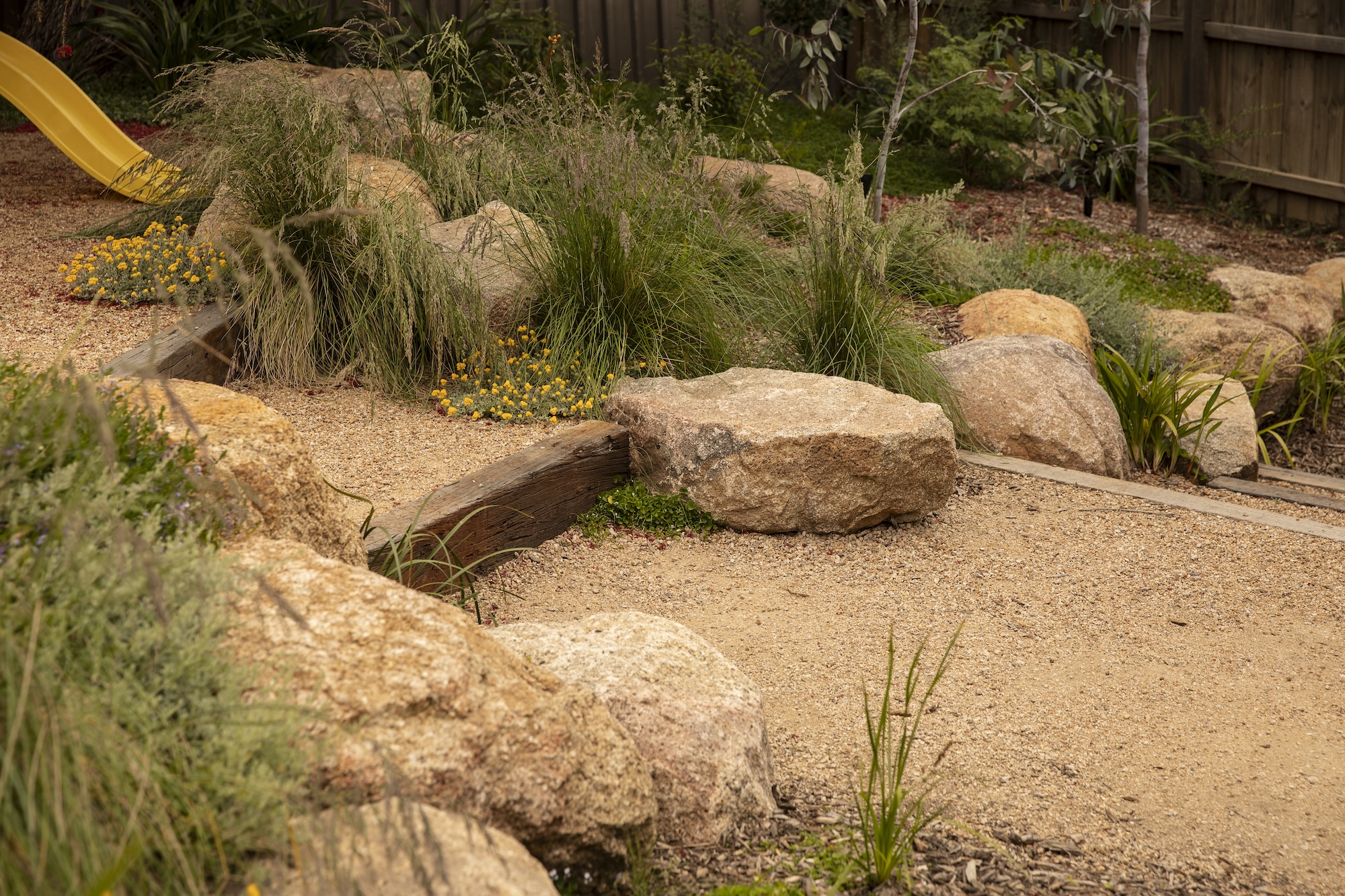
Situated on a generous 678m² inner-urban block, the space allowed for deep garden beds, enabling the planting of large native trees while maintaining open lawns for practical family use. The garden was laid out to cater to the young family, with areas for the children to explore among granite boulders and under the shade of mature trees.
Early planning addressed site constraints, such as street parking, which was resolved by integrating parking into a welcoming front garden that offers an array of plantings and a practical flow to the front door.
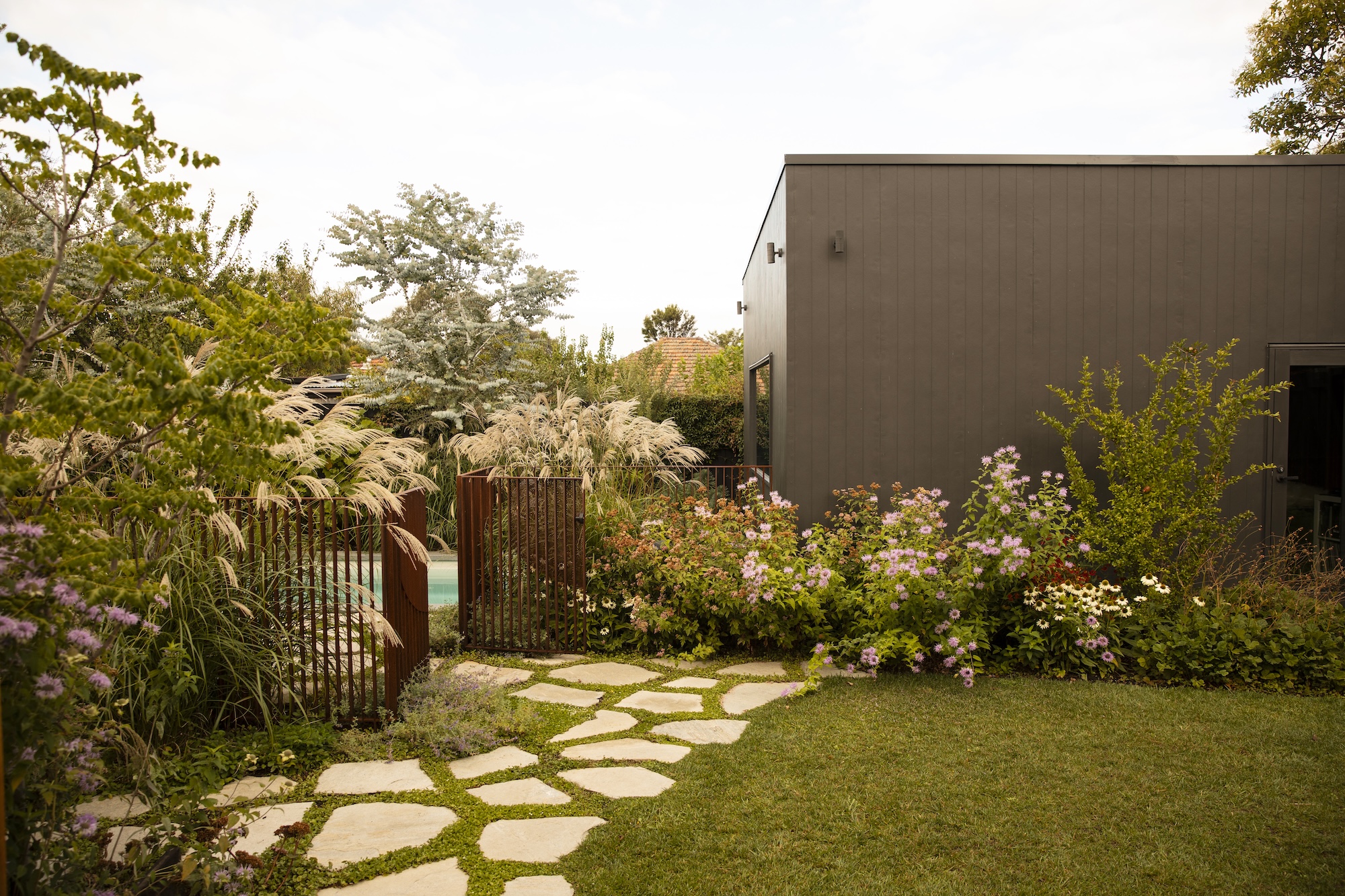
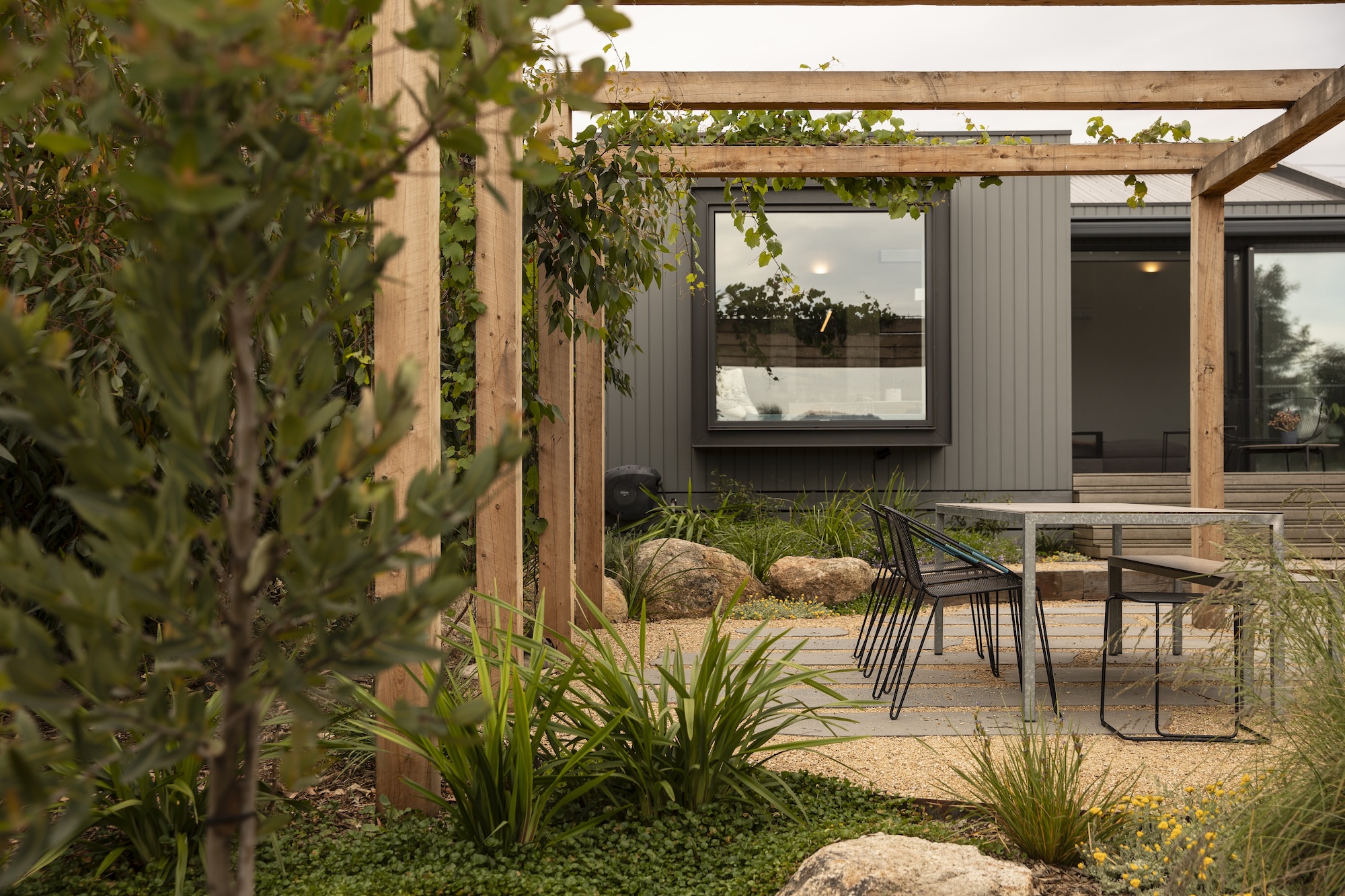
In the rear garden, the natural slope of the block was embraced through the use of terracing and material choices that served to connect the landscape. An arbor with ornamental grape vines and the careful placement of shade trees (including the pruned Callistemon) formed cool, usable spaces even during the hottest parts of the day. Sightlines from the house were well considered, with trees and structures positioned to create framed views, enhance privacy and increase the garden’s visual interest year-round.
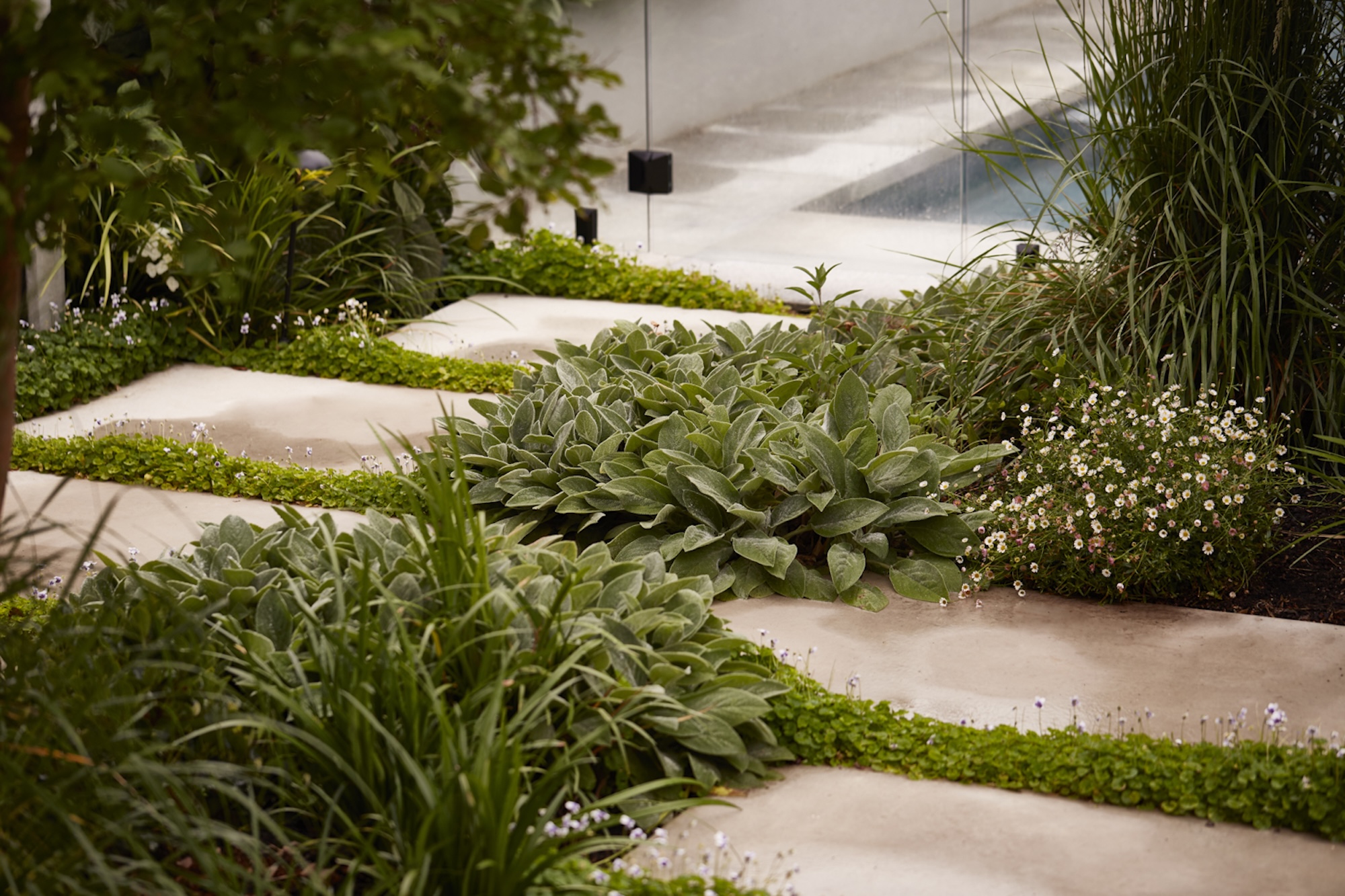
Plant selection was driven by a desire to encourage local wildlife, support a sustainable low-maintenance environment and provide rich sensory experiences. Trees such as Banksia integrifolia, Eucalyptus forrestiana, and Eucalyptus cladocalyx ‘Nana’ were planted in clusters for screening and structure, while sculptural species like Eucalyptus caesia, Eucalyptus pauciflora and Angophora hispida added form and seasonal interest. Ground covers like Scaevola ‘Mauve Clusters’ and Chrysocephalum apiculatum introduced long-flowering colour to soften hard surfaces, while indigenous grasses and flax such as Poa poiformis and Dianella tasmanica contributed texture and movement throughout.
To add depth and contrast, shrubs like Calothamnus quadrifidus, Spyridium parvifolium, and Correa species were positioned strategically against walls and fences, highlighting their leaf shape and colour. Shrubs and flowering plants were used to frame transition spaces and garden edges, enhancing the immersive quality of the garden.
The design favoured species that provide habitat and food for local fauna, with vibrant and accessible plantings at kid-height (such as kangaroo paws, Scaevola and Chrysocephalum), encouraging interaction.
The result
The garden has grown into an engaging, ecologically mindful space with distinct areas the family can enjoy. The bird life has increased noticeably, and there’s even been lovely engagement from pedestrians walking by, who can feel and admire the plants leaning over the footpath.


Plant palette
The majority of plants chosen here are beneficial to the local wildlife and are low maintenance, which is important for a large garden looked after by a young family.
Shrubs
Calothamnus quadrifidus (one-sided bottlebrush)
Correa spp. (Australian fuchsia)
Grevillea spp.
Indigofera australis
Spyridium parvifolium (dusty miller)
Designer tip: Plant these against flat surfaces such as fences or walls to highlight their leaf form and colour in contrast.
Groundcovers
Chrysocephalum apiculatum (common everlasting)
Scaevola ‘Mauve Clusters’ (fan flower)
These groundcovers flower for long periods, scrambling between boulders or over the edges of paths to soften hard landscaping.
Native trees
Angophora hispida (dwarf apple)
Banksia integrifolia (coast banksia)
Eucalyptus caesia (silver princess)
Eucalyptus cladocalyx ‘Nana’ (dwarf sugar gum)
Eucalyptus forrestiana (fuchsia gum)
Eucalyptus pauciflora (snow gum)
Grasses, flaxes & accent planting
Anigozanthos spp. (Kangaroo paws)
Chrysocephalum spp. (everlasting)
Dianella tasmanica (flax lily)
Orthrosanthus multiflorus (morning iris)
Poa poiformis (blue tussock grass)
Scaevola spp. (fan flower)


Landscape design by Ben Saunders Landscapes
Photography by Martina Gemmola
—
Ben Saunders Landscapes
The Ben Saunders Landscapes team designs and builds native gardens across Naarm, Melbourne suburbs. They are small team of landscape designers and construction specialists that care about the natural environment and how native gardens can help facilitate a connection to Australian landscapes.