
Creating this Canterbury garden meant factoring in weather extremes, while also designing around a central entertaining pavilion, anchoring it to the surrounding landscape.
This story was first told Sage Vol. 1: Life among plants
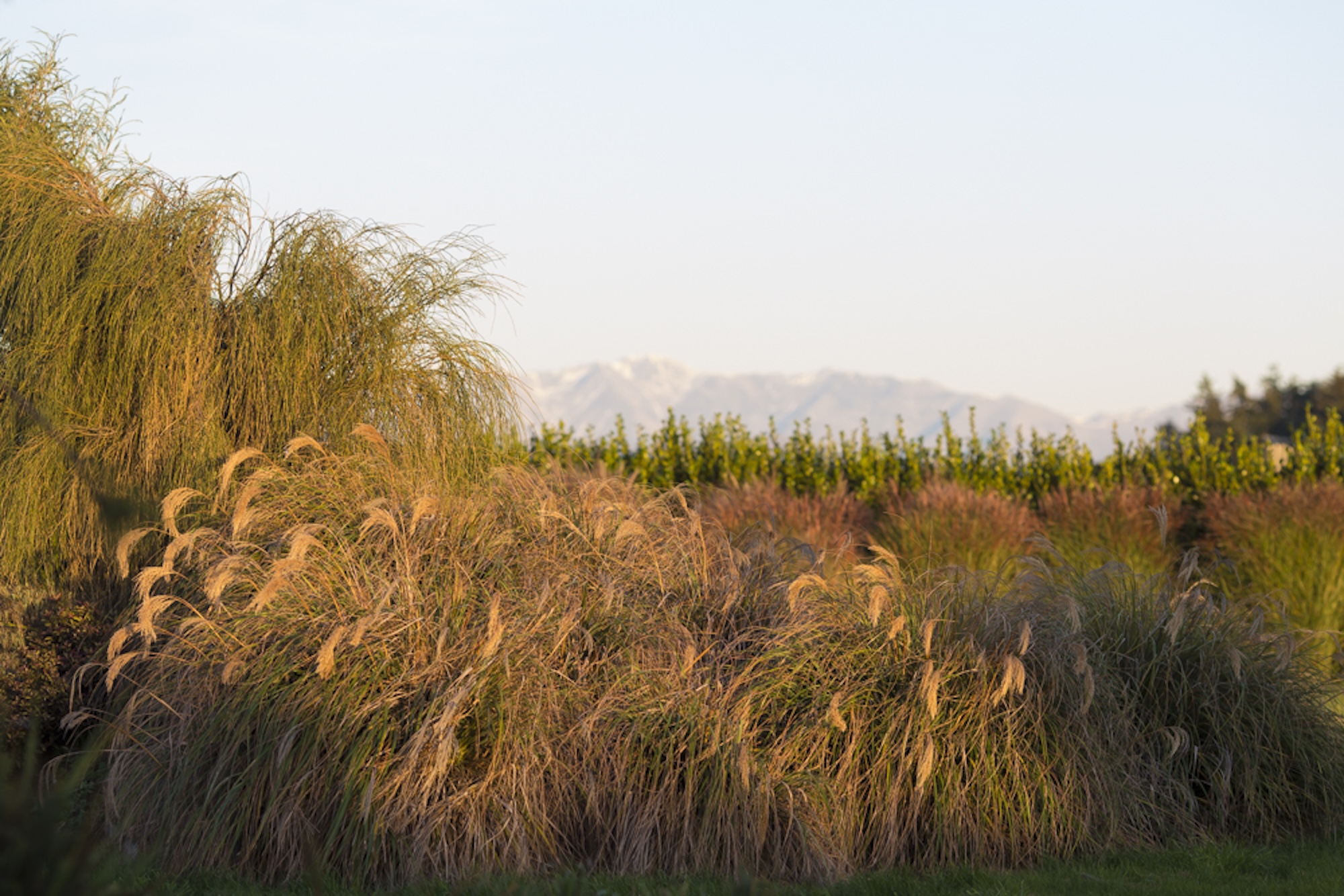
Waitaha Canterbury is known for its wide landscapes and views to the Southern Alps. Hot in summer, cold in winter and often blasted by warm north-westerly winds. This gives you a lot to think about when trying to design a garden that looks good, fits with the wider landscape and is able to survive the elements.
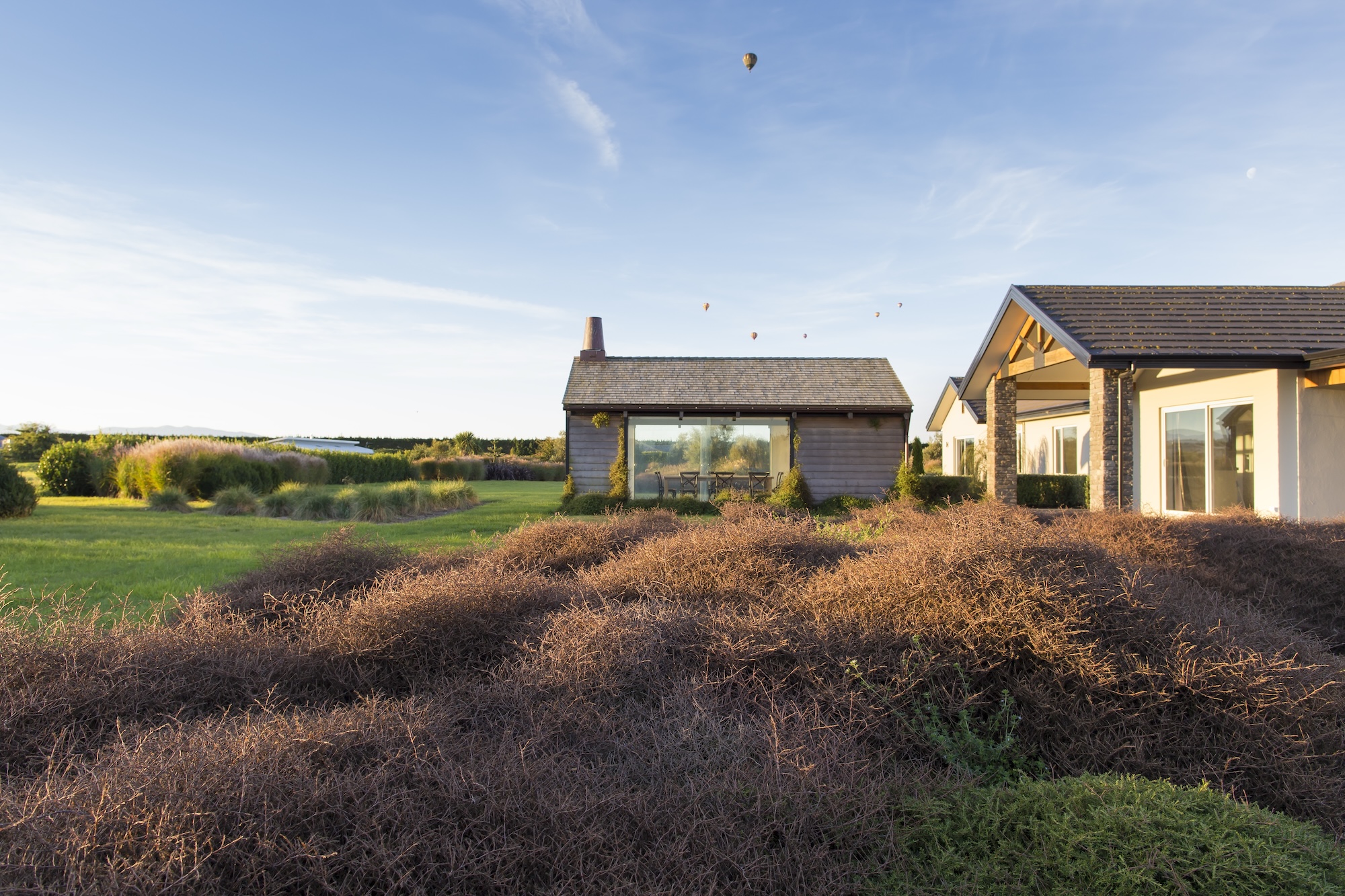
Henry Blakely of Henry Blakely Landscapes has designed a garden that meets these challenges without sacrificing style. Located in Darfield, the site has the characteristic Canterbury outlook of big skies touching the Southern Alps in the distance. The brief was to create something that fits the homeowners’ lifestyle: a place to relax, unwind and enjoy the views beyond, while keeping maintenance low.
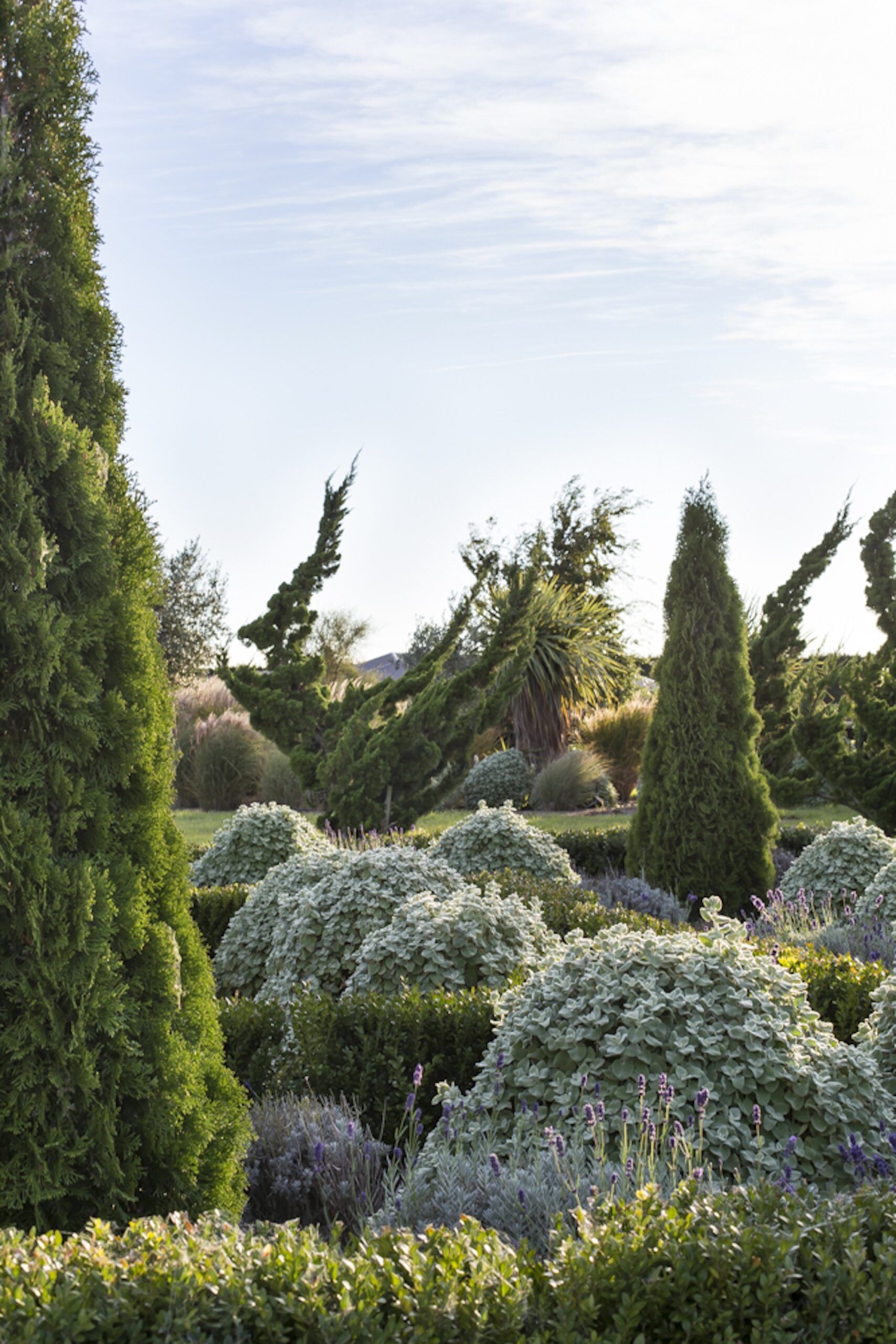
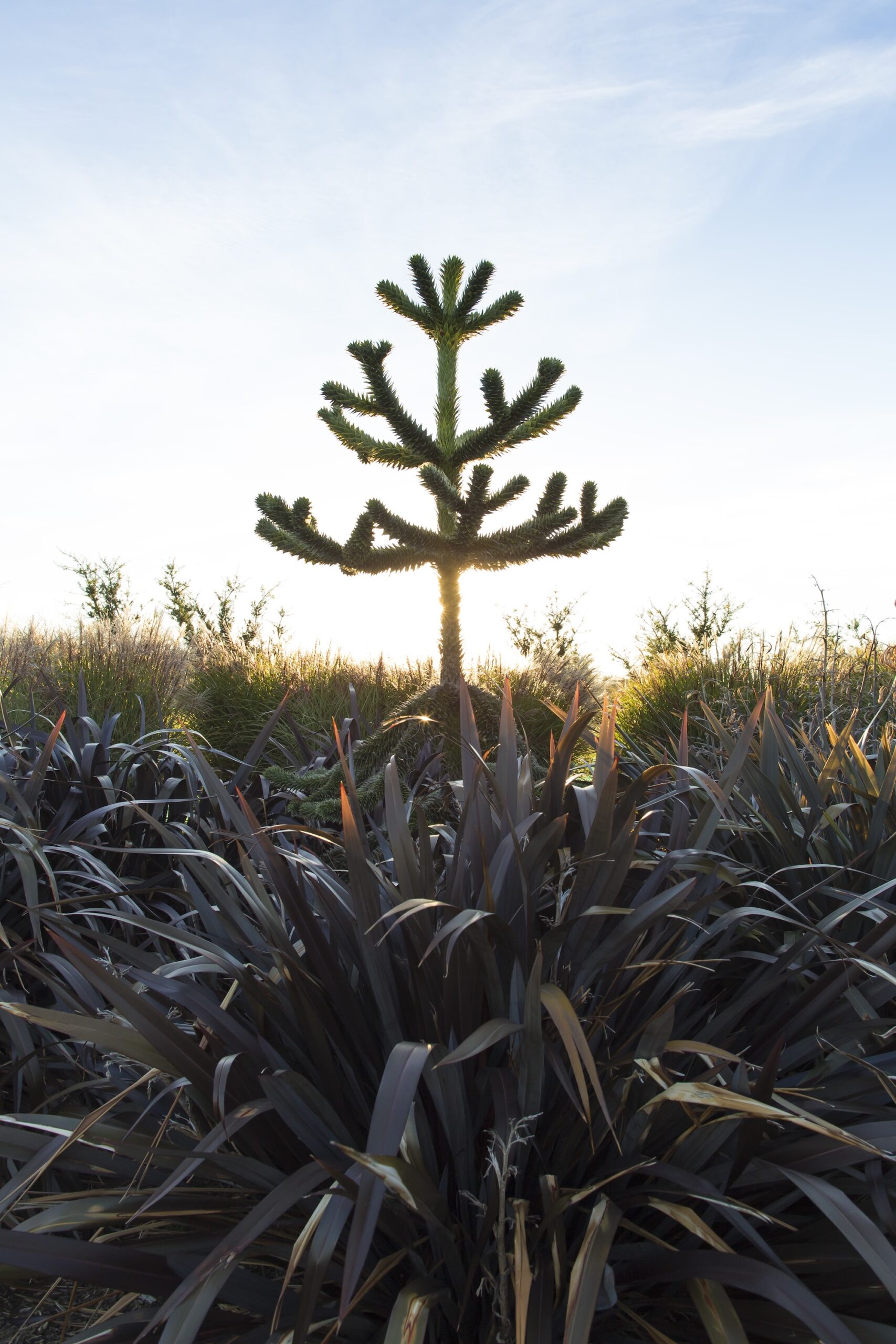
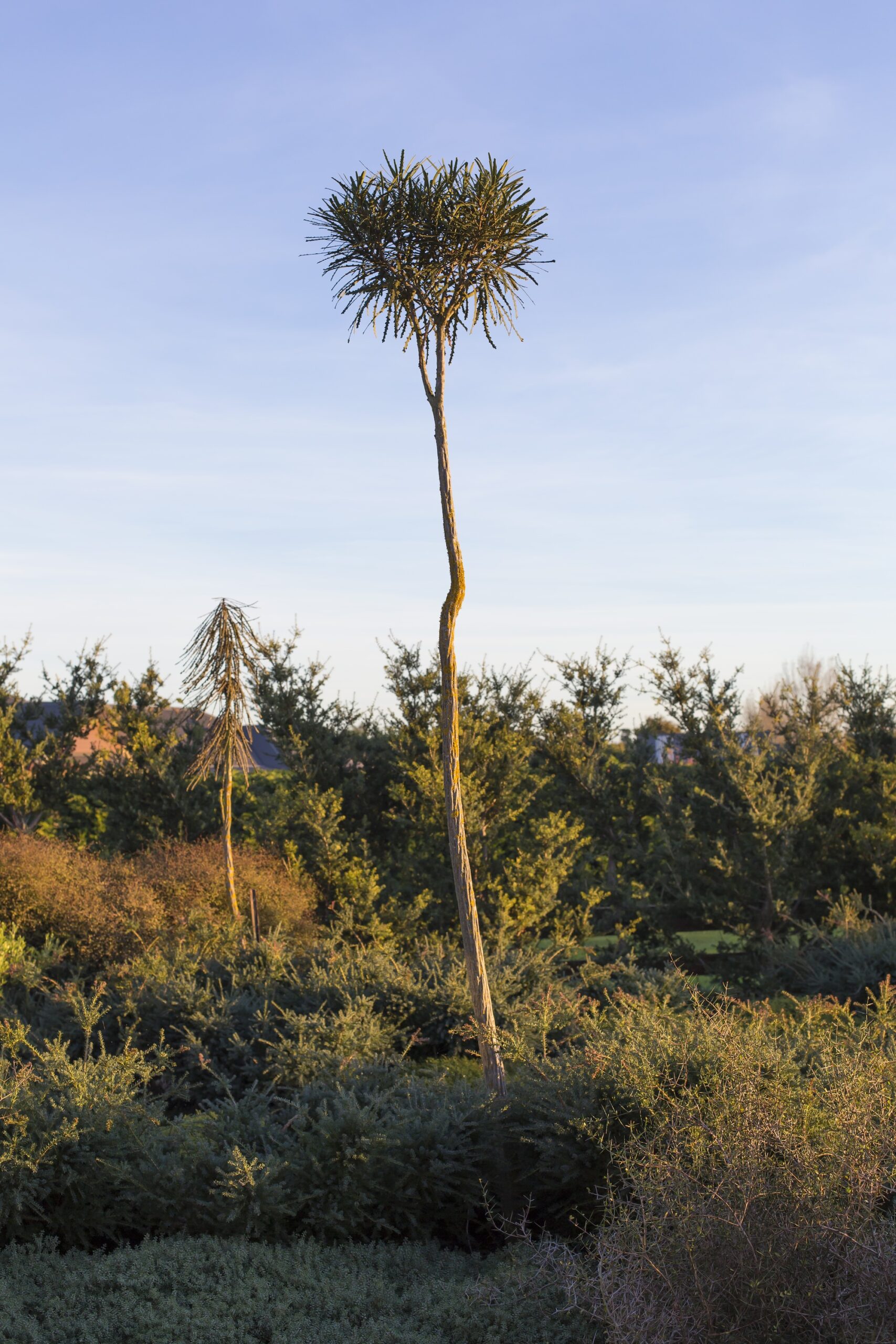
The garden also needed to meld with the unique “cookhouse” on the property – a modern take on the Native American cookhouse. This standalone entertainment area, mostly enclosed by glass, serves to fend off the region’s chilly easterly winds, while offering near-panoramic views of the garden. Planting, therefore, had to look good from every angle.
On the vast 4,000 square metre site, pathways and straight lines define the everyday spaces, balanced by curved garden beds and open lawn that lead your eye towards the mountains. Plenty of space for the young family to enjoy the garden.
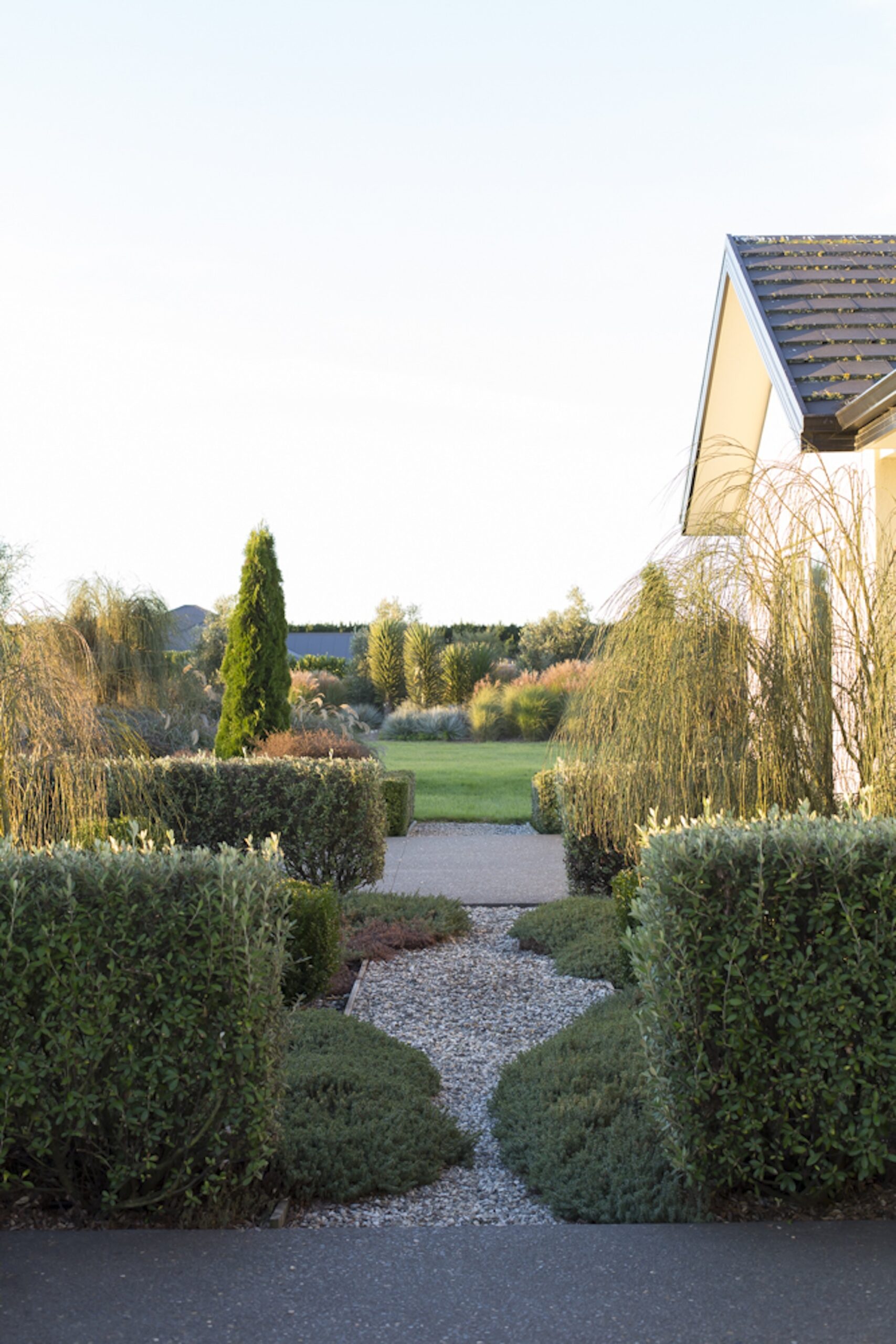
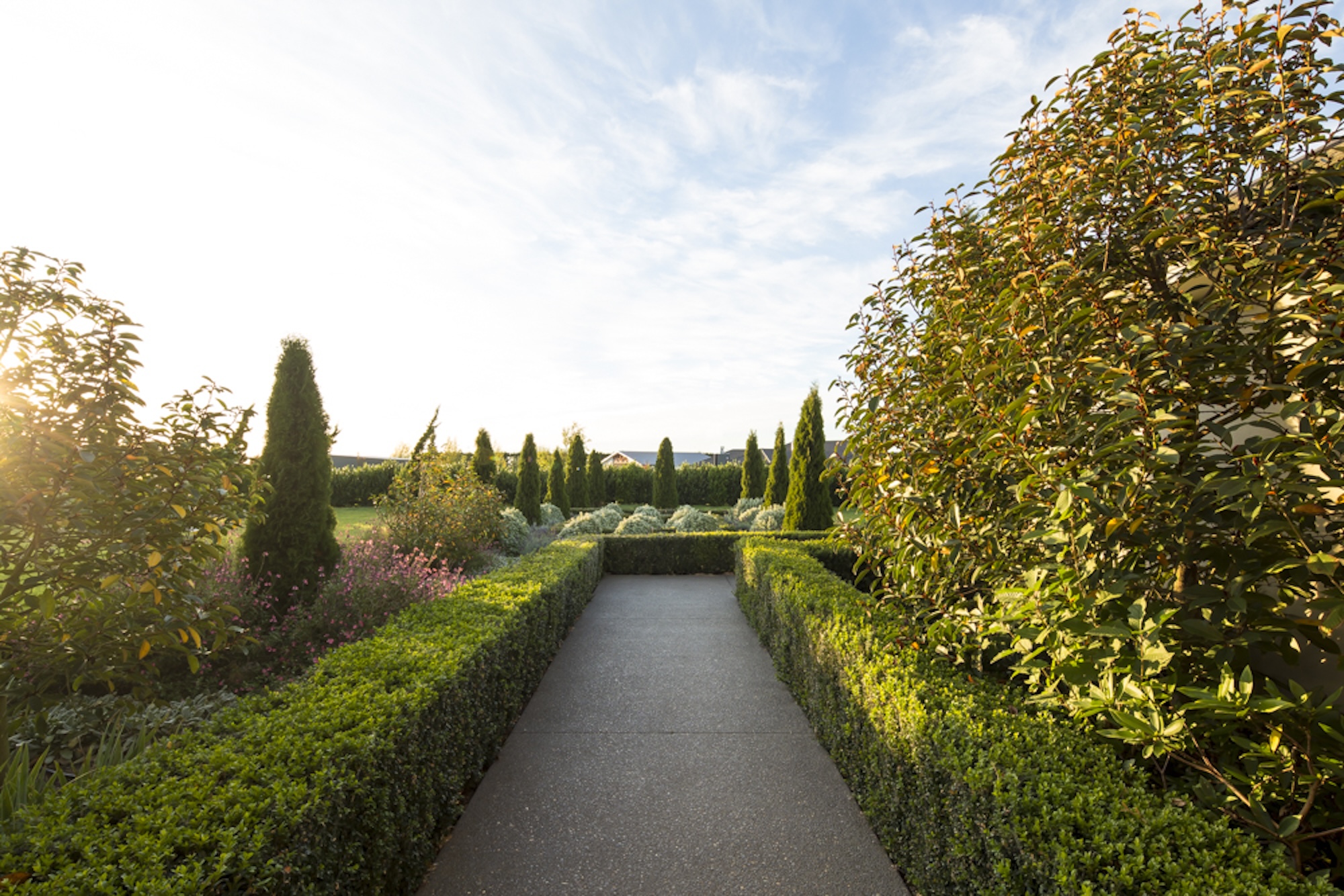
While the wider planting of this large garden is textured and wild- feeling, pathways, straight lines and more formal plant combinations
define the spaces around the house.
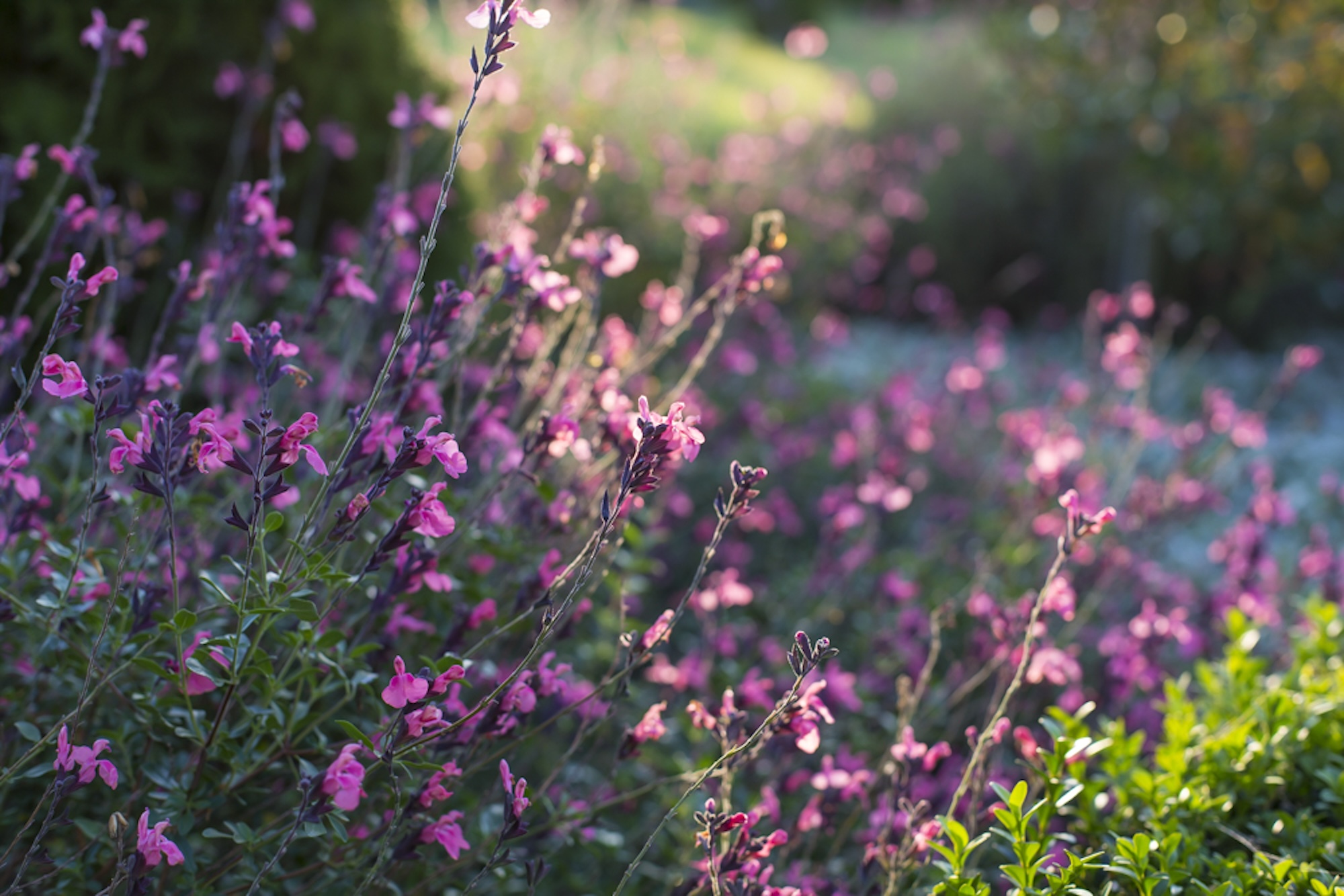
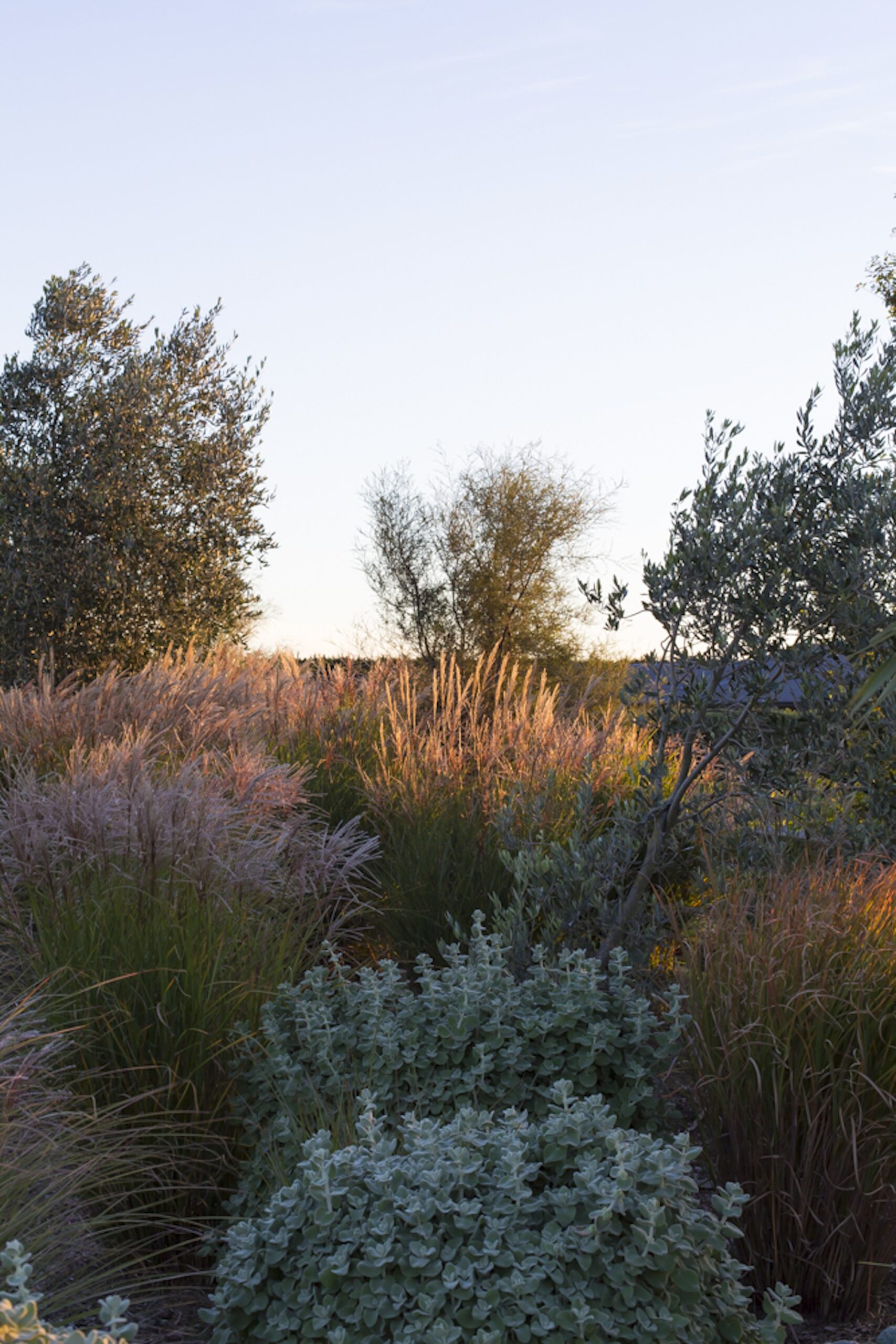
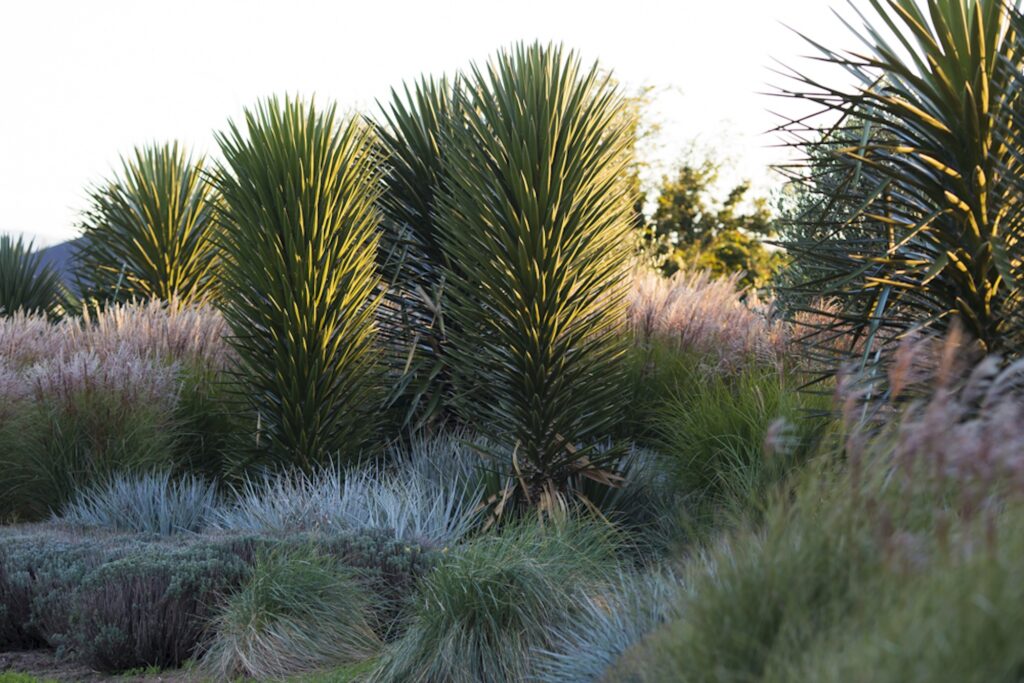
The design philosophy was about creating texture, movement and visual depth. The use of tall grasses in particular help achieve this. Local hardy plant varieties mean the garden can withstand the elements and blends seamlessly into its environment. Low-maintenance planting is a defining feature, with dense layers chosen to naturally suppress weeds. Beyond a seasonal hedge trim and regular lawn mowing, the garden is largely self-sustaining.
The end result delivers privacy from the road, but preserves a sense of openness to the landscape. From the cookhouse, some days offer a tranquil view, on others, the garden dances with the rippling waves of tussocks and grasses.
Plant palette
Perennials & border plants
- Ballota pseudodictamnus
- Lavandula angustifolia (English lavender)
- Pimelea prostrata (New Zealand daphne)
- Puya venusta
- Salvia
Grass-like plants
- Chionochloa flavicans (miniature toetoe)
- Miscanthus sinensis ‘Morning Light’
- Phormium cookianum ‘Black Adder’ (mountain flax)
Trees & shrubs
- Araucaria araucana (monkey puzzle tree)
- Buxus sempervirens (common boxwood)
- Carmichaelia stevensonii (New Zealand broom)
- Coprosma ‘Red Rocks’
- Corokia ‘Geenty’s Green’
- Juniperus chinensis ‘Kaizuka’
- Olea europaea (olive)
- Pseudopanax ferox (toothed lancewood)
- Thuja occidentalis ‘Smaragd’