
Journey Beyond the Tracks: From Adelaide to Perth Garden was awarded a Silver-Gilt Medal at the 2026 RHS Chelsea Flower Show. The garden is sponsored by Journey Beyond,
South Australian Tourism Commission and Tourism Western Australia.
Landscape design by Max Parker-Smith of Maximillian Design
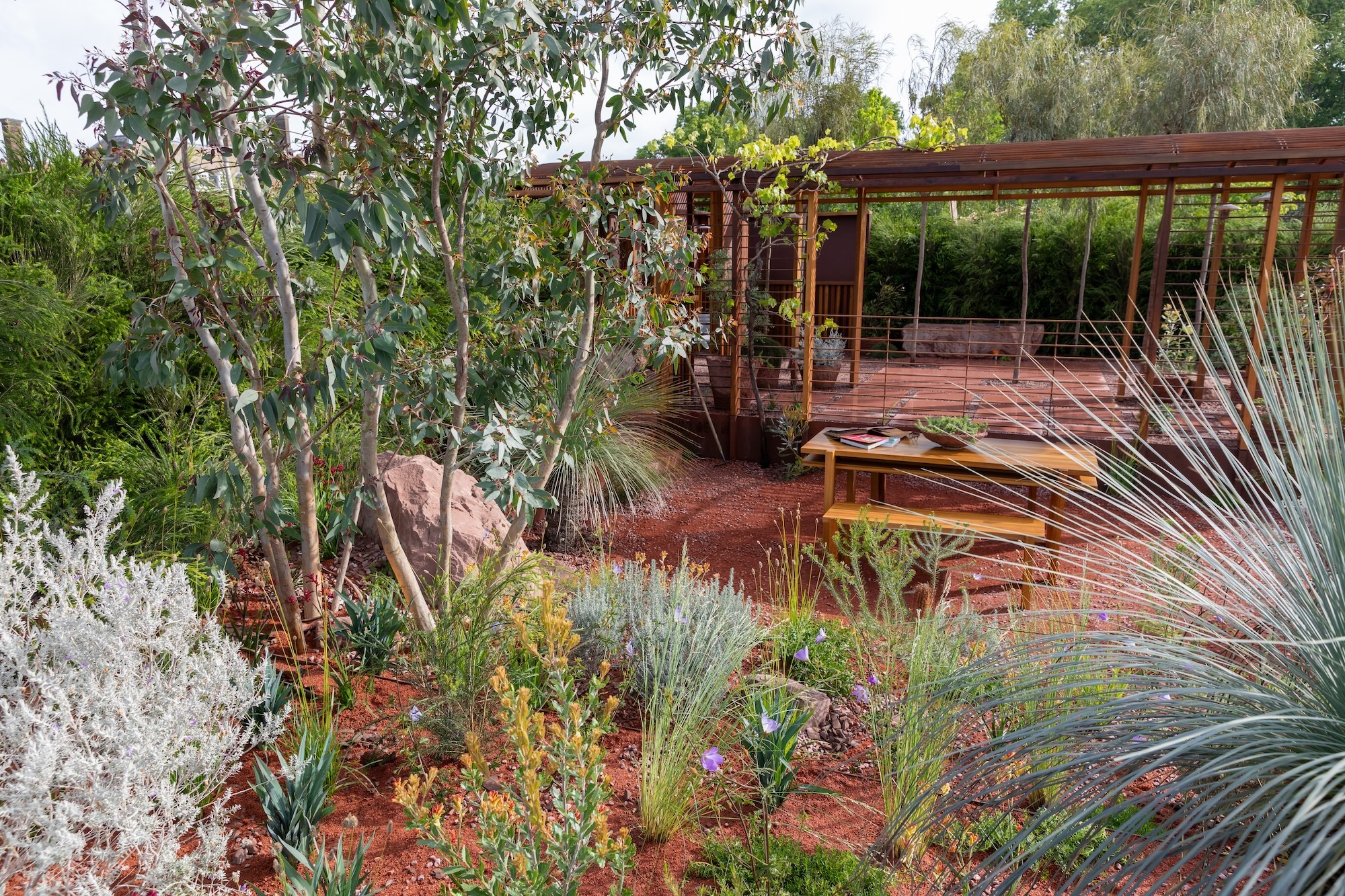
Inspired by a journey on the Indian Pacific railway between Adelaide and Perth, Max Parker-Smith’s Chelsea garden brought together two very different Australian landscapes. One side looked to Adelaide’s approach to urban greening, while the other drew on the distinctive Kwongan of Western Australia, using the journey between them to explore travel, biodiversity and plants adapted to increasingly challenging climates.
Two landscapes, one journey
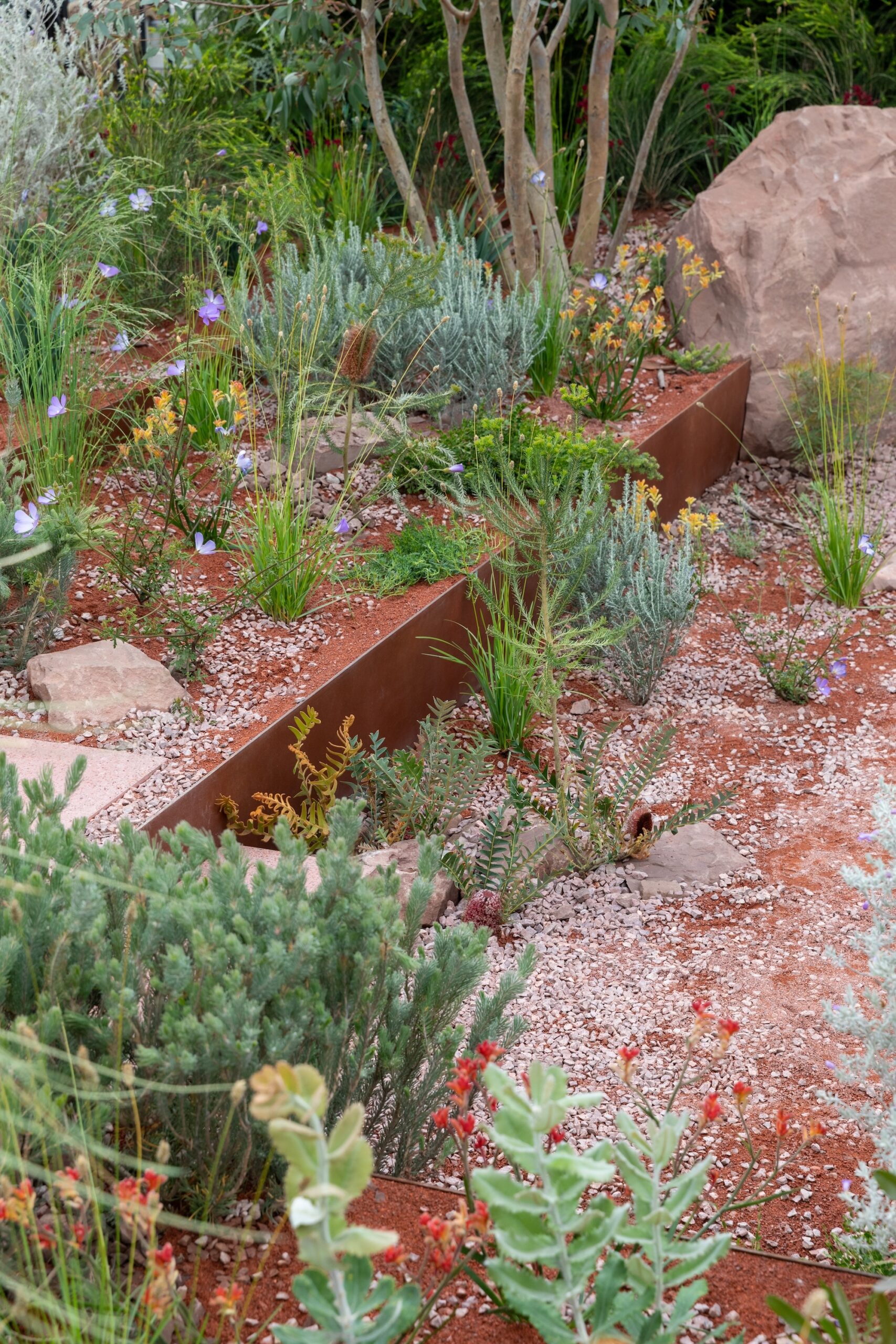
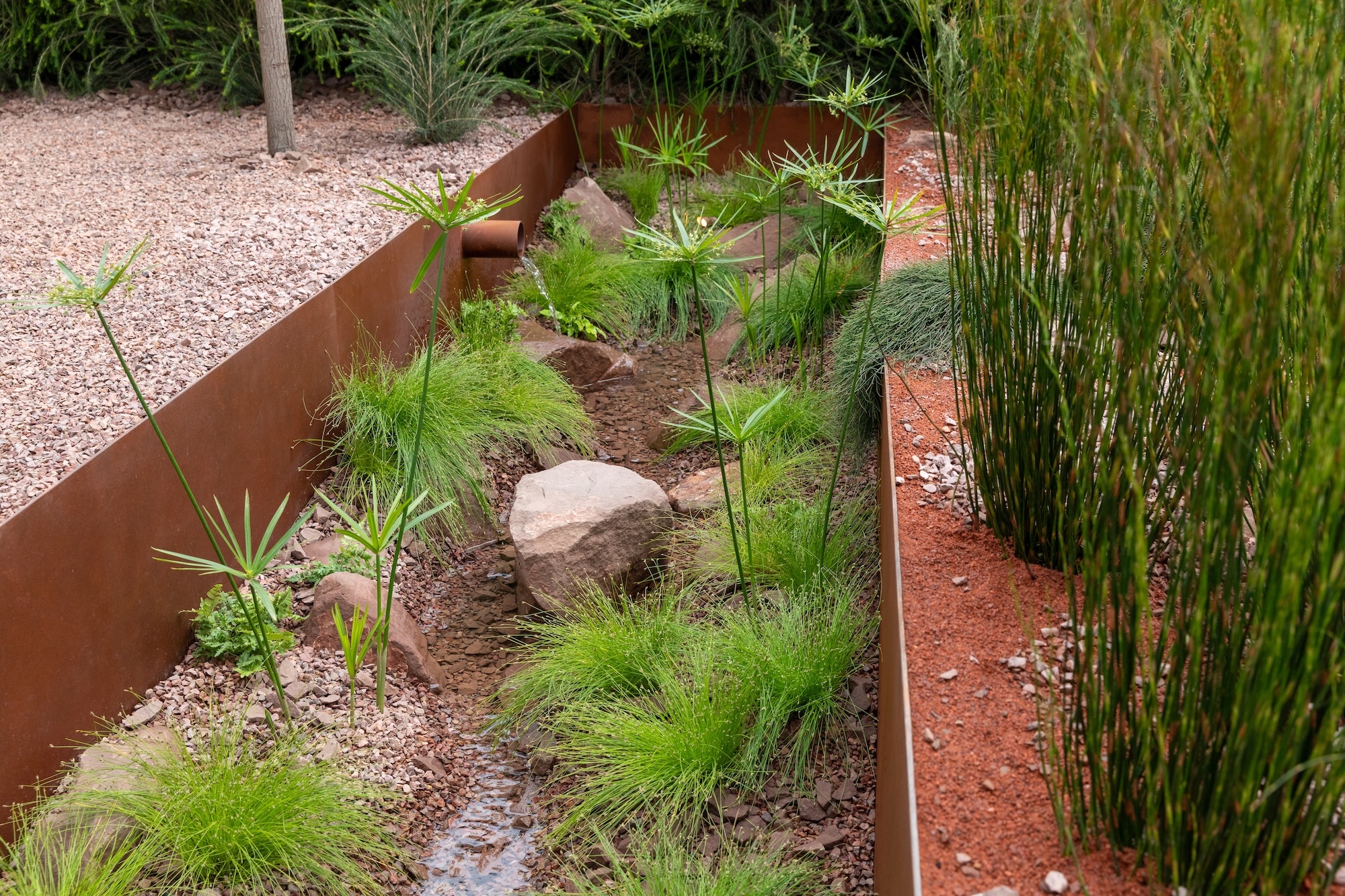
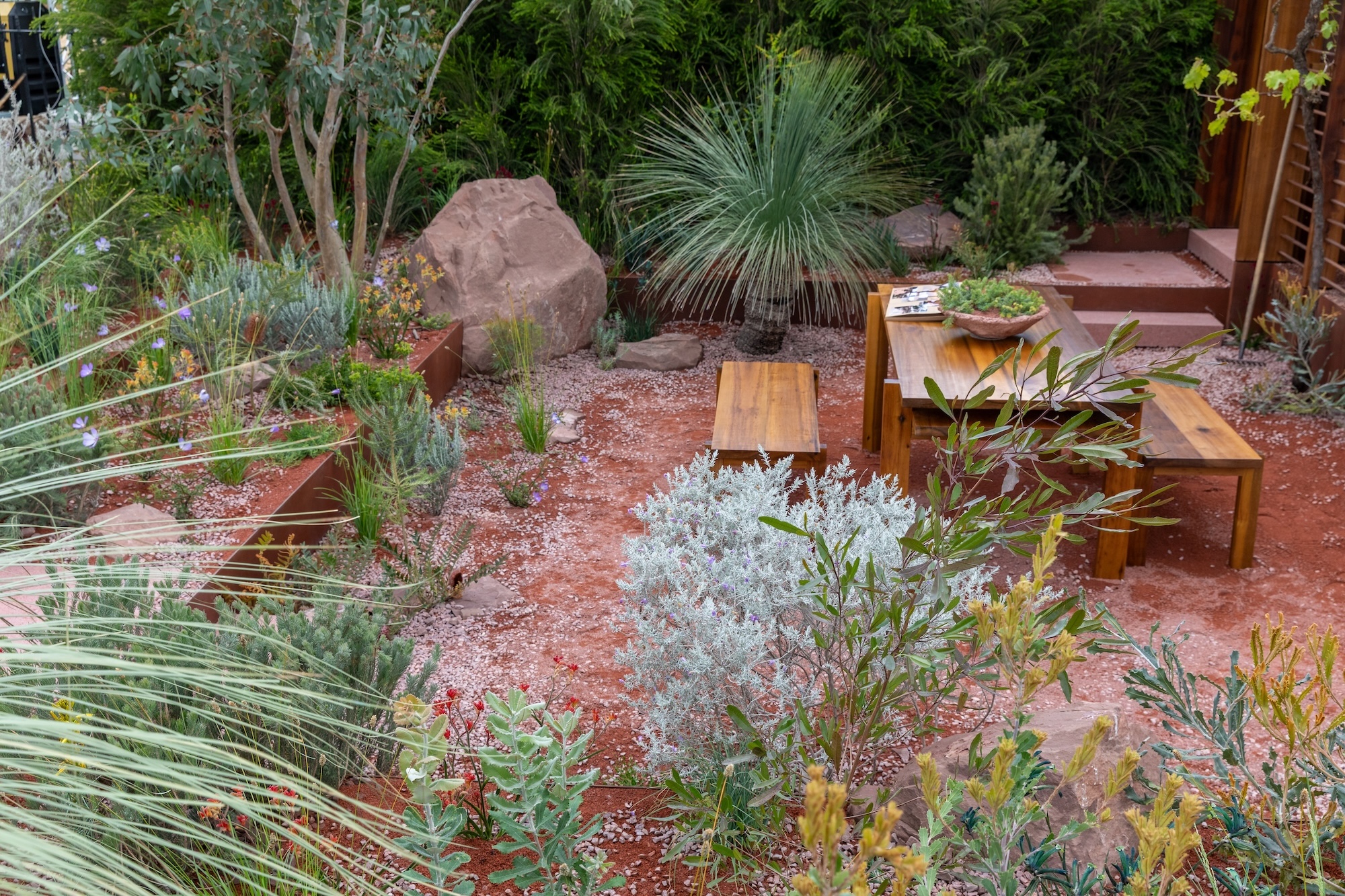
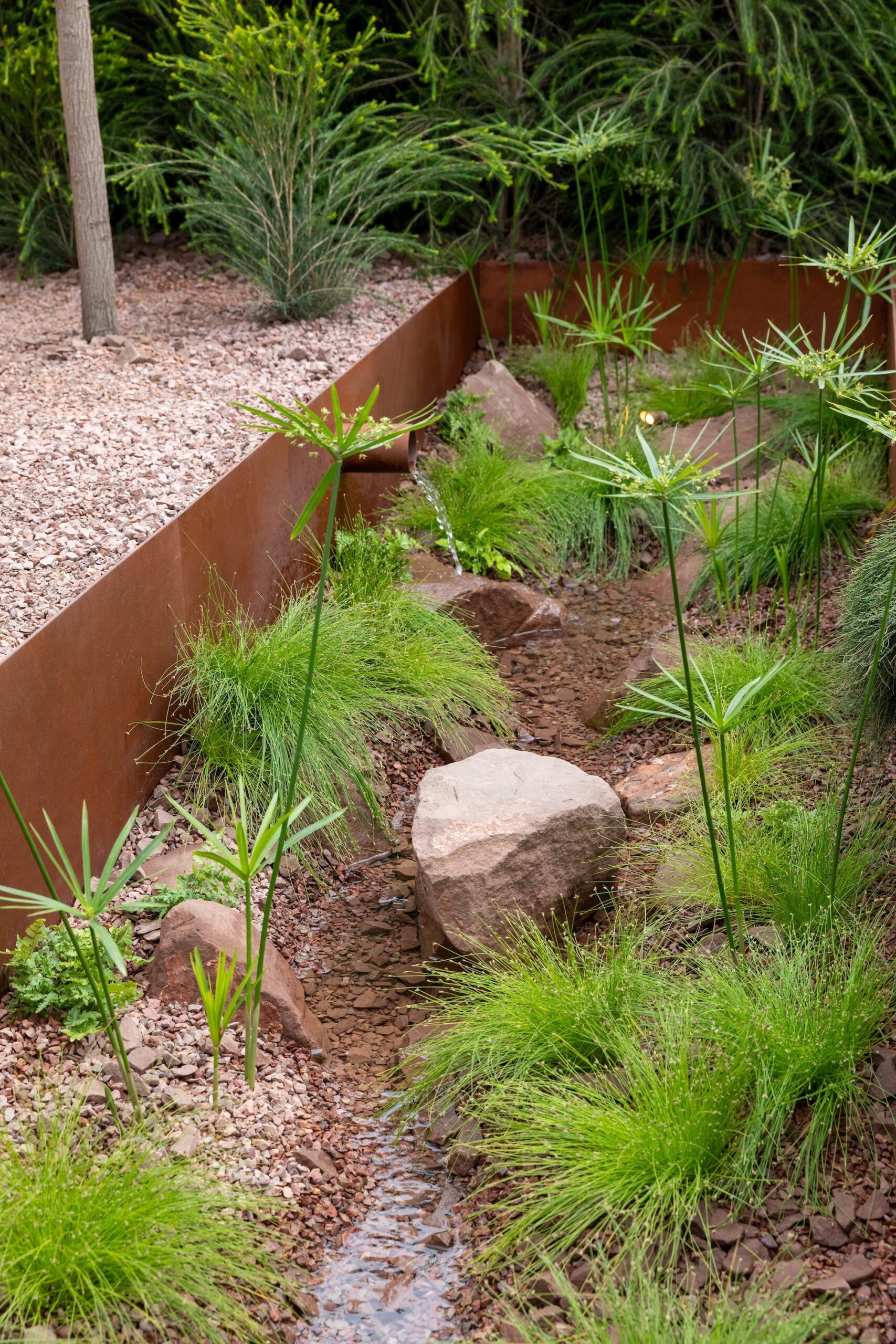
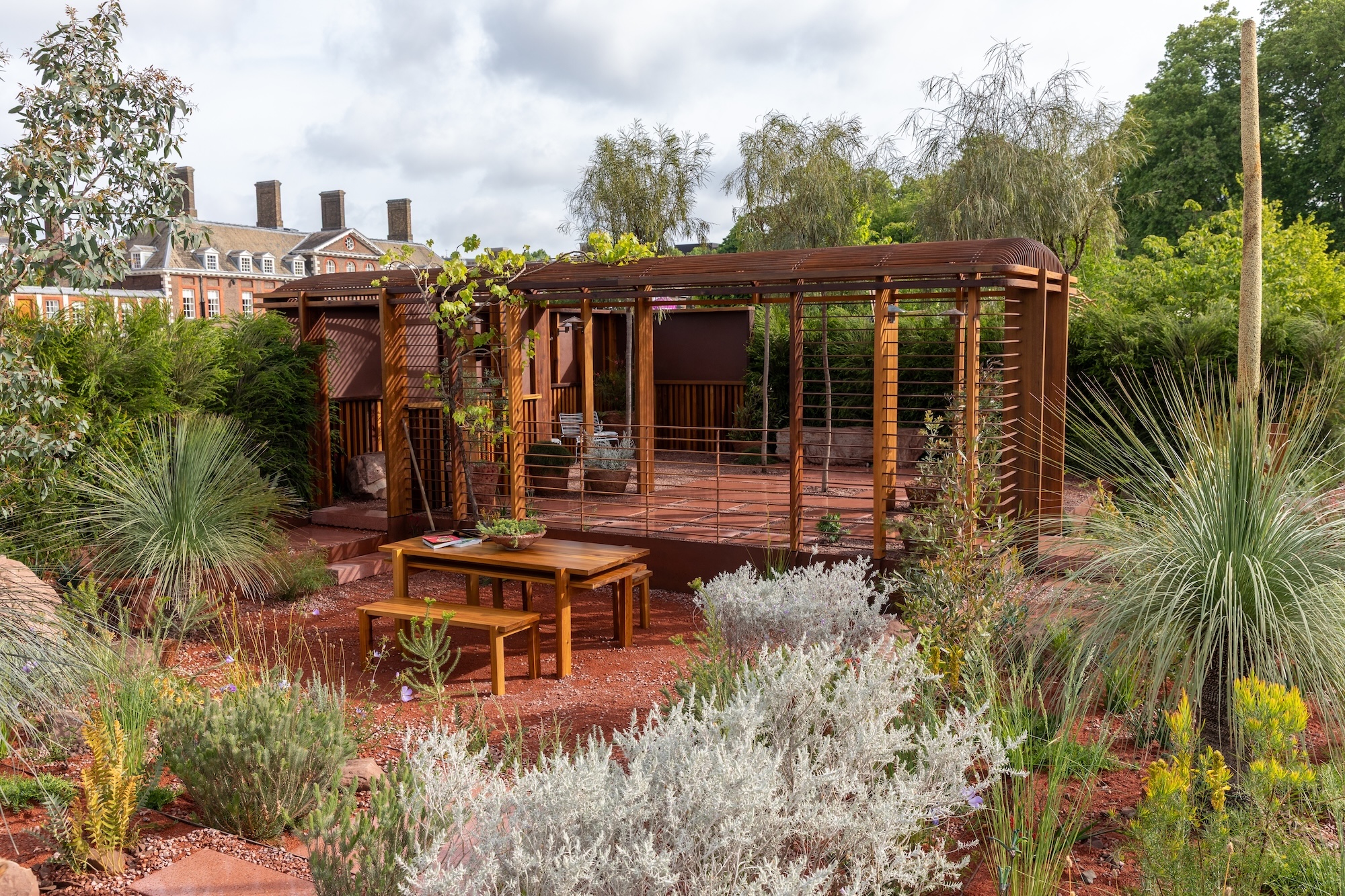
The garden was conceived as two distinct environments separated by a structure inspired by a railway carriage. On one side, a small urban forest referenced Adelaide’s National Park City status and the role vegetation can play within a growing city. On the other, Max looked to the Kwongan – the extraordinarily diverse shrublands and sand plains of Western Australia that made a lasting impression on him during his travels.
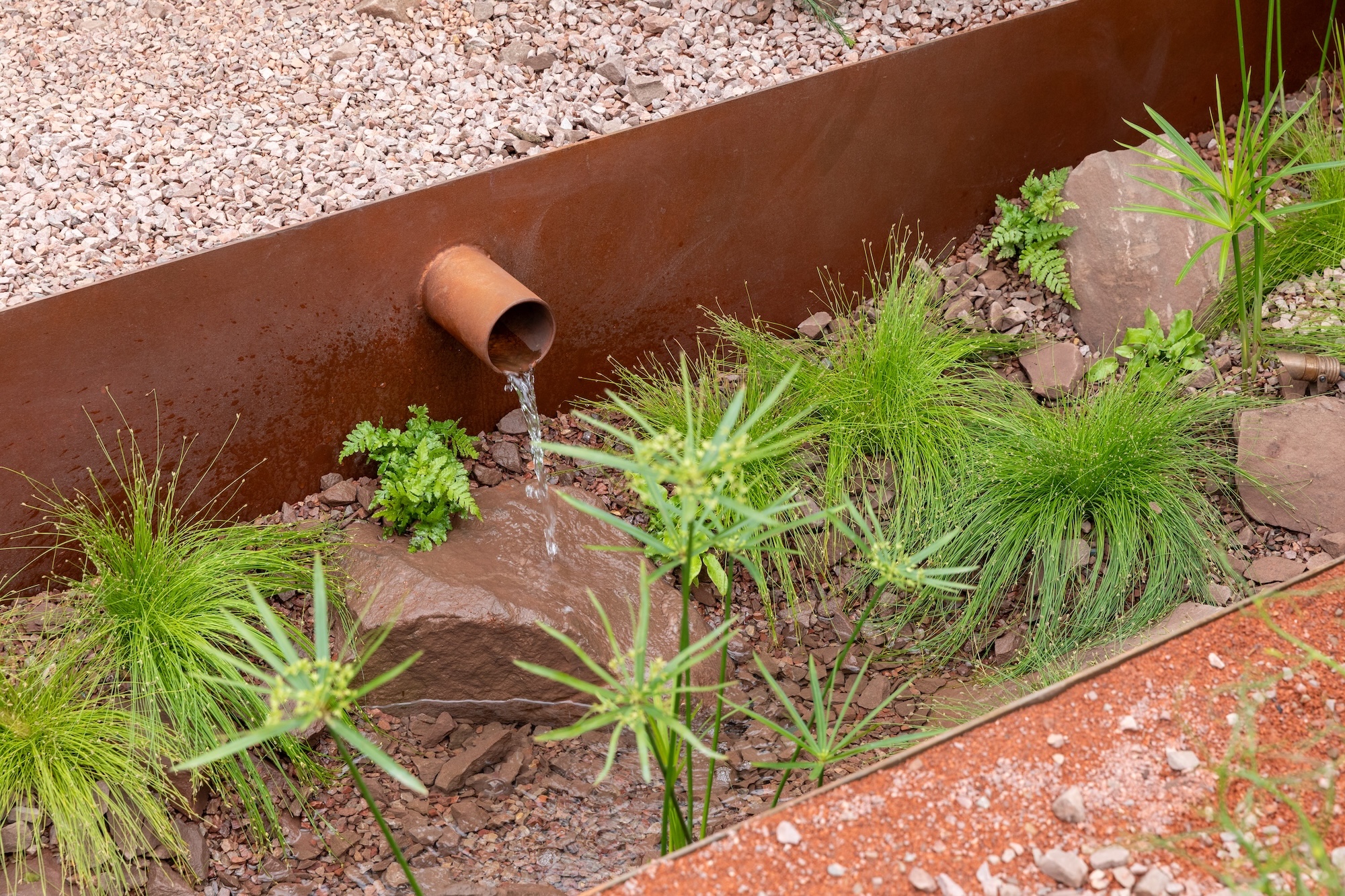
Rather than recreate either landscape literally, the garden distilled elements of each into a suburban setting. The contrast between the two sides became part of the experience, allowing visitors to move between an urban interpretation of South Australia and a planting scheme informed by the more open, nutrient-poor landscapes of Western Australia.
The wider idea was also about the value of travel itself. The garden grew from Max’s experience of crossing the two states by rail and the way encountering unfamiliar landscapes can change how we see the places we know.
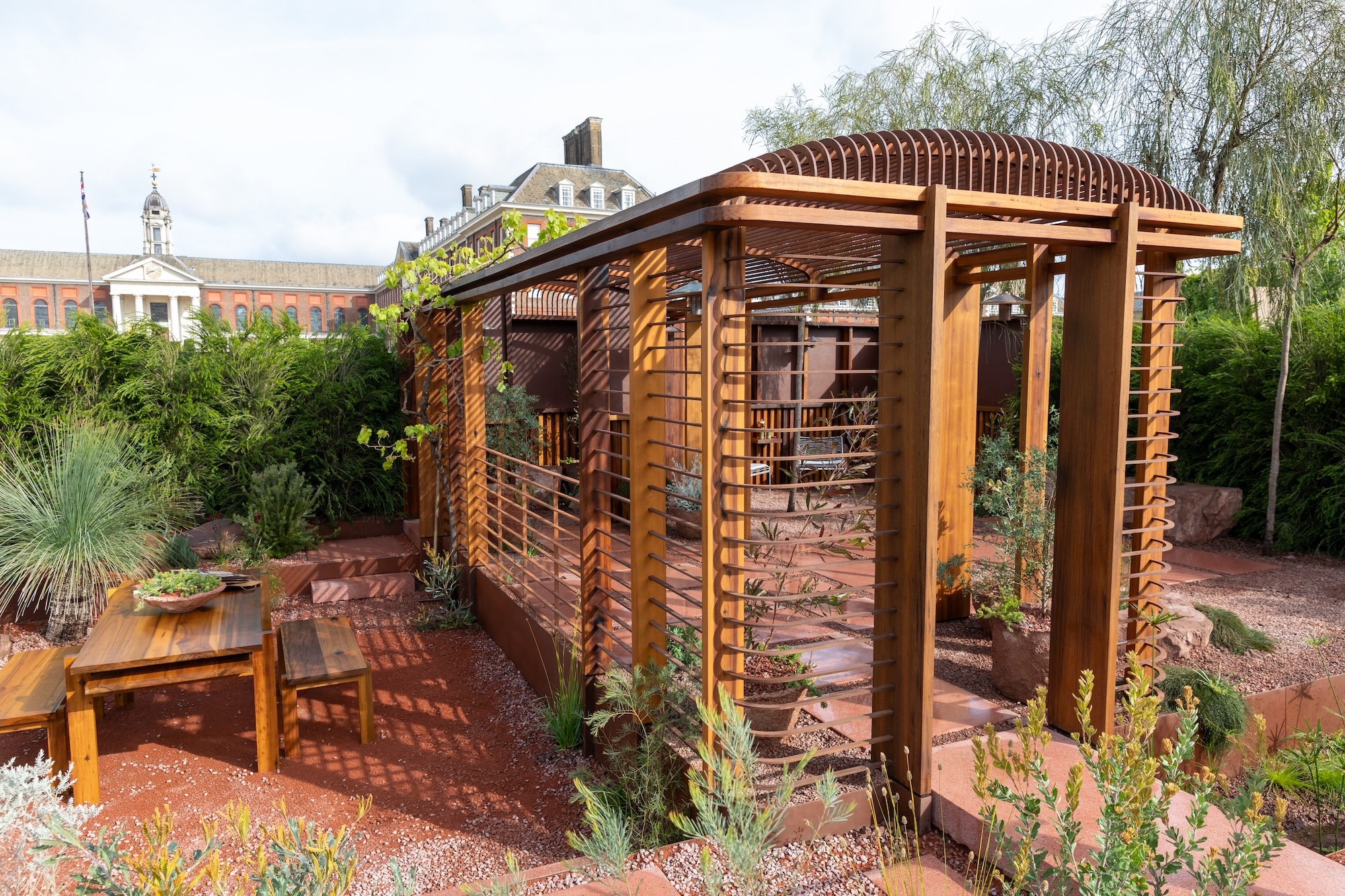
A carriage through the garden
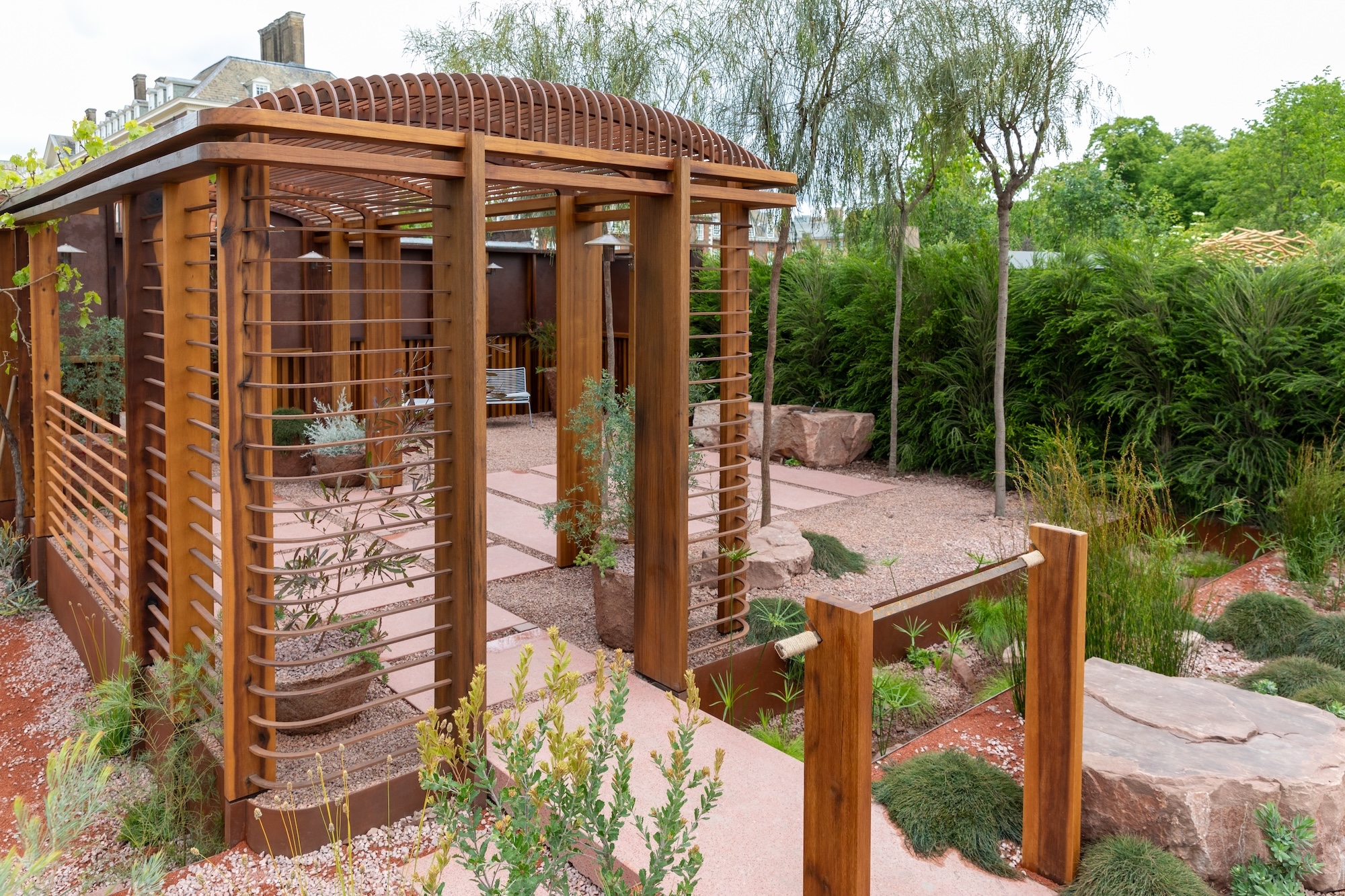
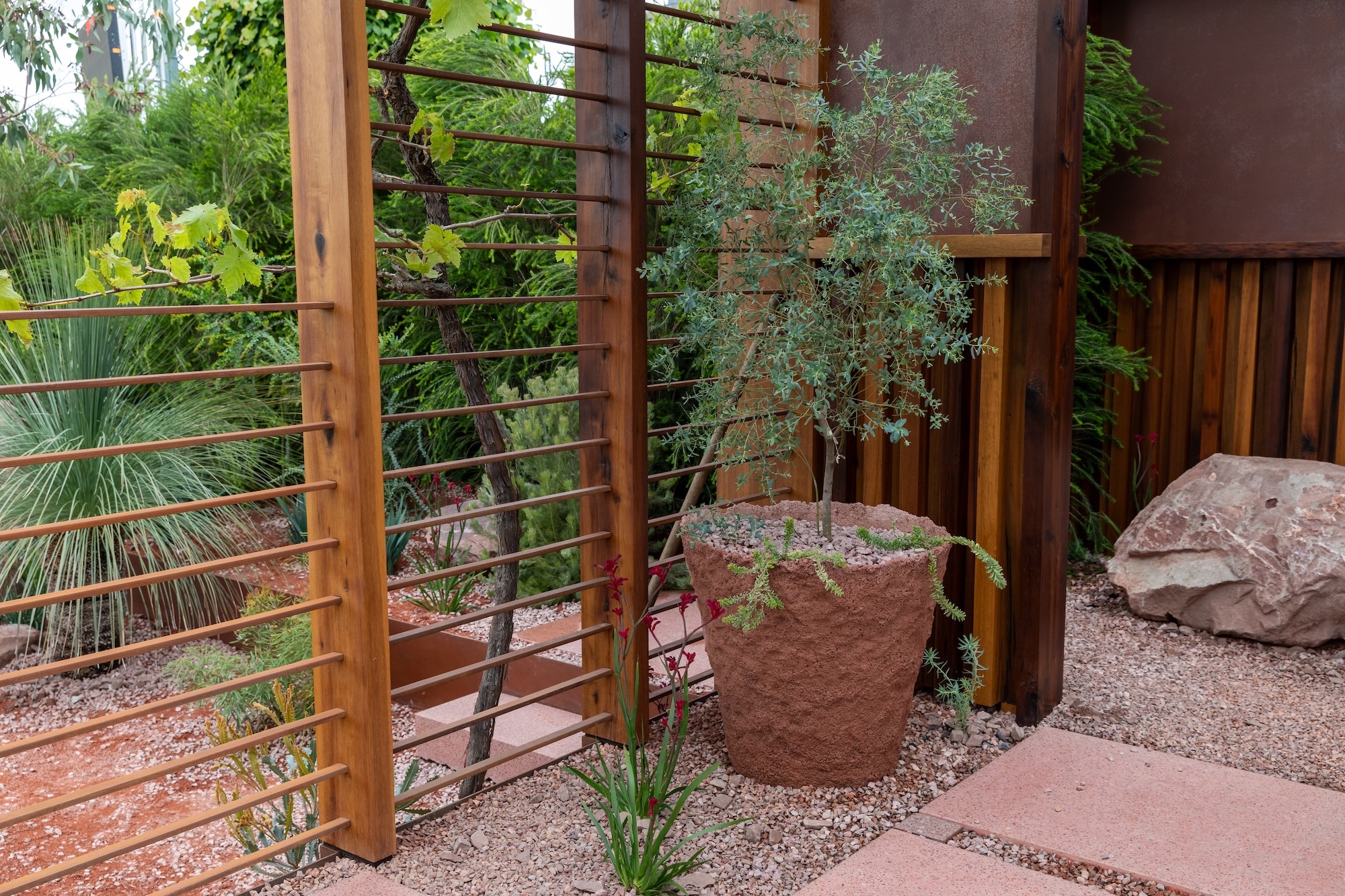
The central structure carried much of the garden’s story. Designed as an abstract interpretation of a train carriage, it divided the two planting environments while also providing a place from which both could be viewed. It took several attempts to get the structure right, with the final design the eighth version. Max wanted the train reference to be clear, but not so industrial that it dominated the garden.
Plants built for extremes
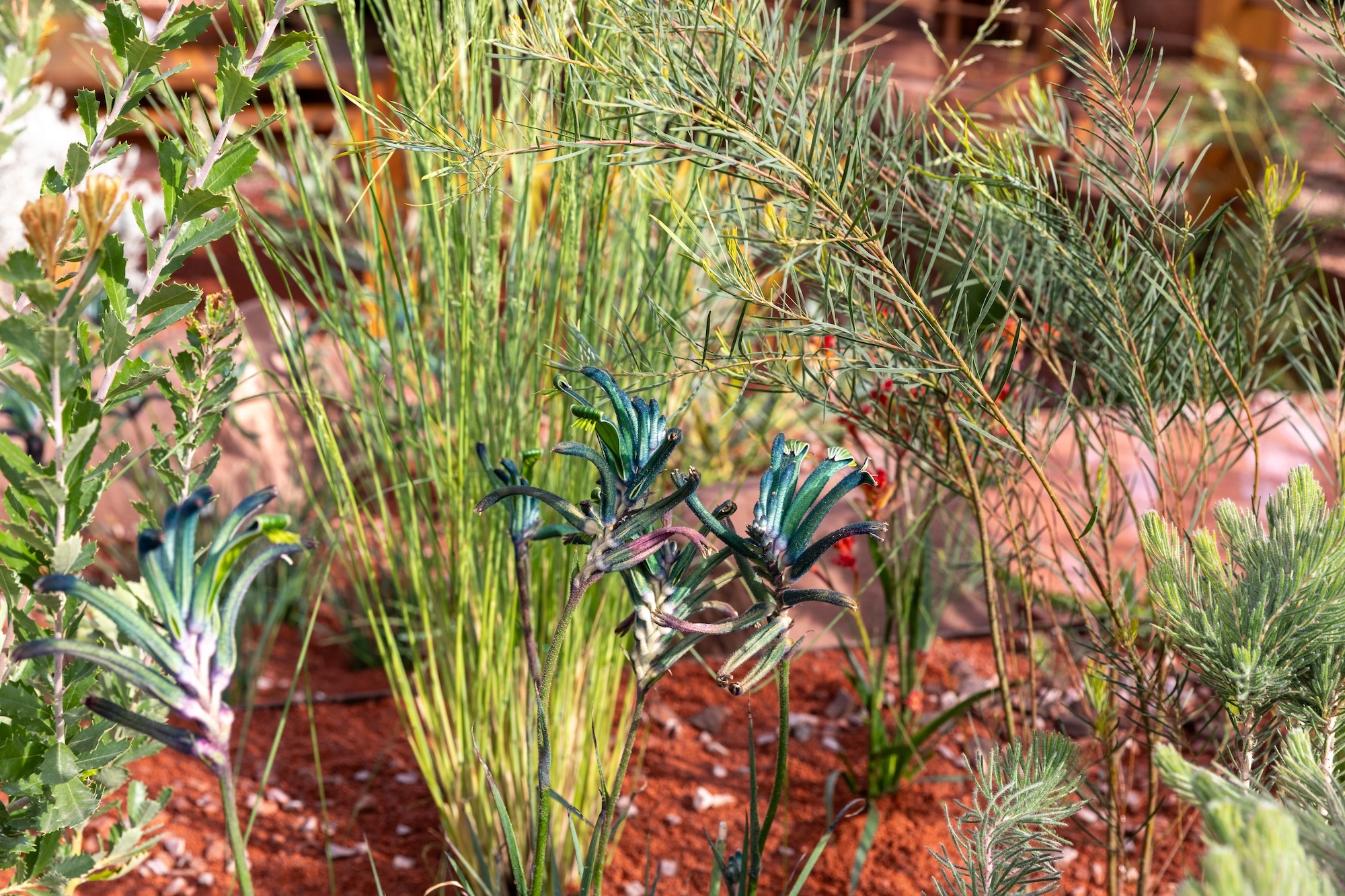
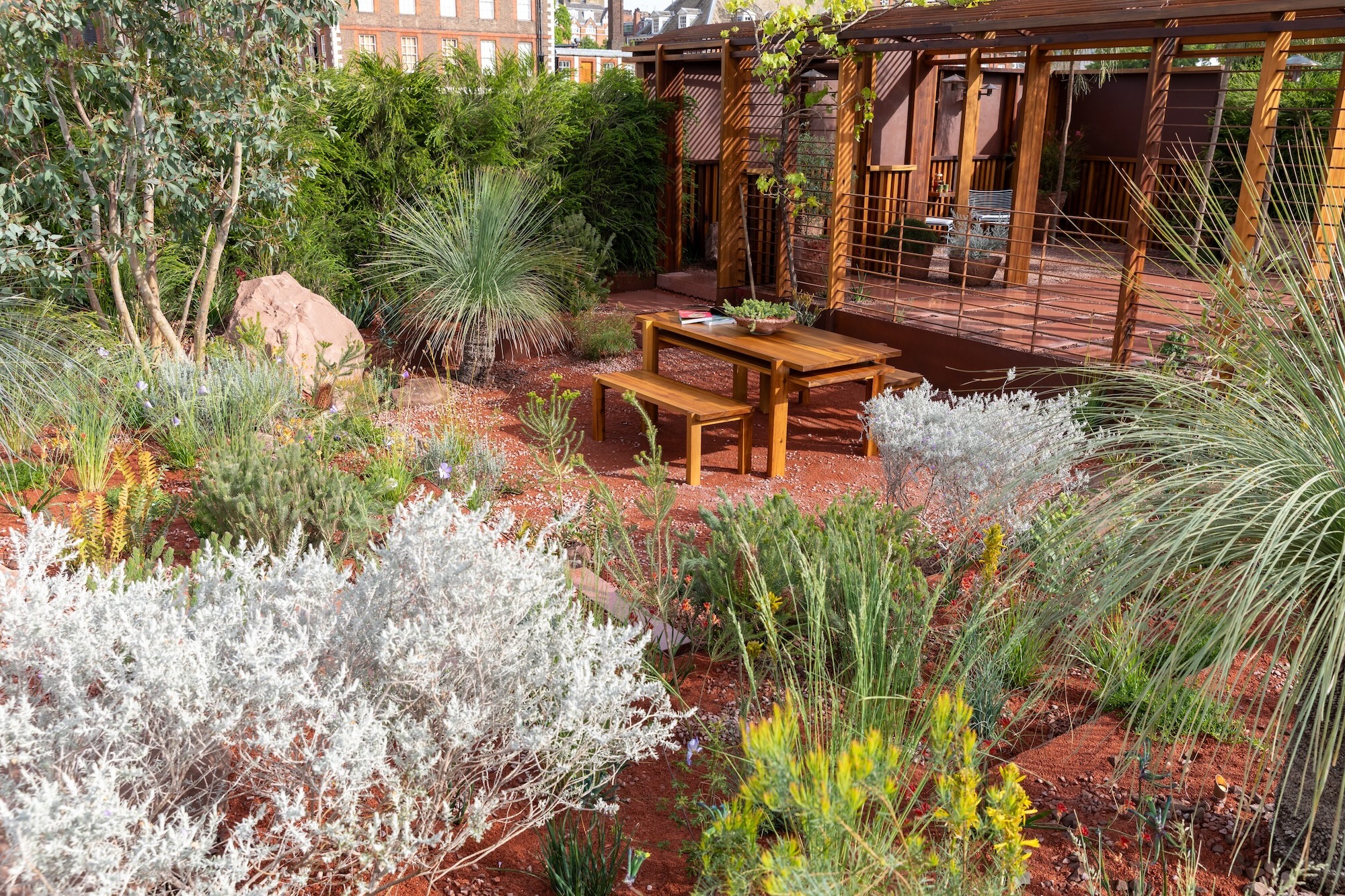
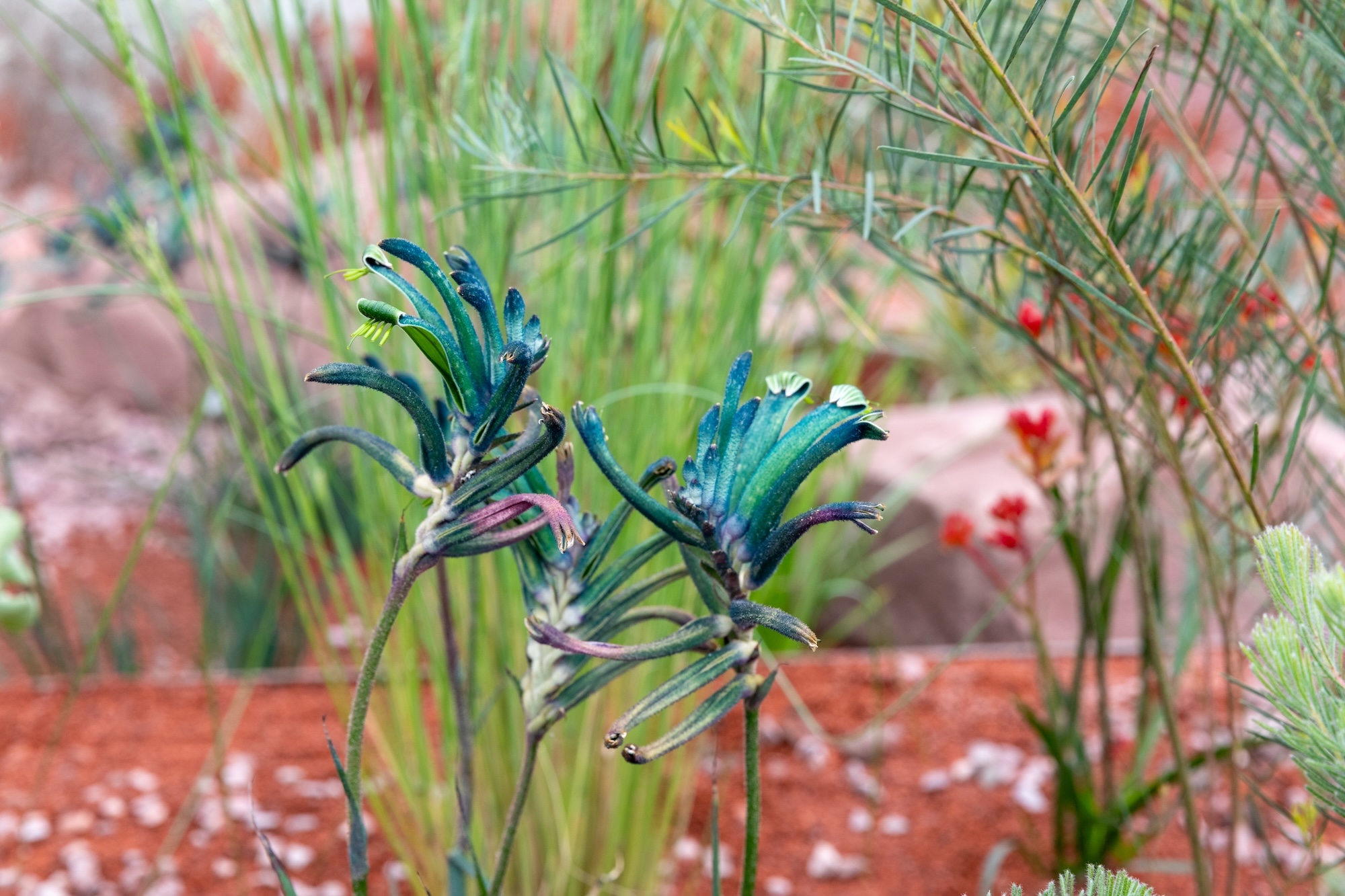
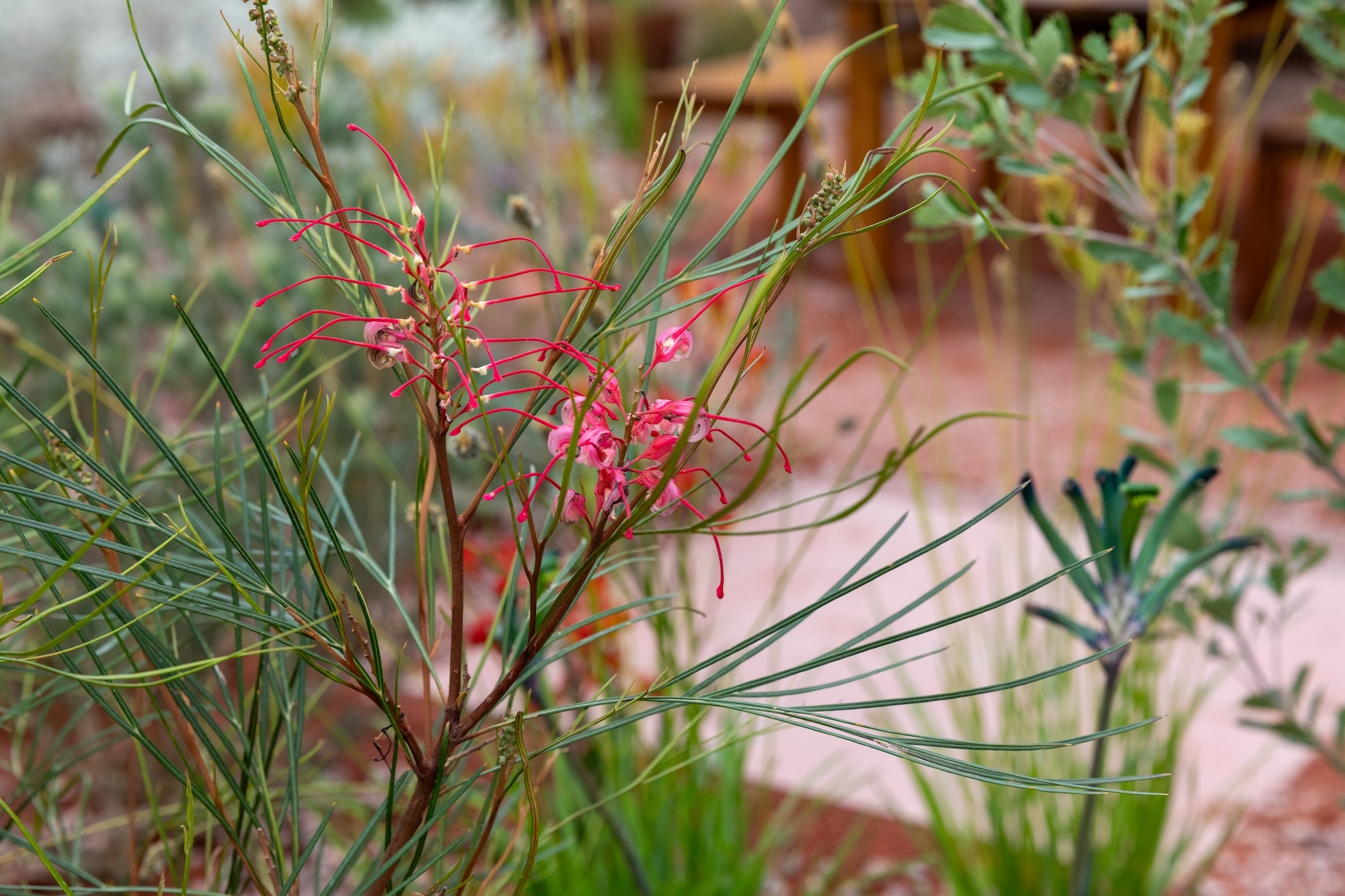
Australian plants were central to the story, particularly species shaped by heat, drought and low-nutrient soils. Eucalyptus, Callistemon, Hakea, Grevillea and Anigozanthos featured prominently, alongside plants associated with both South Australia and Western Australia. Muted greens and blues provided much of the base, with stronger flower colour appearing through the planting.
What interested Max most was not simply their appearance, but the way many Australian plants had evolved to cope with difficult conditions. Their ability to survive in low-fertility soils, extreme heat and periods of drought gave the planting a relevance well beyond the garden’s Australian theme. For a UK audience, the garden raised a broader question about which plants may become useful as cities warm and traditional planting conditions change.
A useful second life
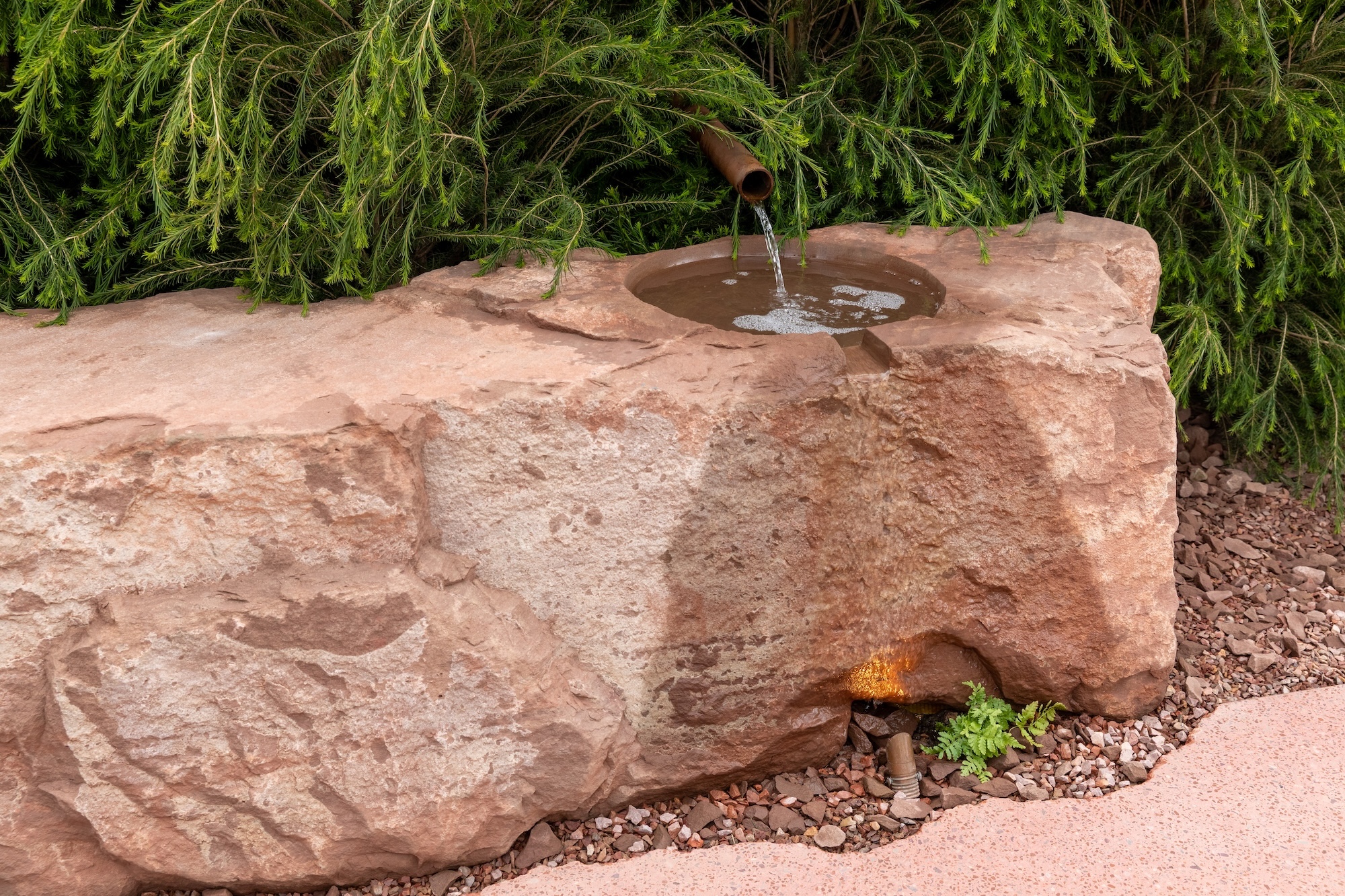
The garden’s plants and materials were also chosen with their future use in mind. After Chelsea, the plants were earmarked for Kensington Gardens in central London, where the Royal Parks are trialling them as part of an experiment into species that might perform well as the city’s climate warms. The hard landscaping went to Longleat Safari Park in Wiltshire, where a new climate-appropriate garden is planned near the park’s South Australian koalas.
It gave the project an afterlife closely connected to its original ideas. What began as a garden about Australian landscapes and climate adaptation at Chelsea is now a practical test of how some of those lessons might translate to British conditions.
Plant palette
- Adenanthos sericeus
- Alyogyne ‘Santa Cruz’
- Alyogyne hakeifolia ‘Melissa Anne’
- Alyogyne cuneiformis
- Baloskion tetraphyllum
- Banksia blechnifolia
- Banksia ericifolia var. macrantha
- Banksia spinulosa var. collina
- Banksia coccinea
- Boronia crenulata
- Callistemon viminalis ‘Better John’
- Calocephalus brownii
- Calothamnus quadrifidus ‘Grey’
- Casuarina glauca ‘Prostrata’
- Dianella caerulea ‘Cassa Blue’
- Dianella tasmanica
- Dodonaea viscosa ‘Purpurea’
- Eremophila nivea
- Eremophila glabra
- Eremophila maculata ‘Aurea’
- Eremophila ‘Kalbarri Carpet’
- Grevillea crithmifolia ‘Prostrate’
- Grevillea juniperina
- Grevillea lanigera ‘Mt Tamboritha’
- Grevillea semperflorens
- Grevillea ‘Winpara Gem’
- Hakea sericea
- Leptospermum scoparium ‘Martinii’
- Lomandra ‘Sea Breeze’
- Melaleuca alternifolia
- Melaleuca ericifolia
- Melaleuca fulgens ‘Red’
- Myoporum parvifolium
- Ozothamnus rosmarinifolius ‘Silver Jubilee’
- Pimelea ferruginea
- Regelia velutina
- Templetonia retusa
- Vitex trifolia ‘Purpurea’
- Westringia ‘Blue Gem’
- Westringia fruticosa
- Westringia ‘Grey Box’
Trees
- Acacia stenophylla
- Eucalyptus gunnii ‘Azura’
- Xanthorrhoea glauca
—
After being showcased at the RHS Chelsea Flower Show, the plants will be reused in Kensington Gardens, London and the hard landscaping will be relocated to a new garden at Longleat.
—
Maximillian Design seeks to create sympathetic landscapes that connect people to place through thoughtful, layered design, where the modern blends with the romantic. A personal fascination with soil and flora informs every planting scheme, with each project approached as an opportunity to create something unique. Strong form and a clean, confident design sensibility are paired with richly layered planting to create deeply evocative gardens. Every project is shaped by the aspirations of the client, resulting in distinctive and deeply personal gardens that feel rooted in their surroundings. Max works across a range of projects, from city gardens to larger country landscapes.
—
More RHS Chelsea Flower Show Gardens here