
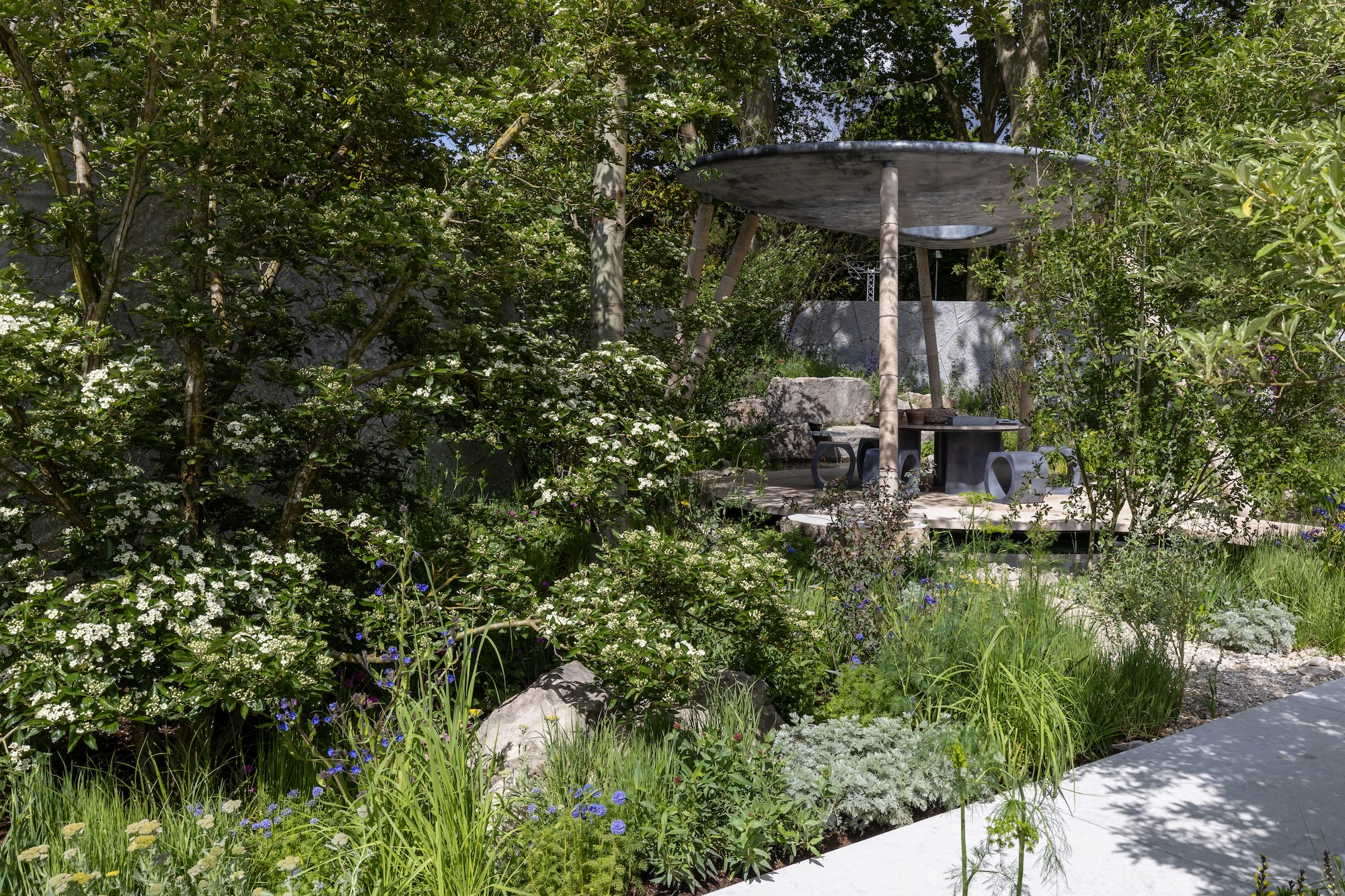
The Eden Project: Bring Me Sunshine Garden was awarded a Silver Gilt medal and Environmental Innovation Award at the 2026 RHS Chelsea Flower Show. It was sponsored by Project Giving Back and Eden Project.
Landscape design by Harry Holding and Alex Michaelis.
Inspired by the landscape and culture of the Morecambe Bay in northwest England, The Eden Project: Bring Me Sunshine Garden used Chelsea to explore what a garden could offer beyond beauty. Designed with young adults from Morecambe, it brought together horticulture, craft, new materials and outdoor learning, while creating a practical pathway into green industries.
Learning outdoors
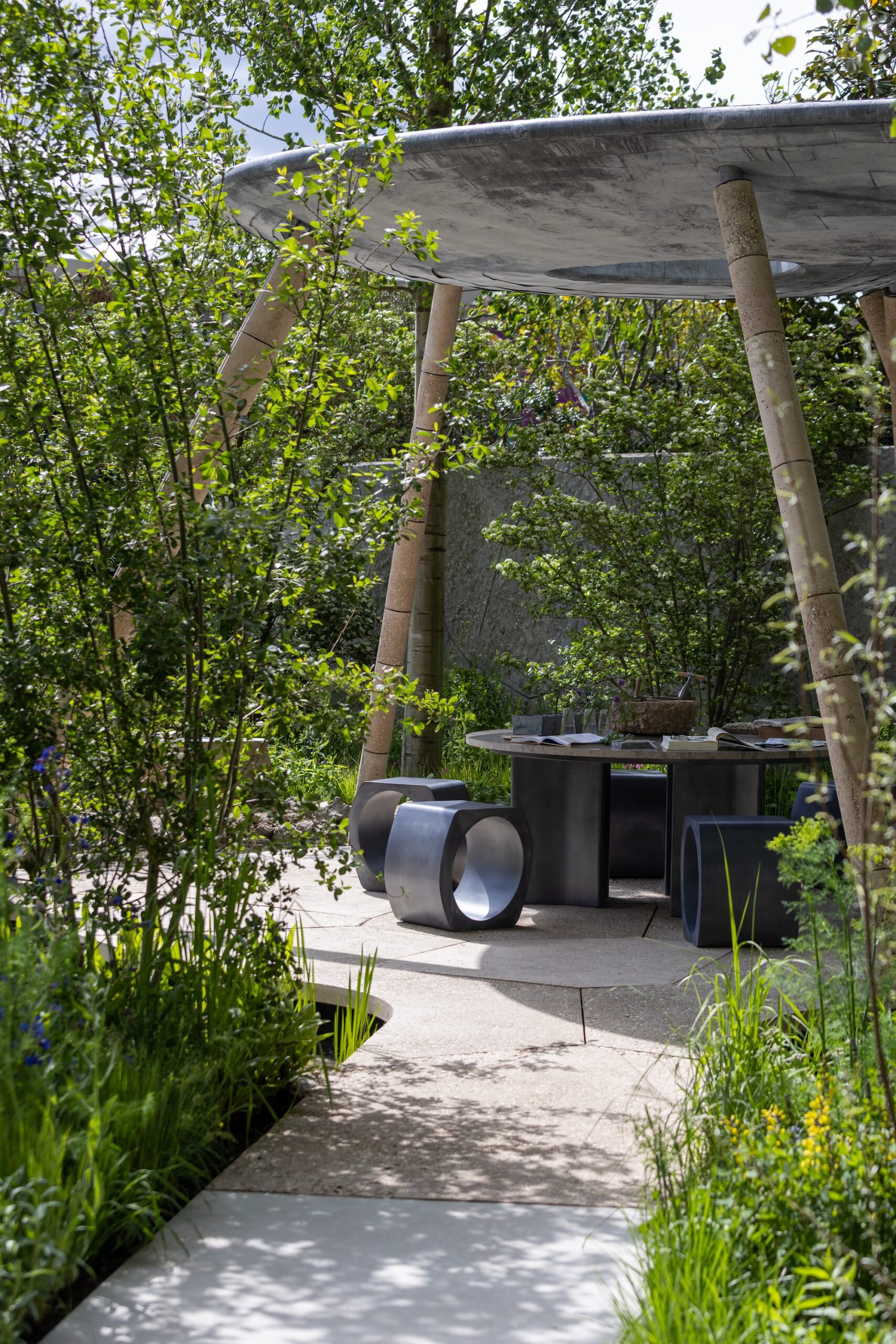
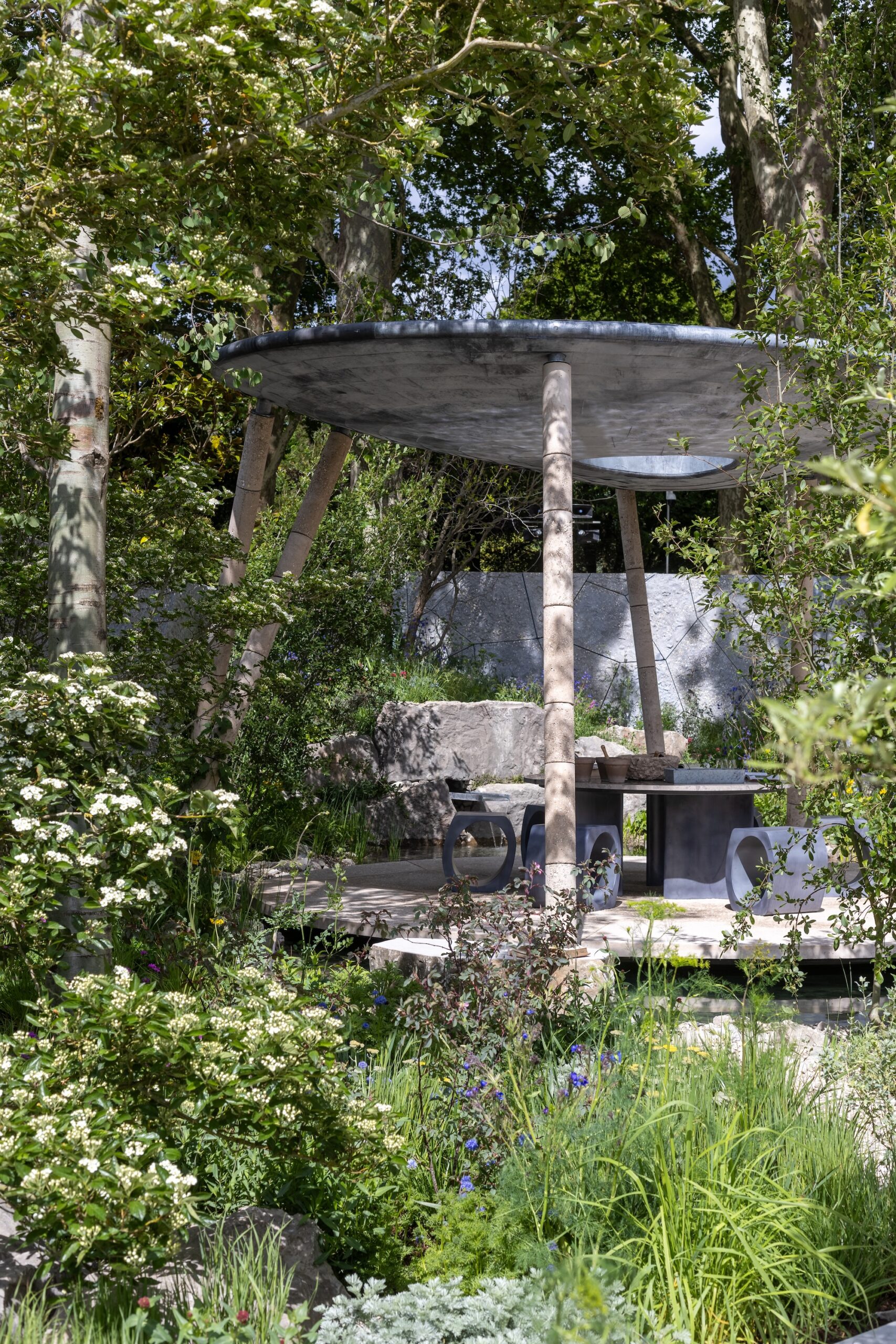
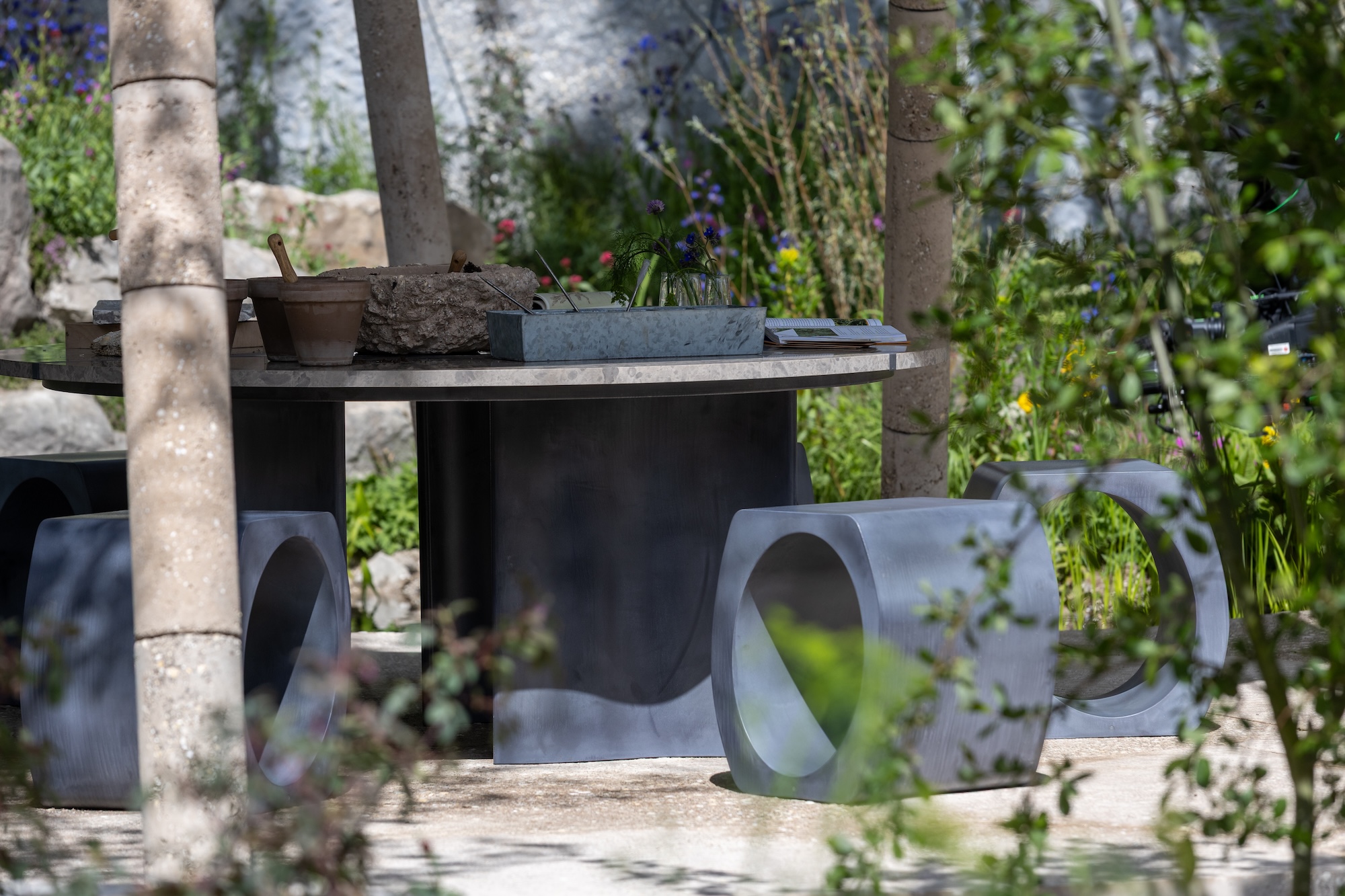
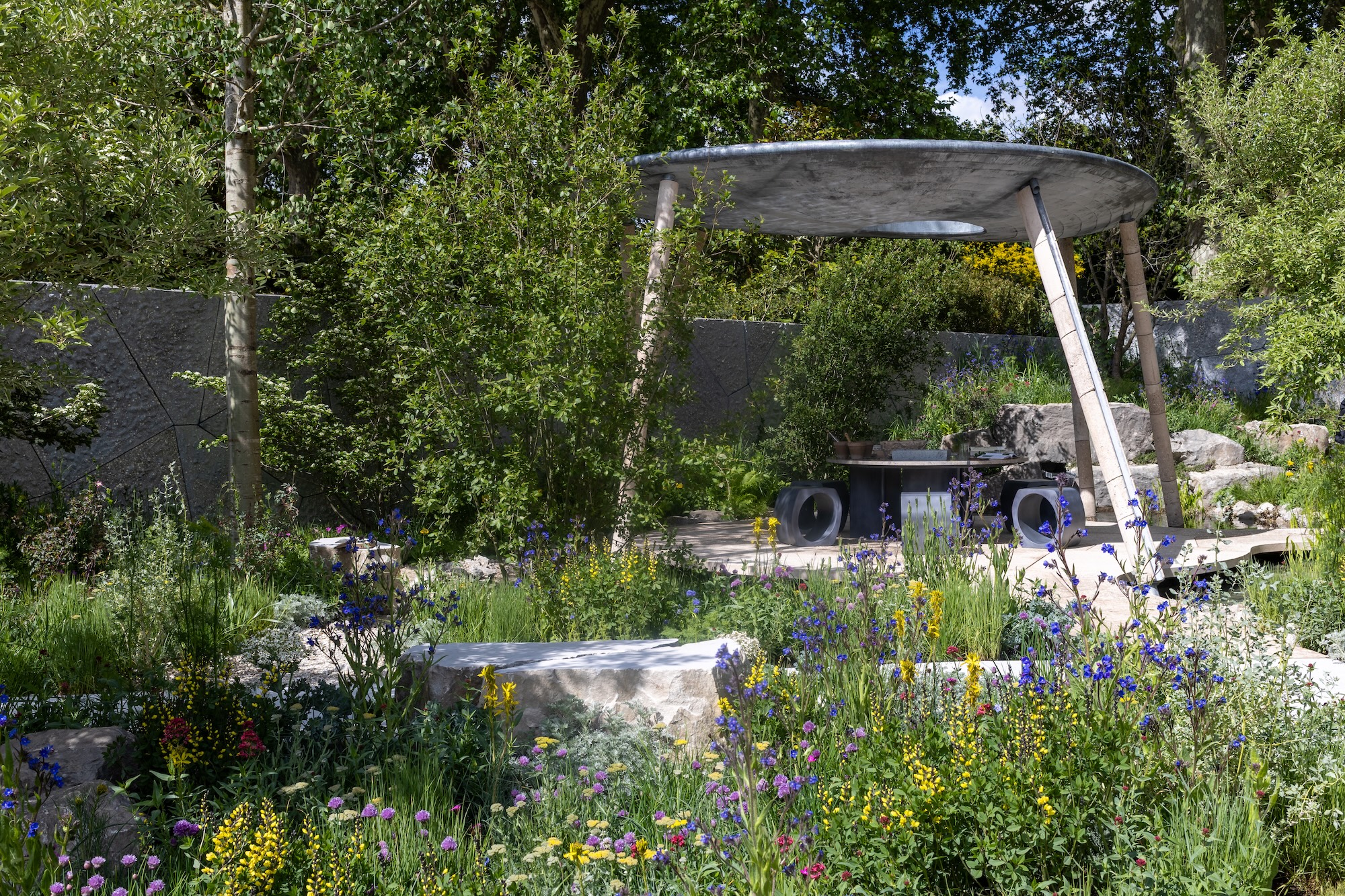
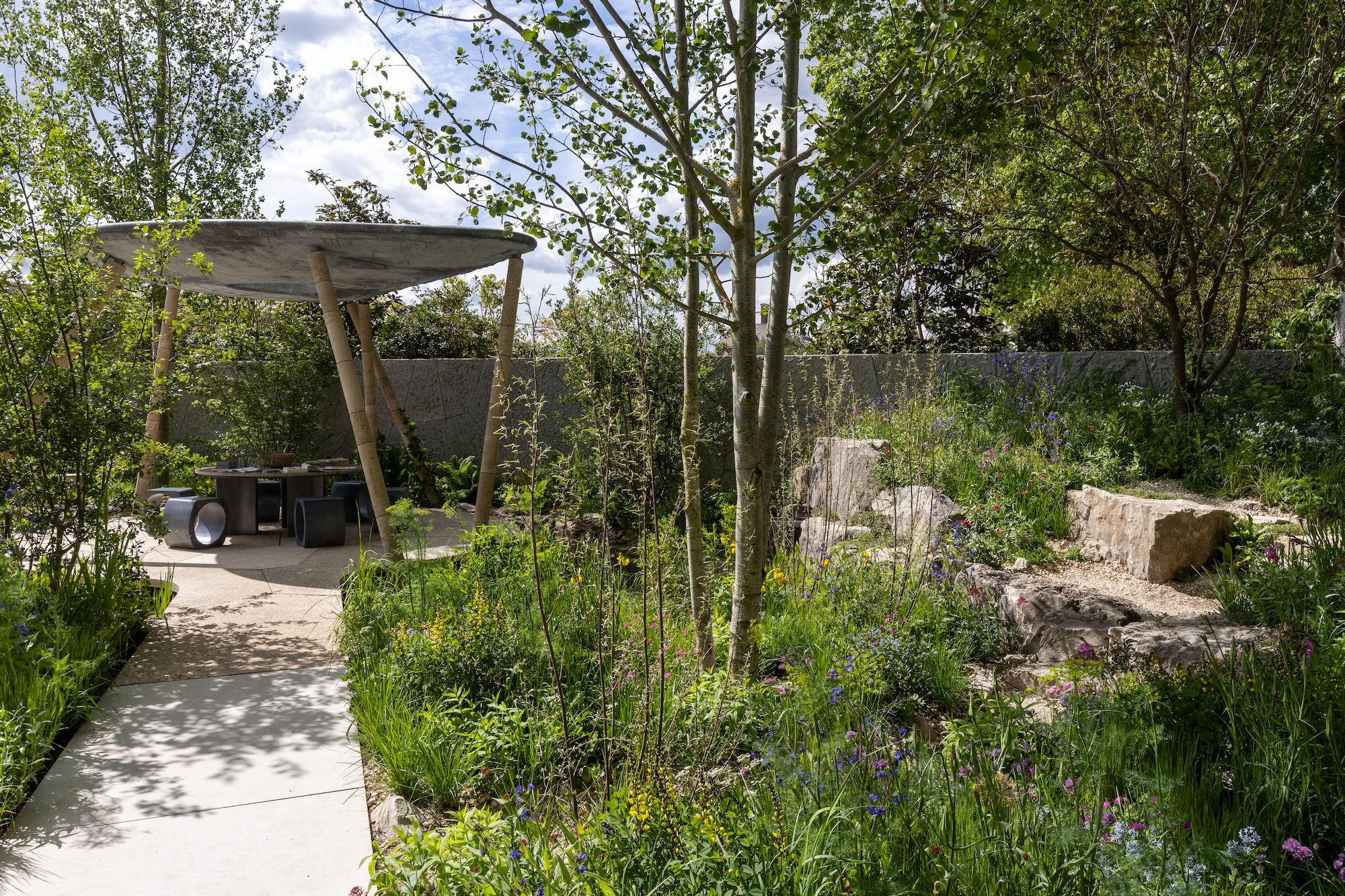
At the centre of the garden was a solar-powered pavilion conceived as both shelter and outdoor classroom. A large table and stools provided a place for workshops spanning horticulture, making and digital learning, turning the garden into somewhere skills could be shared as well as plants grown.
Young adults from Morecambe were involved in shaping the project, particularly those who may not have followed traditional education or employment pathways. For the Eden Project, that participation was fundamental to the garden.
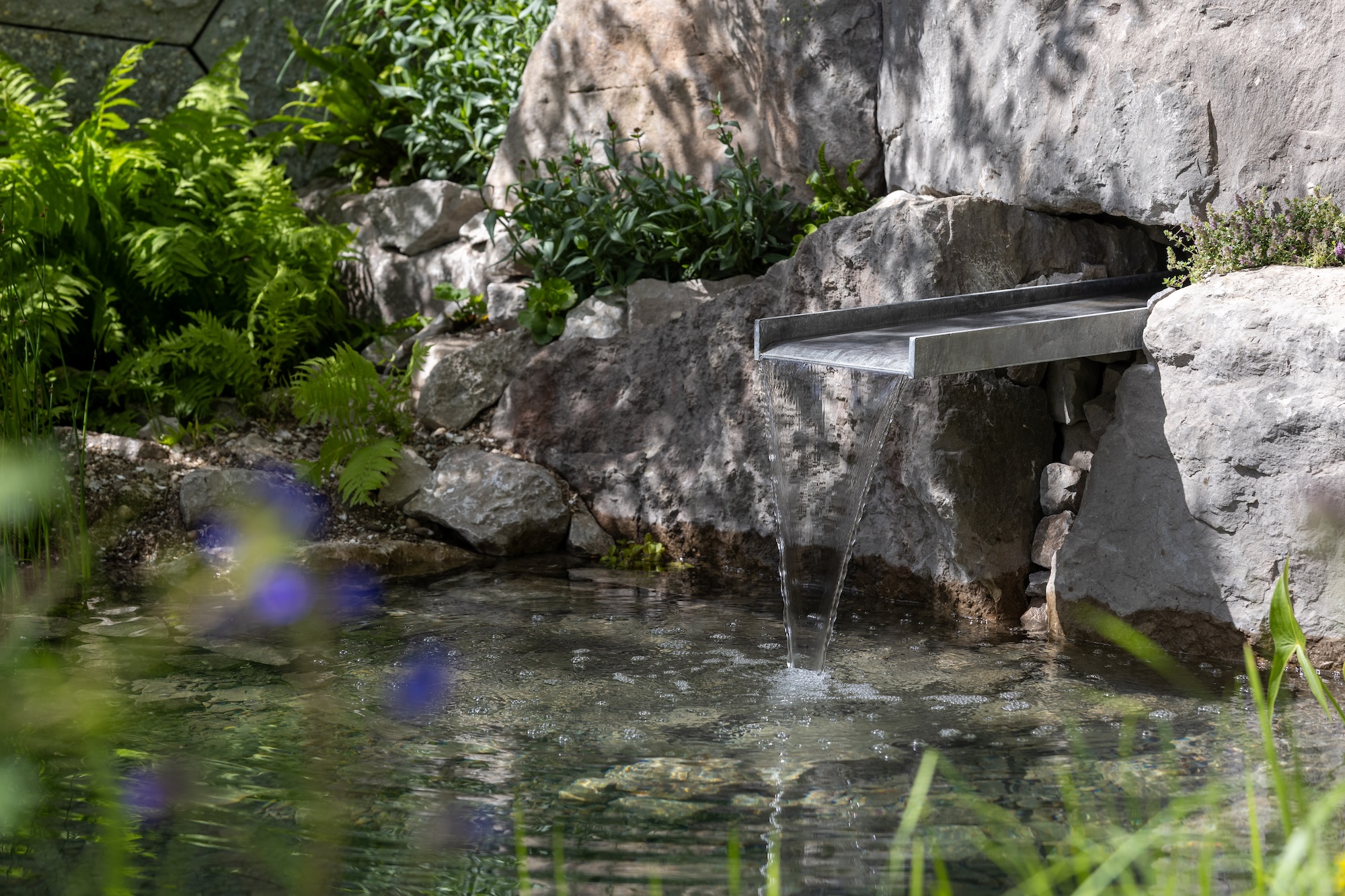
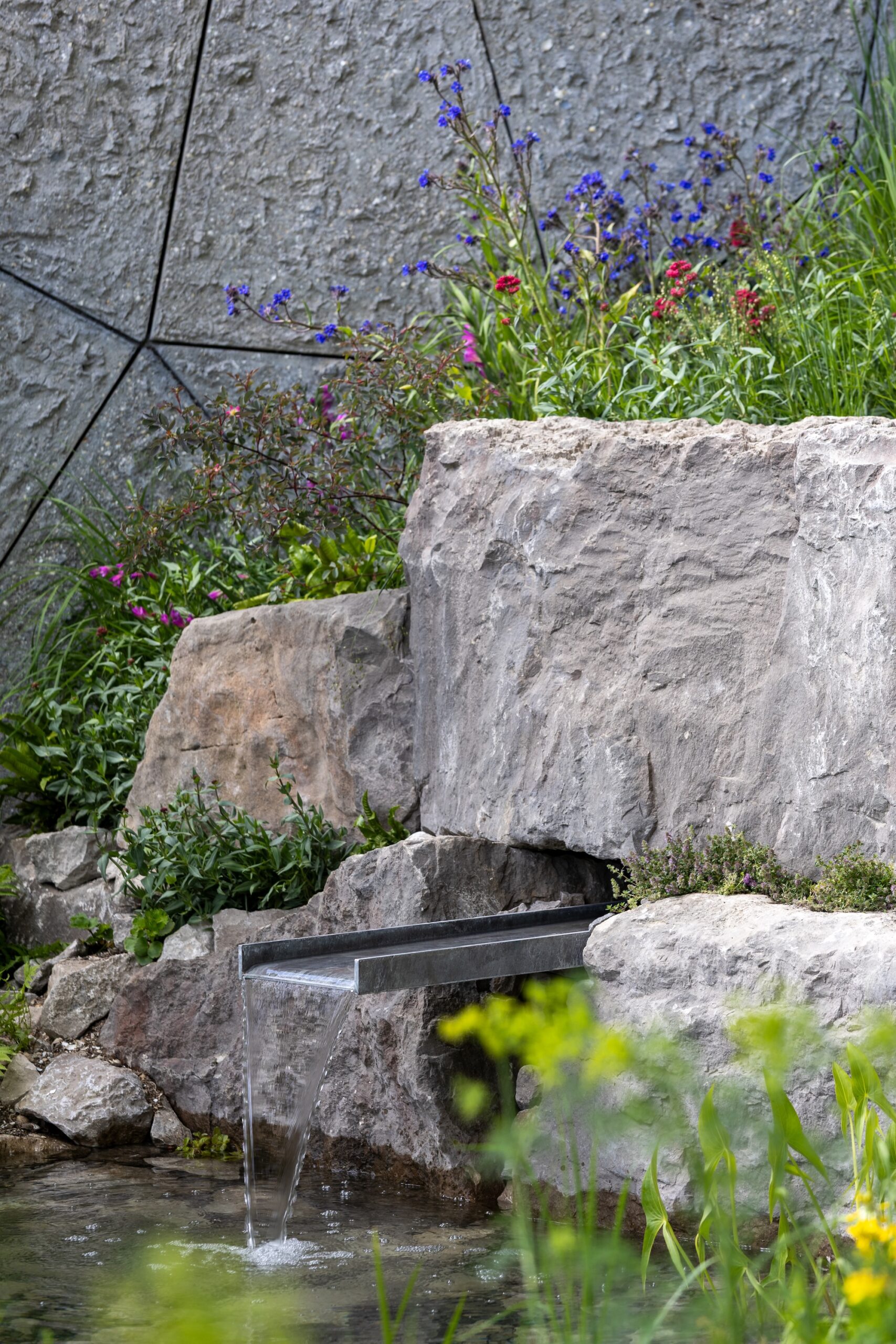
The pavilion rose from a shell-inspired island terrace surrounded by a reflective pool. Rainwater from the pool and rill system was captured and reused, making water part of the garden’s function as well as its atmosphere.
Made from the Bay
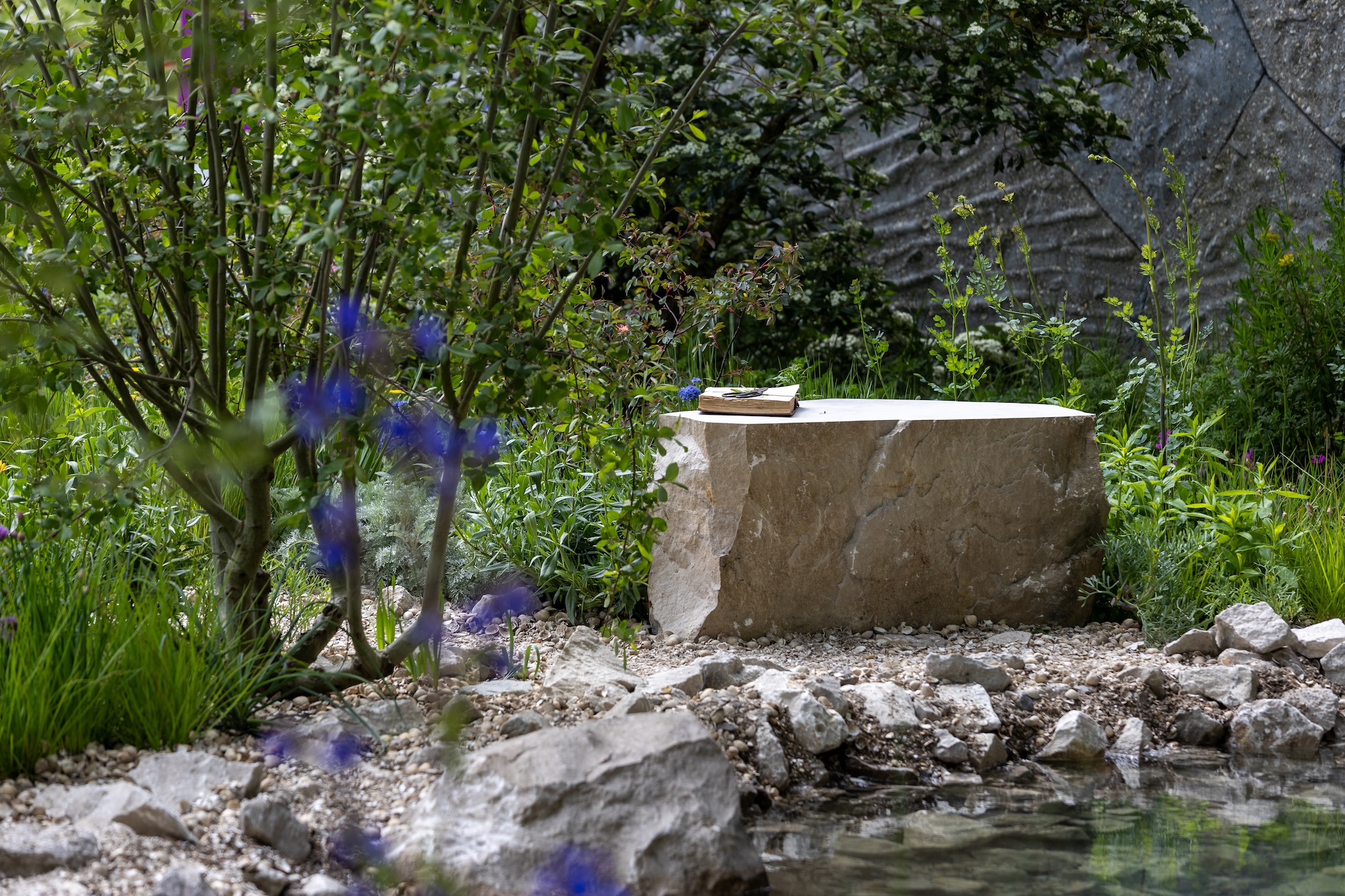
Morecambe Bay influenced both the form of the garden and the materials used to build it. One of the most significant was Shellcrete, a low-carbon concrete incorporating waste cockle and mussel shells from the local seafood industry. Shells made up around half of the Shellcrete, while some of the cement was replaced with ground granulated blast-furnace slag and basalt bars were used instead of steel reinforcement.
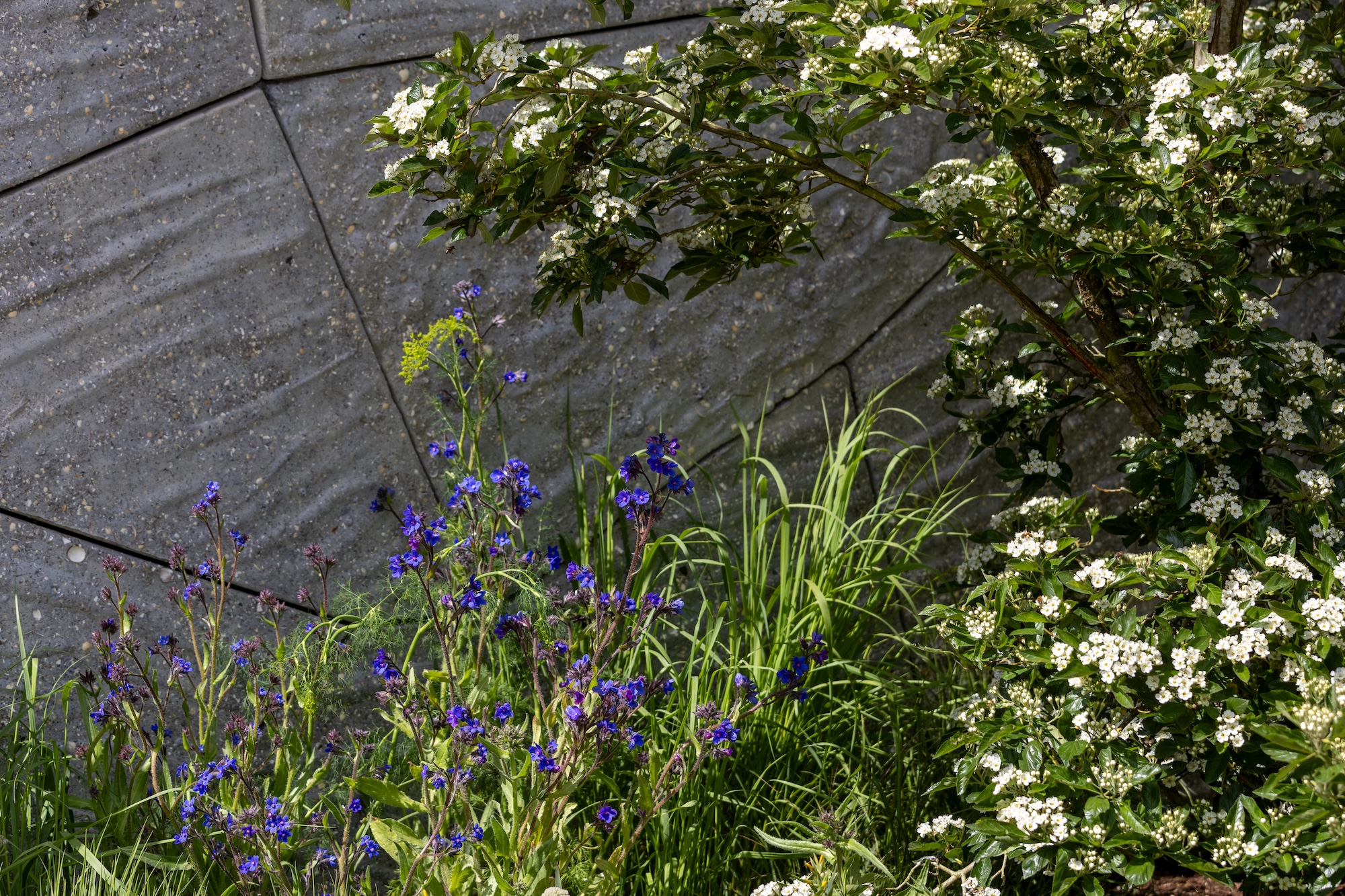
The material was used for the terrace and wall, where the patterning drew on the microscopic structure of a mussel shell. Young adults working with artist Finbar Ward also made casts from Morecambe’s beaches and limestone pavements, which were then used as inspiration for 128 individual wall panels.
It was a direct link between place, waste material and design – taking something associated with the Bay and giving it a new structural life within the garden.
Planting for the coast
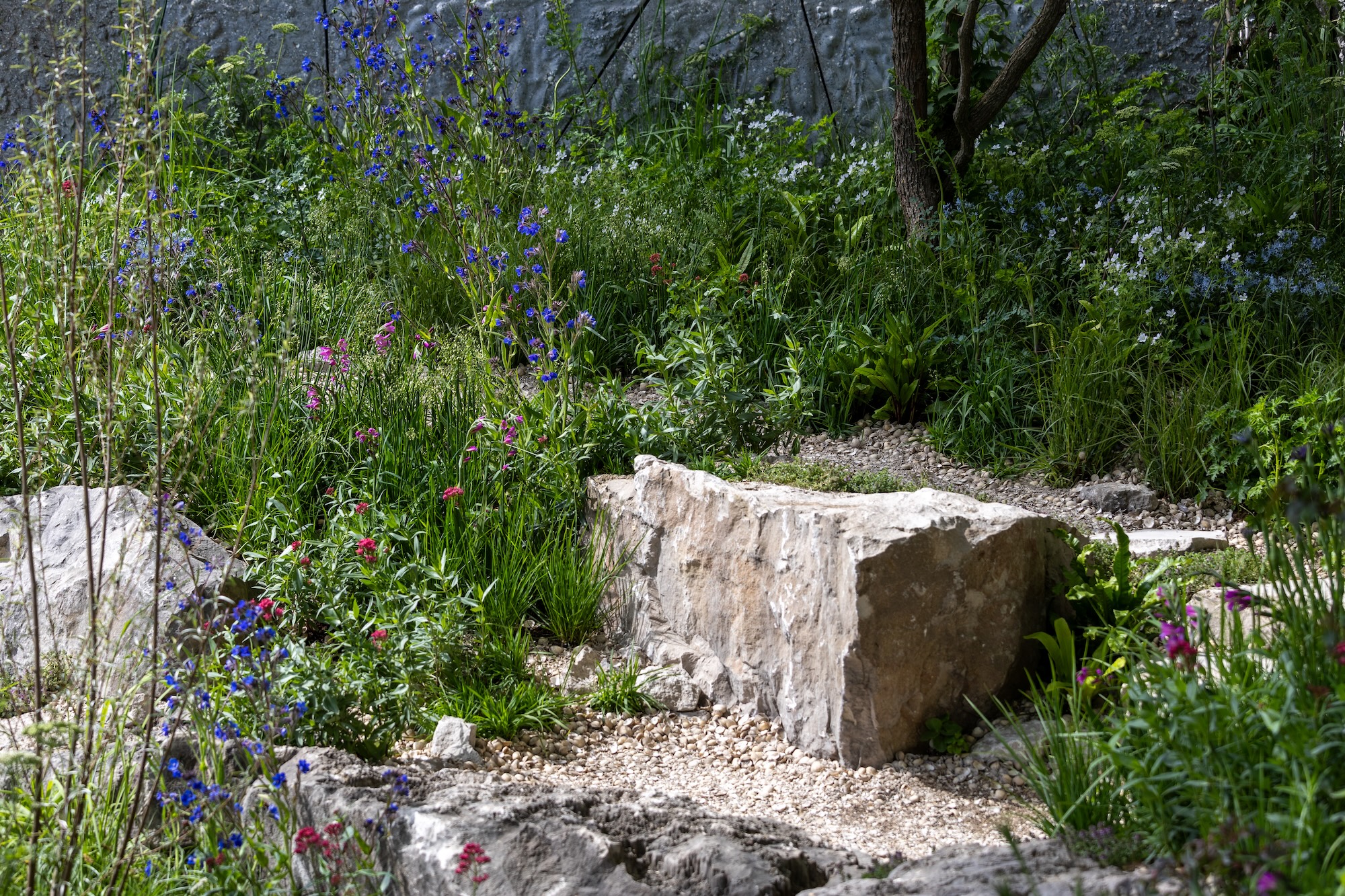
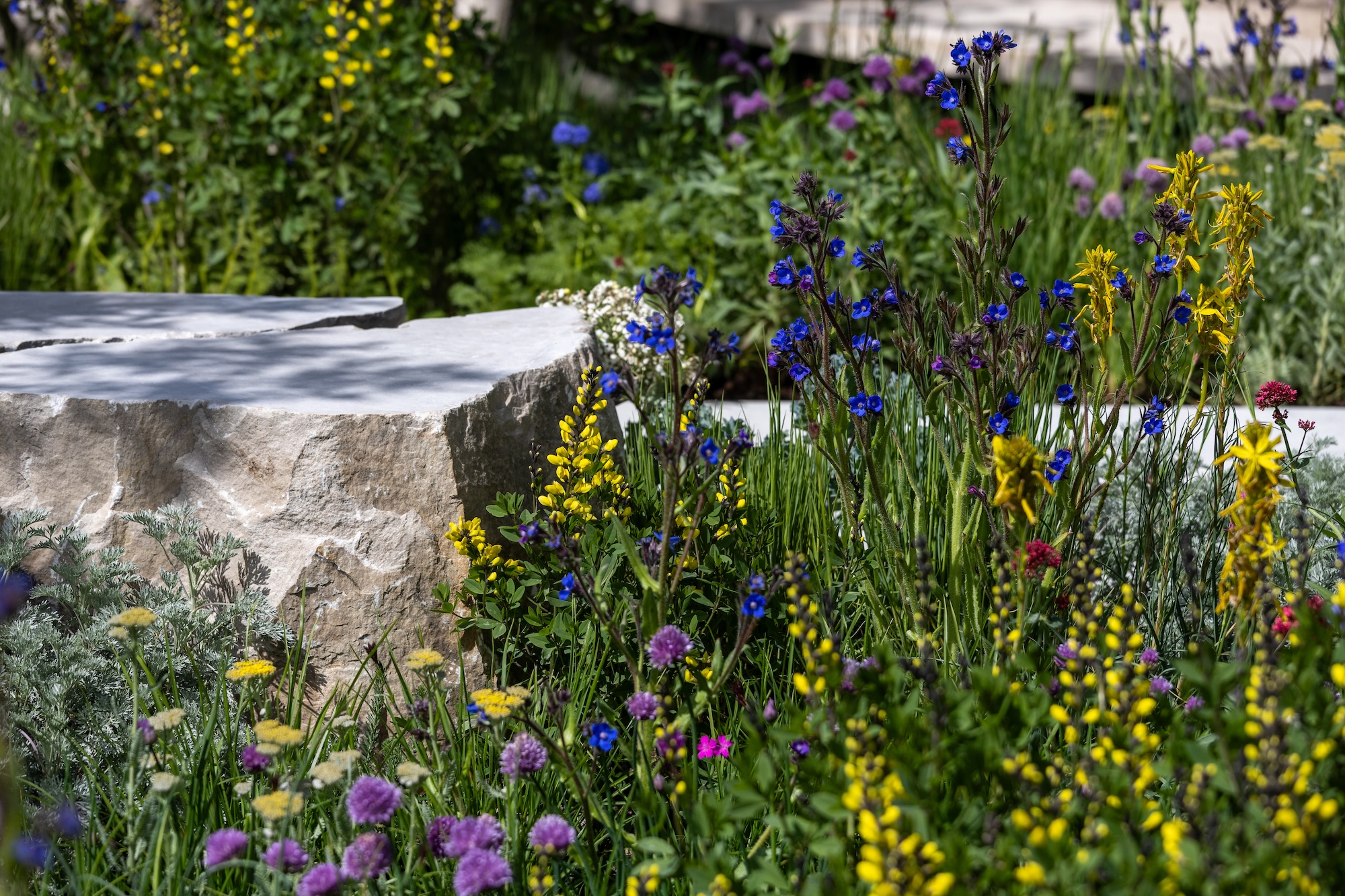
The planting evoked a coastal meadow, combining species capable of coping with exposed conditions with a softer, more naturalistic character.
Pinks and yellows dominated, with occasional blue providing contrast, while grasses brought movement through the scheme. Many plants had been chosen for more than appearance alone.
Salix exigua, a climate-resilient willow, could also provide material for craft. Hippophae rhamnoides (sea buckthorn) was well suited to coastal conditions and produced edible berries, while Calamagrostis epigejos, found around Morecambe, brought an airy quality to the planting. The glaucous foliage of Atriplex halimus reinforced the coastal character, and the vertical blue flowers of Echium vulgare punctuated the looser planting.
The designers wanted visitors to encounter a garden that felt vibrant but also restorative, with the softness of the planting countering the more robust concrete and stone surfaces.
Designed for a second life
After the show, all of the garden’s elements were dismantled and reassembled at Eden Project Morecambe, where the original 10m x 10m garden expanded dramatically to become part of a 1.5-acre public landscape outside the project’s paid perimeter.
The young adults who helped develop the Chelsea garden and managed it during the show continue to care for it in Morecambe, building horticultural skills that could lead to employment with the Eden Project or elsewhere in the region. Local community groups also contributed to the plans for the permanent garden, which was conceived as a freely accessible place for learning, gathering and stewardship.
For a garden centred on regeneration and opportunity, its afterlife was arguably as important as its week at Chelsea. The show garden demonstrated an idea; in Morecambe, that idea was intended to become part of everyday life.
Plant palette
Trees and shrubs
- Crataegus × lavalleei ‘Carrierei’ (hybrid cockspur thorn)
- Elaeagnus multiflora (cherry silverberry)
- Populus tremula (aspen)
- Rosa glauca (red-leaved rose)
- Salix spp.
- Thymus serpyllum ‘Magic Carpet’ (wild thyme)
- Ziziphus jujuba (Chinese date)
Upper, part shade and shady mix
- Allium schoenoprasum (chives)
- Anchusa azurea (Italian bugloss)
- Anethum graveolens (dill)
- Asplenium scolopendrium (hart’s-tongue fern)
- Briza media (quaking grass)
- Calamagrostis epigejos (wood small-reed)
- Cenolophium denudatum (Baltic parsley)
- Centranthus ruber (red valerian)
- Crambe maritima (sea kale)
- Didiscus caeruleus (blue lace flower)
- Geranium sylvaticum ‘Alba’ (wood cranesbill)
- Luzula nivea (snowy woodrush)
- Malva sylvestris (common mallow)
- Melica ciliata (silky-spike melic)
- Rumex sanguineus (wood dock)
- Sesleria autumnalis (autumn moor grass)
- Thalictrum flavum (common meadow rue)
Rocky crevices
- Centranthus ruber (red valerian)
- Crambe maritima (sea kale)
- Crithmum maritimum (rock samphire)
- Sedum sarmentosum (stringy stonecrop)
Main mix
- Achillea ‘Moonshine’ (yarrow)
- Allium moly (yellow garlic)
- Allium schoenoprasum (chives)
- Amsonia ‘Starstruck’
- Anchusa azurea (Italian bugloss)
- Anethum graveolens (dill)
- Artemisia ‘Powis Castle’ (wormwood)
- Asphodeline lutea (asphodel)
- Baptisia ‘Lemon Meringue’ (false indigo)
- Centranthus ruber (red valerian)
- Crambe maritima (sea kale)
- Dianthus carthusianorum
- Didiscus caeruleus (blue lace flower)
- Geranium ‘Elworthy Eyecatcher’ (cranesbill)
- Gilia capitata (blue thimble-flower)
- Gladiolus communis subsp. byzantinus
- Sesleria autumnalis (autumn moor grass)
- Tragopogon porrifolius (salsify)
Aquatic & marginal plants
- Anagallis tenella (bog pimpernel)
- Calamagrostis epigejos (wood small-reed)
- Carex paniculata (greater tussock sedge)
- Eleocharis dulcis (Chinese water chestnut)
- Euphorbia palustris (marsh spurge)
- Geranium palustre (marsh cranesbill)
- Houttuynia cordata
- Ligusticum scoticum (Scots lovage)
- Mentha aquatica (water mint)
- Primula prolifera (candelabra primrose)
- Rumex sanguineus (wood dock)
- Sagittaria latifolia (broadleaf arrowhead)
—
After being showcased at the RHS Chelsea Flower Show, this garden will be permanently relocated to Eden Project Morecambe. There it will become part of a new 1.5-acre community space for learning, gathering and stewardship, supporting Eden’s mission to inspire action and regenerate landscapes and livelihoods.
—
Designed by Harry Holding and Alex Michaelis
Built by Landscape Associates
—
More RHS Chelsea Flower Show Gardens here