
The Children’s Society Garden designed by Patrick Clarke Landscapes was awarded a Gold Medal at Chelsea and was highly commended in the RHS Environmental Innovation Award.
The idea behind The Children’s Society Garden was straightforward: to create somewhere teenagers could feel comfortable taking a moment for themselves, whether alone or talking with someone they trusted.
Landscape designer Patrick Clarke worked with young people supported by The Children’s Society, using their input to shape a garden intended to feel safe and welcoming rather than clinical. The project also drew attention to declining wellbeing among teenagers in the UK and the charity’s work providing support before problems reach crisis point.
Finding value in what remains
The garden took inspiration from the Japanese idea of wabi-sabi – finding beauty in things that are imperfect, weathered or incomplete. That idea shaped Patrick’s approach to the materials. Rather than sourcing everything new, he searched reclamation yards, online marketplaces, skips and donations for pieces that could be given another life.
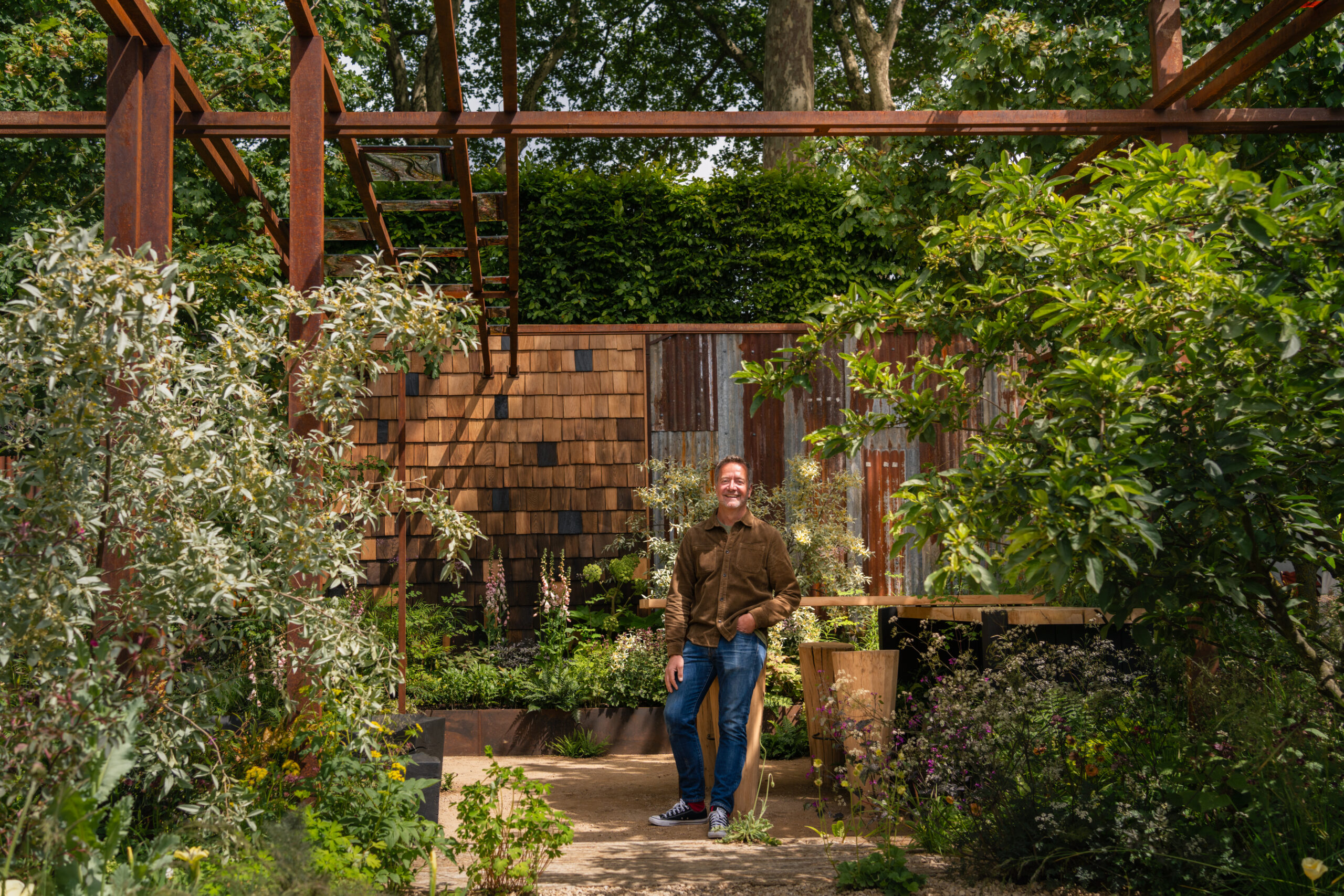
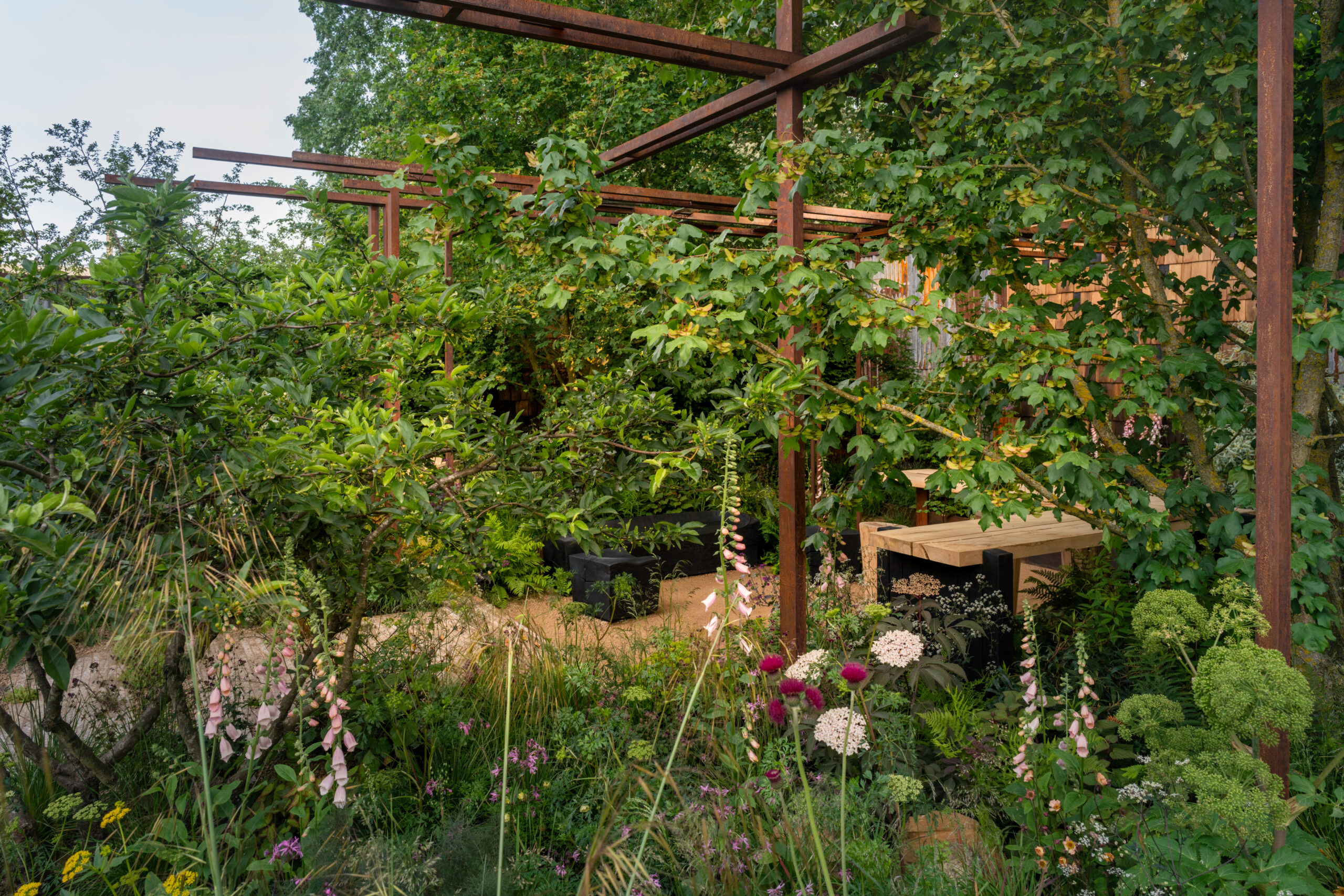
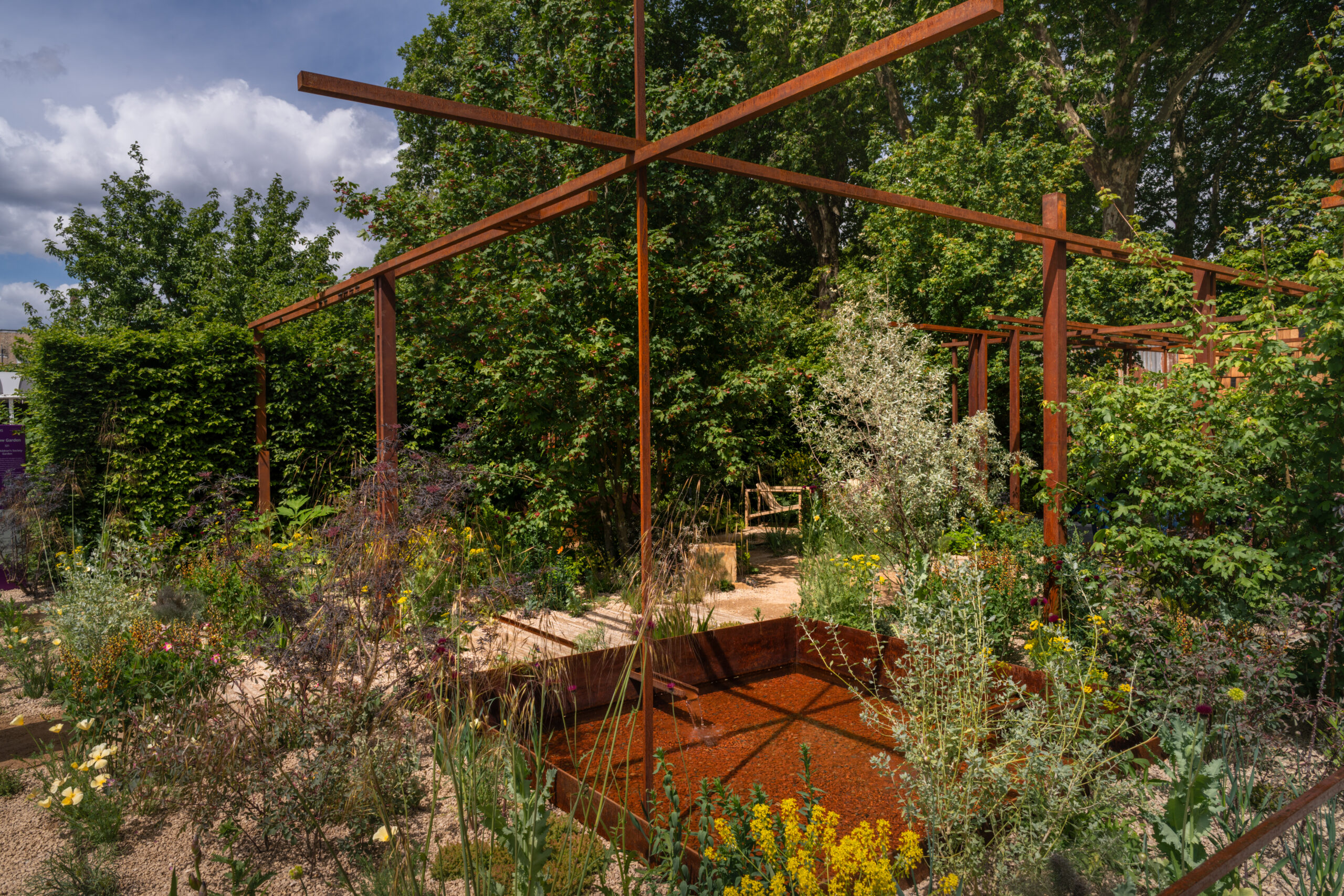
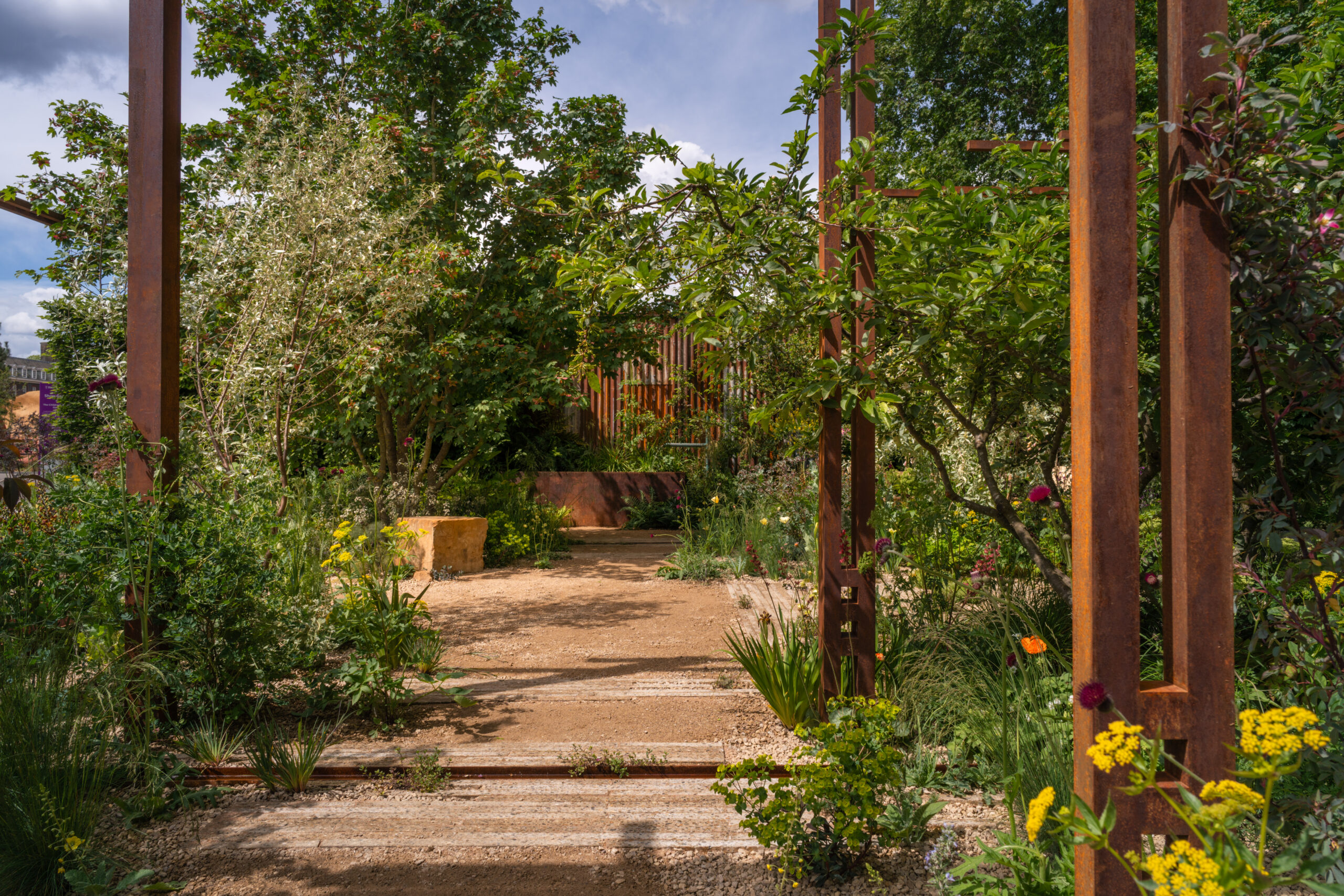
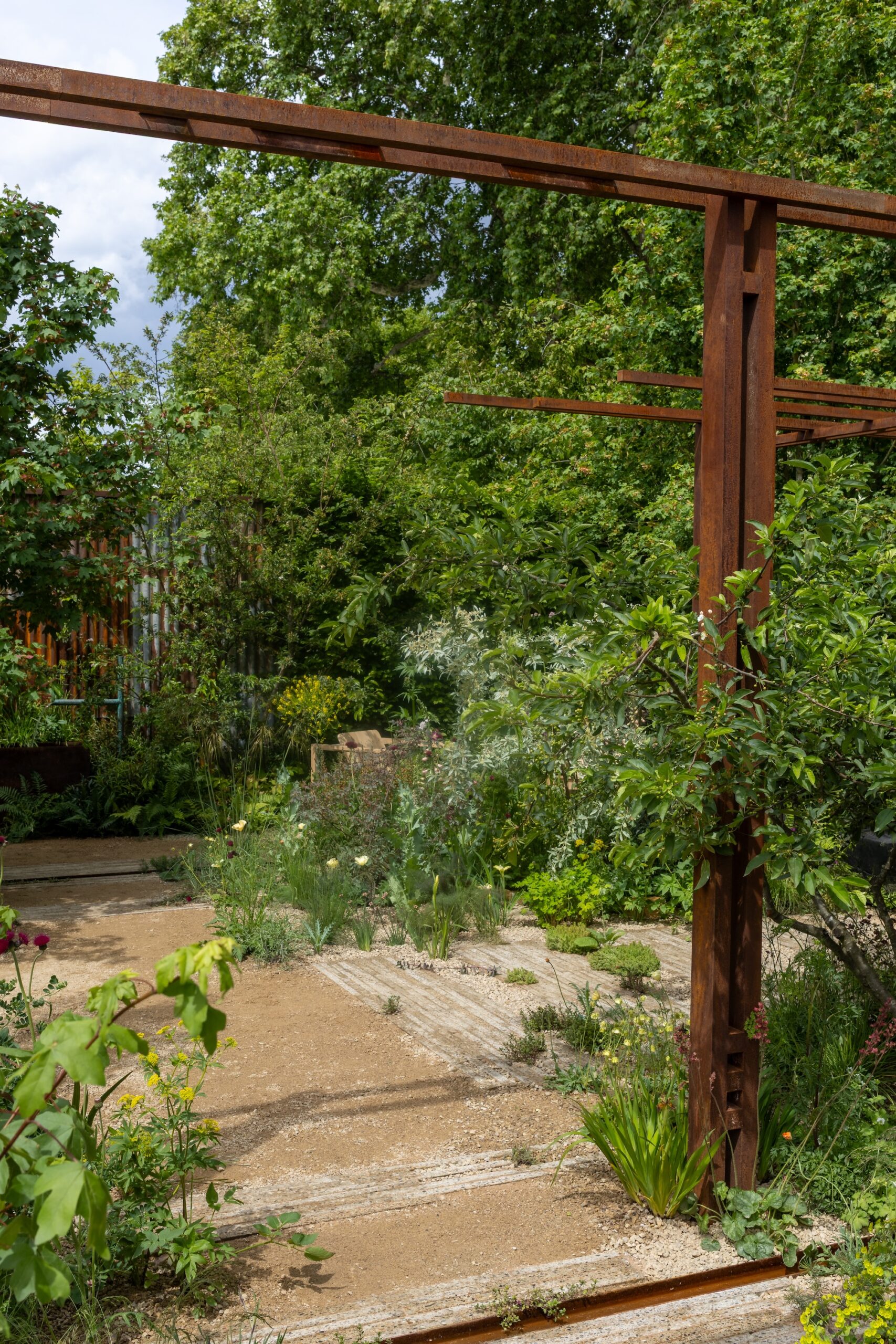
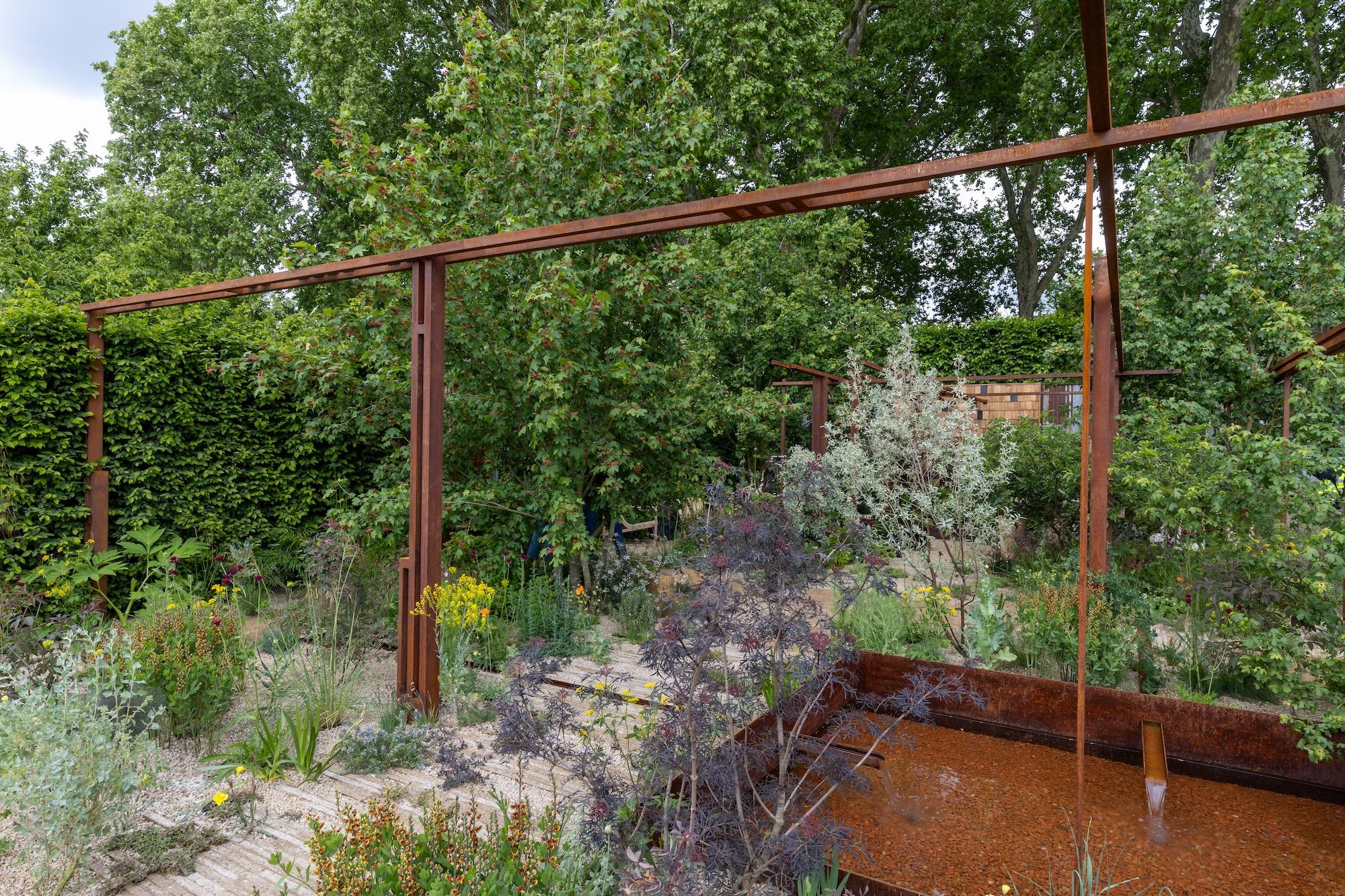
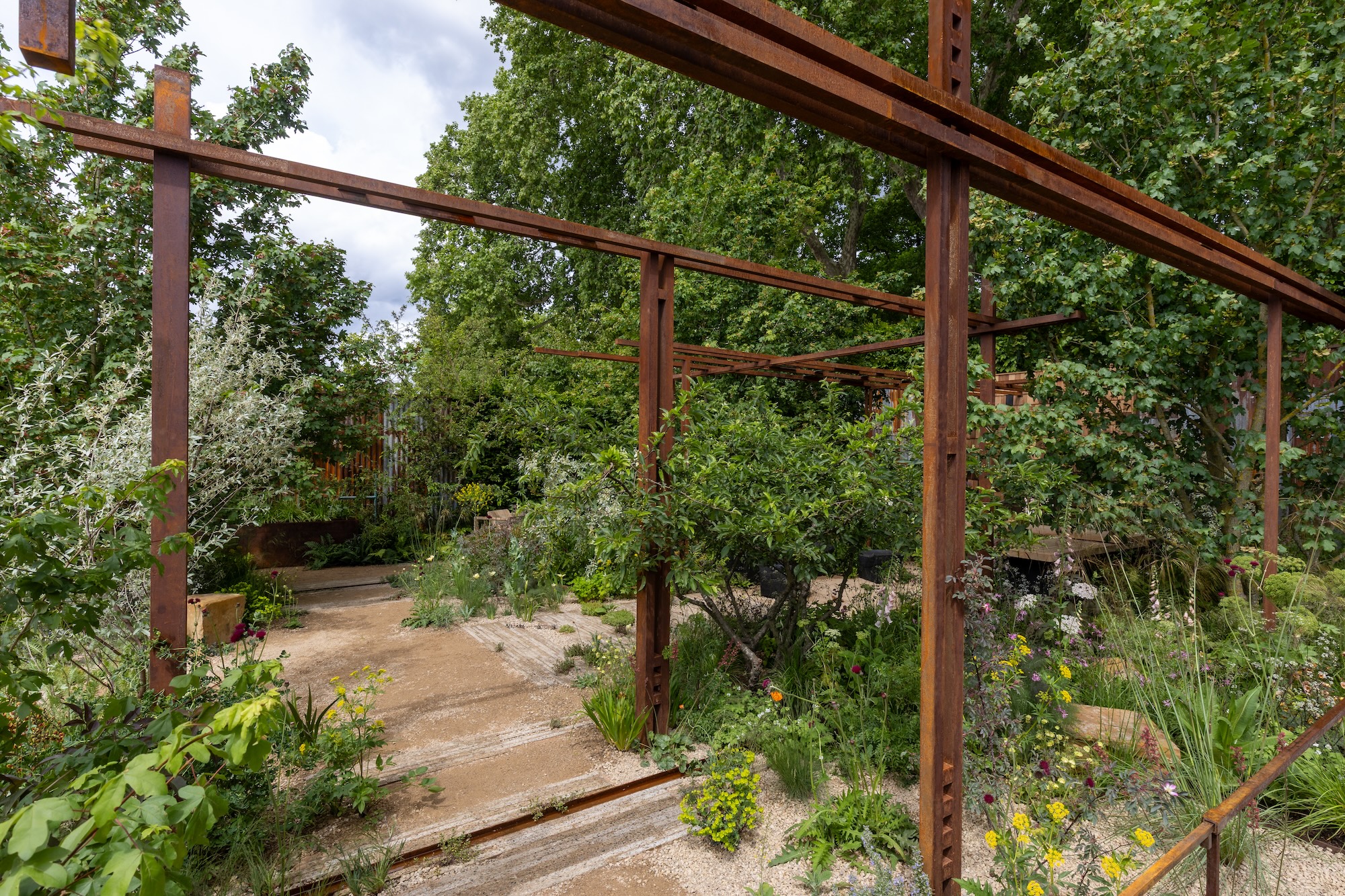
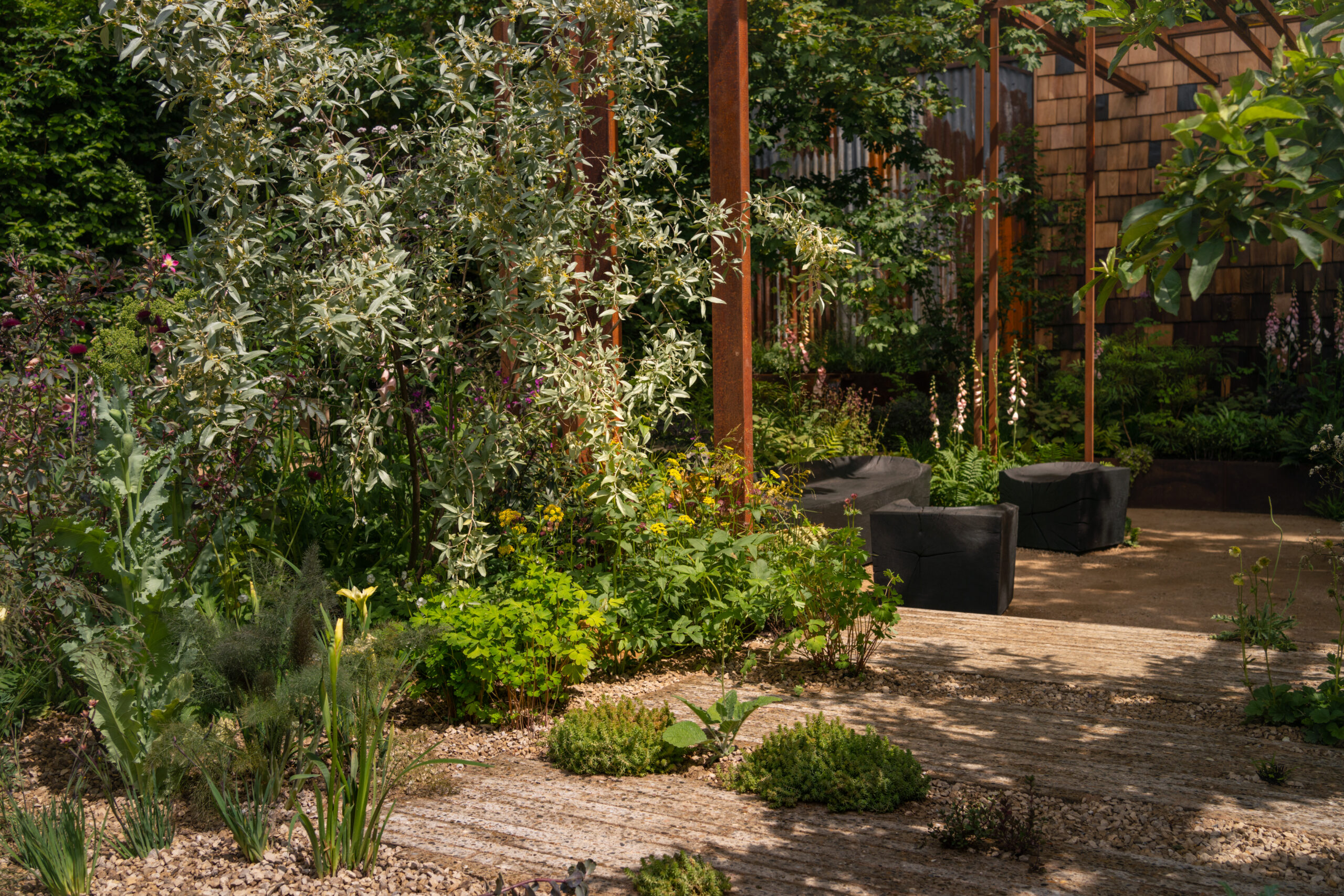
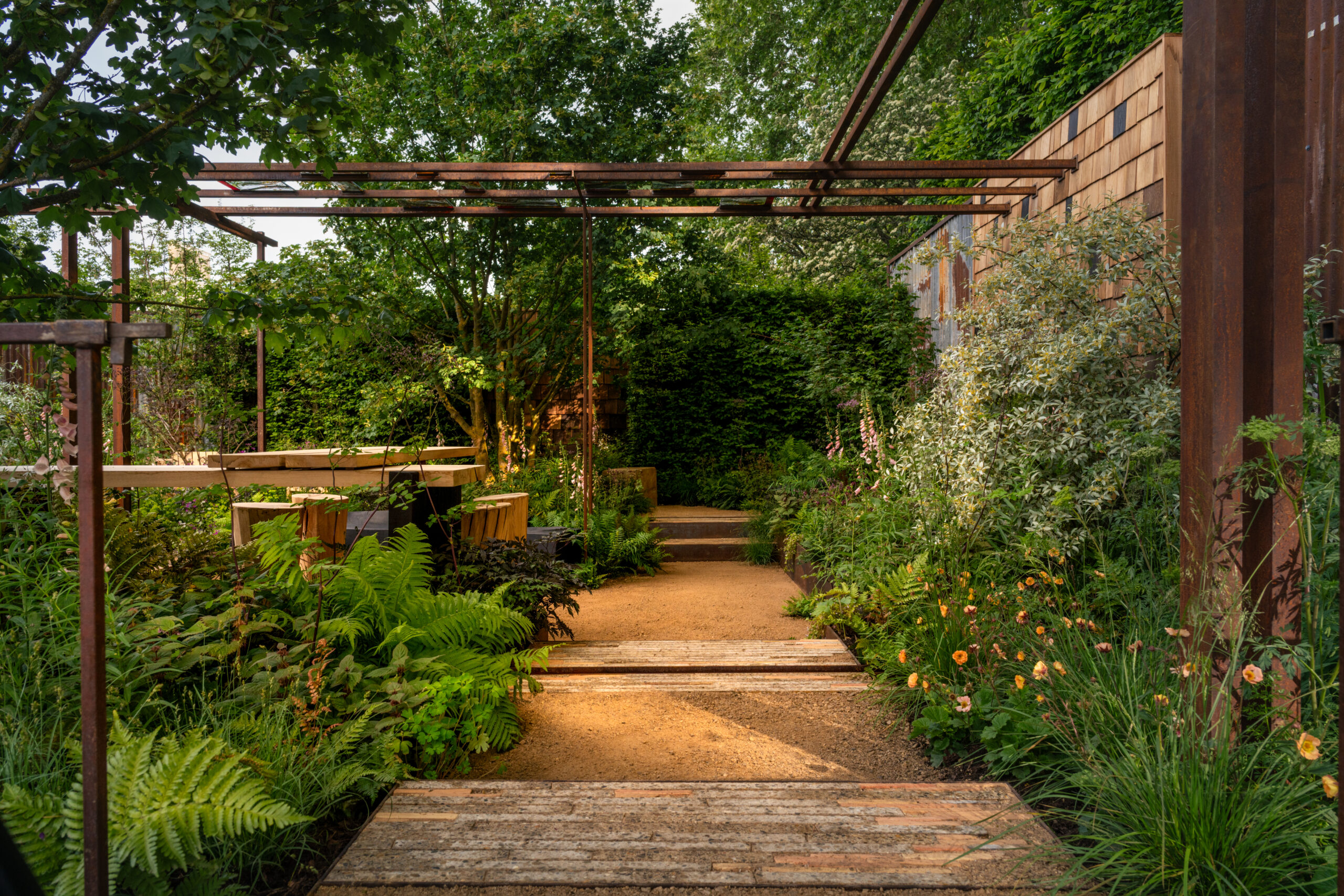
Recycled steel rafters and offcuts formed an overhead structure spanning the garden. Handcrafted glass was inserted into it, based on artwork developed by The Children’s Society’s young creative partners, allowing filtered light to fall into the space below.
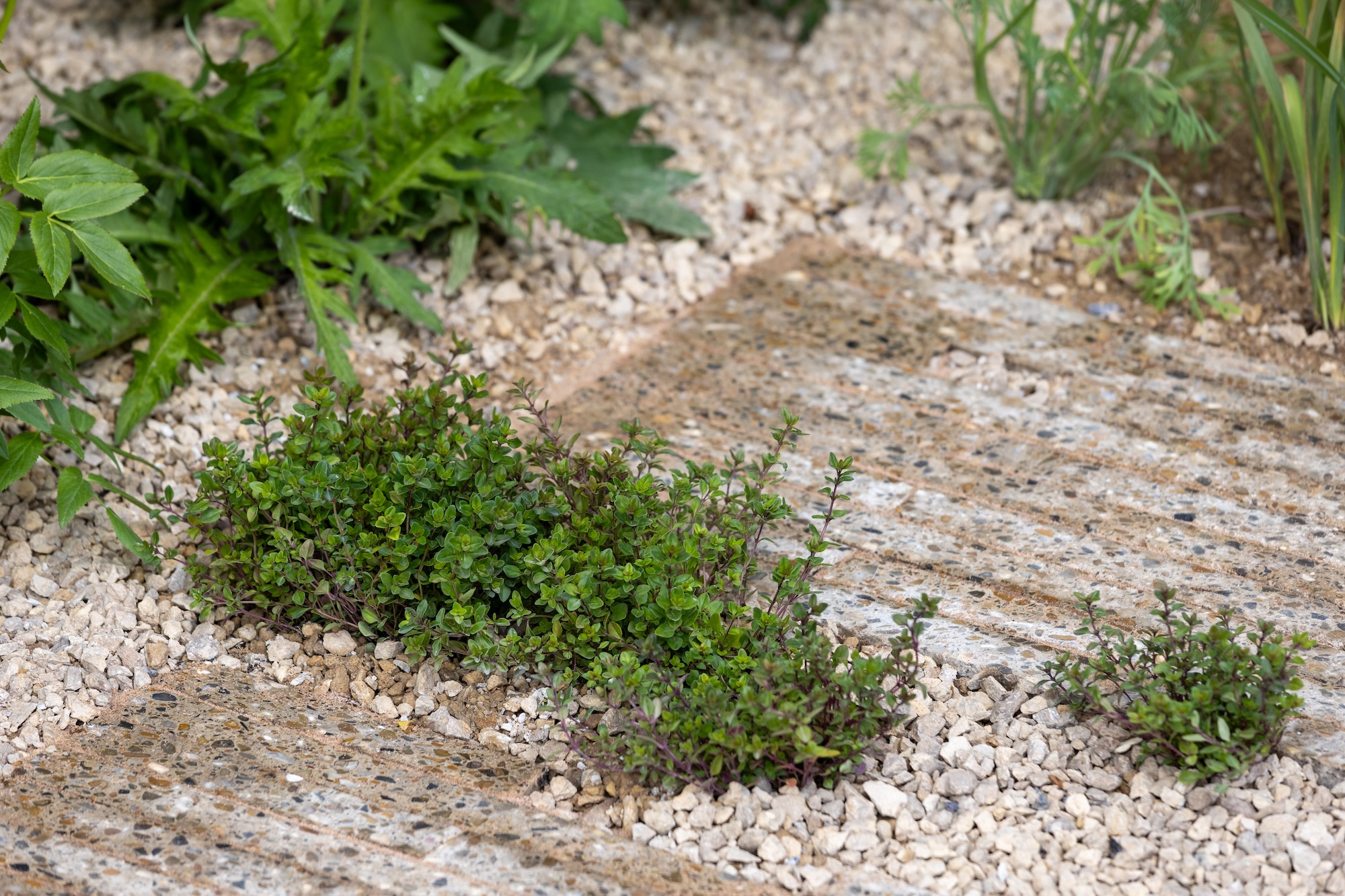
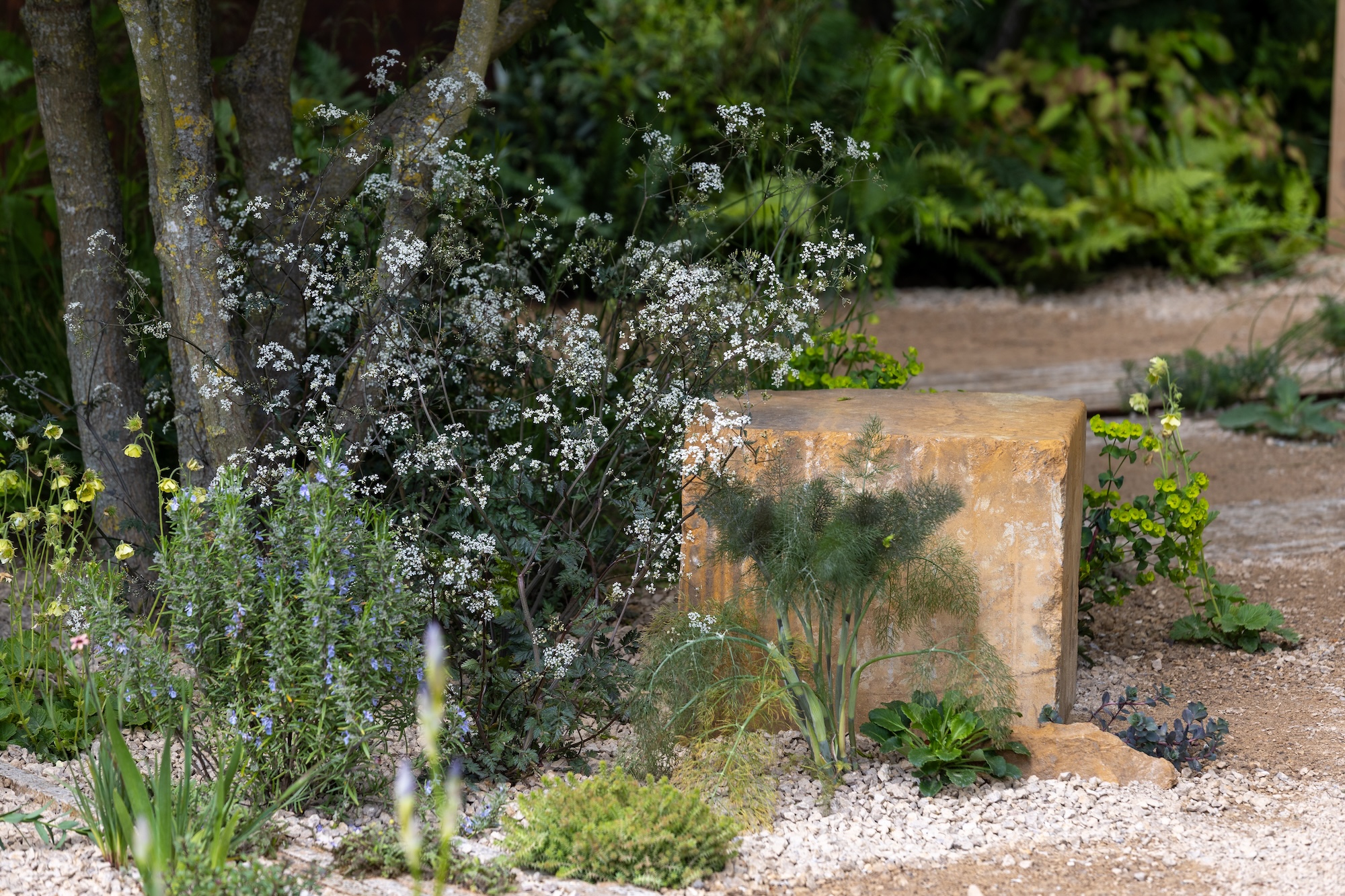
Elsewhere, reclaimed timber shingles formed a three-metre-high wall, while crushed brick, concrete and stone offcuts were reused through the paths. Reclaimed copper, recycled tiles and waste timber appeared throughout the detailing and furniture.
The intention wasn’t to disguise the previous lives of these materials, but to let their marks and imperfections become part of the garden.
Room to reset
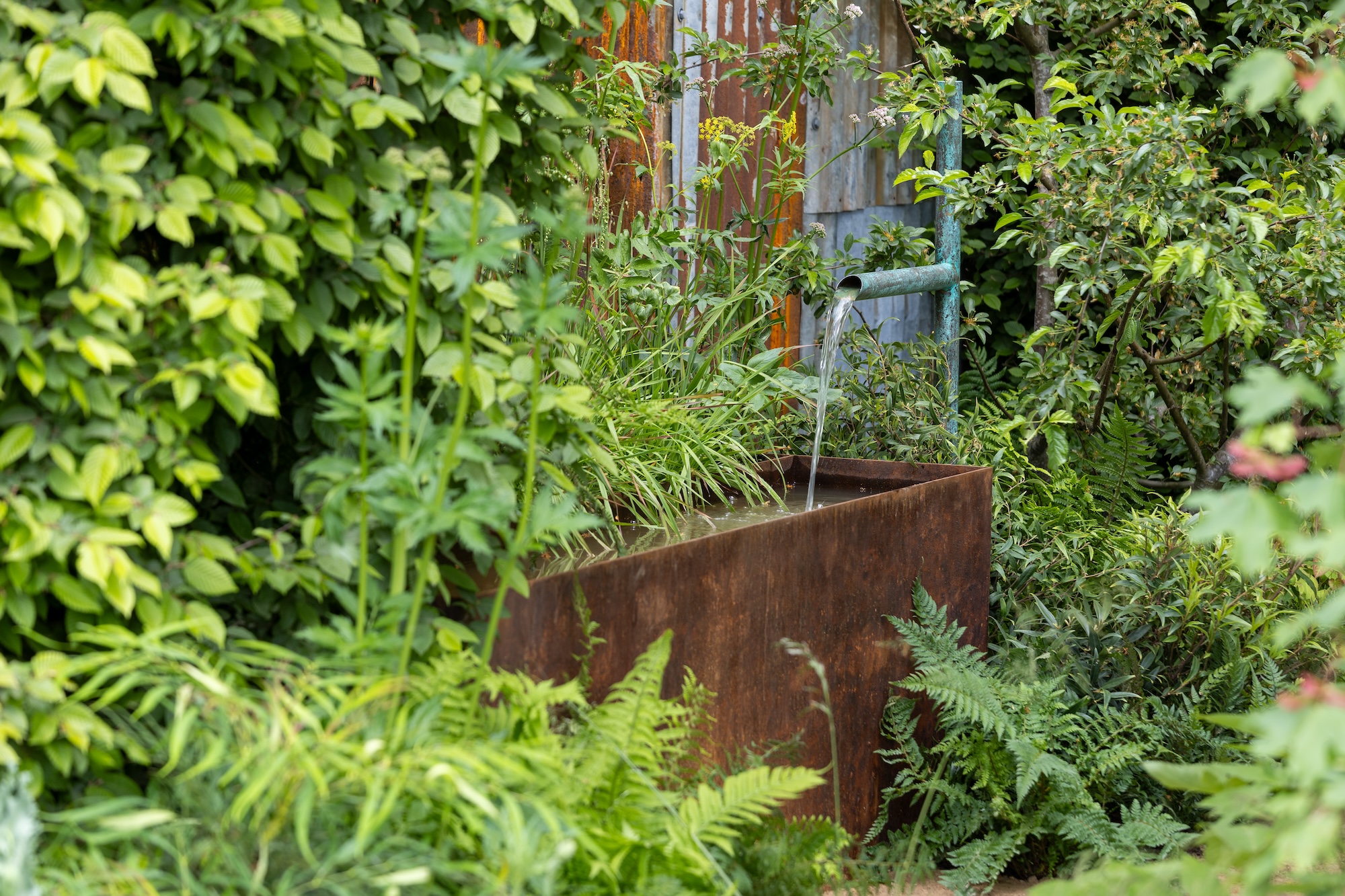
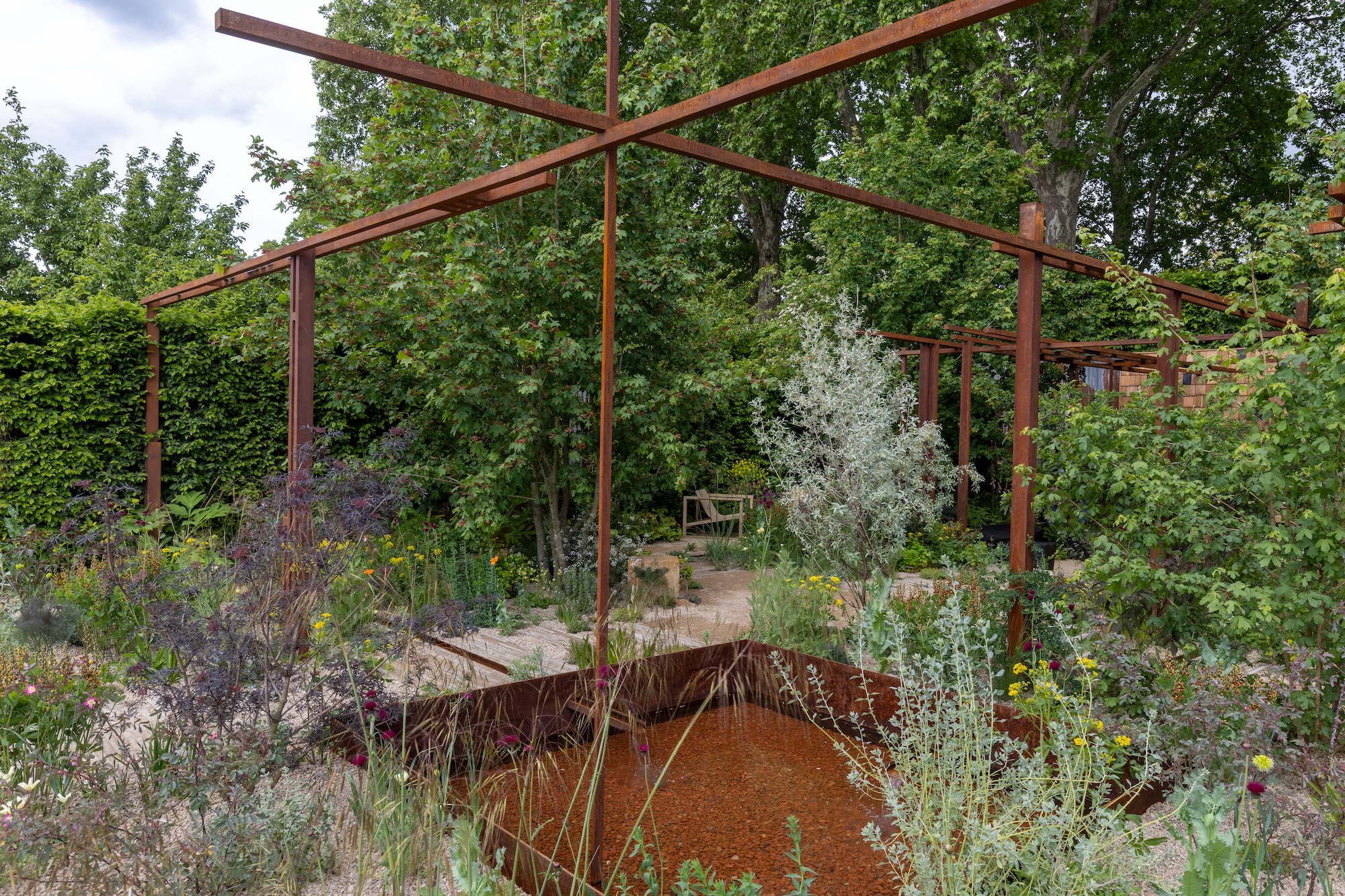
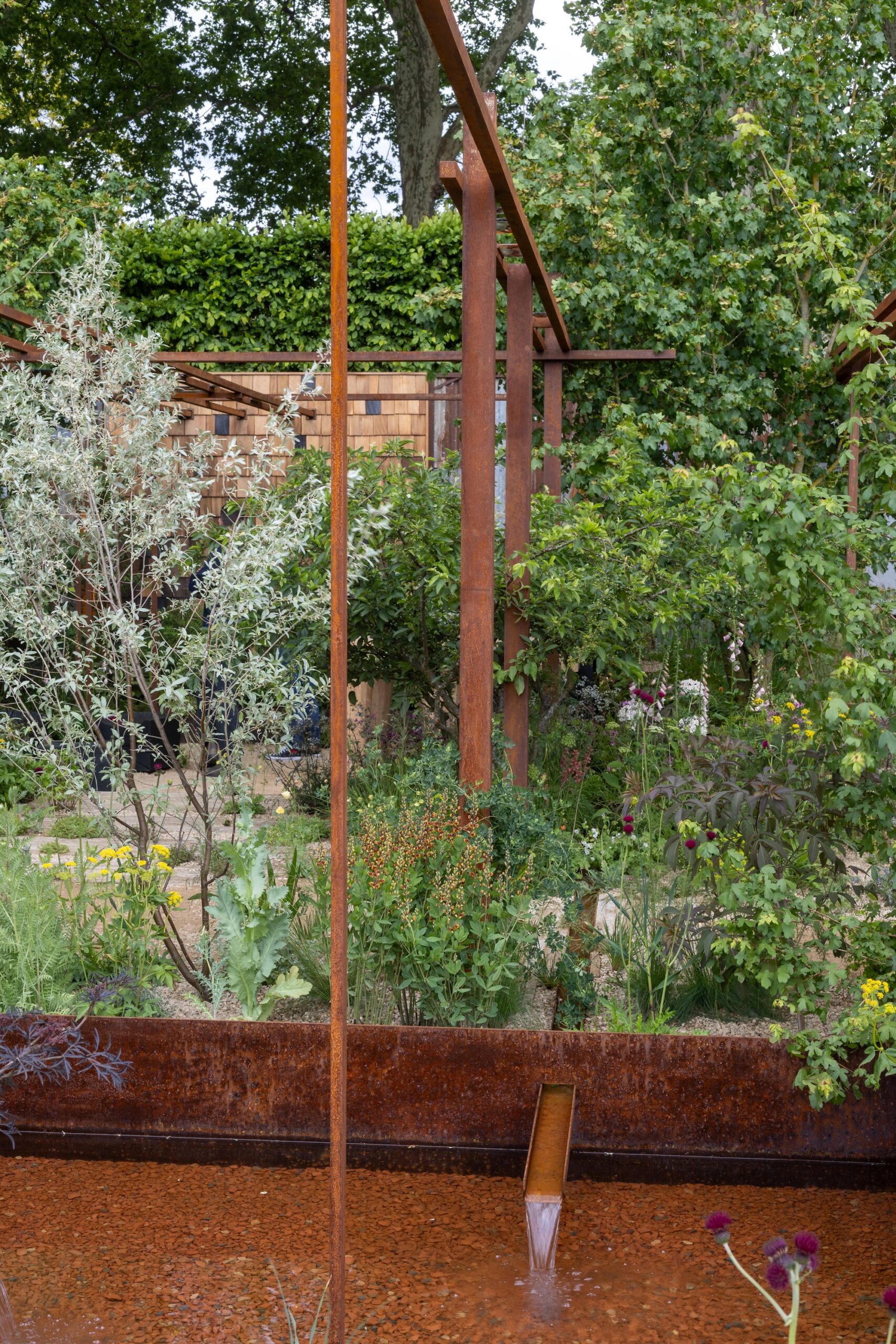
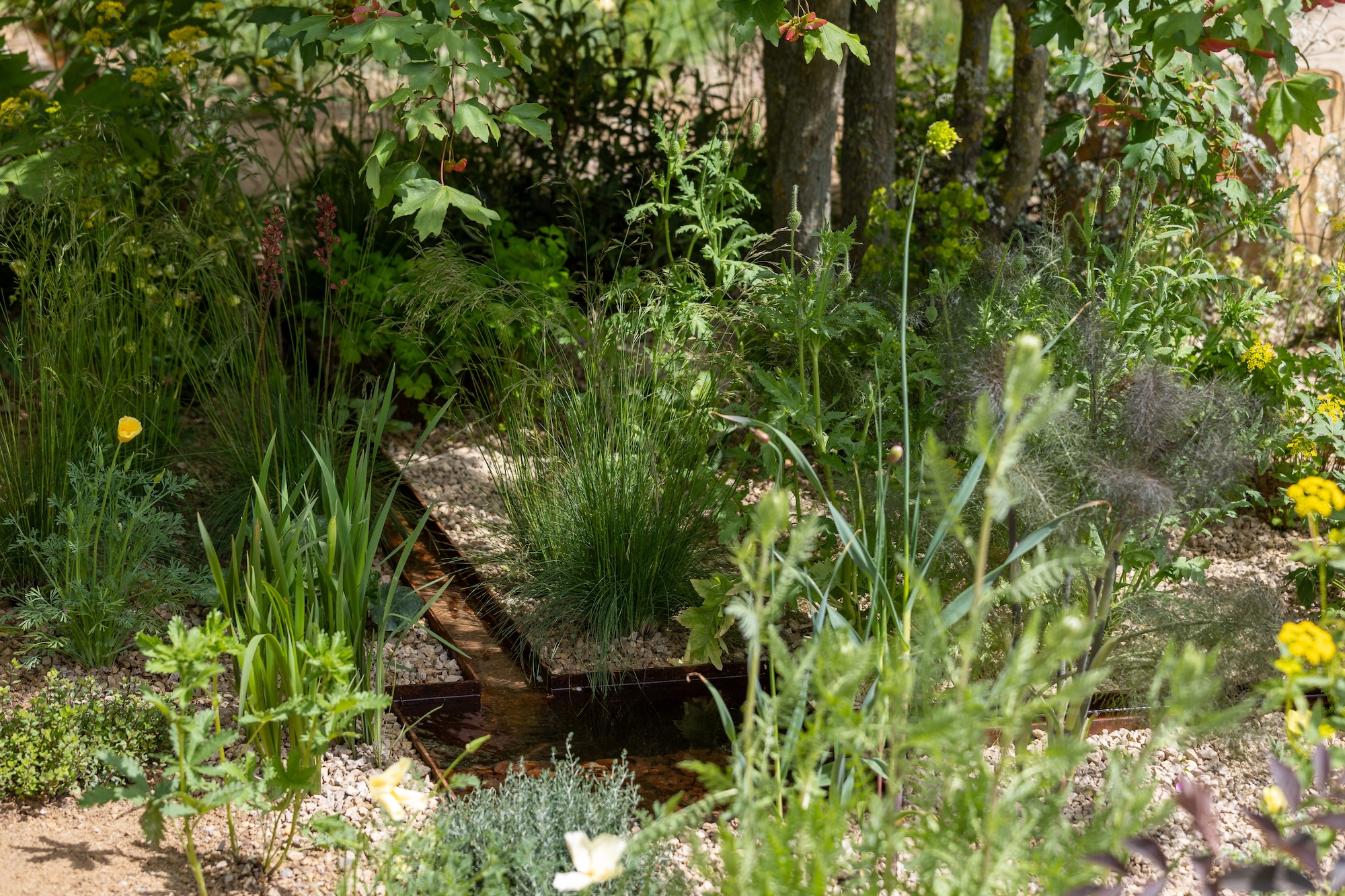
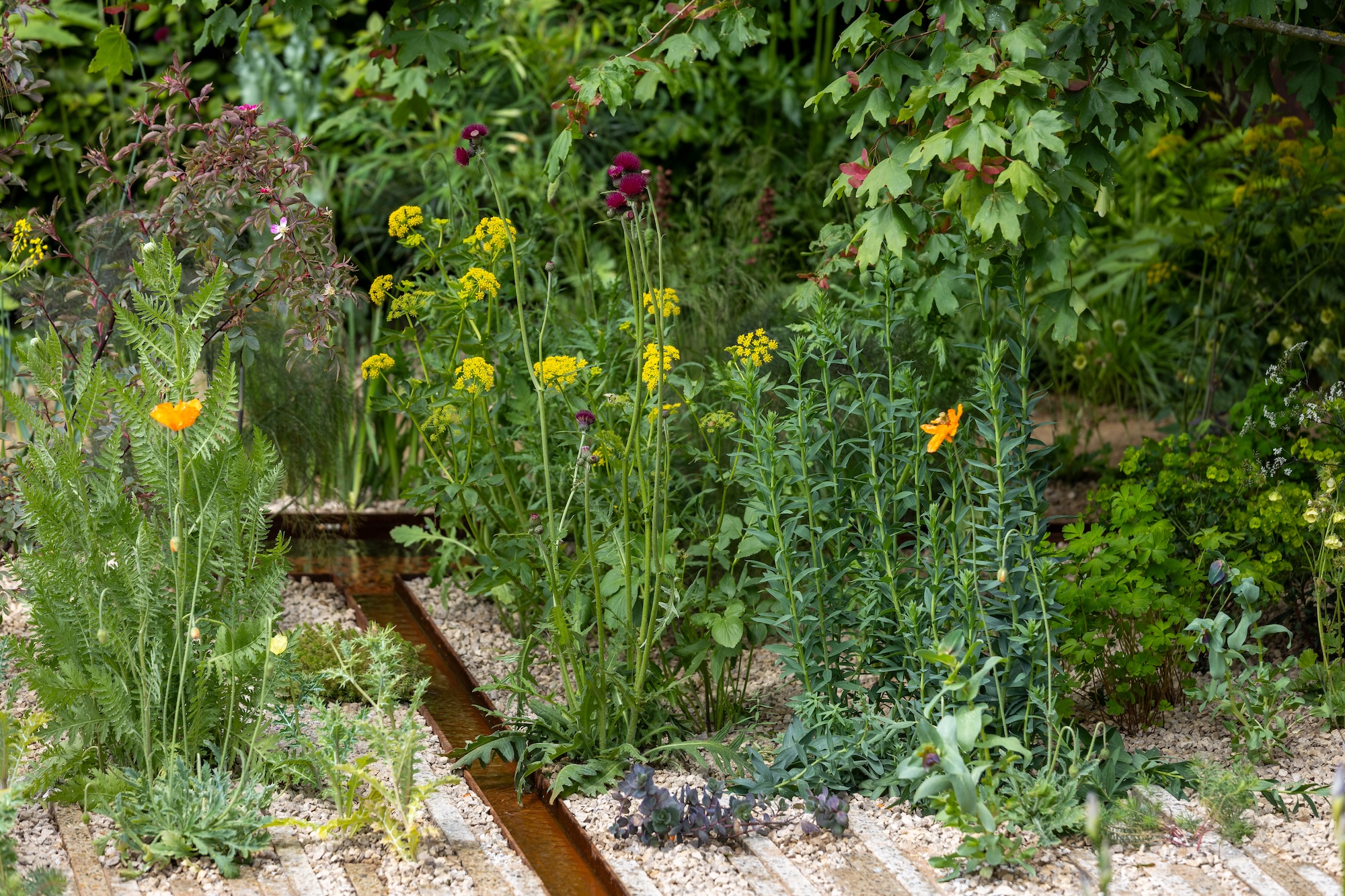
Water was another strong element. More than 32 metres of recycled steel rills ran through and around the garden, visually connecting with the framework overhead. Patrick described the water as a “subtle shimmering ribbon of animation”, but it also helped define the garden as a more enclosed space within the busy showground.
The overhead structure worked in a similar way. Rather than completely closing off the garden, it created a sense of shelter while still allowing light and views through. Together, the water, planting and structure gave the garden some separation from what was happening beyond its edges.
That feeling was important to the wider brief: a place where young people could pause without feeling shut away.

Plants that cope
The garden was divided into sunny, transitional and shaded areas, allowing plants to respond to different conditions across the site. Spring greens, yellows and rich purples brought colour through the scheme, with many species selected because they could thrive in less-than-perfect situations.
Cymbalaria muralis, or ivy-leaved toadflax, grew through cracks and crevices, while Asplenium trichomanes settled into shaded areas. Dryopteris erythrosora brought copper tones that picked up the weathered metals elsewhere in the garden.
More obvious flower colour came from irises, including Iris ‘Kent Pride’ and the softer yellow and white ‘Butter and Sugar’, while the small star-like flowers of Gillenia trifoliata added a finer layer through the planting. The result was deliberately varied rather than pristine, with plants, reclaimed materials and changing light all contributing to the sense that beauty didn’t depend on perfection.
Beyond Chelsea
After Chelsea, it was relocated to The Children’s Society’s youth support centre in Leighton Buzzard, Bedfordshire, where it has become the charity’s first dedicated outdoor wellbeing space for young people.
Here, the ideas explored at Chelsea have a much more practical role. The garden provides somewhere teenagers can spend time outside, talk with support workers or have some space to themselves.
Plant palette
Trees, shrubs & hedging
- Acer campestre (field maple)
- Arbutus × arachnoides
- Carpinus betulus (European hornbeam)
- Coronilla valentina subsp. glauca ‘Citrina’ (scorpion vetch)
- Elaeagnus ‘Quicksilver’ (silverberry)
- Euphorbia mellifera (honey spurge)
- Mahonia ‘Soft Caress’
- Osmanthus × burkwoodii (Burkwood osmanthus)
- Rosa glauca (red-leaved rose)
- Rosa ‘Mutabilis’
- Sambucus ‘Black Lace’ (elder)
- Sarcococca hookeriana ‘Winter Gem’ (sweet box)
- Viburnum opulus ‘Roseum’ (snowball bush)
Sunny plants
- Acaena inermis ‘Purpurea’ (spineless bidibid)
- Achillea filipendulina ‘Parker’s Variety’ (yarrow)
- Allium obliquum (twisted-leaf garlic)
- Allium siculum (Sicilian honey garlic)
- Anthyllis montana ‘Rubra’ (mountain kidney vetch)
- Argemone ochroleuca (Mexican poppy)
- Atriplex hortensis ‘Rubra’ (red orache)
- Ballota pseudodictamnus (ballota)
- Baptisia ‘Dutch Chocolate’ (false indigo)
- Briza media (quaking grass)
- Bupleurum ‘Bronze Form’ (hare’s ear)
- Callirhoe involucrata (purple poppy mallow)
- Cerinthe major ‘Purpurascens’ (honeywort)
- Cirsium rivulare ‘Atropurpureum’ (plume thistle)
- Cistus × skanbergii (rock rose)
- Crithmum maritimum (rock samphire)
- Erigeron karvinskianus (seaside daisy)
- Eschscholzia californica ‘Ivory Castle’ (California poppy)
- Euphorbia palustris (marsh spurge)
- Festuca amethystina (amethyst fescue)
- Foeniculum vulgare ‘Giant Bronze’ (bronze fennel)
- Geum spp. (avens)
- Helianthemum ‘Ben Nevis’ (rock rose)
- Iris spp.
- Isatis tinctoria (woad)
- Ligusticum scoticum (Scots lovage)
- Linaria ‘Peachy’ (toadflax)
- Mathiasella bupleuroides ‘Green Dream’
- Oenothera spp. (evening primrose)
- Origanum vulgare (oregano)
- Papaver spp. (poppies)
- Phlomis ‘Edward Bowles’ (Jerusalem sage)
- Potentilla recta var. sulphurea (sulphur cinquefoil)
- Salvia rosmarinus (rosemary)
- Sedum sexangulare (stonecrop)
- Sesleria ‘Greenlee’ (moor grass)
- Stipa gigantea (giant feather grass)
- Stipa tenuissima ‘Pony Tails’ (Mexican feather grass)
- Teucrium chamaedrys (wall germander)
- Thymus fragrantissimus (orange-scented thyme)
- Verbascum spp. (mullein)
- Zizia aurea (golden Alexanders)
Shade plants
- Adiantum pedatum (maidenhair fern)
- Asplenium trichomanes (maidenhair spleenwort)
- Blechnum chilense (Chilean hard fern)
- Blechnum spicant (hard fern)
- Cenolophium denudatum (Baltic parsley)
- Disporopsis pernyi (evergreen Solomon’s seal)
- Dryopteris erythrosora (autumn fern)
- Epimedium spp. (barrenwort)
- Galium odoratum (sweet woodruff)
- Geranium phaeum ‘Samobor’ (dusky cranesbill)
- Gillenia trifoliata (bowman’s root)
- Lamium orvala (balm-leaved deadnettle)
- Polygonatum verticillatum (whorled Solomon’s seal)
- Pulmonaria ‘Diana Clare’ (lungwort)
Transitional plants
- Acaena inermis ‘Purpurea’ (spineless bidibid)
- Acanthus mollis (bear’s breeches)
- Angelica gigas (Korean angelica)
- Anthriscus ‘Ravenswing’ (cow parsley)
- Astrantia major ‘Claret’ (masterwort)
- Centaurea nigra (common knapweed)
- Corydalis ochroleuca (white corydalis)
- Cymbalaria muralis (ivy-leaved toadflax)
- Deschampsia cespitosa ‘Goldtau’ (tufted hair grass)
- Digitalis spp. (foxgloves)
- Dipsacus fullonum (teasel)
- Epimedium ‘Glingal’ (barrenwort)
- Euonymus cornutus var. quinquecornutus (spindle)
- Euphorbia spp.
- Fuchsia ‘Hawkshead’
- Geranium macrorrhizum ‘White-ness’ (cranesbill)
- Geum ‘Alabama Slammer’ (avens)
- Hesperis matronalis spp. (sweet rocket)
- Heuchera ‘Brownfinch’ (coral bells)
- Lunaria annua ‘Chedglow’ (honesty)
- Melica uniflora f. albida (wood melick)
- Mukdenia rossii
- Myrrhis odorata (sweet cicely)
- Sambucus ‘Black Lace’ (elder)
- Saxifraga spp.
- Umbilicus oppositifolius (navelwort)
- Valeriana officinalis (valerian)
—
After being showcased at the RHS Chelsea Flower Show, this garden will be relocated to a youth support centre in Leighton Buzzard, Bedfordshire, a space that provides teenagers with a safe space to talk, reflect and access the support they need without long waits or unnecessary barriers.
—
Designed by Patrick Clarke Landscapes
Built by Yoreland Design Ltd
Planting team Studio Ikram Ltd
—
Patrick Clarke is a UK landscape and garden designer with around 30 years’ experience across landscape architecture, planning, urban design and private garden design. His work is shaped by an interest in the relationship between people, place and landscape, often drawing on local history, materials and vernacular references to inform each project.
Based in Brighton, Patrick runs Patrick Clarke Landscapes and is also Lead Tutor on the Diploma in Garden Design at KLC in Chelsea. His work has received awards in the UK and overseas, including three gardens at the RHS Chelsea Flower Show.
—
More RHS Chelsea Flower Show Gardens here