
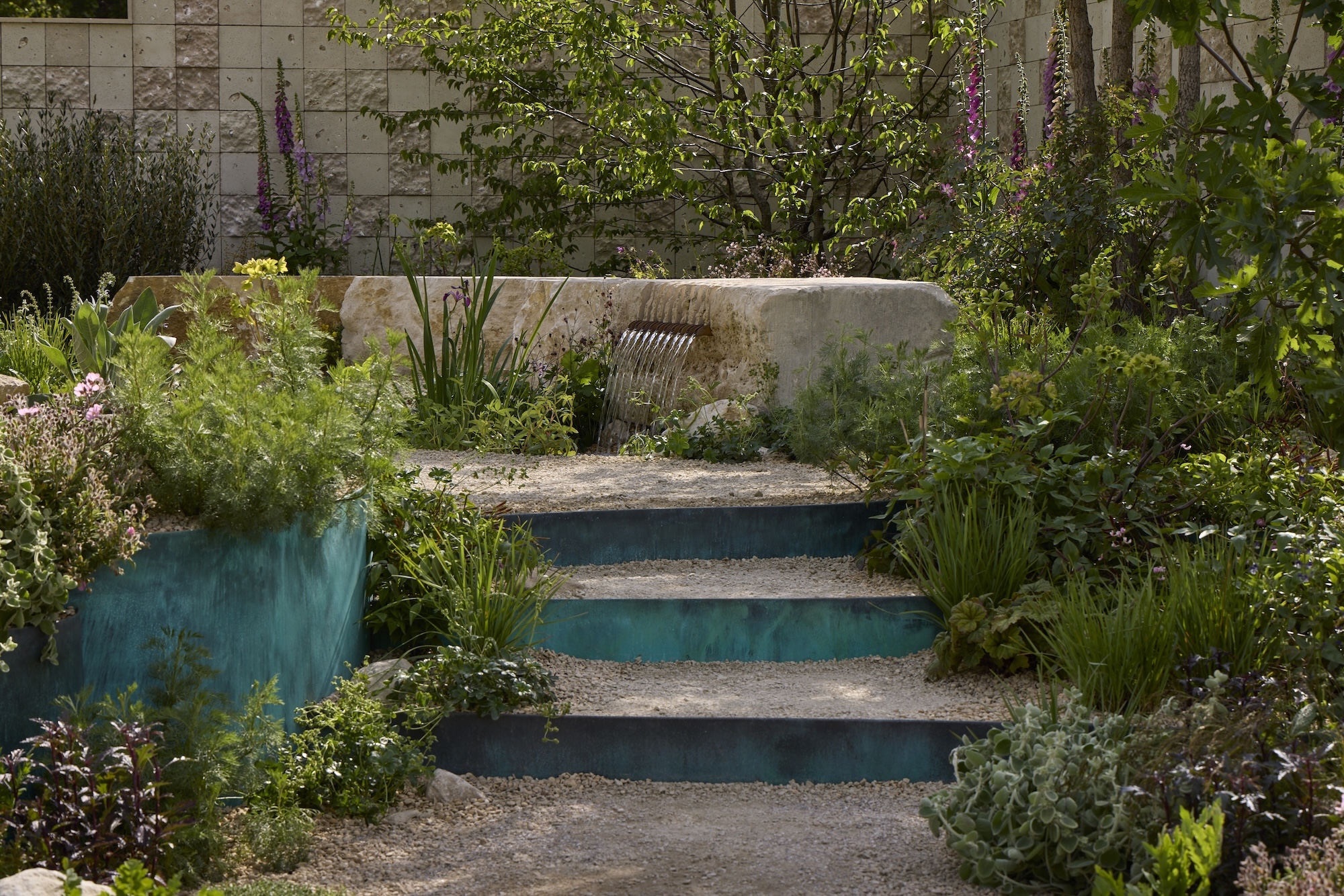
Flourish in the City was awarded Small Garden of the Year and a Gold Medal at the 2026 RHS Chelsea Flower Show. It was sponsored by law firm, Addleshaw Goddard.
Landscape design by Joe and Laura Carey, Carey Garden Design Studio.
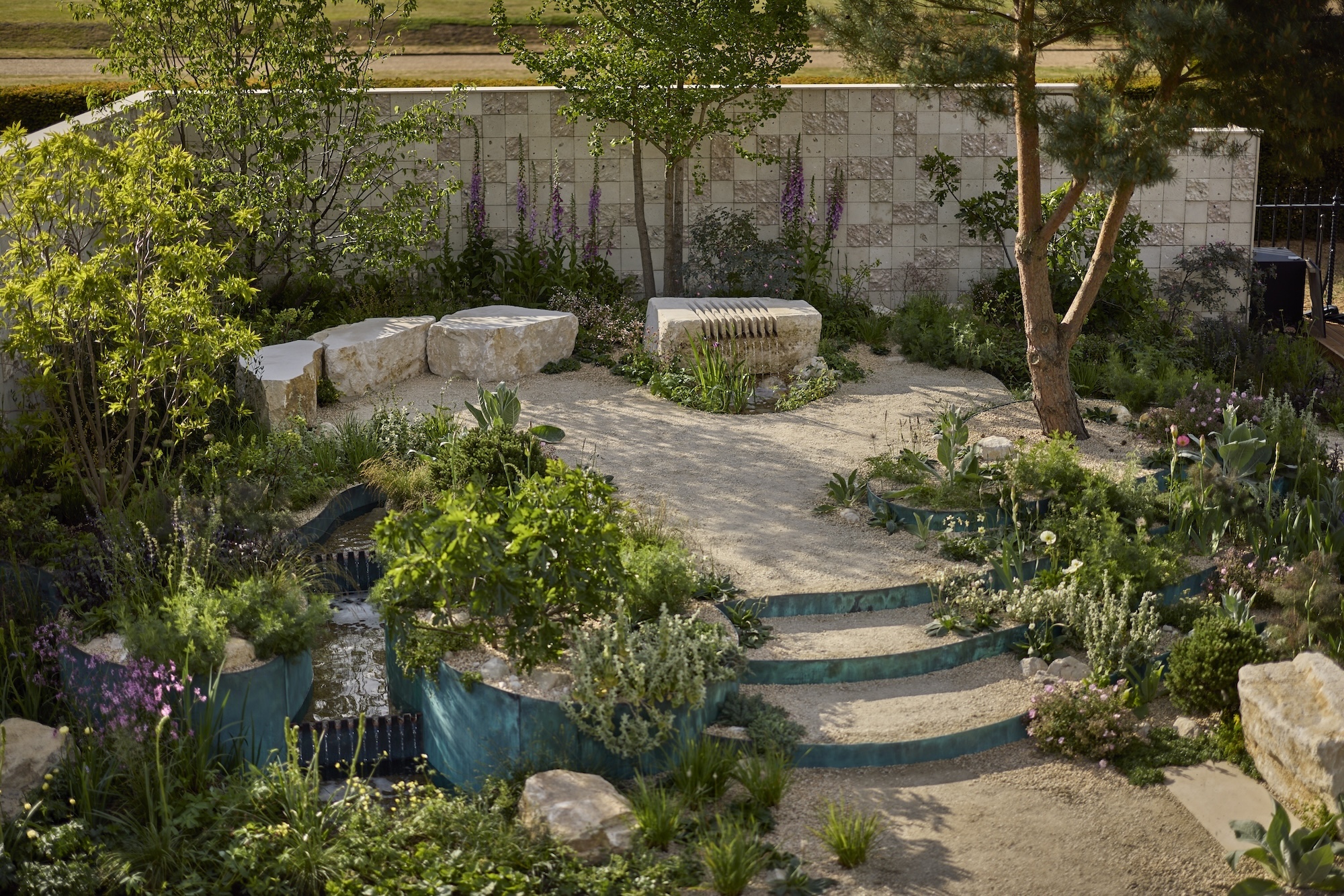
London’s pocket-sized gardens and green spaces inspired a show garden celebrating the city’s urban oases. Joe and Laura Carey combined resilient planting with materials drawn from London’s history and built environment to create a richly layered retreat.
London distilled
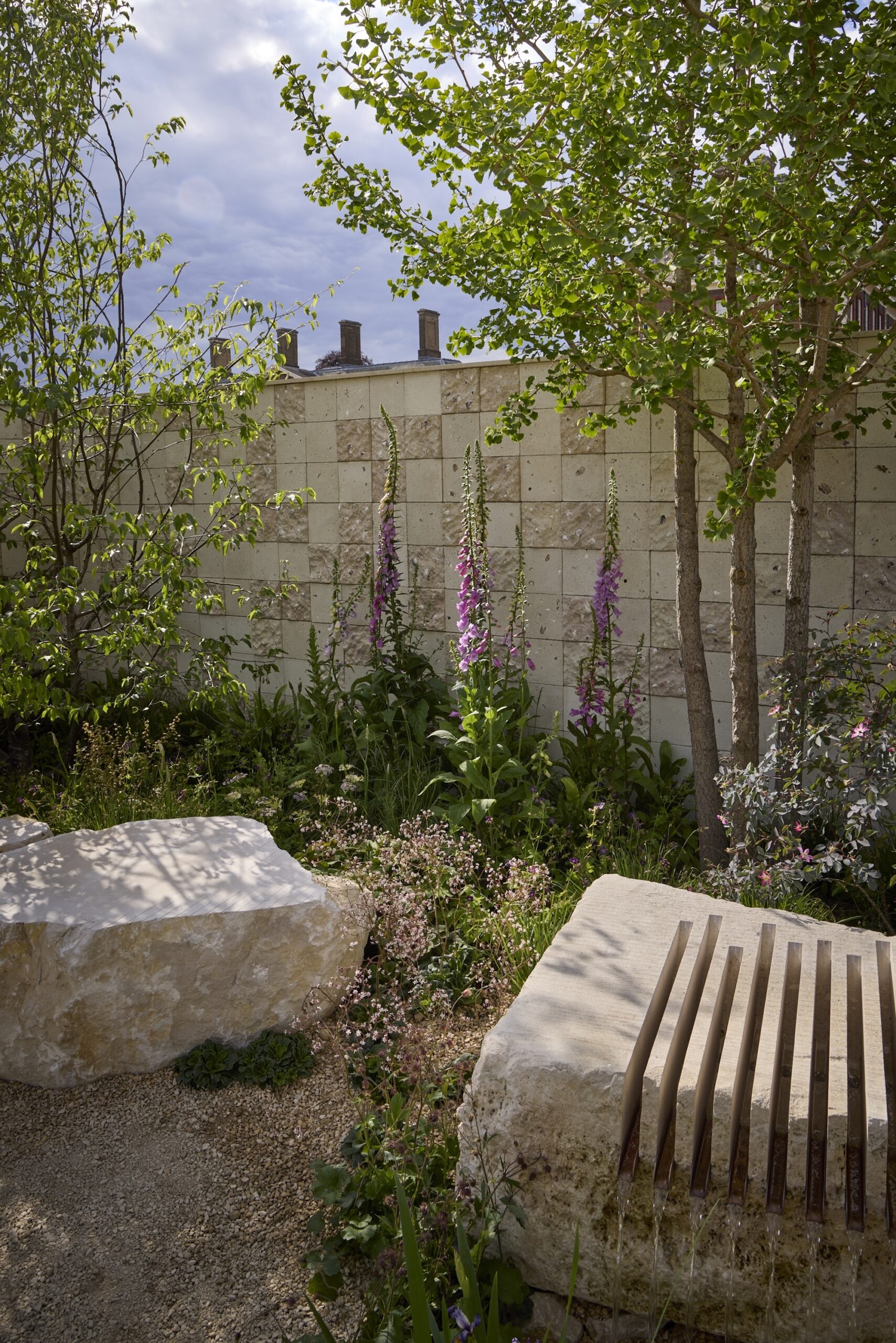
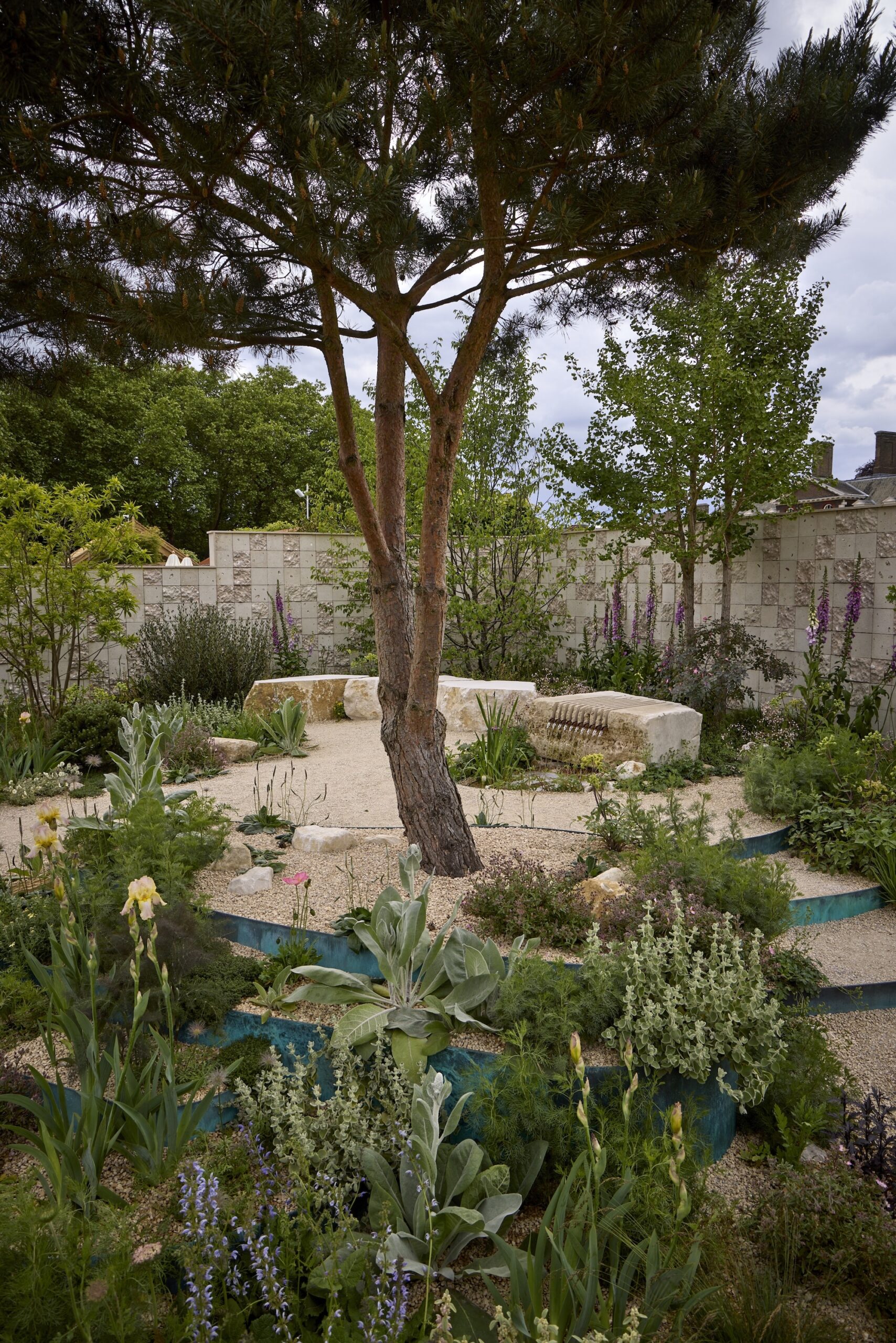
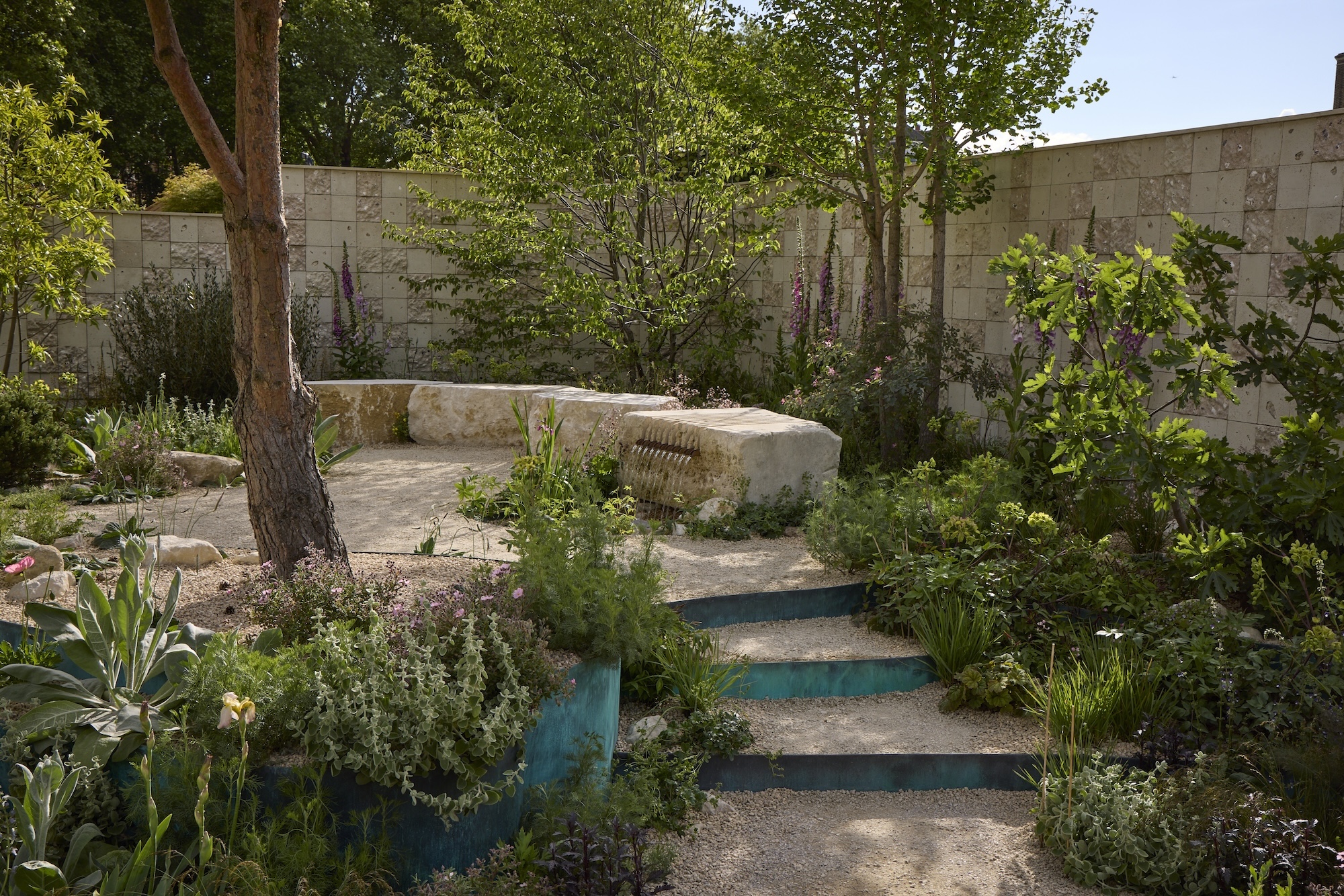
London’s smallest gardens could be some of its most valuable. Courtyards, pocket parks, planted streets and overlooked patches of green provide places to pause and gather amid the rush of the city. Flourish in the City took these urban oases as its starting point, imagining the garden as a pearl within the city. Inspired partly by London’s oyster heritage, the design brought together materials closely associated with the capital – Portland stone, concrete and weathered metals – with abundant planting intended to thrive in urban conditions.
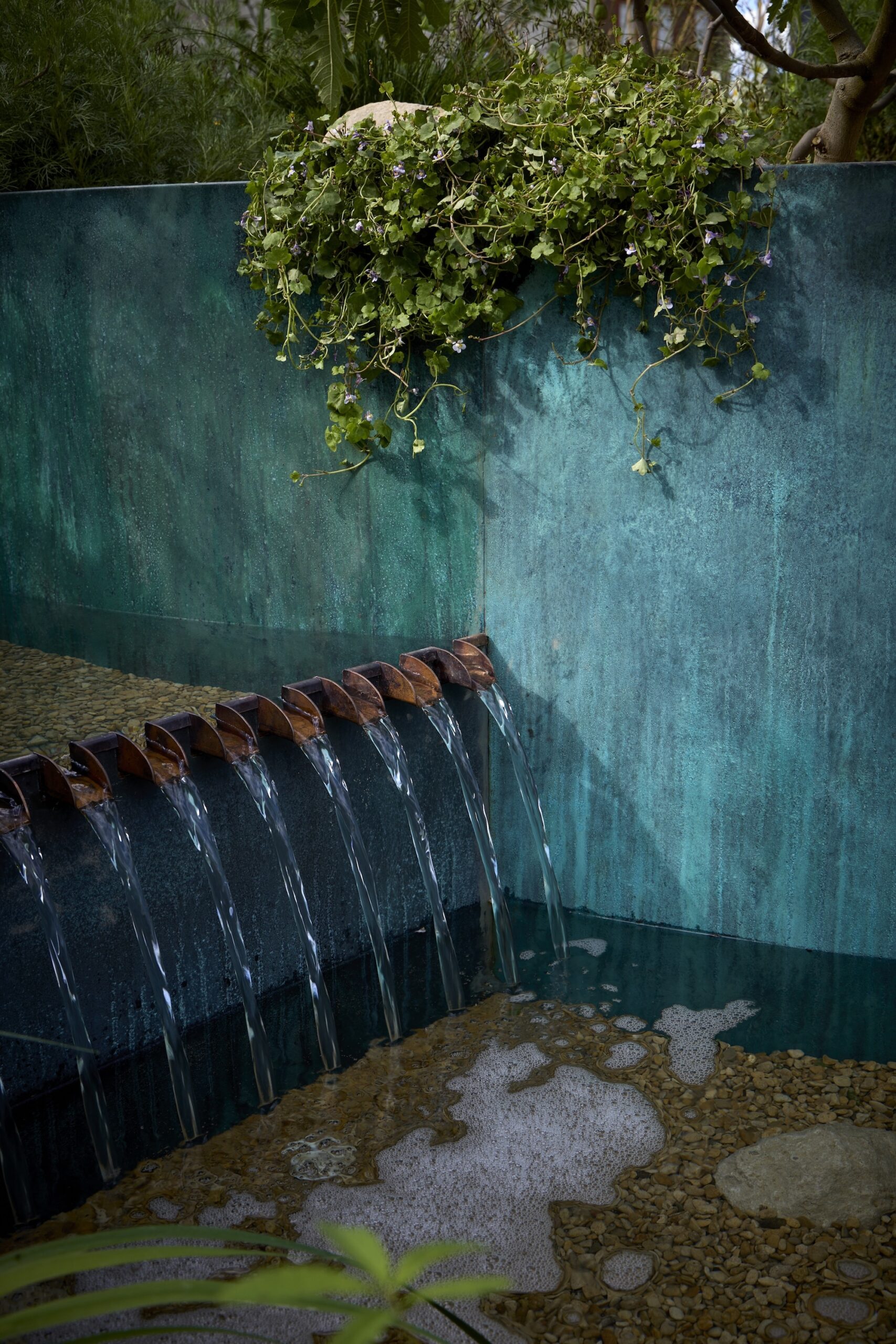
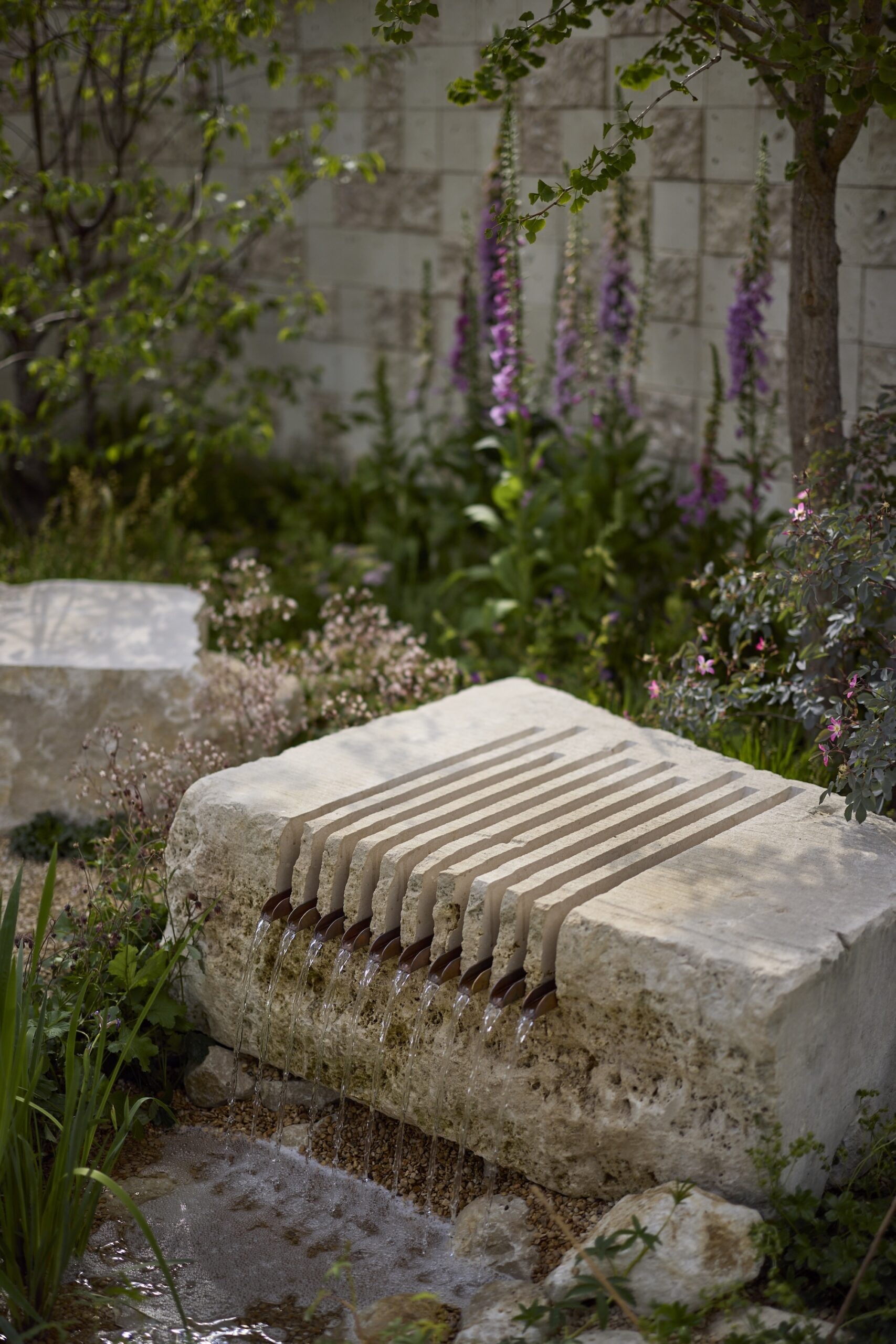
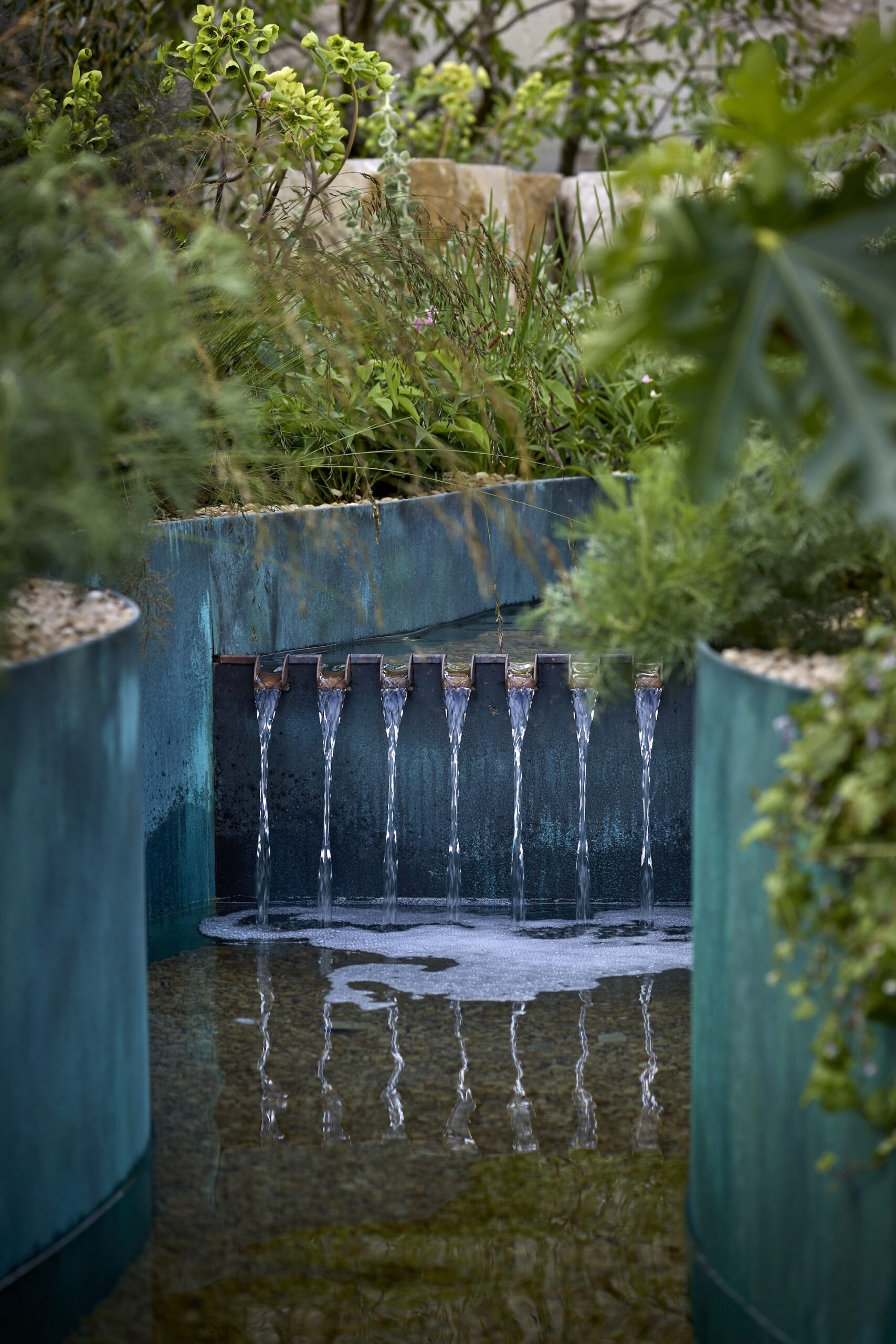
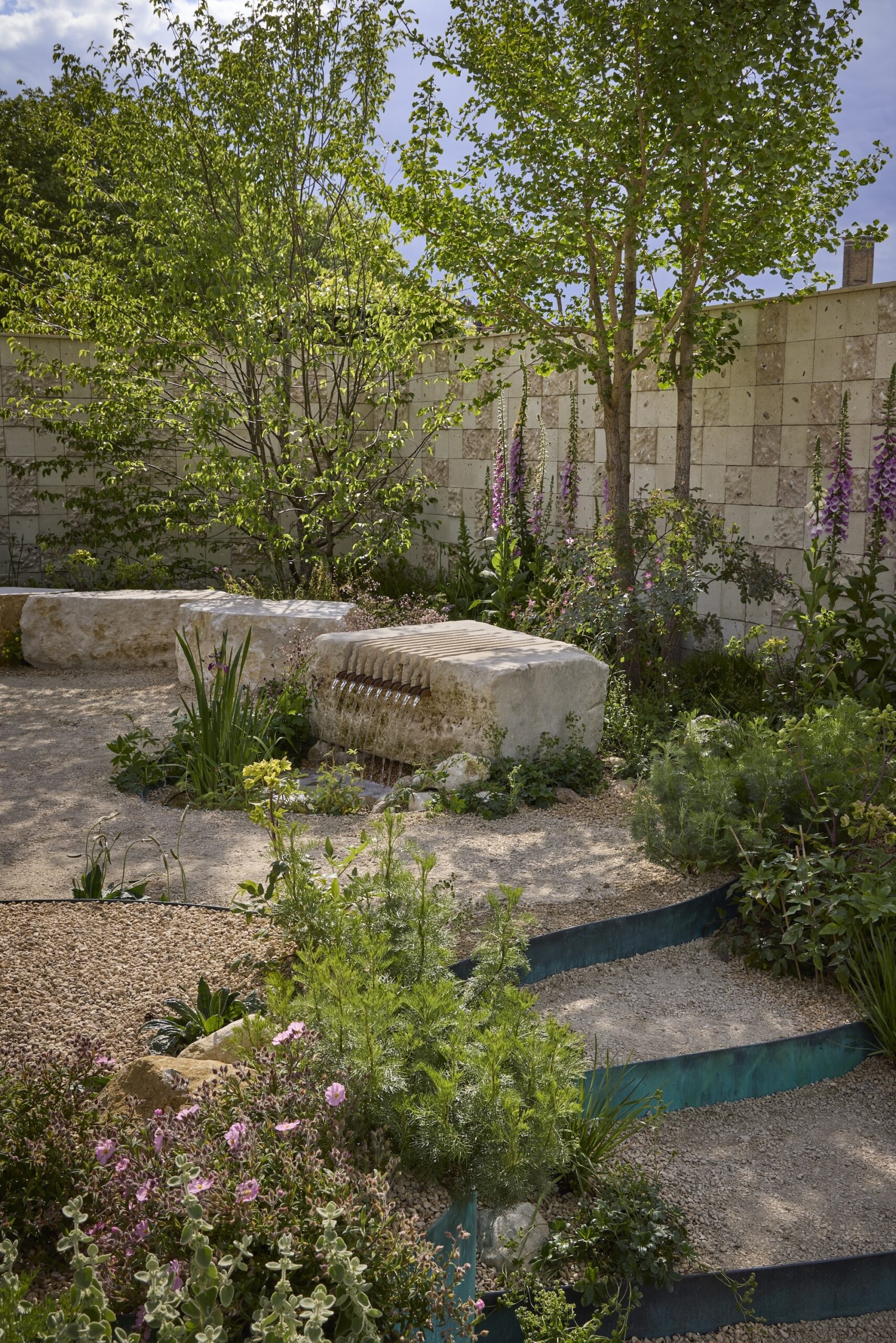
Water moved through the garden too, referencing London’s hidden rivers and adding another natural element to an otherwise distinctly urban material palette.
The fabric of London
Rather than reproducing a particular London garden, the designers distilled elements they saw as characteristic of the city and used them within the show garden.
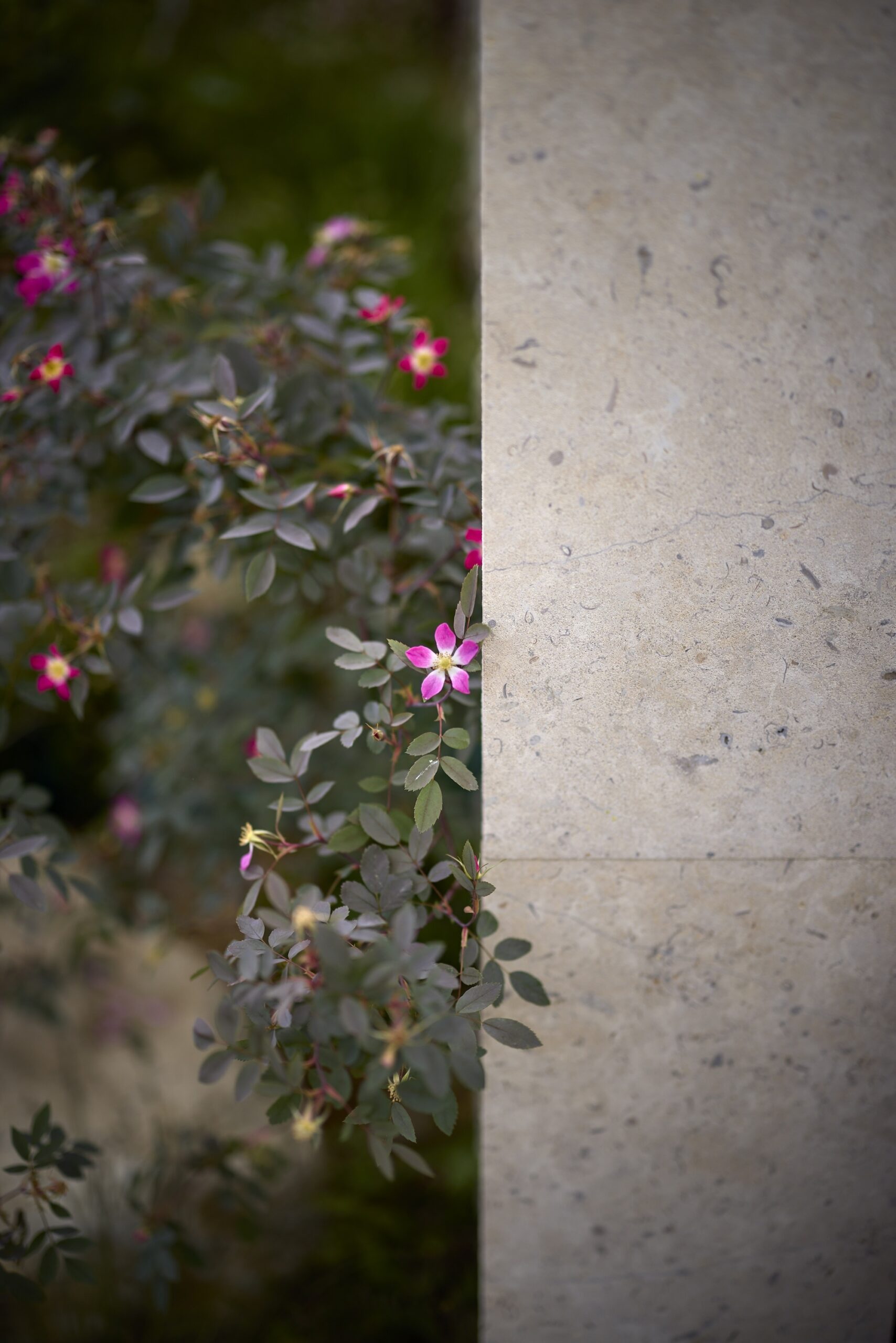
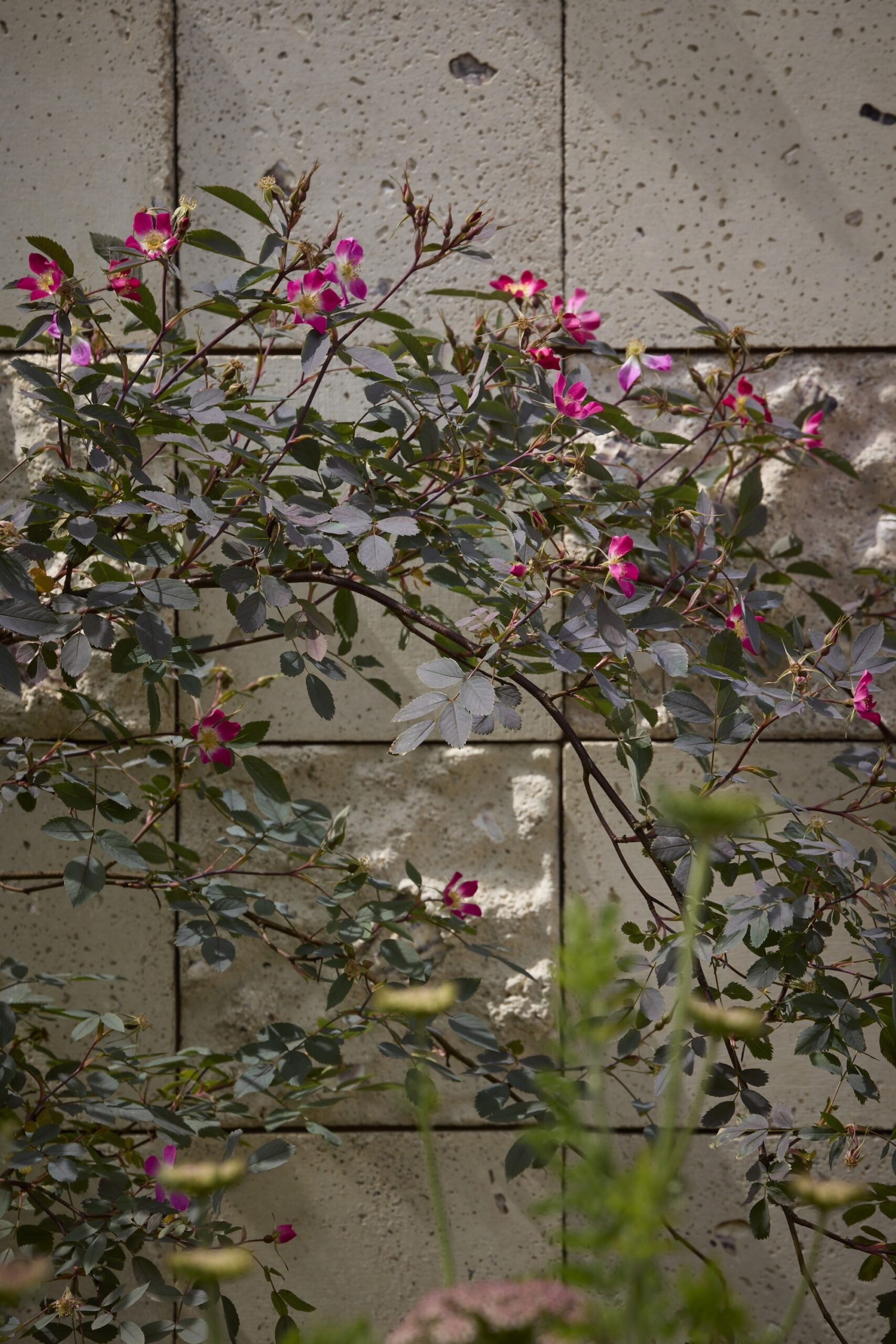
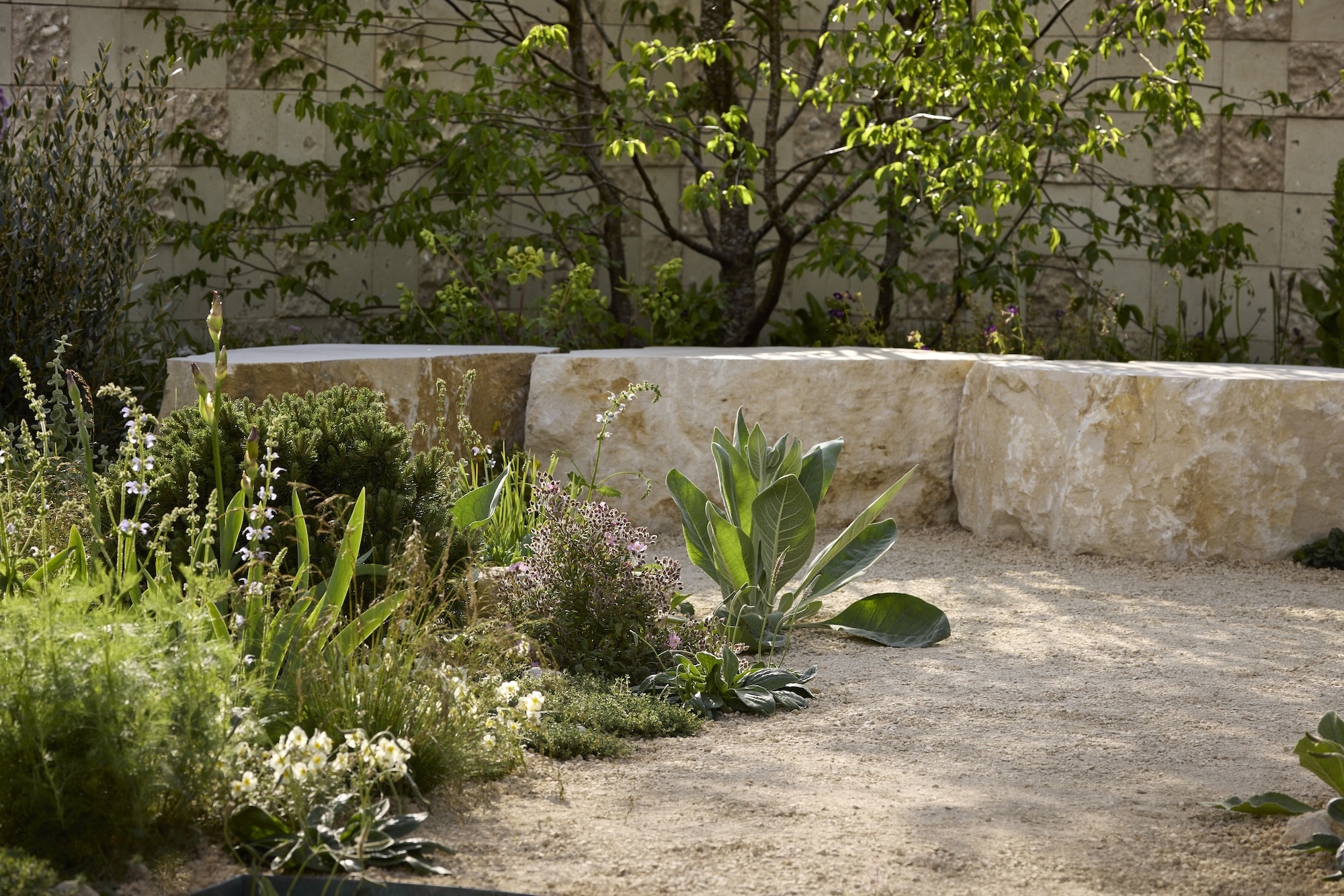
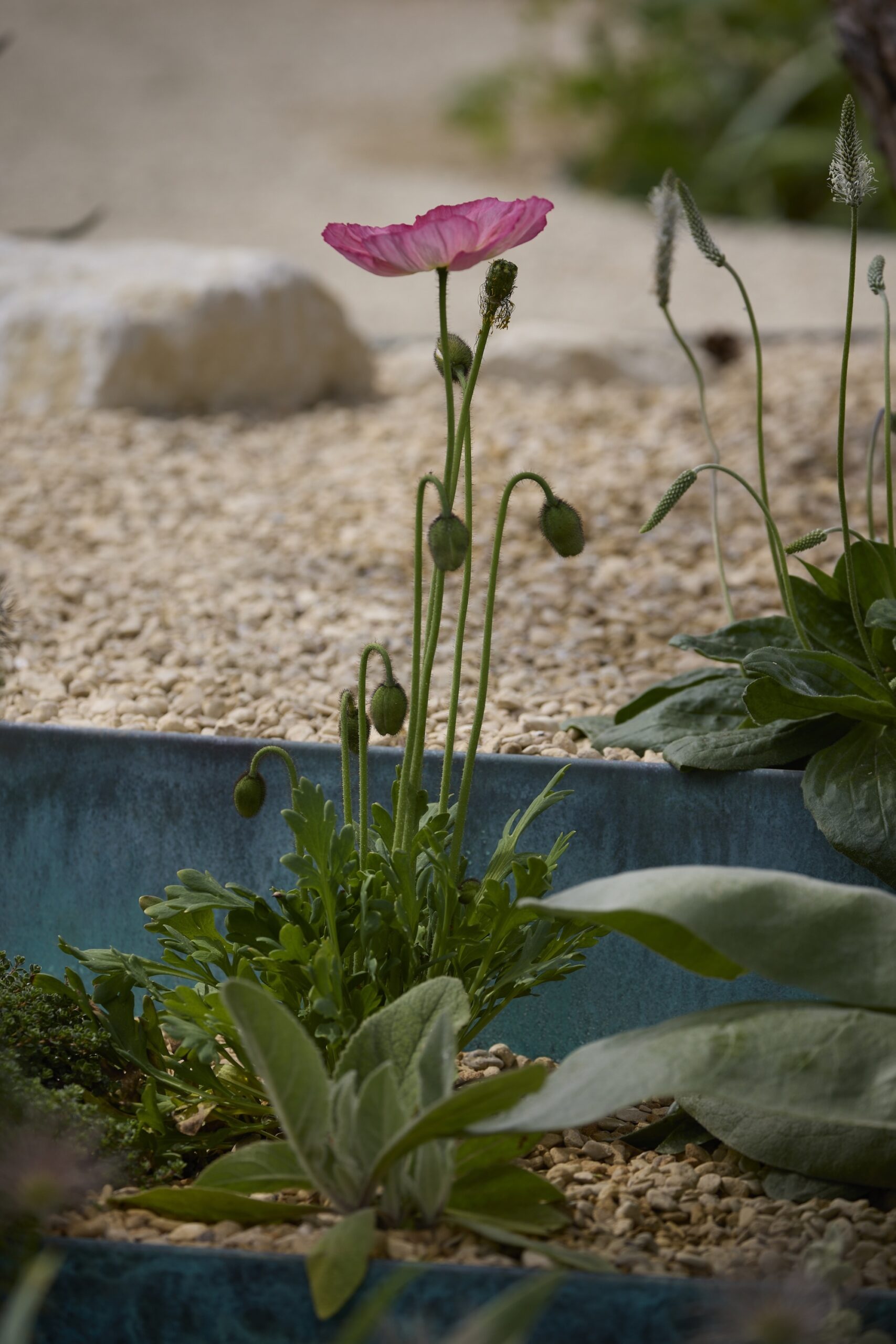
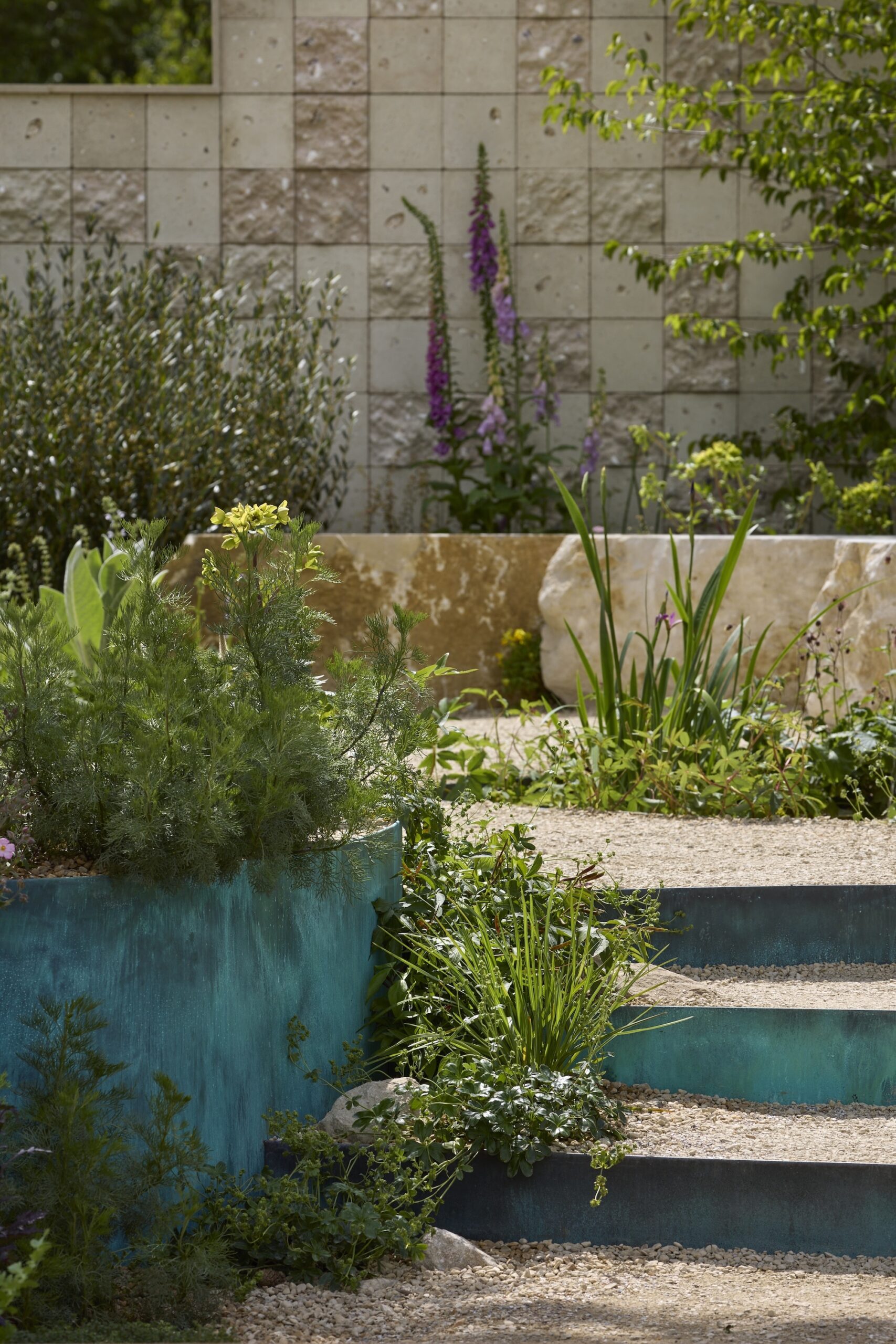
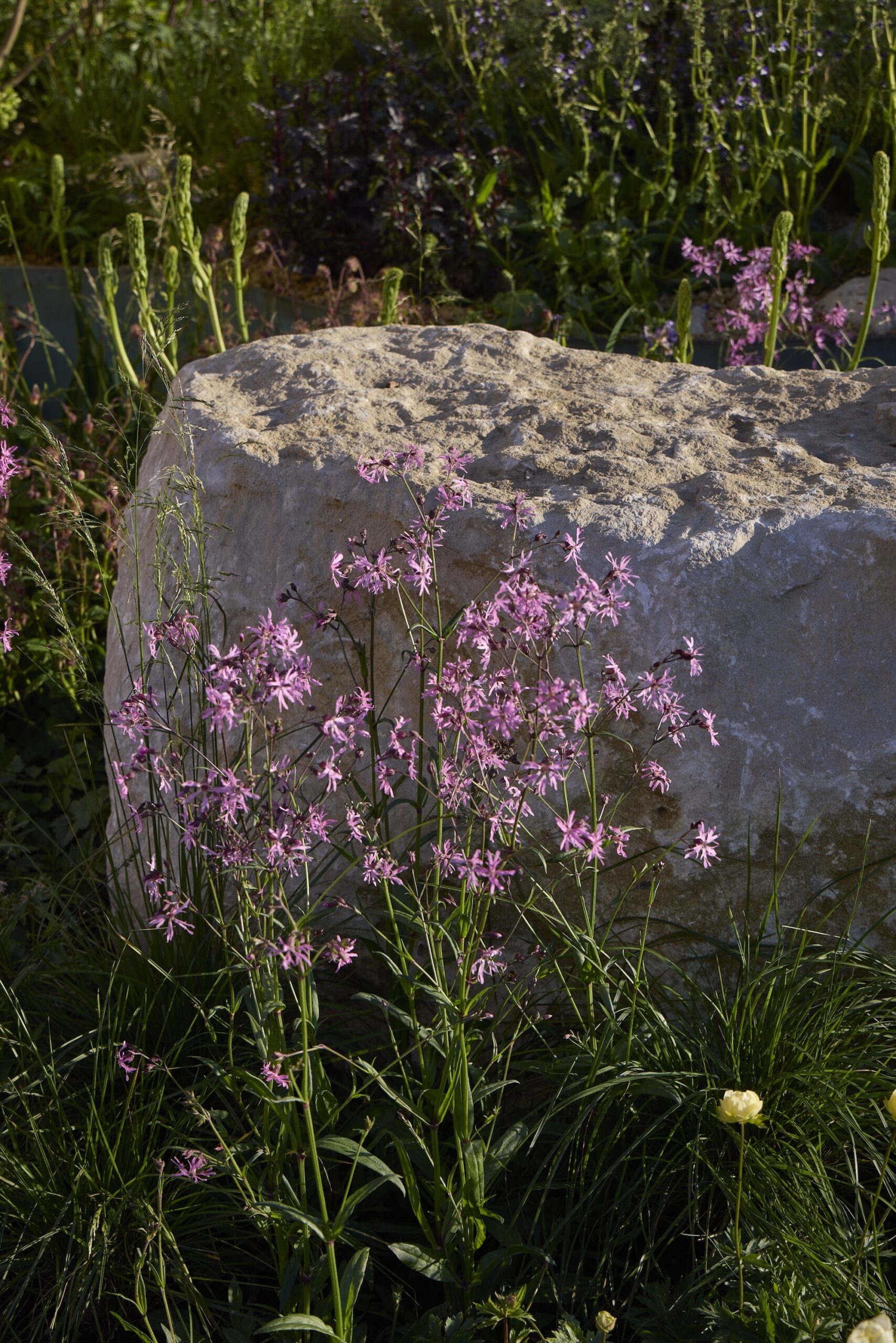
Portland stone referenced a material that became closely associated with London architecture, particularly following Sir Christopher Wren’s rebuilding work after the Great Fire. Brass, copper and concrete introduced more industrial notes, while planting softened and pushed through the harder surfaces.
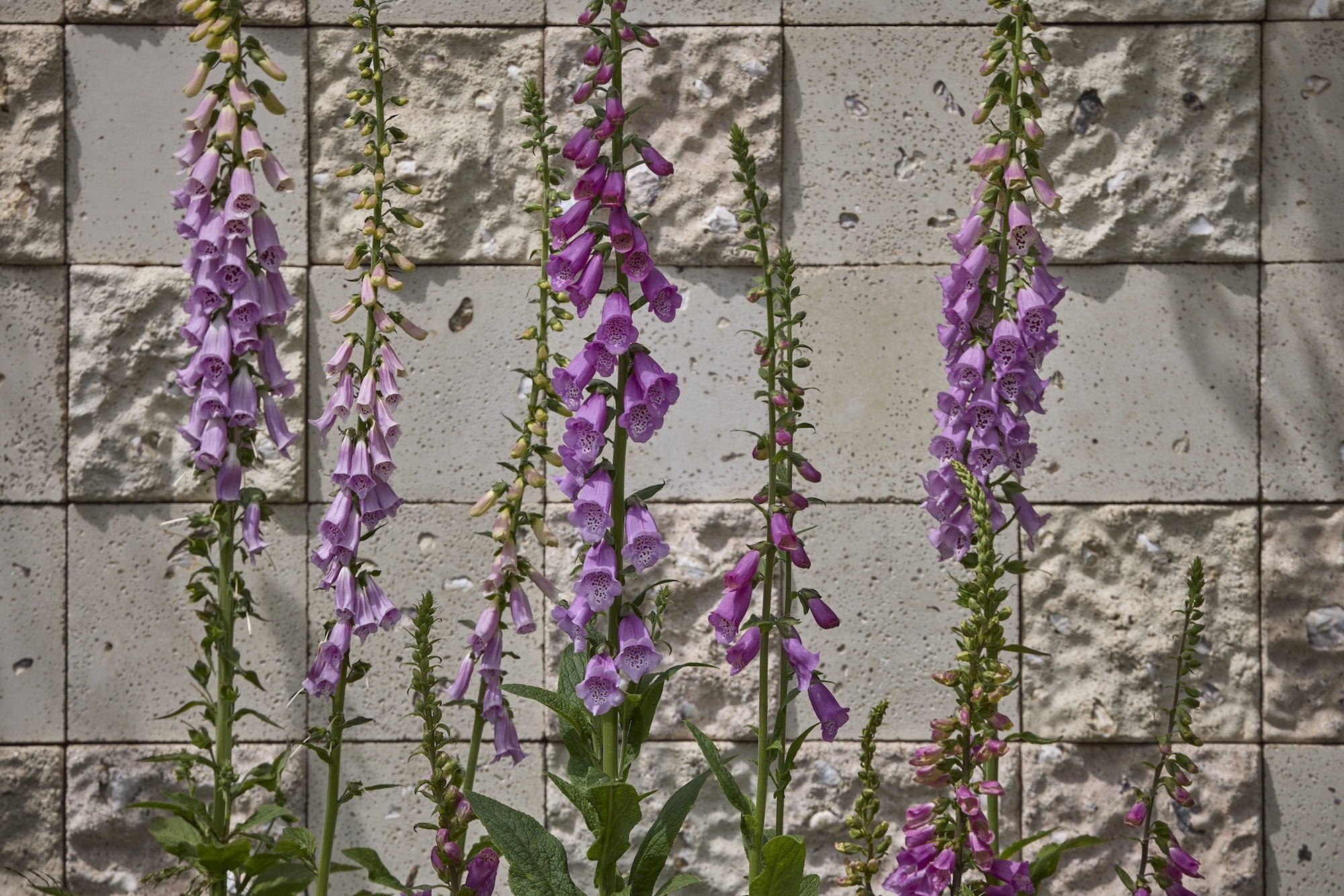
Some materials carried more specific pieces of London history. The cap stone (Bath rag) on the wall was salvaged from recent work at Buckingham Palace, while waste oyster shells appeared throughout the garden in several forms.
The designers were also influenced by Thomas Heatherwick’s Humanise campaign and its argument for more joyful and engaging buildings. Here, repetition provided structure, but the details became richer on closer inspection.
From shell to structure
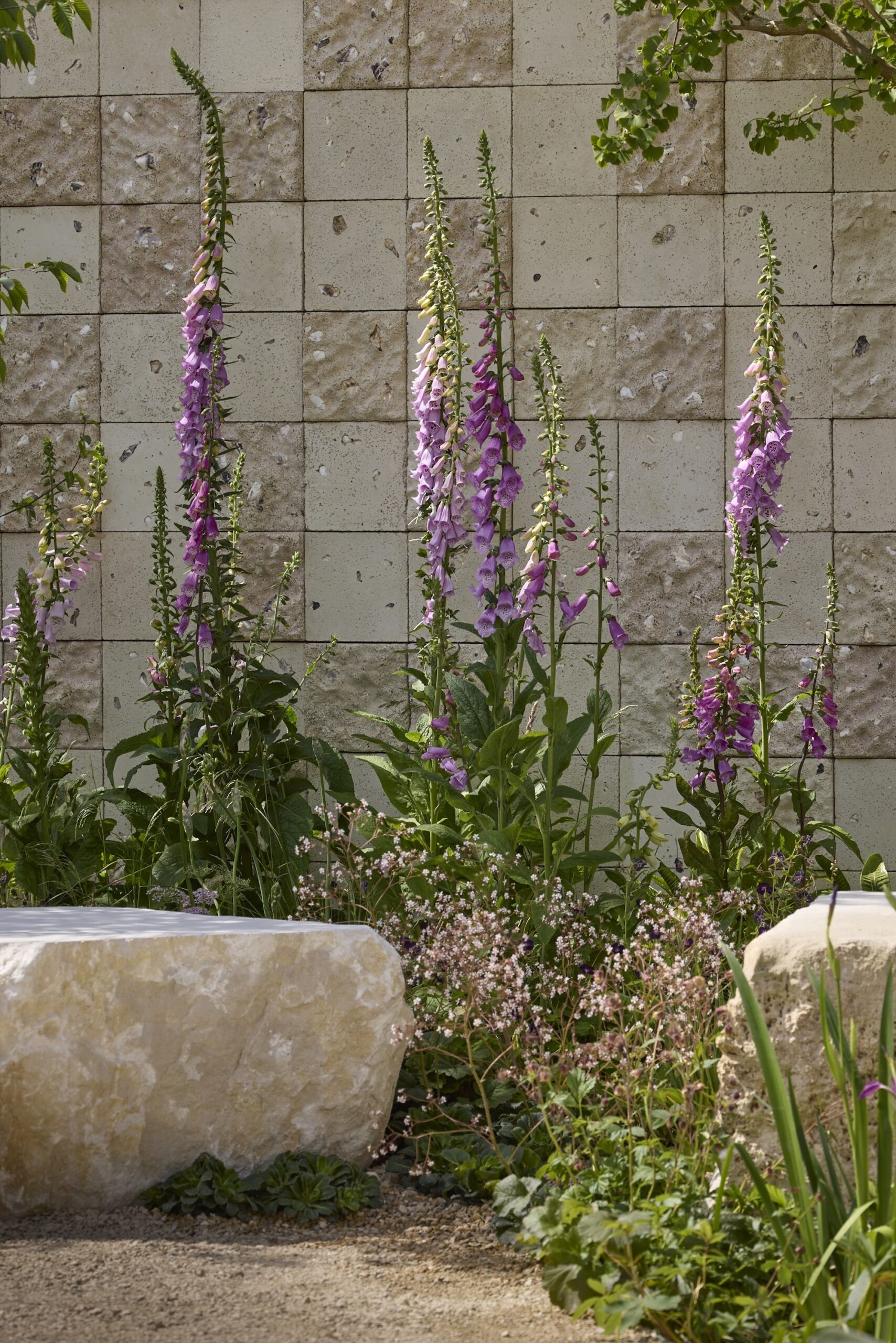
One of the garden’s most unusual materials was Oyster[Crete], developed using waste oyster shells collected from London restaurants. The designers describe it as a lower-carbon alternative to conventional concrete, using naturally occurring minerals within the shells as part of the binding process. Crushed oyster-shell aggregate was also incorporated into the garden’s gravel.
This approach ran throughout the project – many elements had a previous life or made use of waste streams. Some of the natural stone was reclaimed or sourced from quarry by-products, while modular steel structures reduced the amount of concrete required.
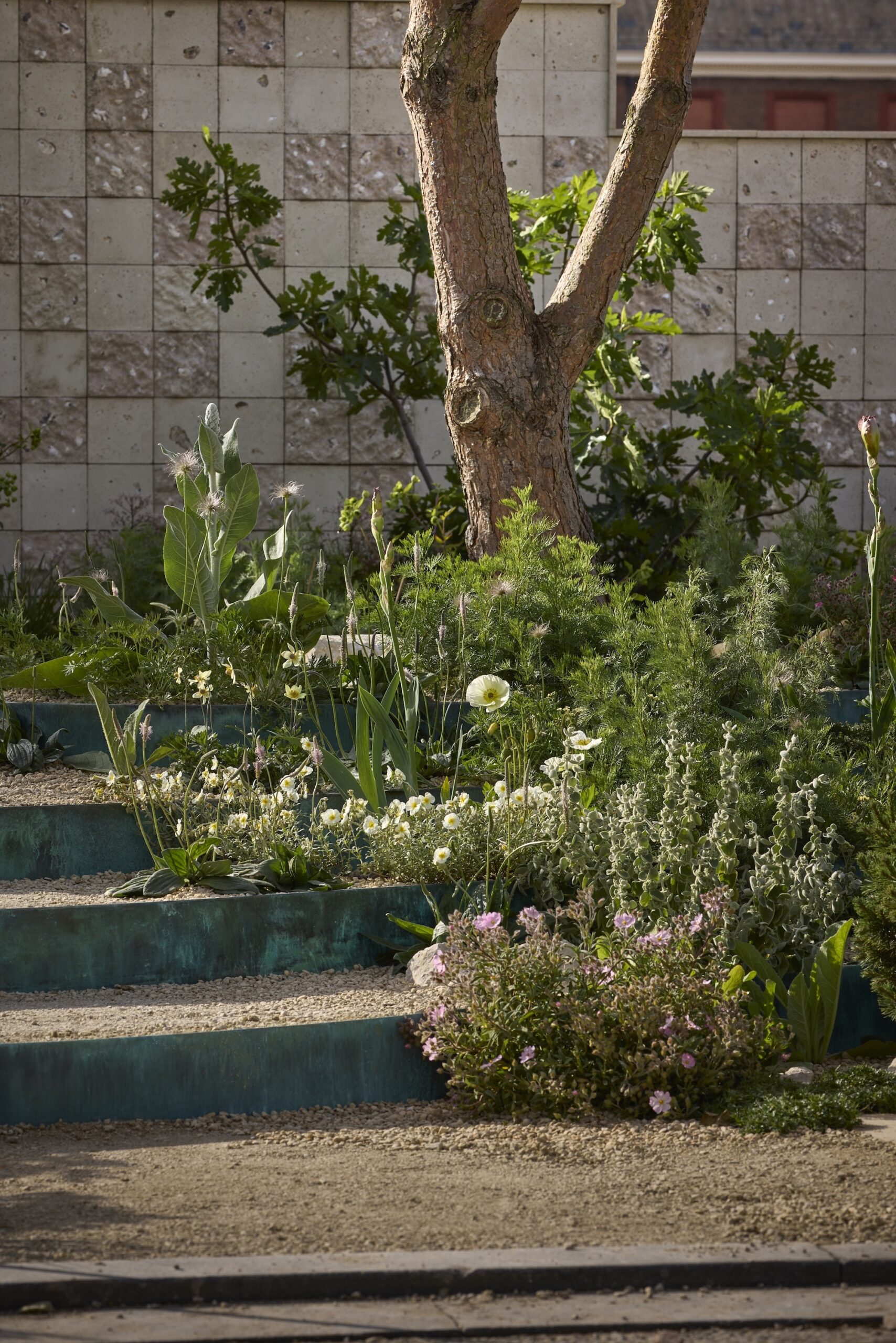
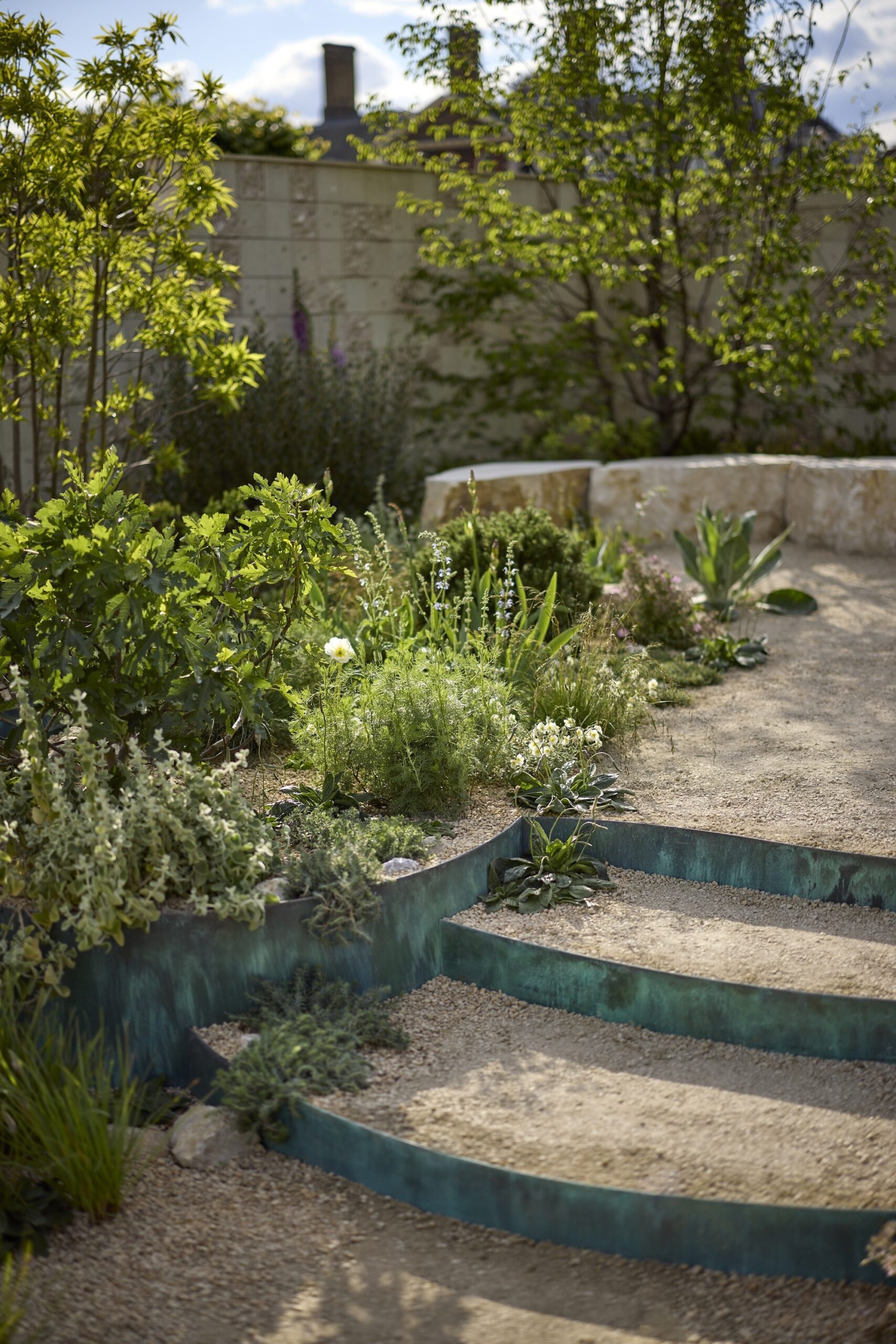
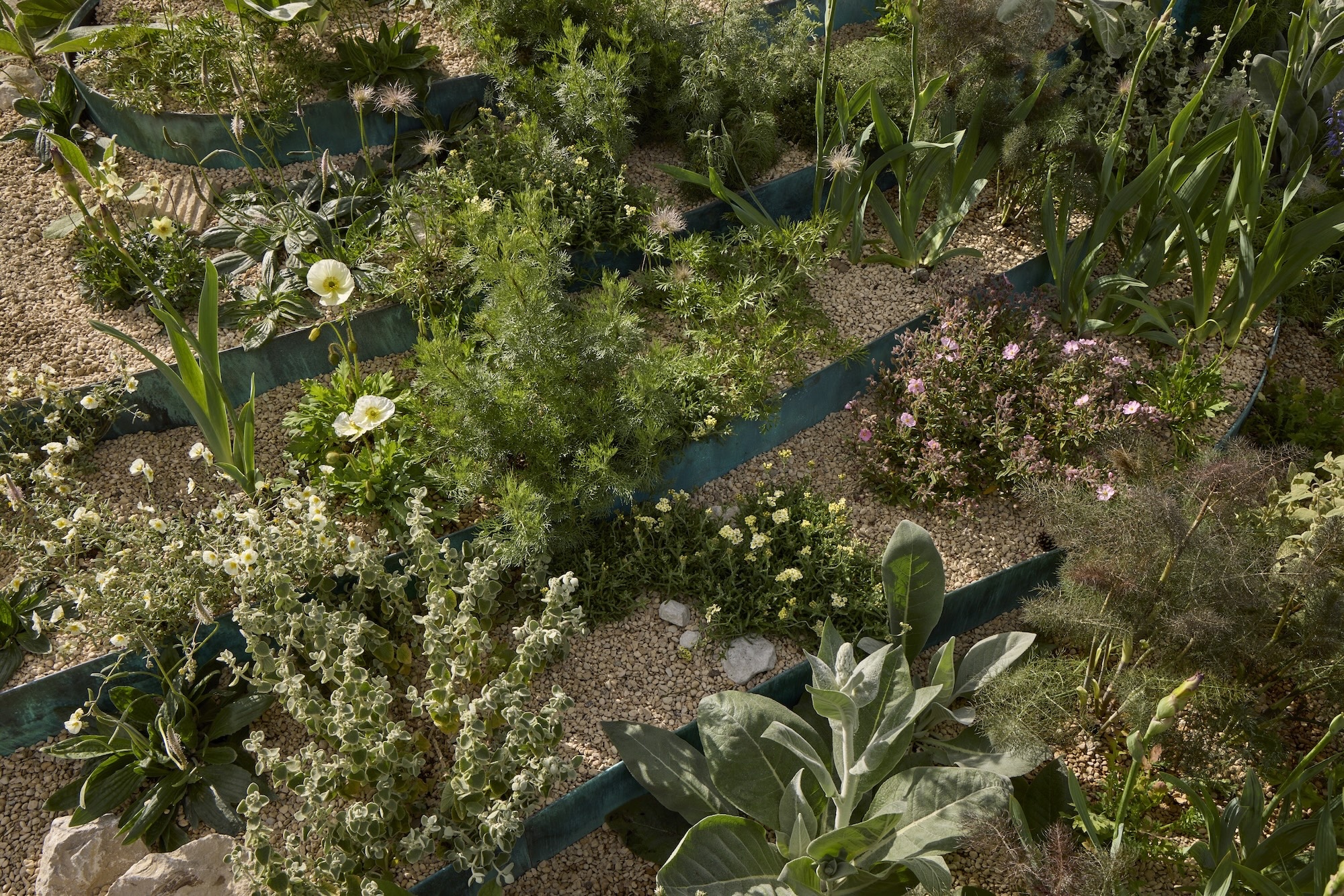
Copper and brass were used sparingly, with thin sheets mounted over mild-steel frames to reduce the volume of these more valuable materials. Most materials were sourced from mainland Britain, and the plants were grown peat-free, largely by a local nursery.
The intention was less about making reuse visually obvious than showing that second-life and waste-derived materials could be chosen first for their beauty and function.
Plants for city life
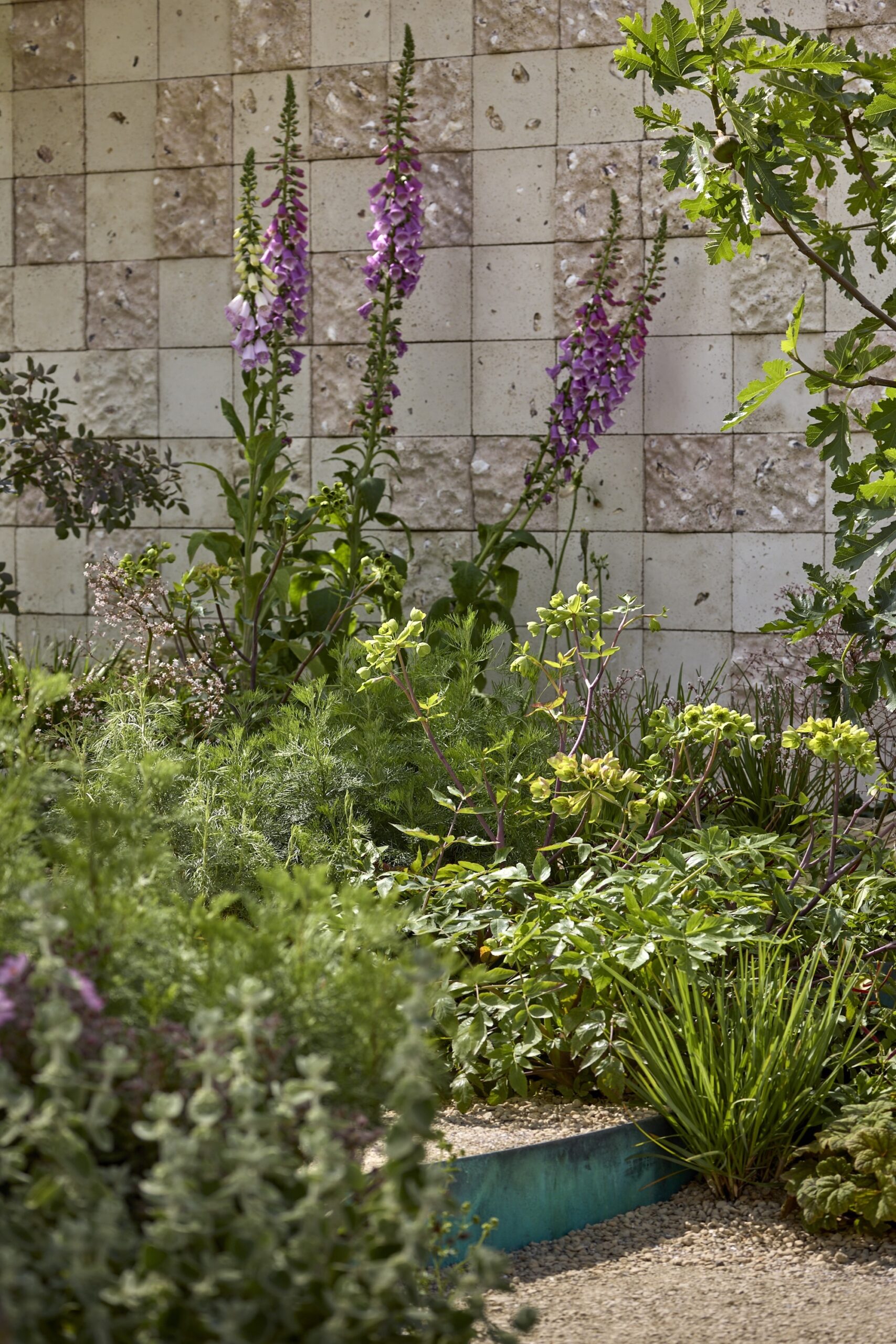
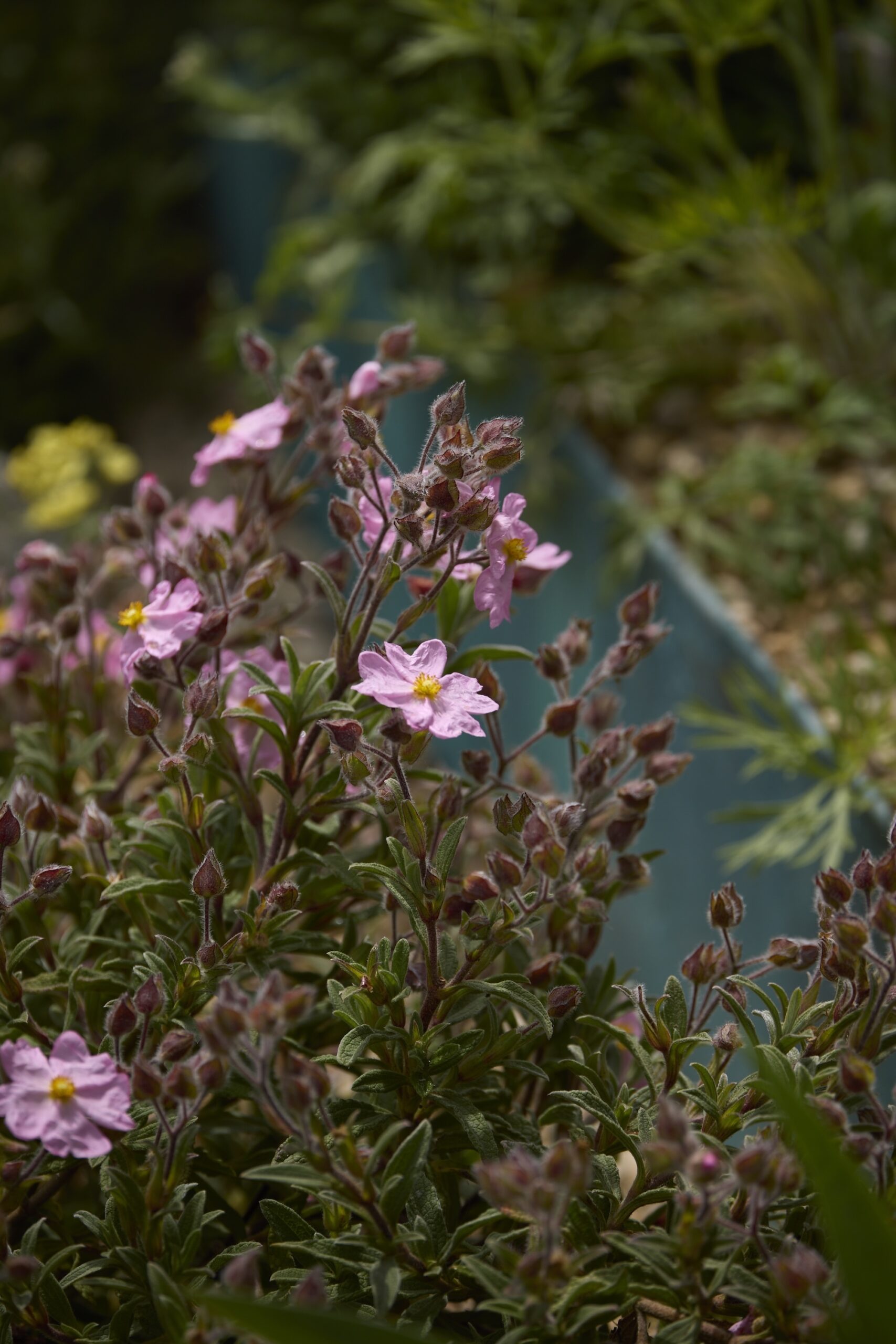
The planting responded directly to the conditions of an urban garden. Species were selected not only for appearance but for their ability to cope with pollution, restricted space and the particular pressures of city growing.
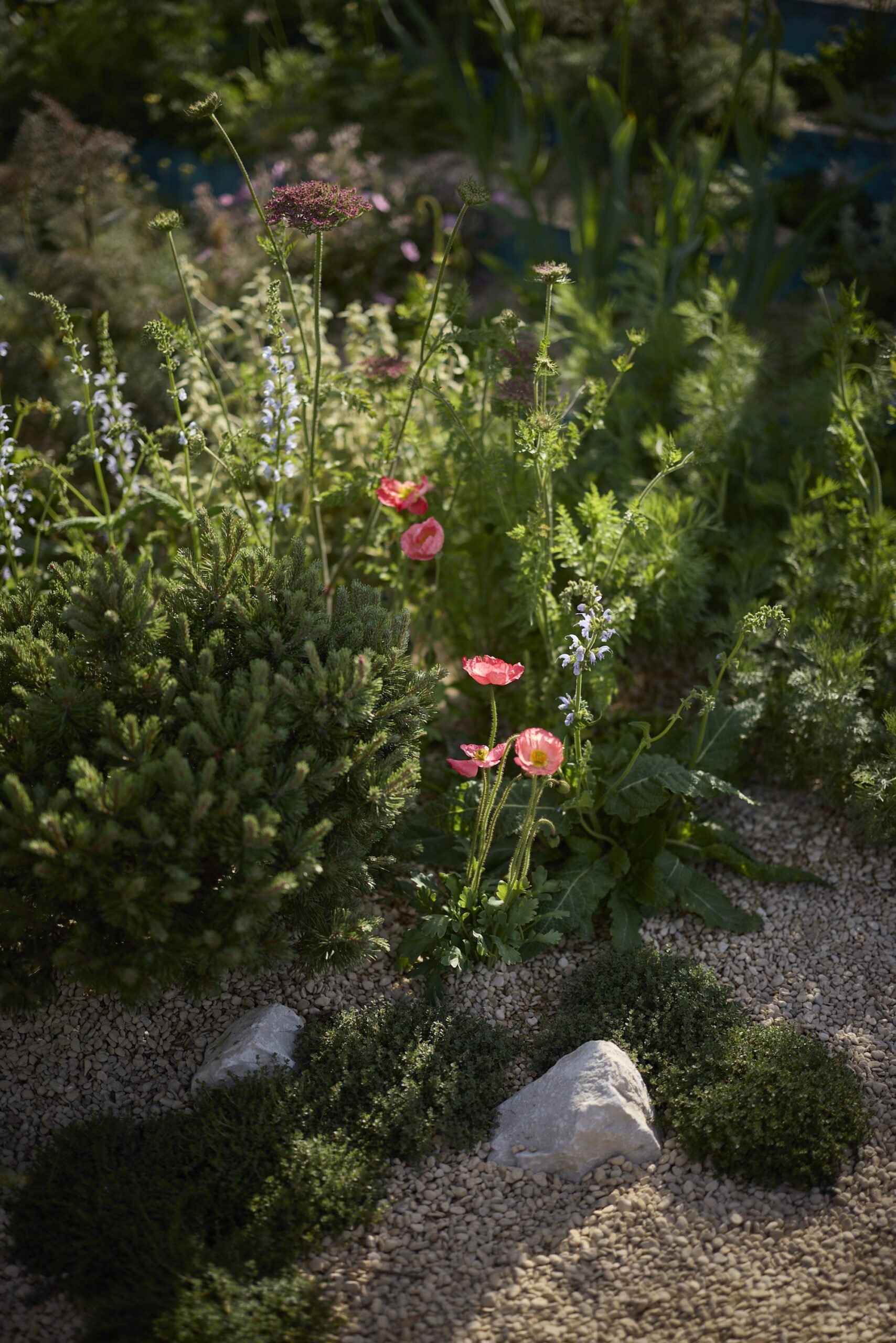
A six-metre pine provided the garden’s largest vertical element. Pines and ginkgo were both commonly used in cities, in part because their foliage could trap airborne particles. At a smaller scale, Arbutus andrachne offered striking bark and a compact habit suited to smaller gardens.
There was also a distinctly London reference in Saxifraga × urbium, commonly known as London pride. The plant became associated with the city during the Blitz because of its ability to colonise rubble and damaged ground.
Together, these resilient plants formed the softer counterpart to the stone and metal, demonstrating how densely planted urban spaces could contribute far more than decoration alone.
More than a show garden
The garden was moved to Baston House School in Bromley, a specialist school for children with autism. It occupied a larger site and was reconfigured as a secluded, reflective garden for students aged five to 18. The water element was removed for safety, but the central ideas remained: shelter, planting, sensory detail and a strong connection with nature.
It was a fitting next chapter for a garden conceived around the value of small urban green spaces. At Chelsea, it presented the garden as one precious piece within a much larger city. In Bromley, that idea became something more practical – a place used every day.
Plant palette
- Achillea x lewisii ‘King Edward’
- Alchemilla alpina
- Allium siculum
- Anemone multifida var. magellanica
- Artemisia maritima ‘Coca Cola’
- Asplenium scolopendrium
- Asplenium trichomanes
- Azorella trifurcata
- Camassia leichtlinii ‘Semiplena’
- Cardamine pratensis
- Carex divulsa
- Carex muskingumensis
- Chaerophyllum hirsutum ‘Roseum’
- Chitalpa tashkentensis ‘Minsum’ (summer bells)
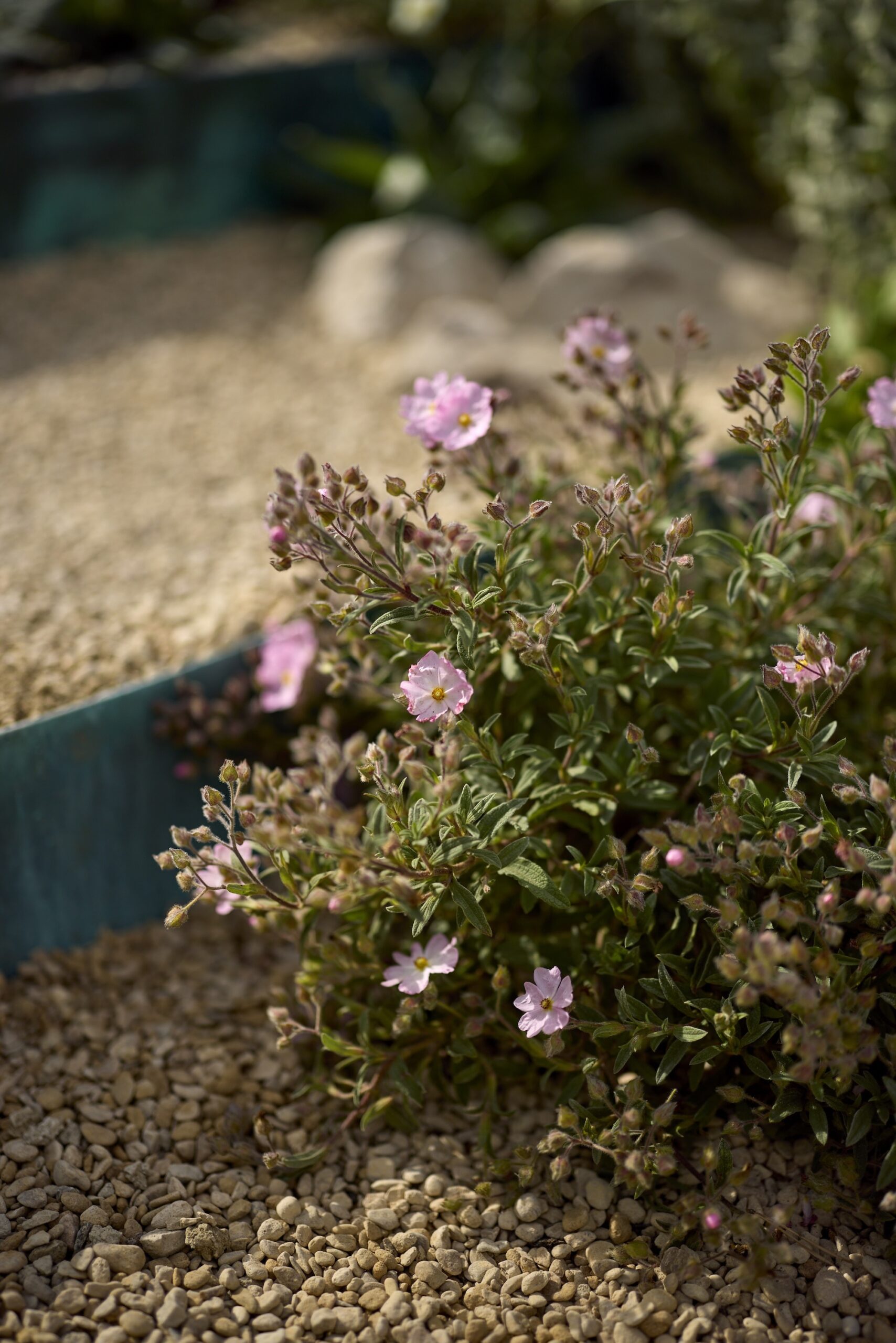
- Cistus skanbergii
- Corydalis lutea
- Cymbalaria muralis
- Darmera peltata
- Daucus carota ‘Dara’
- Deschampsia cespitosa
- Digitalis purpurea
- Epimedium x rubrum
- Festuca amethystina
- Ficus carica ‘Ice Crystal’
- Foeniculum vulgare ‘Bronze Form’
- Geranium ‘Dreamland’
- Geranium phaeum ‘Raven’
- Geum ‘Lemon Drops’
- Geum rivale
- Ginkgo biloba ‘Fastigiata’
- Helianthemum ‘The Bride’
- Iris ‘Chantilly’
- Iris laevigata
- Iris versicolor
- Lathyrus ‘Chocolate Flake’
- Lathyrus vernus
- Lychnis flos cuculi
- Mathiasella bupleuroides ‘Green Dream’
- Melica nutans
- Ostrya carpinifolia
- Papaver nudicaule ‘Colibri Sherbet Mix’
- Papaver rhoeas ‘Amazing Grey’
- Phillyrea angustifolia
- Phlomis italica
- Pinus mugo ‘Mops’
- Pinus sylvestris ‘Glauca’
- Plantago media
- Potentilla palustris
- Pseudodictamnus mediterraneus
- Pulsatilla vulgaris
- Ranunculus acris ‘Citrinus’
- Rosa glauca
- Salvia pratensis ‘Madeline’
- Salvia pratensis ‘Sky Dance’
- Saxifraga x urbium
- Sedum reflexum
- Sesleria heufleriana
- Tellima grandiflora ‘Rubra’
- Thymus serpyllum ‘Pink Chintz’
- Trollius x cultorum ‘New Moon’
- Verbascum bombyciferum ‘Polarsommer’
- Verbena officinalis var. grandiflora ‘Bampton’
—
After being showcased at the RHS Chelsea Flower Show, this garden will be relocated to Baston House School, a specialist educational provider in Bromley for autistic children and young people. The garden will serve as a safe, enriching space that supports their educational experience and provides a calming, therapeutic environment.
—
Designed by Joe and Laura Carey, Carey Garden Design Studio.
Built by The Outdoor Room
Plants by Creepers Nursery and Katie’s Garden Plant Centre
—
More RHS Chelsea Flower Show Gardens here