
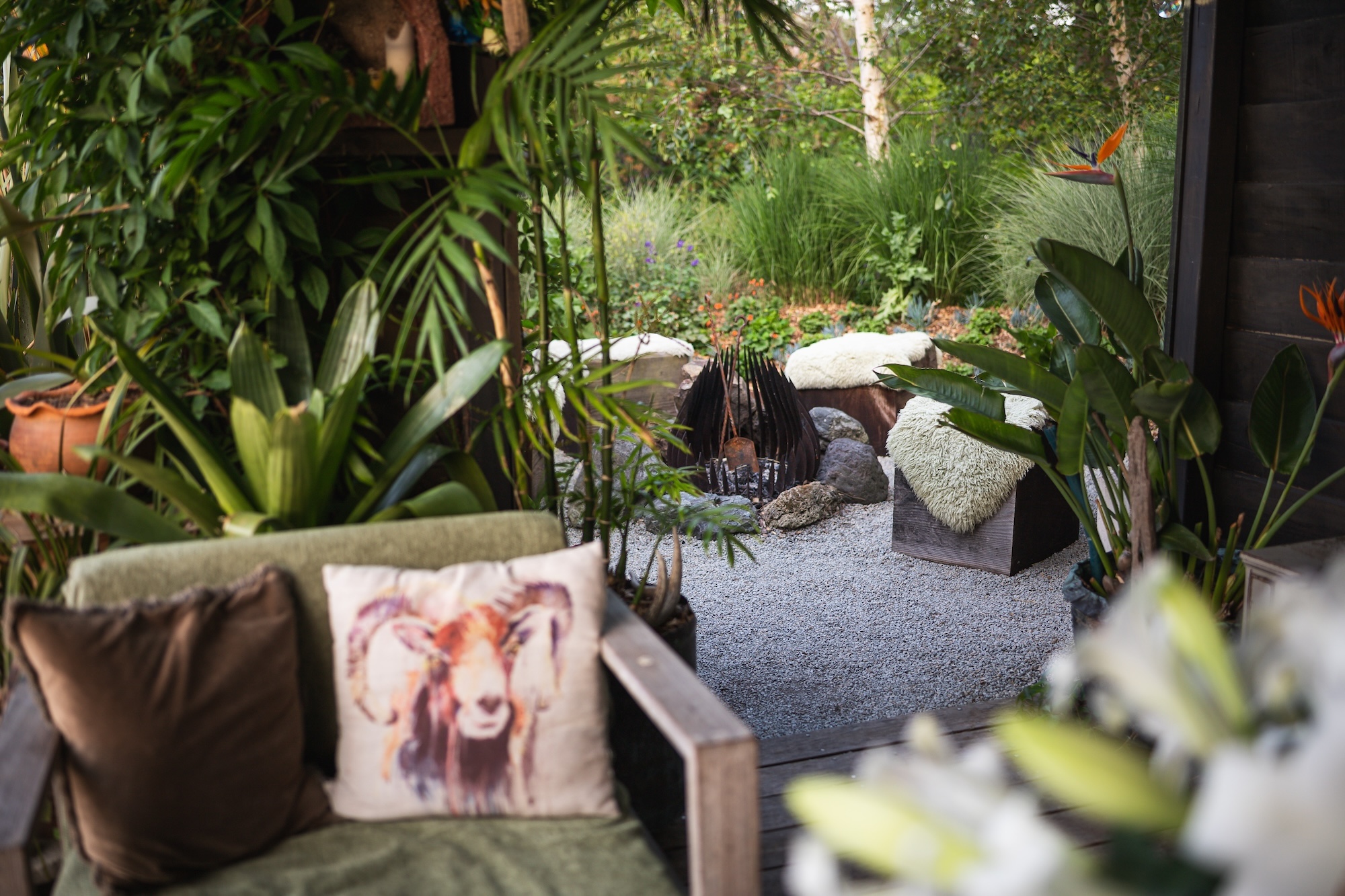
Charlotte and Jason, owners of landscape design and construction business Espaso Verde, have named their garden, Locus Pacis – meaning “the practice of peace”.
A story brought to you in partnership with Resene.
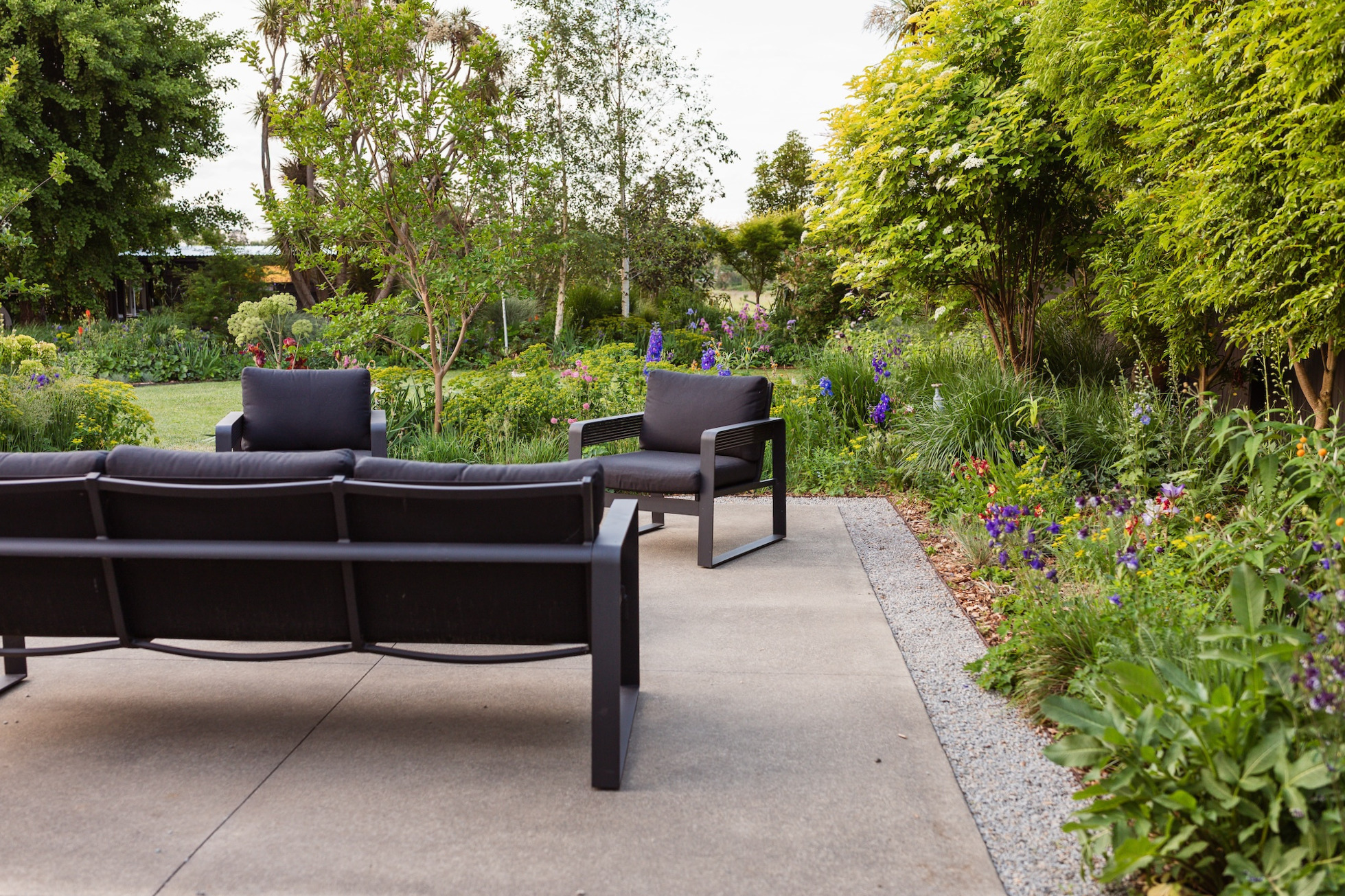
It was the view of the Tukituki Estuary that first drew long-time plant fanatic, Charlotte Pedersen, and her husband Jason to the promising coastal property in Haumoana. Keen for rural landscapes and a place to unwind after the daily strains of their landscape design business, Espaso Verde, the couple jumped into transforming the weathered grounds into a playground of colour. Today the garden functions as an extension to their modest family home – garden shed used as a hang-out space, and courtyards for cooking and dining.
Charlotte draws from a long heritage of horticulture. One side of her family has been cultivating edibles for generations, while the other side leans toward ornamental planting. “My mum had an amazing, big, beautiful, rural garden,” says Charlotte, which is where she spent most of her childhood – planting trees and working among the garden beds. “It’s kind of been ingrained in me to have my hands in the soil.”
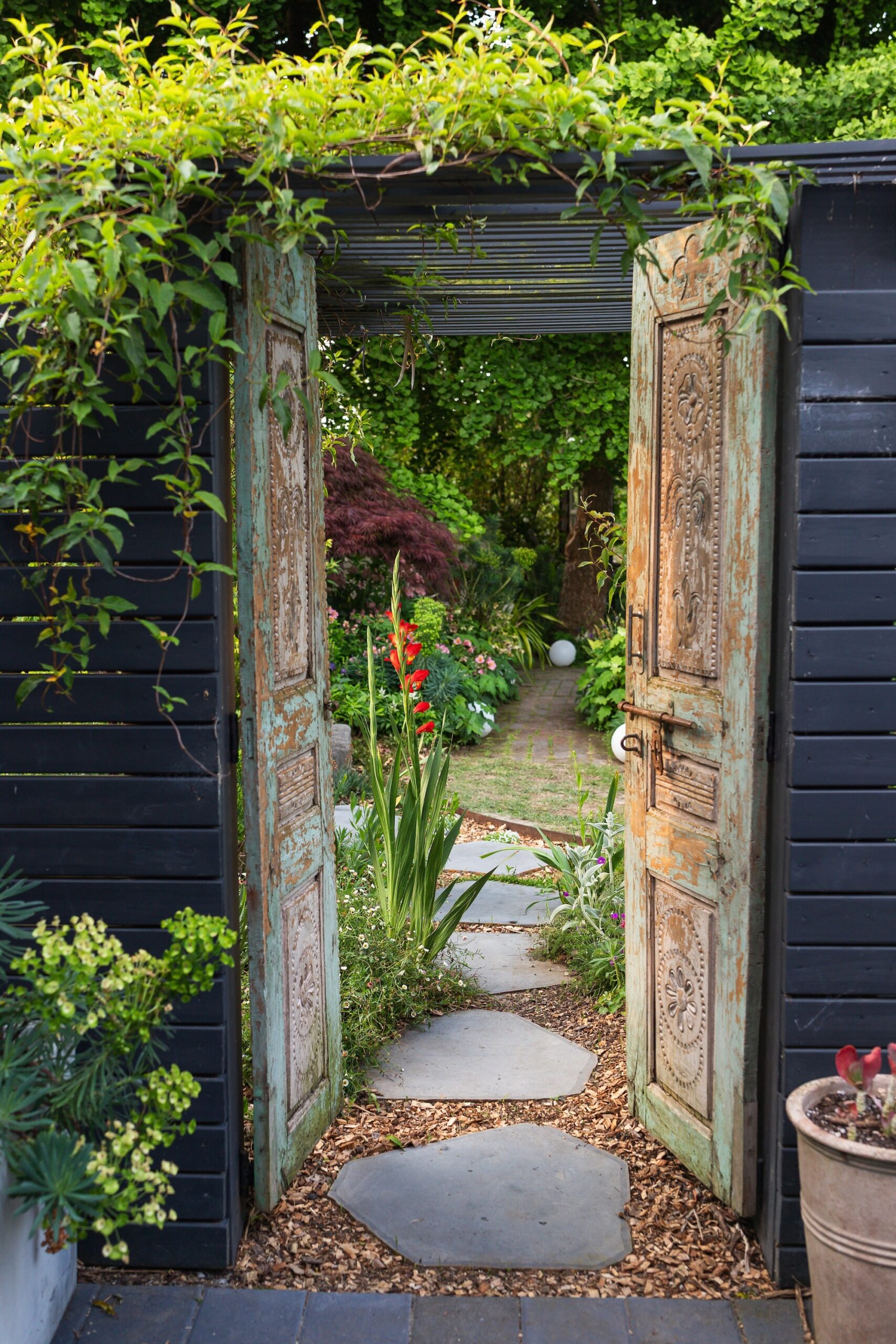
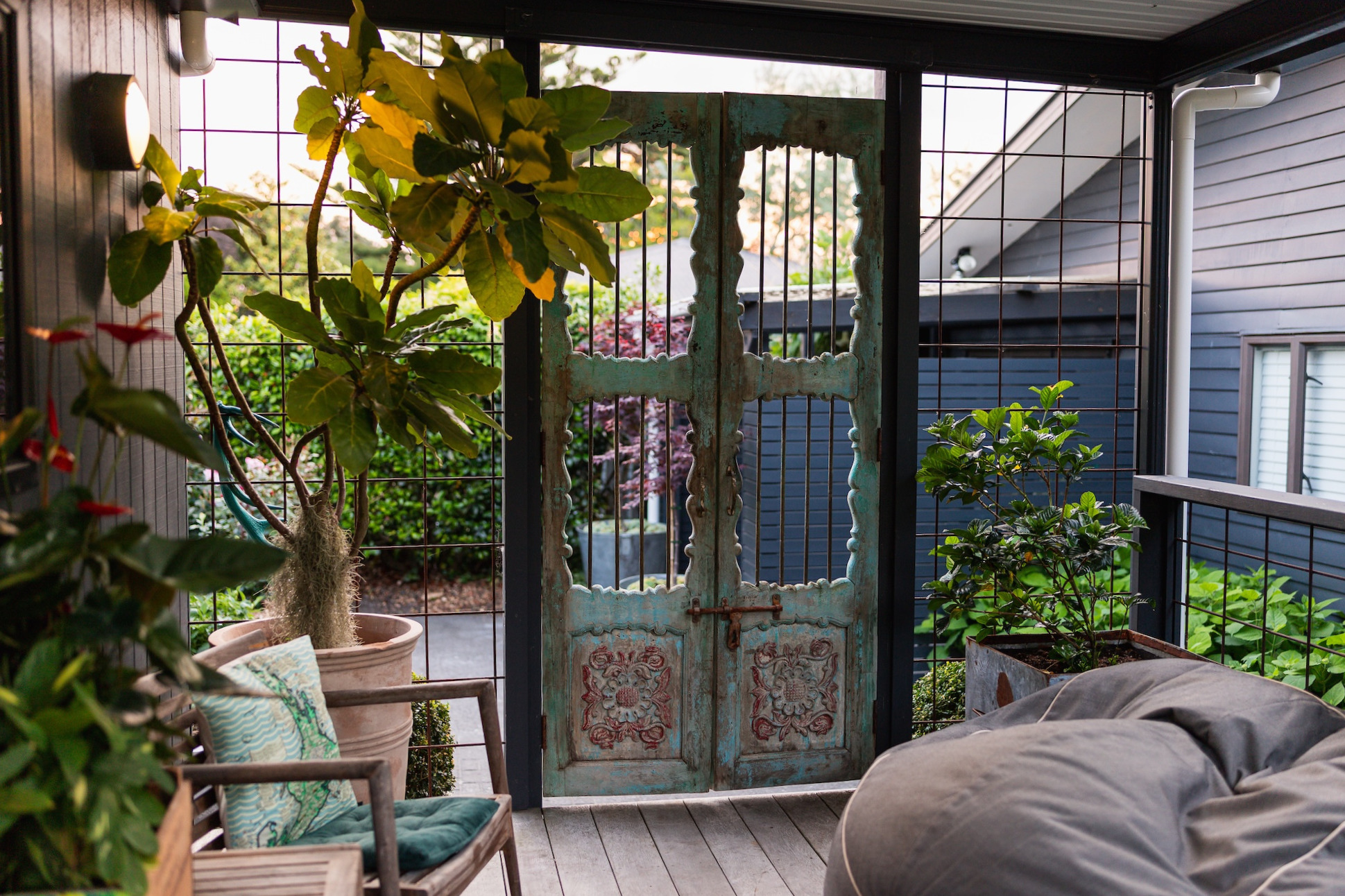
In her early twenties, Charlotte went overseas where she encountered unfamiliar plants and flowers, and exotic gardens. These experiences, alongside her love of art, led her to collect distinctive décor (her garden currently showcases two preserved doors and a window) and, most importantly, a career in garden design.

Espaso Verde has been designing and installing gardens in Hawke’s Bay for 19 years. Jason worked for the previous owner, but when they decided to step away from the business, Jason and Charlotte saw an opportunity. Drawing on Charlotte’s background in design, they put up their hands, and she dove straight into leading the design team.
The pair and their team design, install and care for gardens across the Hawke’s Bay region, including one transformation much closer to home – their own backyard. They spent 10 years pottering beneath the ginkgo trees, the huge cabbage tree, and a cluster of maples out back. Their sons Angus and Orton were little at the time, so the family’s weekends quickly became full of digging and planting while the boys barrelled little yellow plastic trucks through the earth. “We slowly started to put things into place,” says Charlotte, who after years of running a business, constant design work and parenting, has become well-acquainted with the practice of patience.
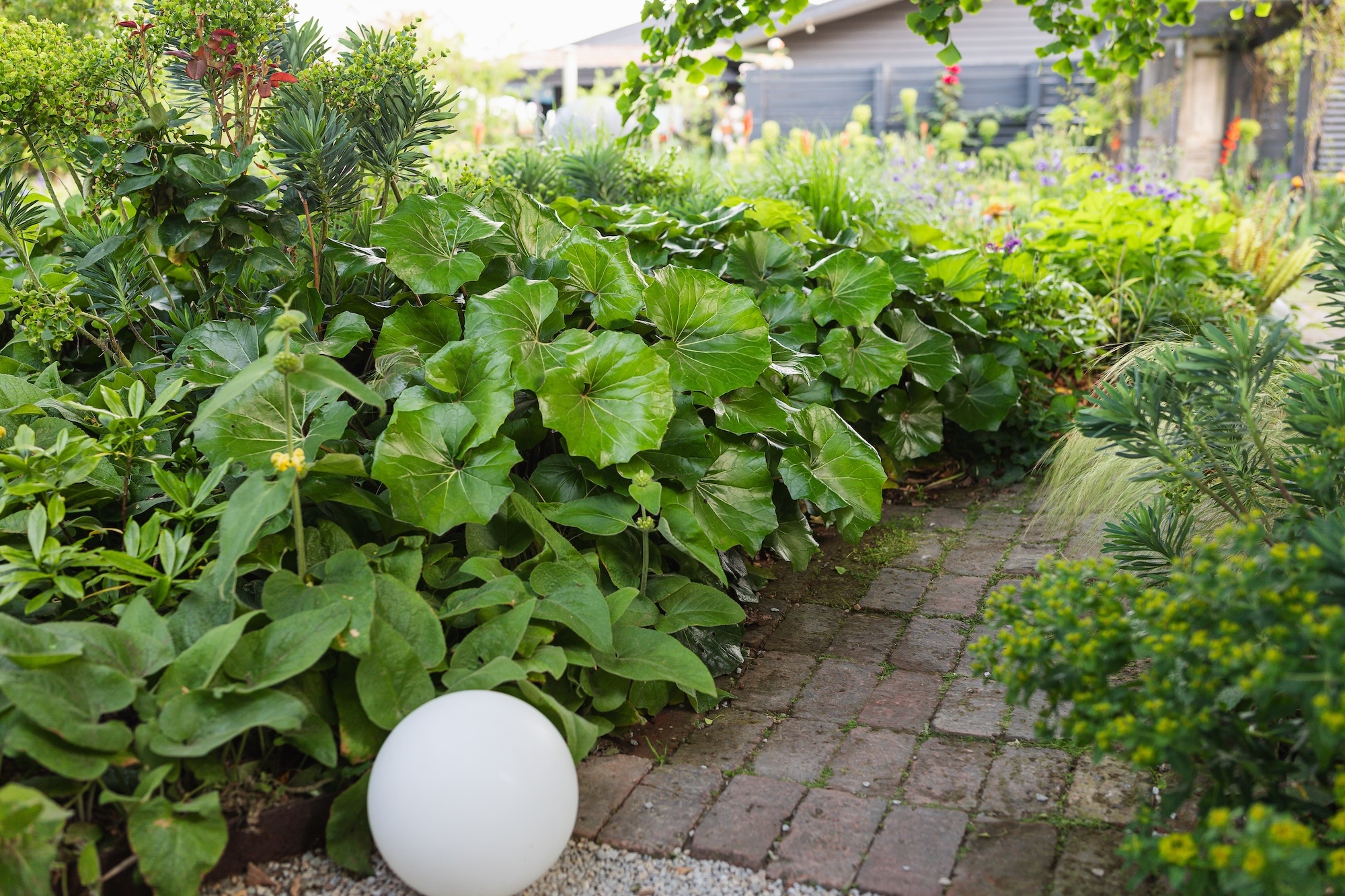
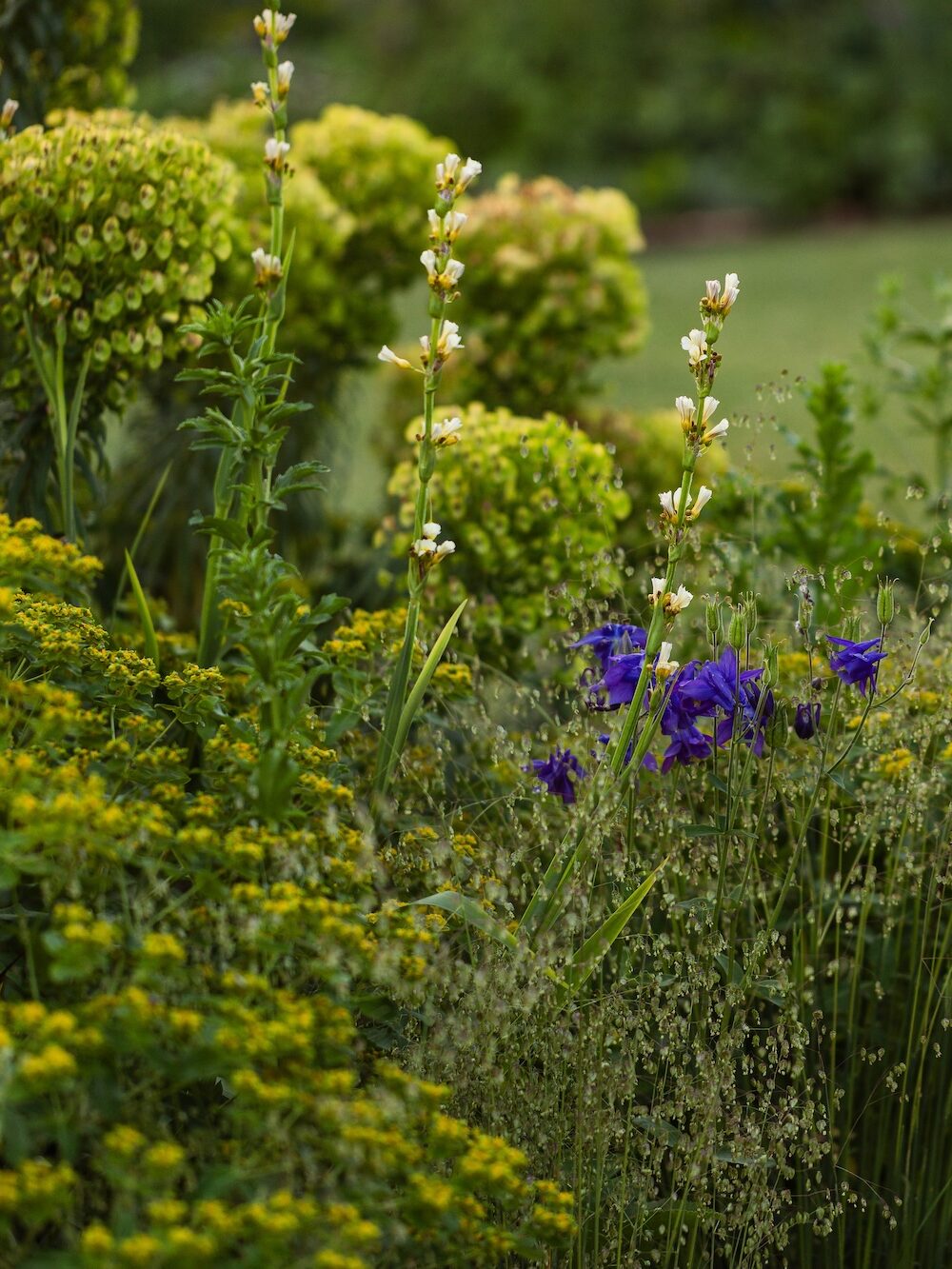
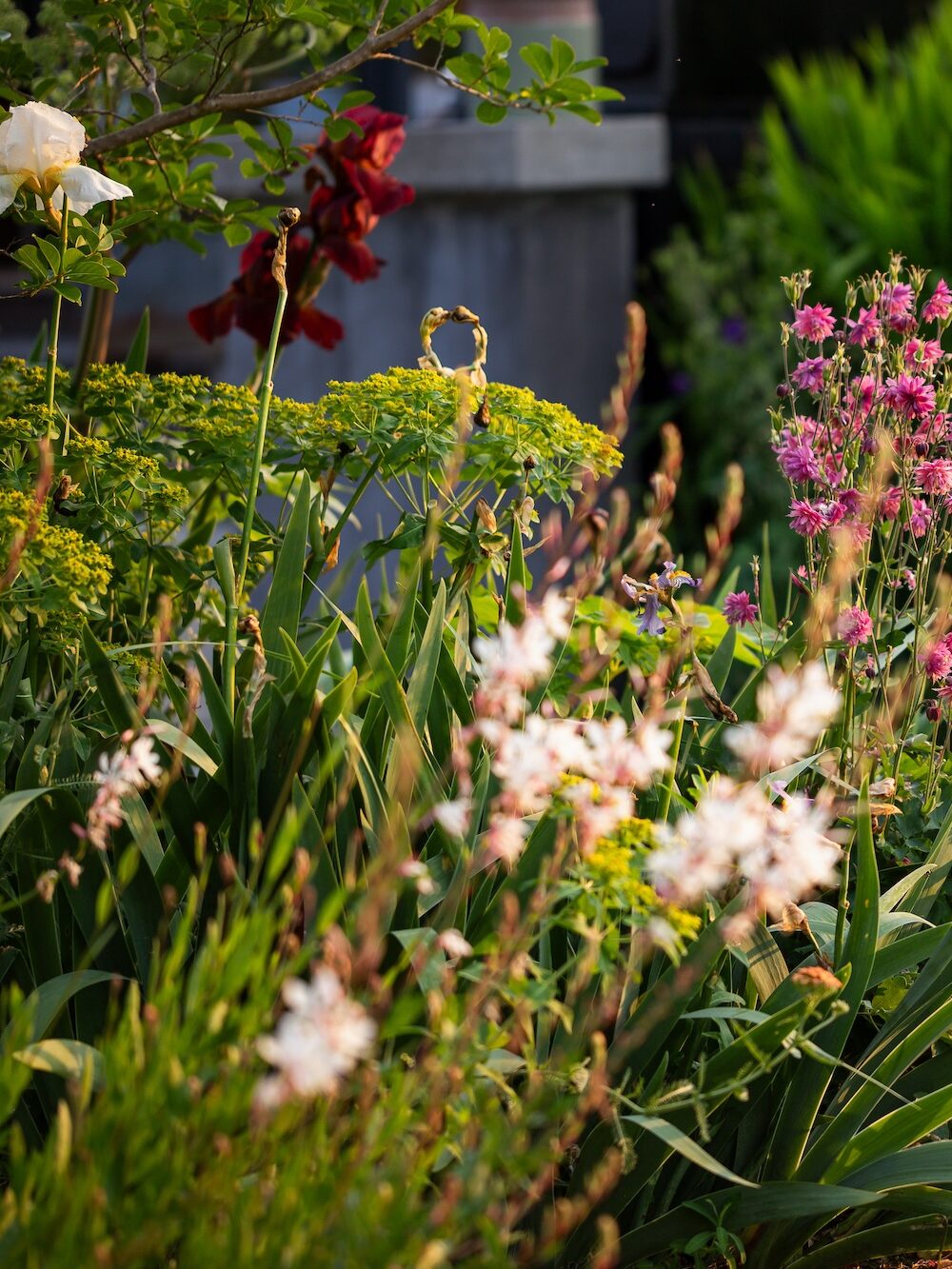
Running a landscaping business where Charlotte’s creativity can be restrained by client briefs has meant that her backyard has become an opportunity for an eclectic feast. She describes her garden as a ‘gardener’s garden’. There you’ll find hydrangea cuttings salvaged from dying gardens, plants diverted from the dump, and Aquilegia grown from seeds gathered on road trips. “If I see a seed flower head, I’m quite happy to grab the seeds and take them home,” she says, noting this habit was inherited from her grandmother.

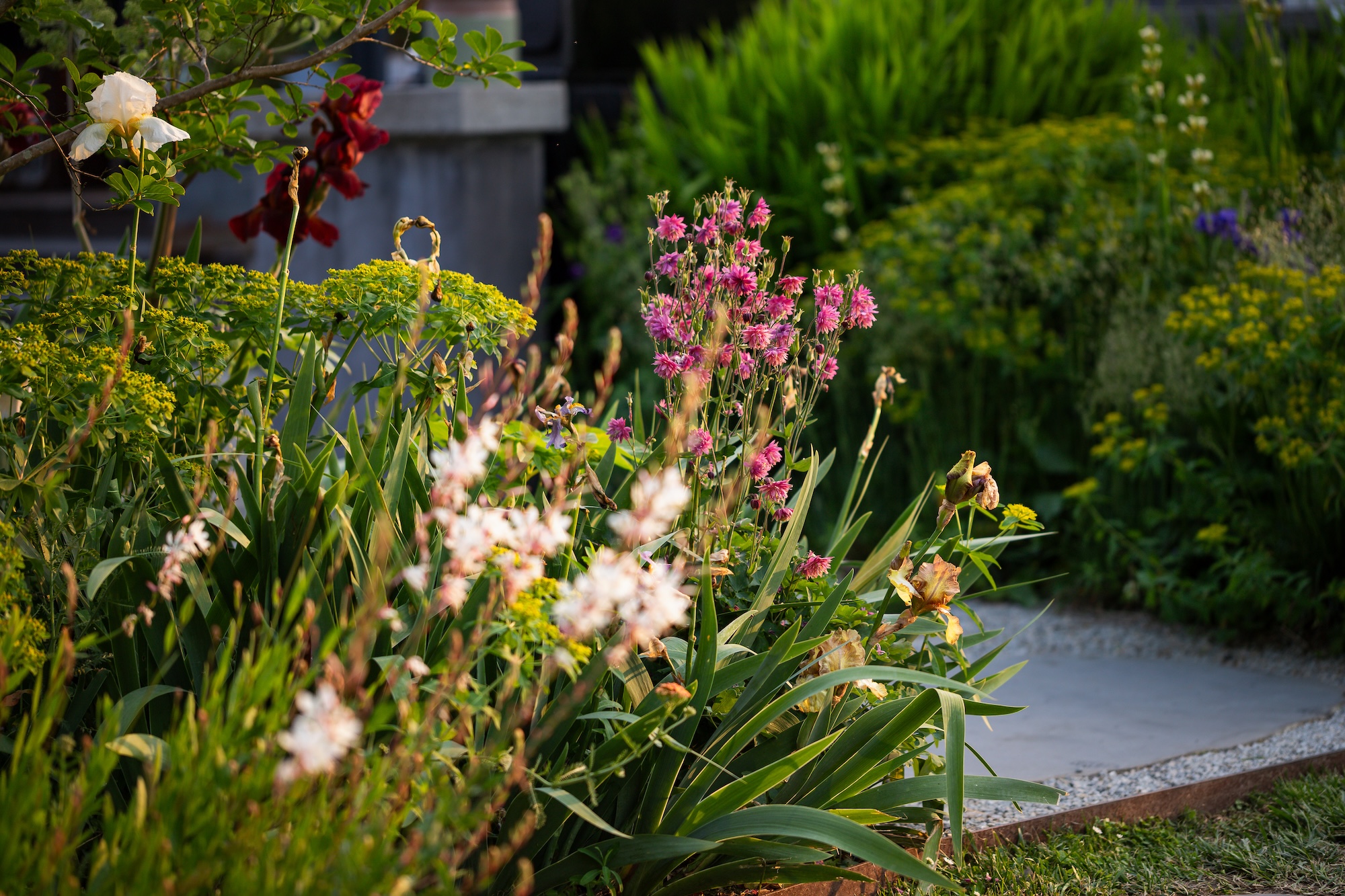
Much of her rescued and regenerated plants self-seed the following year. By allowing something to grow and disperse naturally through a garden, rather than buying a whole lot of new plants, Charlotte is creating a self-sustaining garden. “It can take care of itself,” she says.
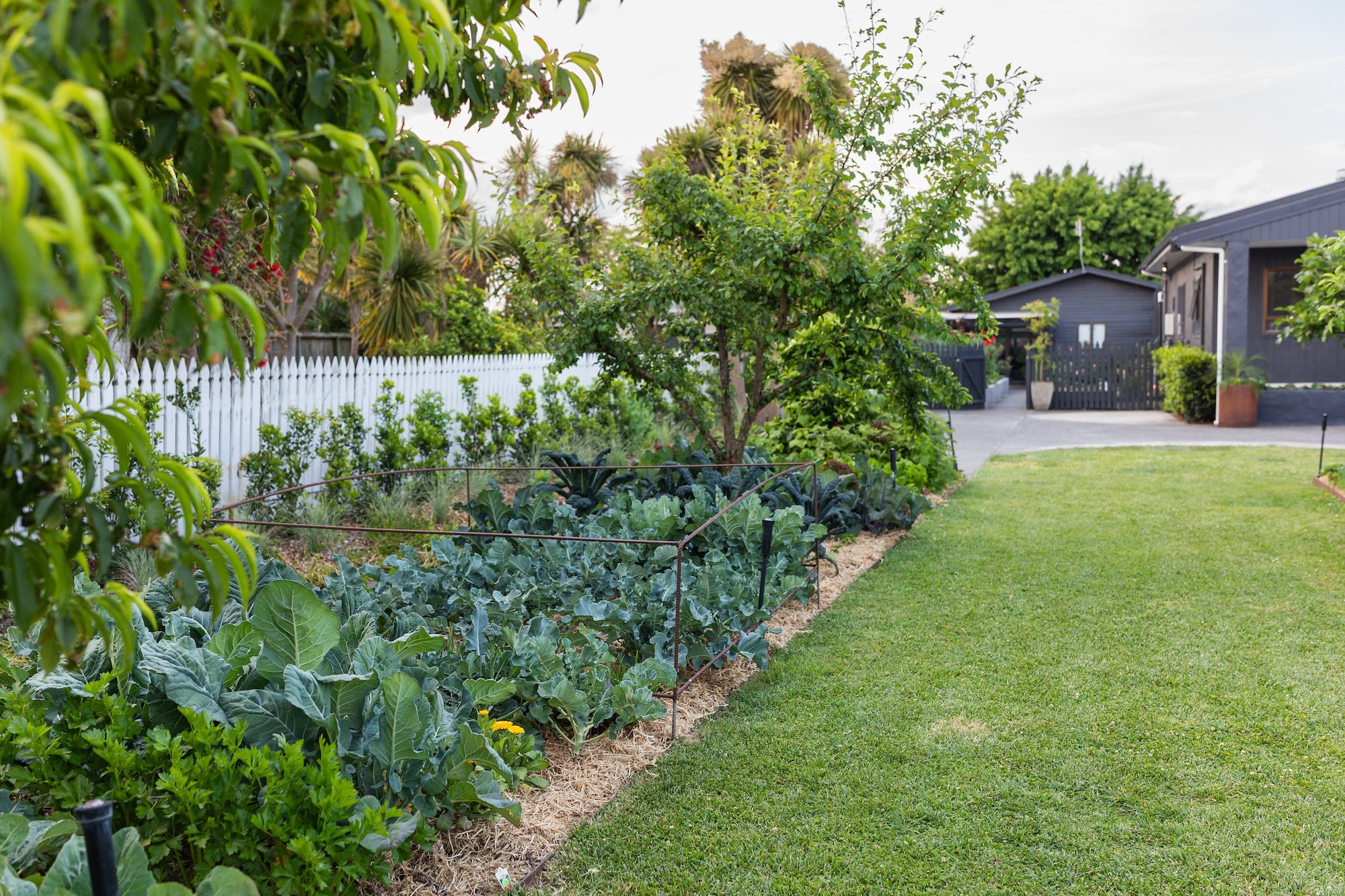
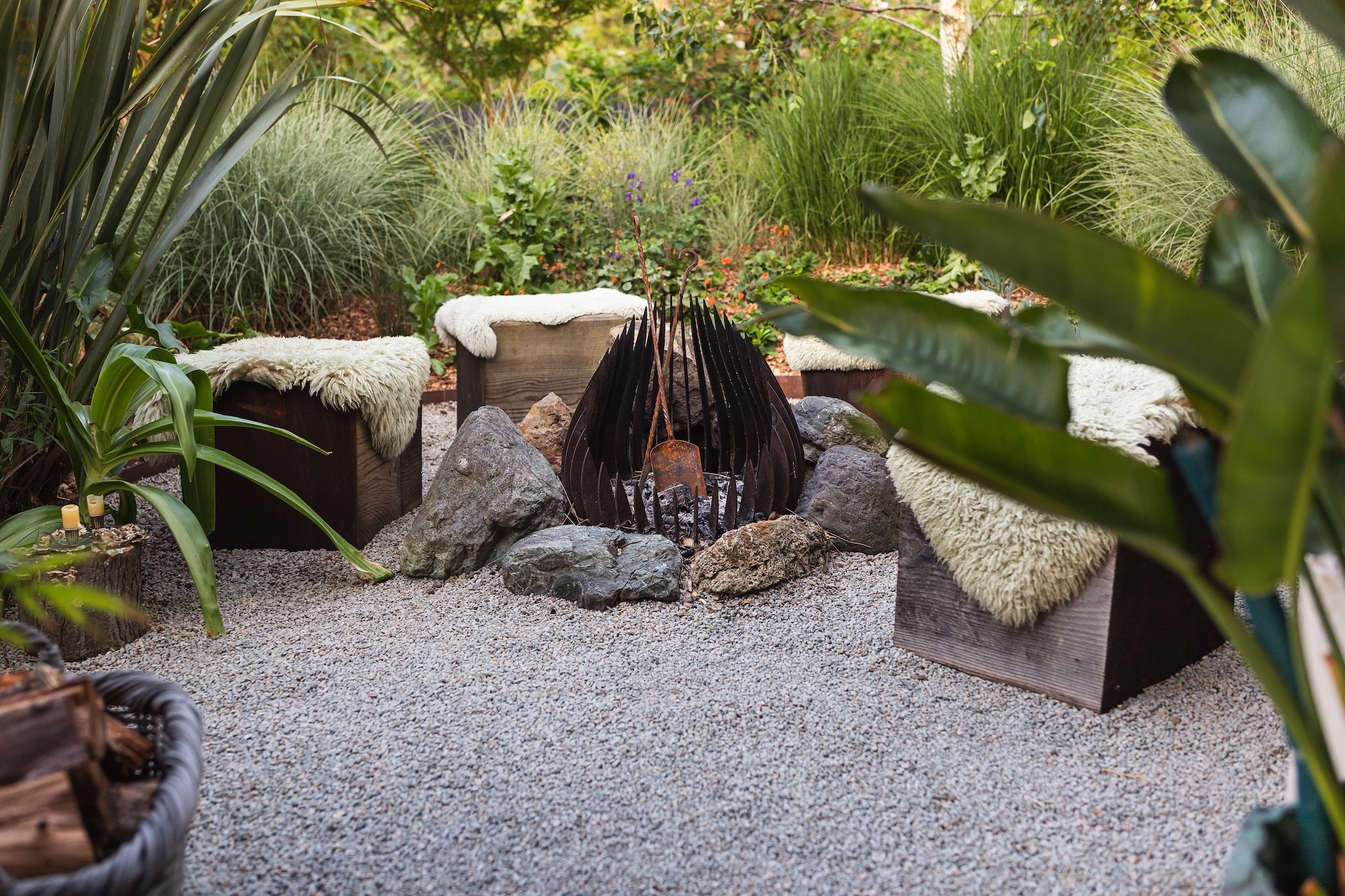
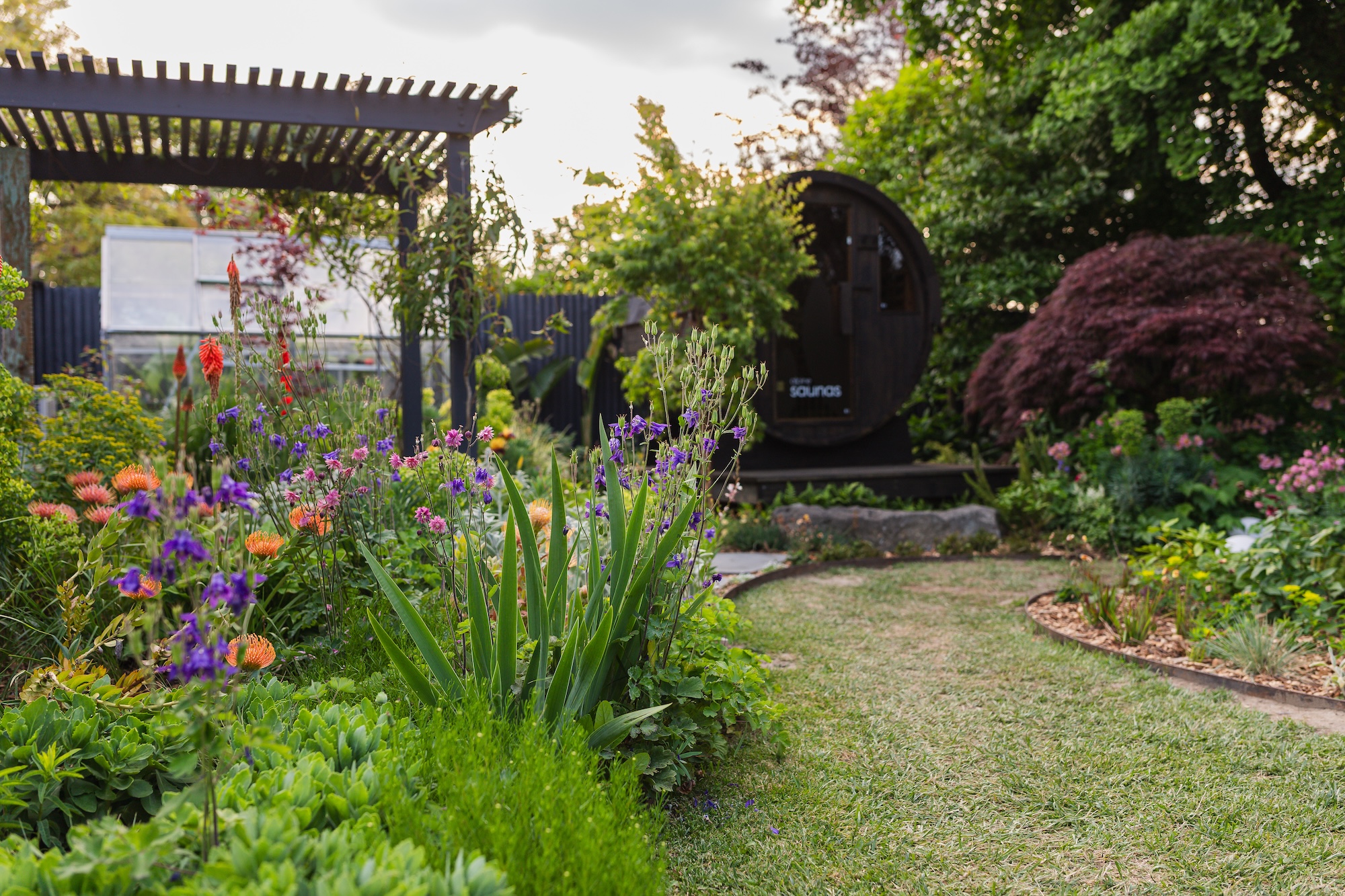
Today, the front of their property is reserved for edibles, with several raised beds and an orchard of plums, Granny Smiths, figs, raspberries, oranges, mandarins and persimmons. Around the back is a veranda and outdoor living area with a pizza oven and barbecue. From there the lawn slopes down toward the estuary with the original pool off to one side, and a sauna and glasshouse overlooking the creek. “Our house is really quite little, which is why our garden is so important to us, to have created all these different outdoor spaces.”
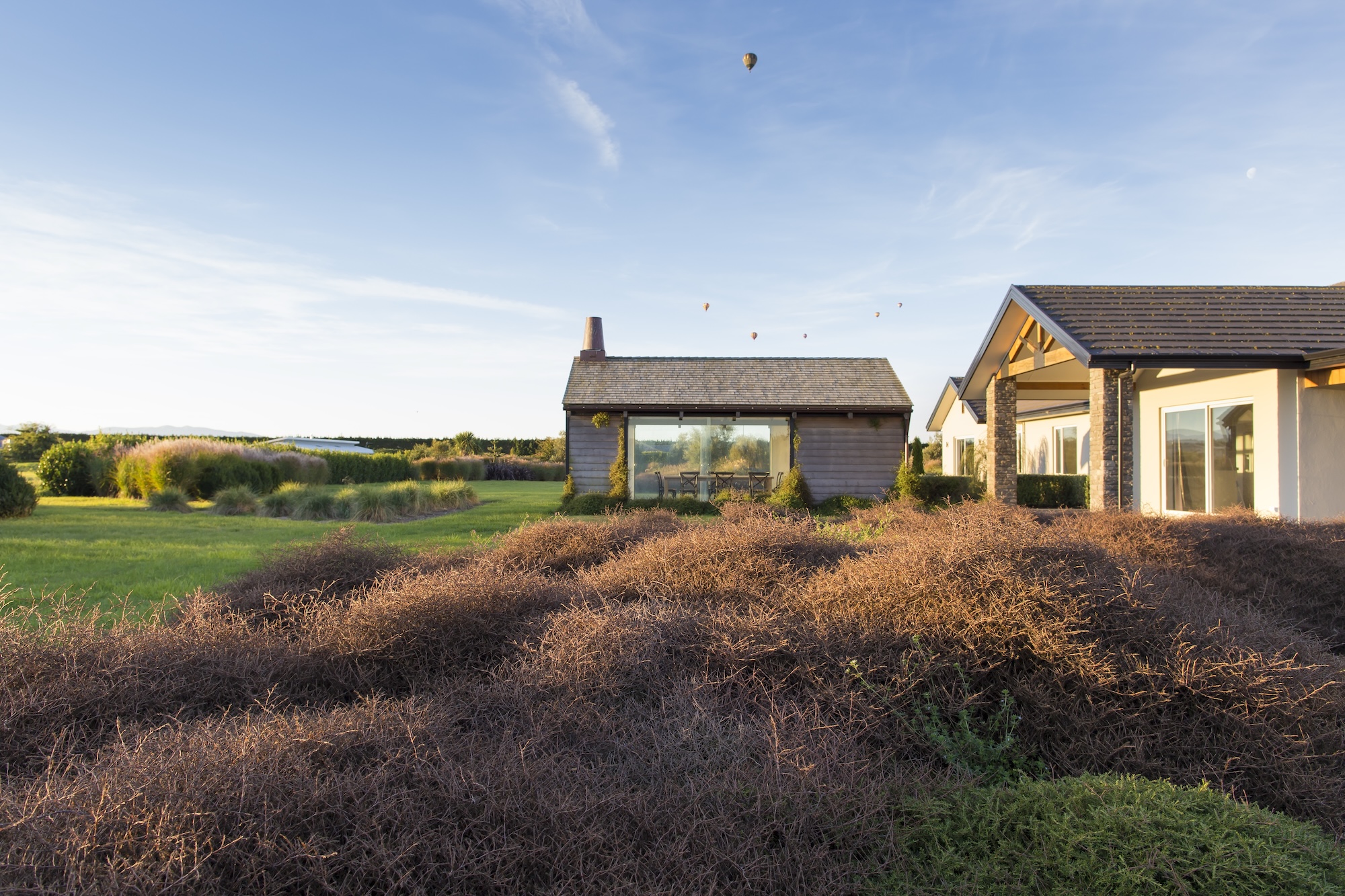
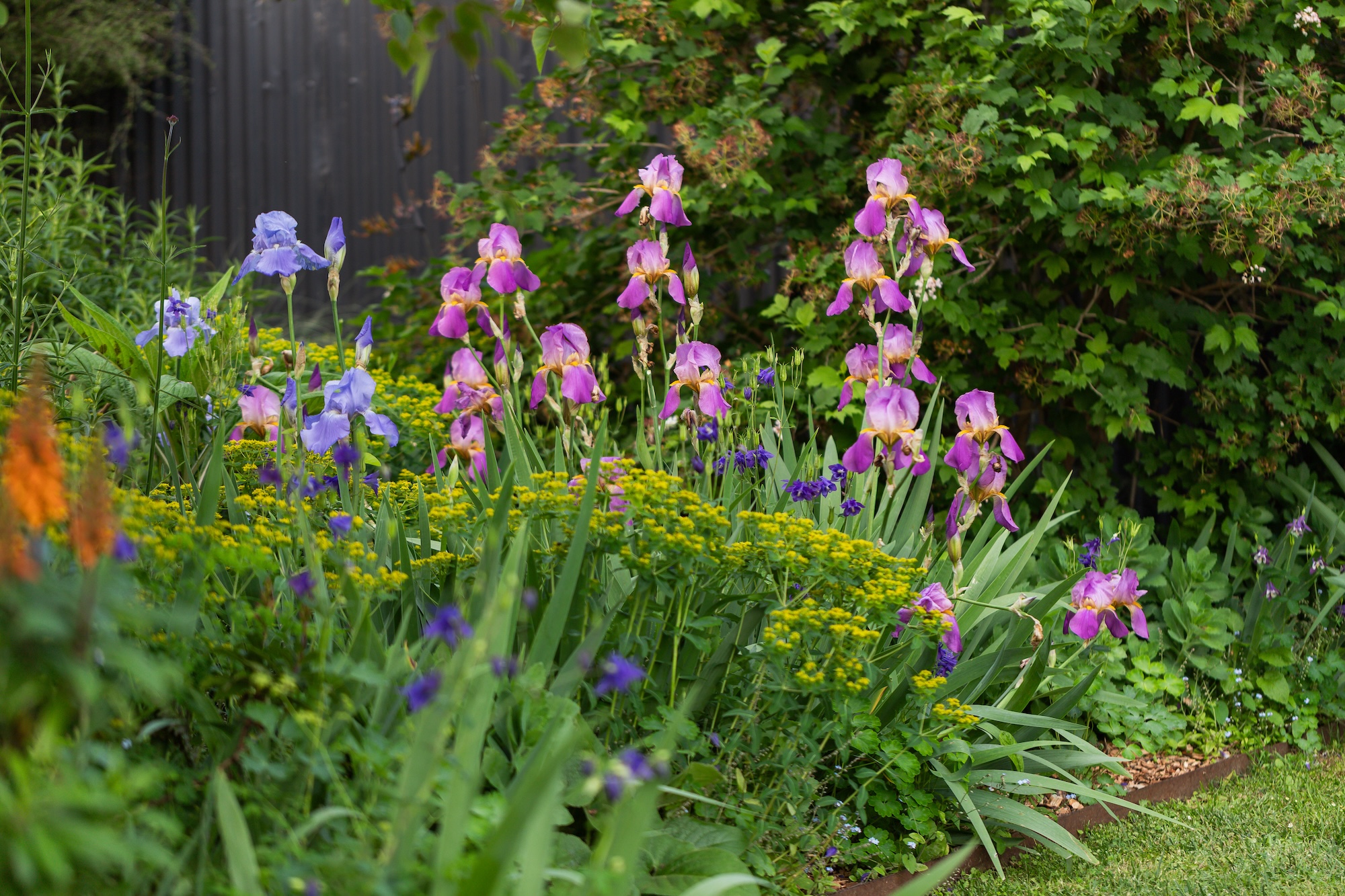
Several years ago, they painted the house with Resene Shark. “We use the Resene Waterborne Woodsman range on structures in some of my design projects – I love Crowshead, and Smokey Woodash is also lovely,” says Charlotte. “Our river hut is painted with Resene Crowshead, creating a darker backdrop for the vibrant blooms that reappear throughout the garden, year after year.”
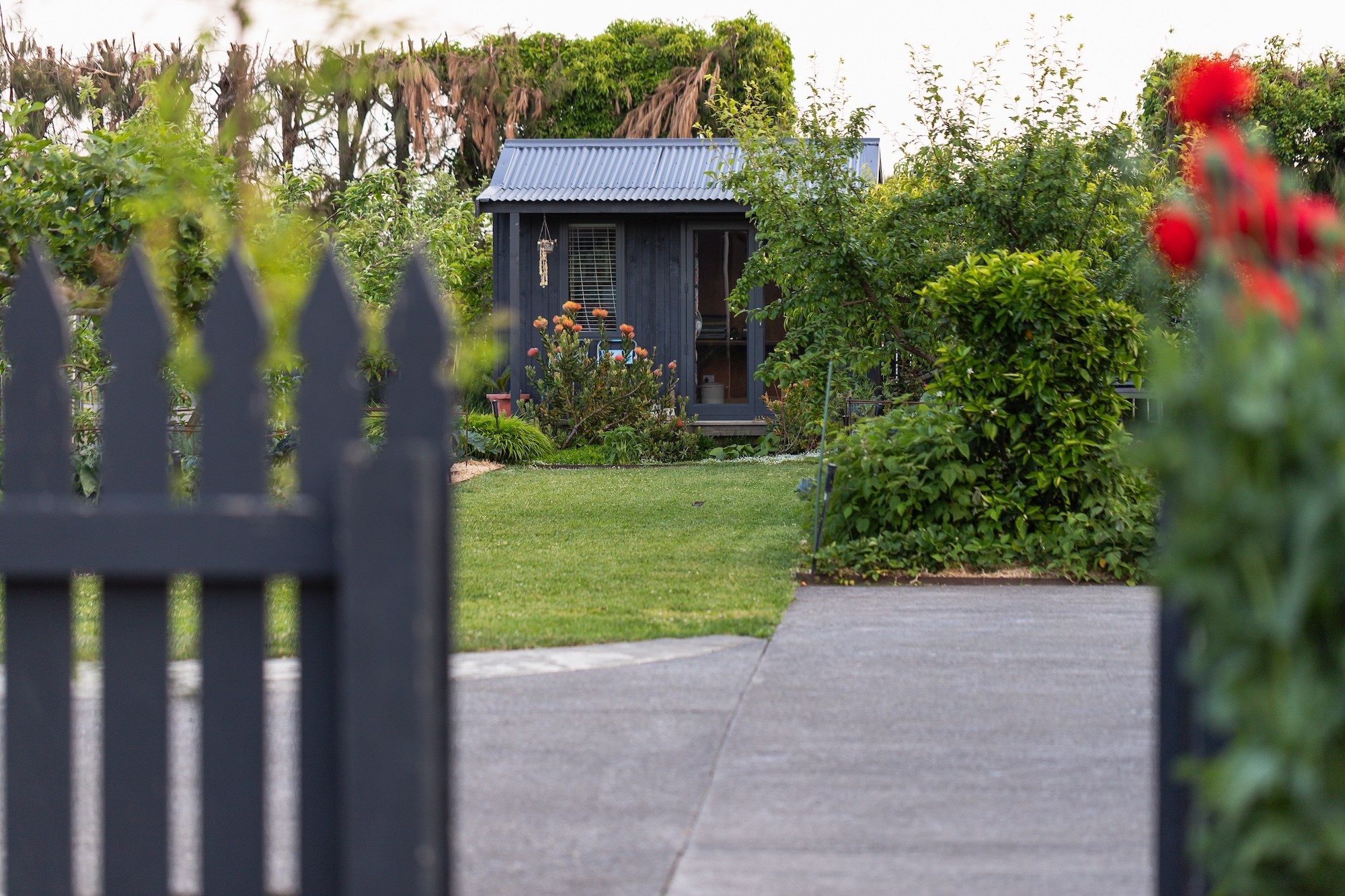
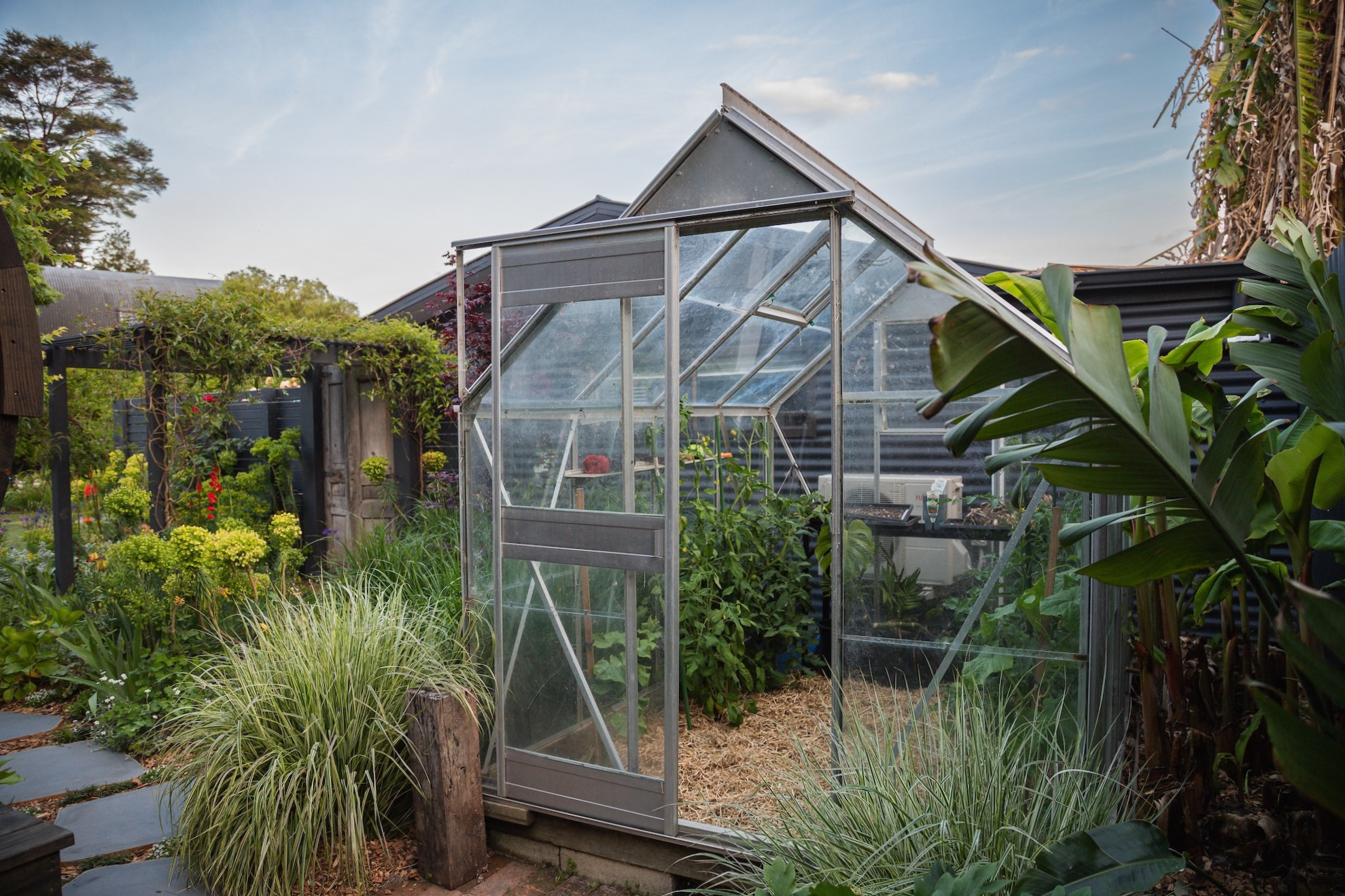
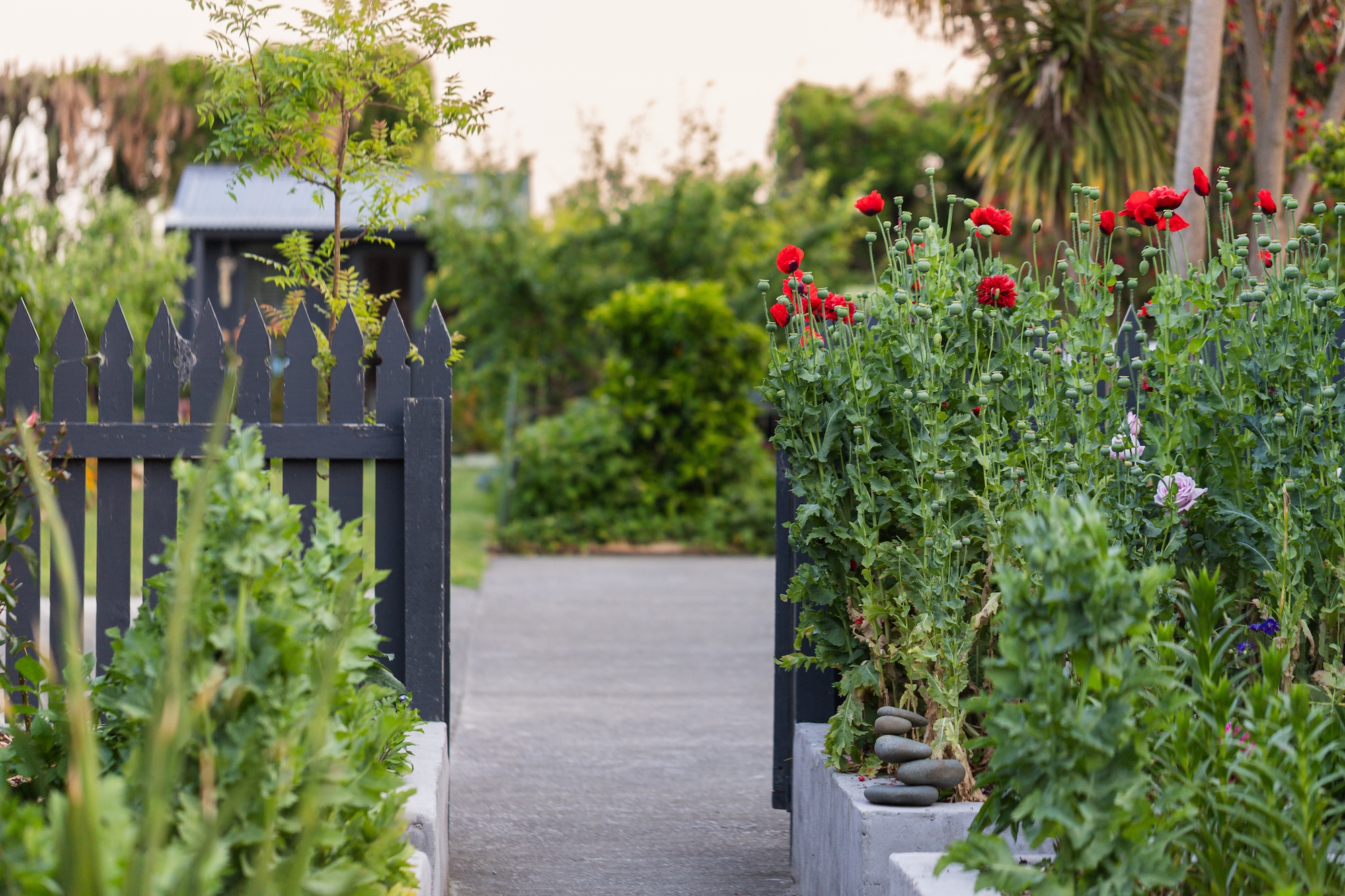
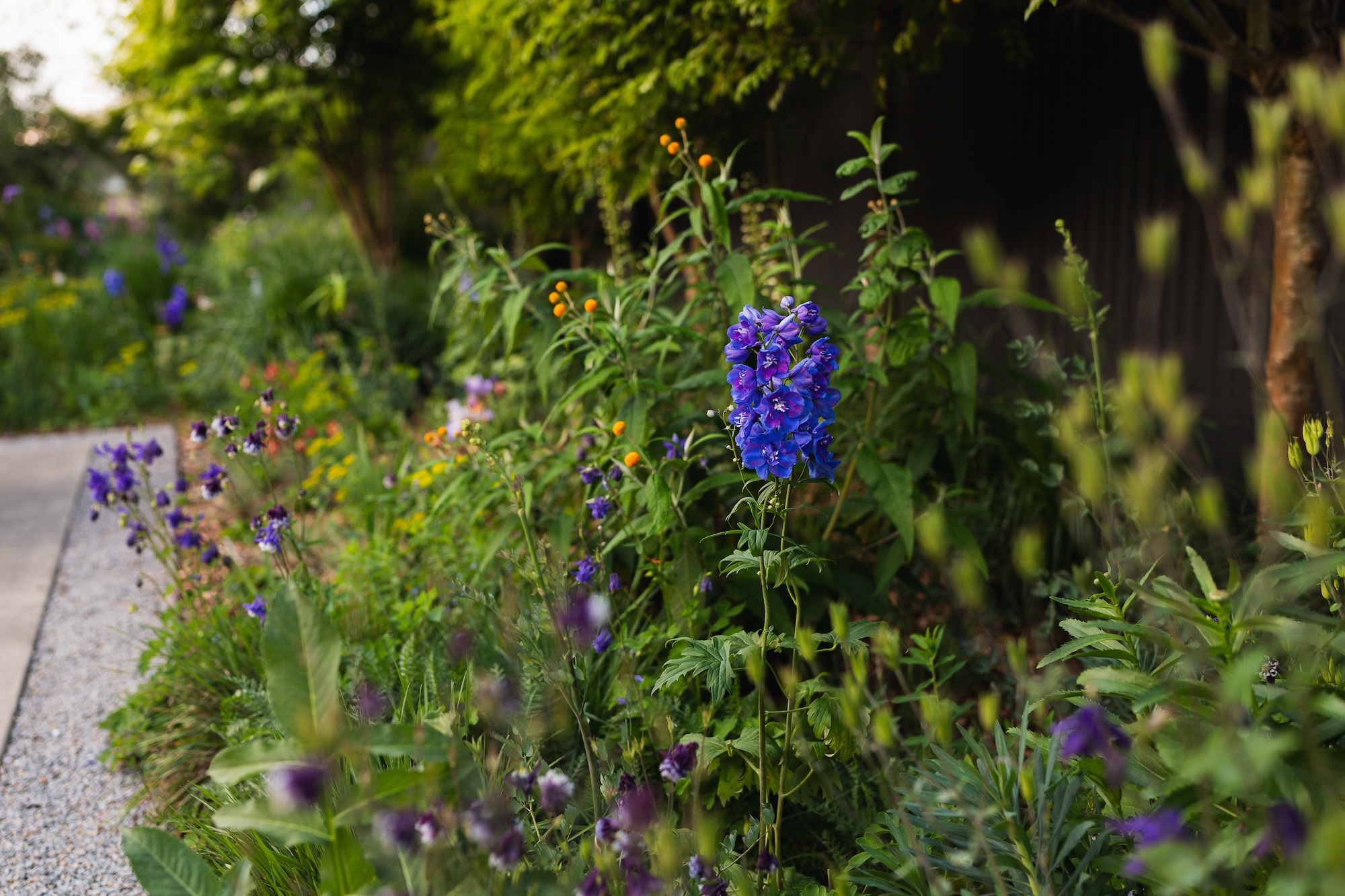
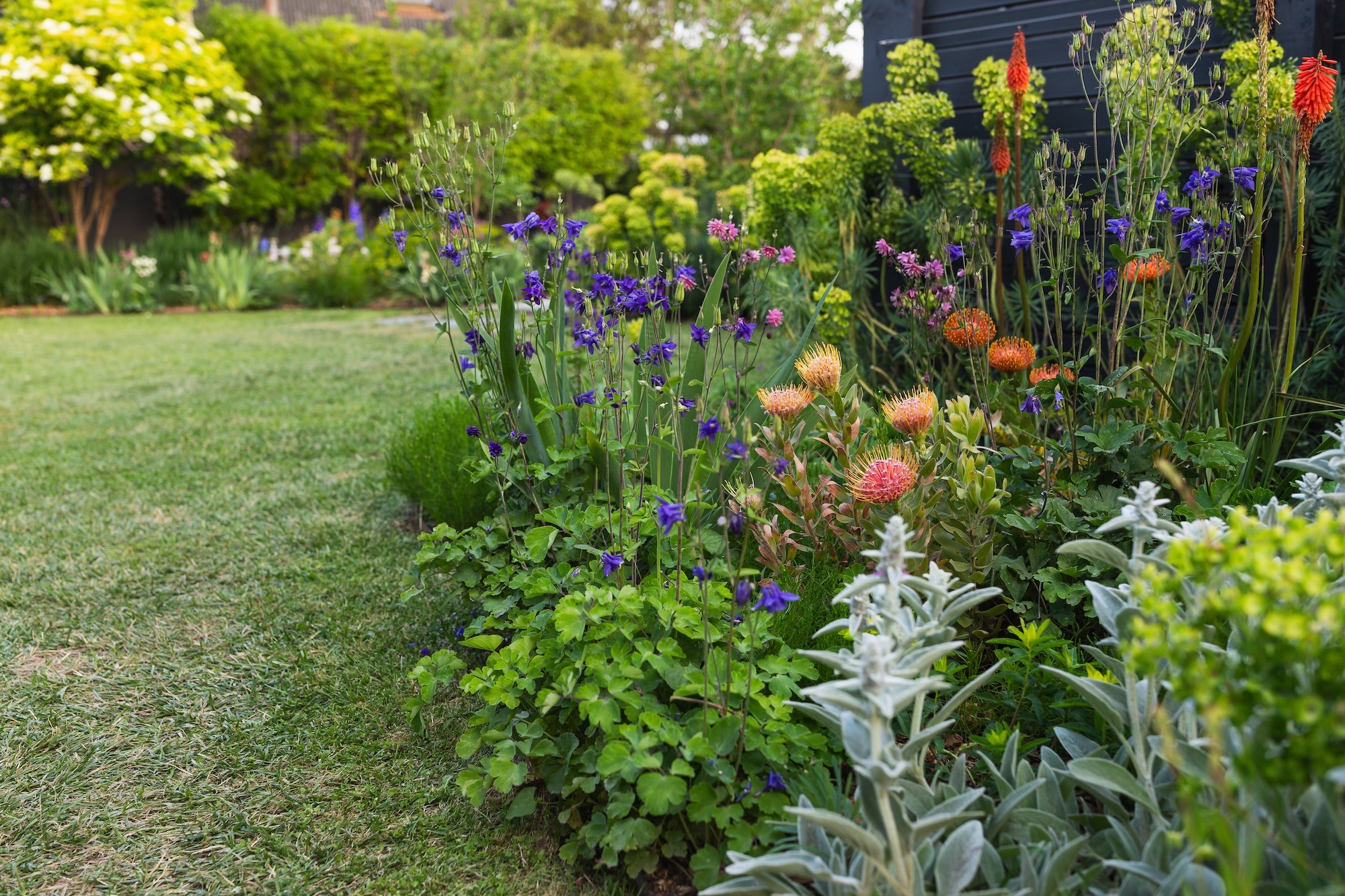
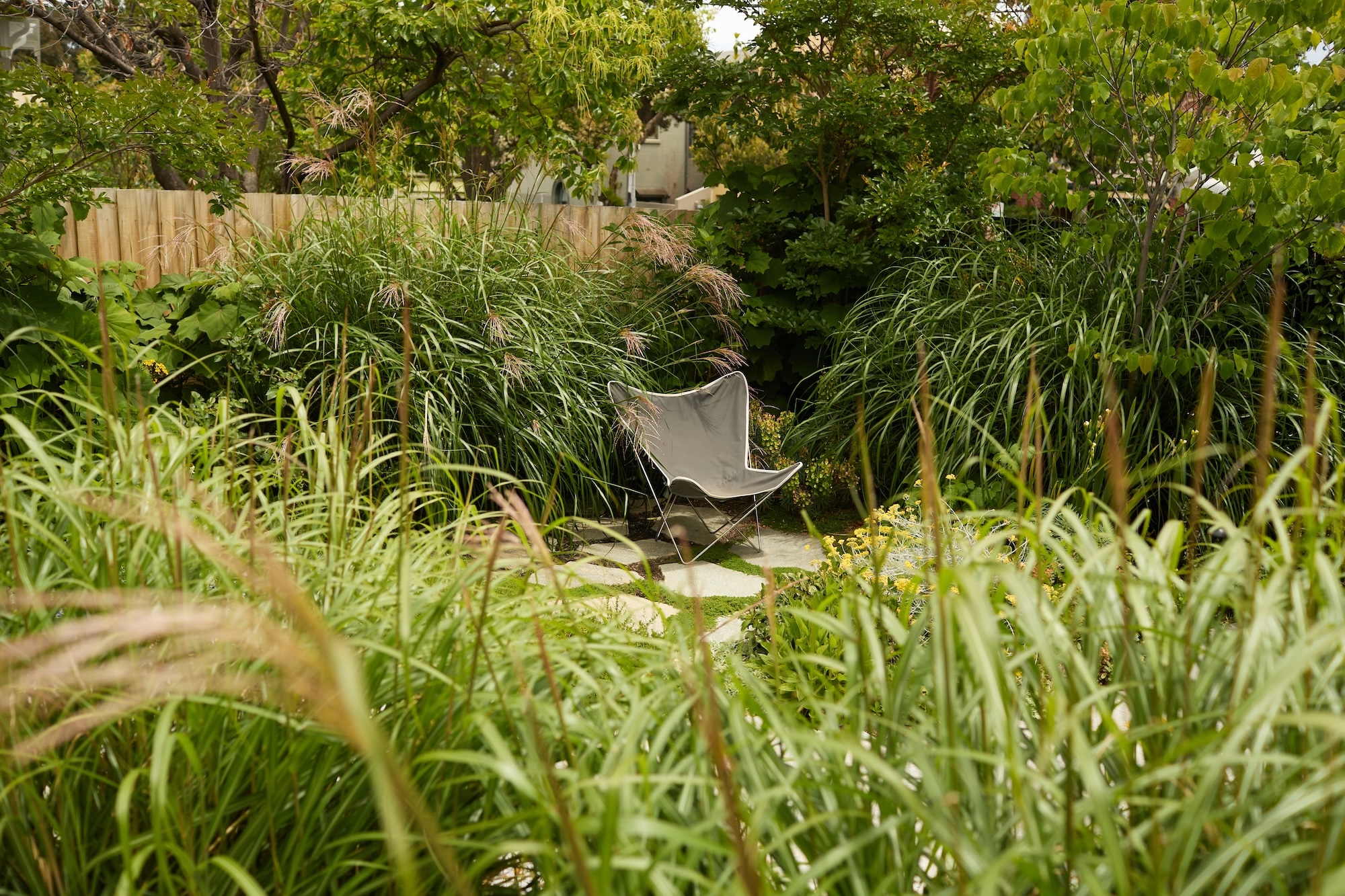
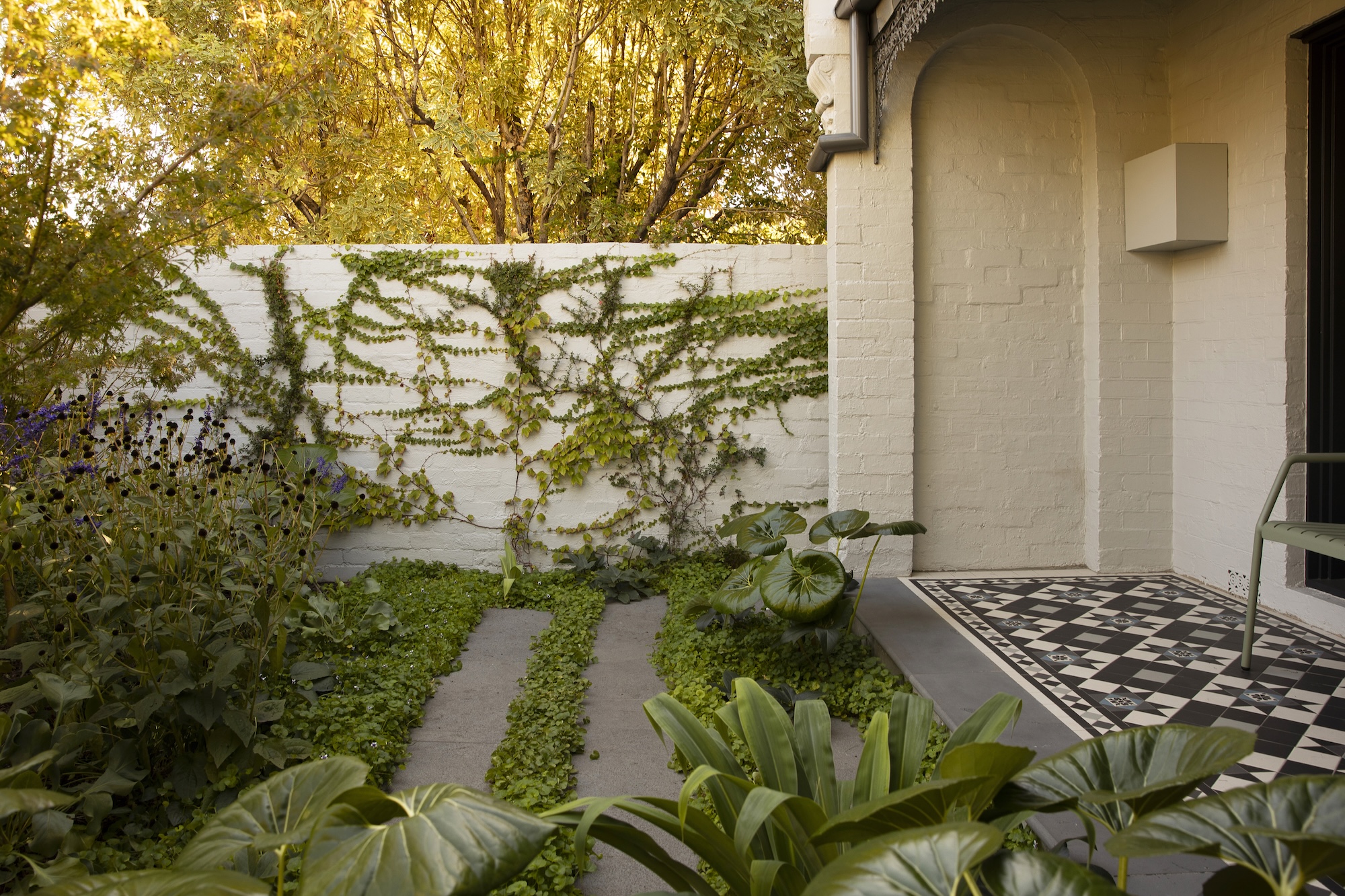
“Colour gives us the freedom to experiment,” she says. “When we first moved here, we planted the garden with a green, white, blue – a soft, cool colour palette. But now we are introducing warmer colours, with oranges, reds, yellows.” Their garden is full of seasonal change: in the winter when the garden is dormant, it has lots of texture, with beautiful seedpods and dried elements; in summer, the garden is full of lush green hues and colour. “There’s a rebirthing of everything as the seasons move through the year.”
Charlotte has also become a member of a small local trust supporting the revegetation of the Tukituki creek. For months they’ve been planting hundreds of beautiful native species into and around the creek to restore it to its original beauty. It will take another 50 years until they see the fruit of their labour. Thankfully, Charlotte is becoming familiar with the unhurried passing of the seasons, knowing full well that any transformation of value needs space and time to percolate.
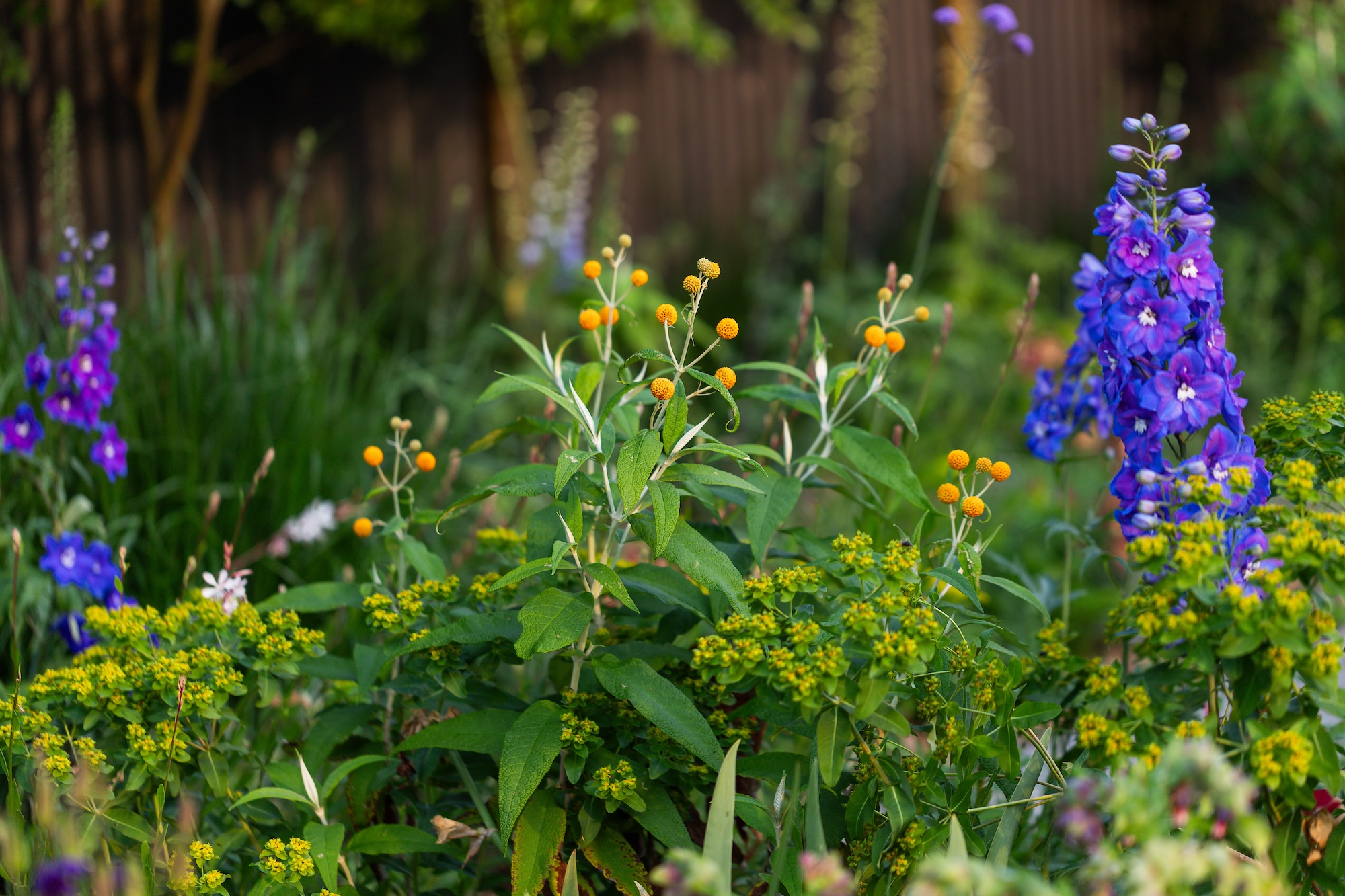
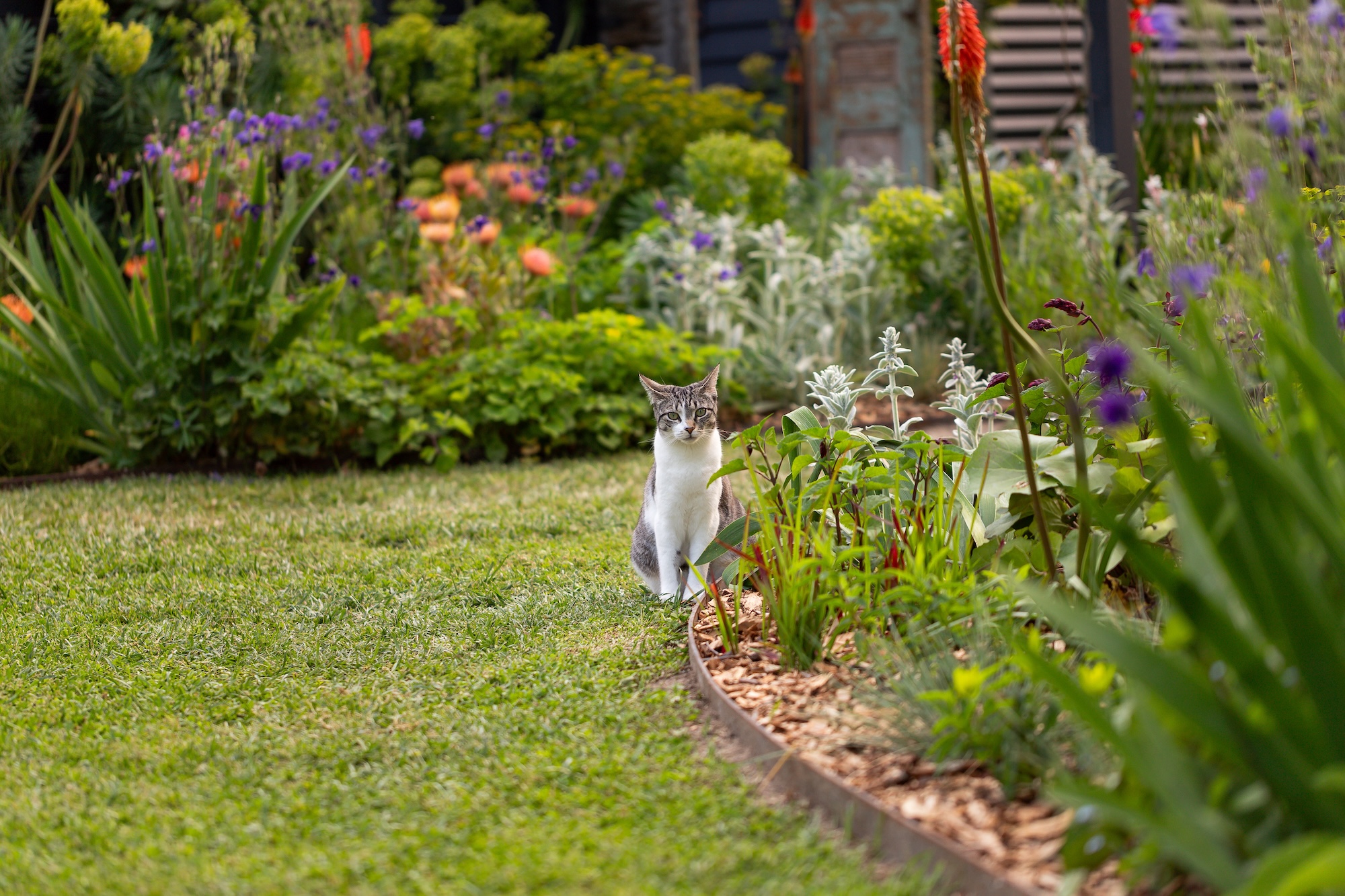
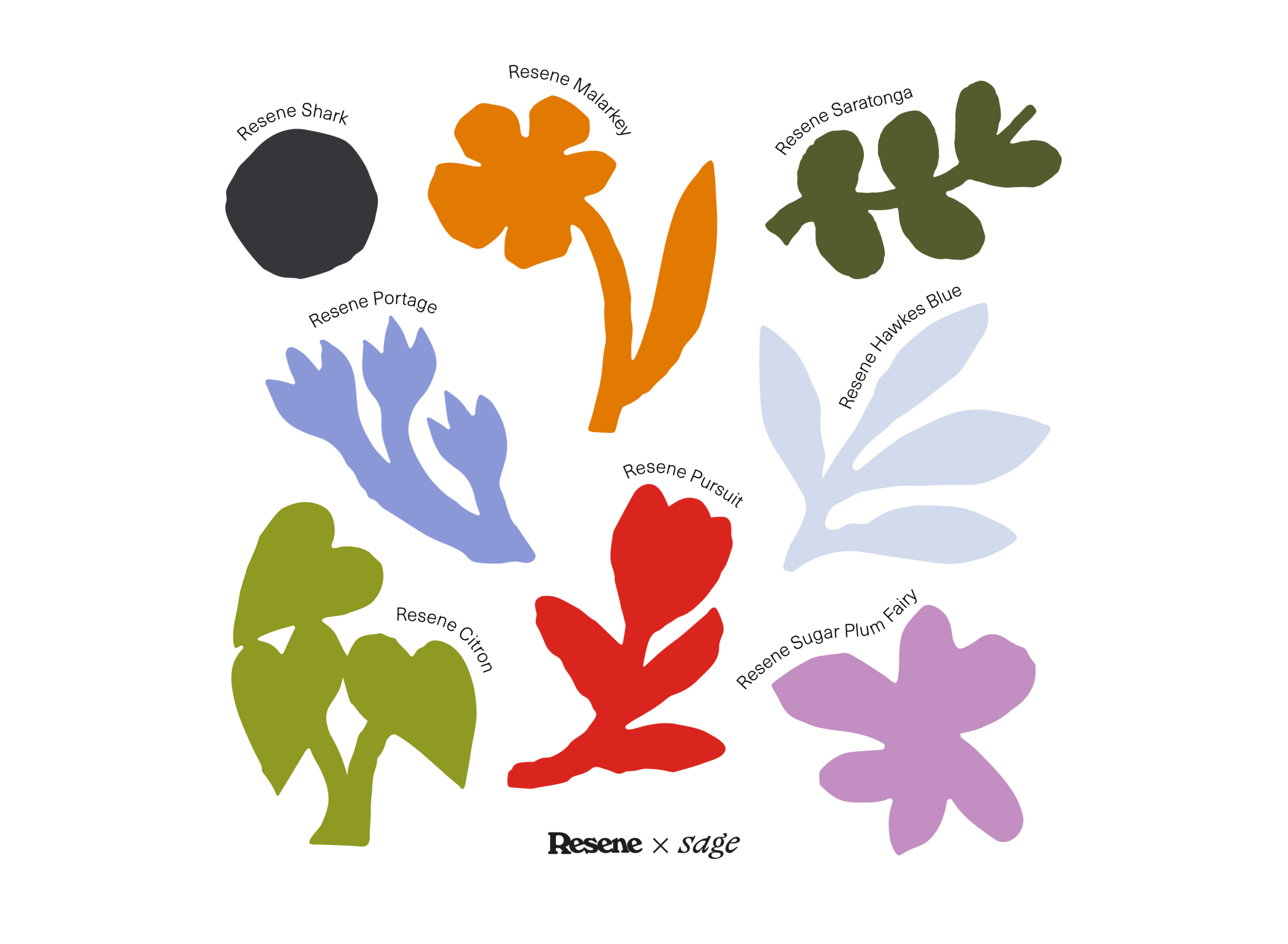
The palette of plants | In this collaboration between Sage Journal and Resene, we’re excited to explore how colour transforms outdoor spaces. This curated colour palette draws inspiration from the garden, its surroundings, and the personality of the gardeners who tend it. Just as the colours inside a home reflect its occupants, the shades chosen for a garden can reveal the gardener’s unique journey, extending creativity from indoors to out. We hope this story inspires you to see your own garden as a living work of art, shaped by both painted and planted colours throughout.

—
Resene tips:
— Using dark stains to make plants pop
Dark backdrops in the garden help draw attention to the stars of your backyard – plant foliage and flowers.
Whether it’s a garden shed, boundary fence, planter box or small garden structure, dark tones create contrast and allow seasonal colour to stand out.
Timber stains such as Resene Waterborne Woodsman Crowshead, Tiri and Smokey Ash are ideal for this. Their natural, earthy tones enhance the grain of the timber while providing a more dramatic backdrop for planting.
Deep charcoal and brown-toned stains work particularly well behind bright flowers, autumn leaves, silver foliage and ornamental grasses, while also allowing structures to sit more subtly within the landscape.
Before committing to a stain colour, test a few options using Resene testpots. Timber species, age and weathering can all influence the final colour, so it’s worth trying them out before making a decision.