
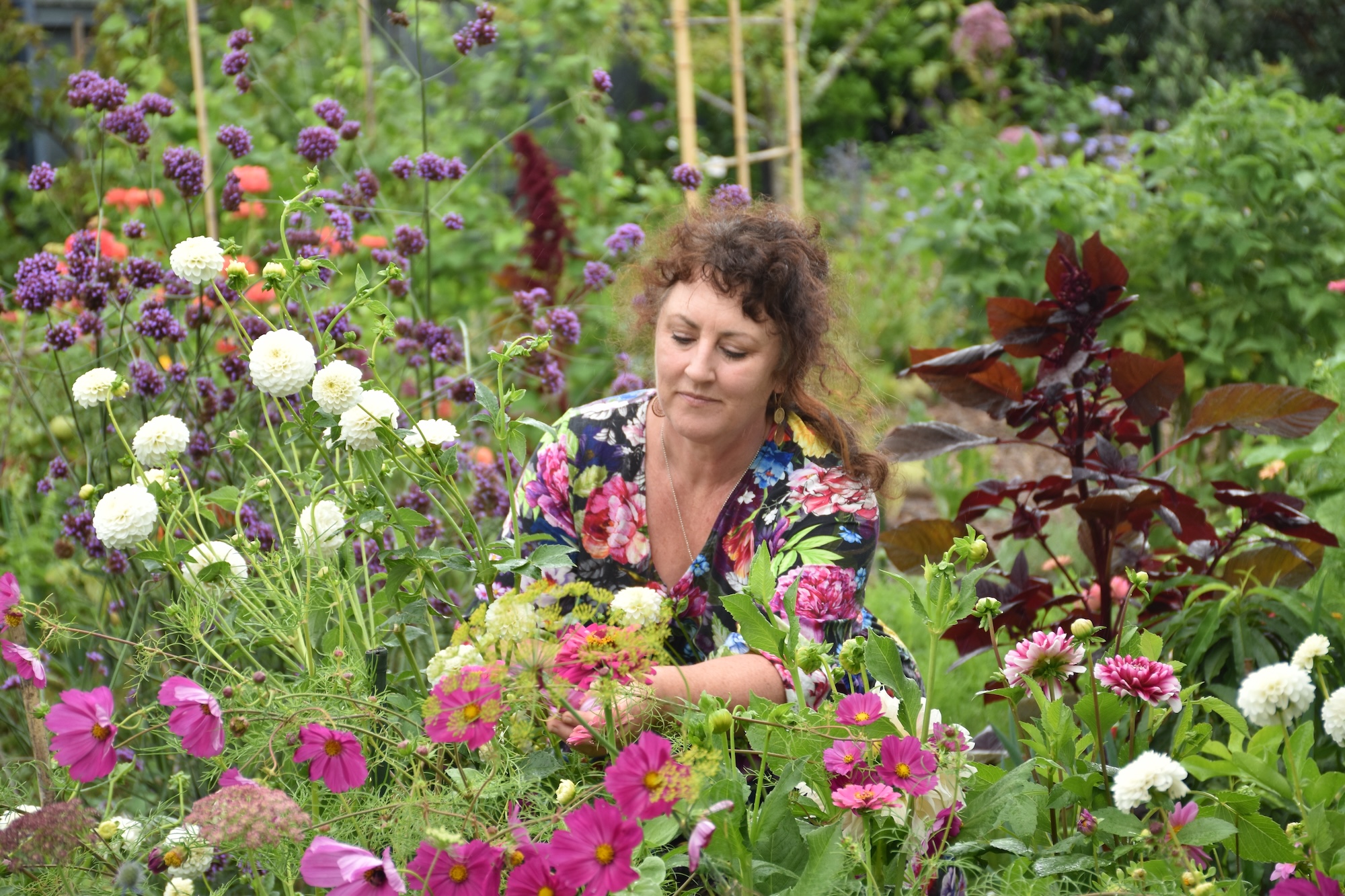
Victoria Chammanee’s ‘Paradise Botanica’ garden is now open to the public through Secret Gardens.
Once a site dominated by kikuyu and concrete, it’s now a biodiverse sanctuary. Victoria tells us about her approach to gardening, the work required to reshape her site, and how it quite literally helped to rebuild her life.
Gardening has been a constant in Victoria Chammanee’s life. She grew up surrounded with grandparents and parents as talented gardeners, and days spent picking lemon verbena and roses, drying flowers, making potpourri and creating “witch’s potions.” Her childhood bedroom was filled with florals and hanging bunches of dried roses.“Flowers and gardening have been part of me, for as long as I can remember.”
Her early gardening as an adult began modestly. First, a flat in her twenties – composting experiments, learning which plants she liked… Later, in Birkenhead, Tāmaki Makaurau Auckland, she had 400 square metres to “play around with.” Looking back, she describes it as passion with limited knowledge. “I planted shade-loving things in the sun because that’s where I wanted them,” she says. “You have to make a lot of mistakes in gardening to really learn.”
Even then, her instincts were clear. Organic methods only. No pesticides. “I could never wrap my head around drenching the earth in chemicals.” Composting courses followed, as did many hours watching permaculture documentaries on YouTube and ecological restoration workshops. She learned positioning for light. She lost plants. She grew food. She kept going.
Gardening became a counterbalance to raising two children under two – a way to nurture soil alongside motherhood. Cooking from the garden, watching her children pick food outdoors – it anchored family life. “It was just such a joy.”
Renewing the land
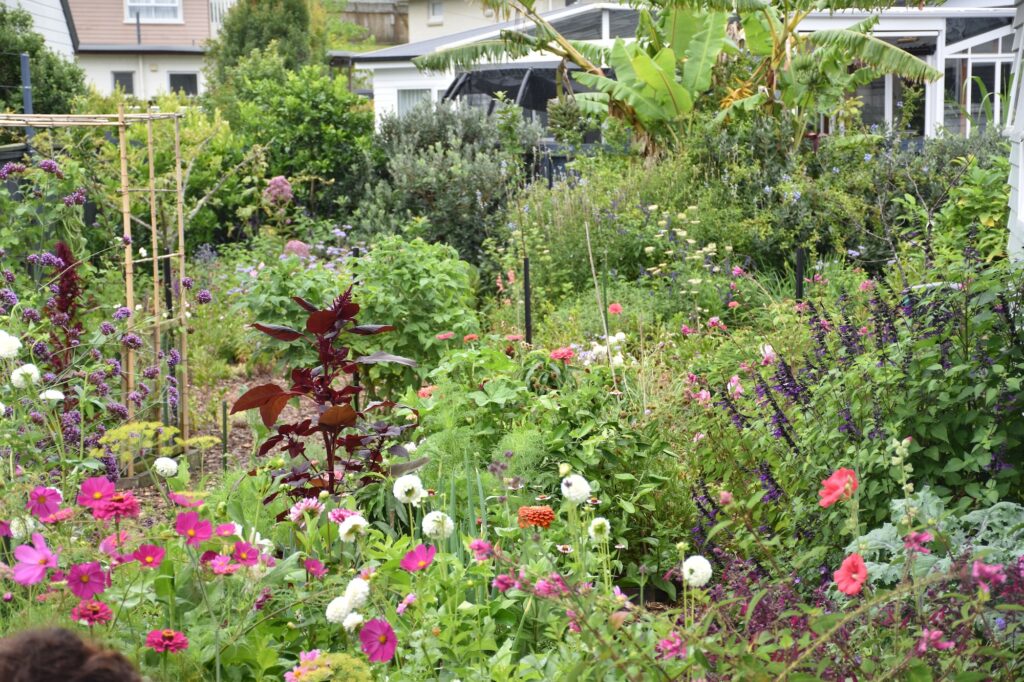
Her current property, Paradise Botanica Gardens, is a 703-square-metre flat rectangular site in Forrest Hill, Auckland. She knew she wanted it before she even looked inside the house. “There was something about the energy of the land,” she says. “I knew I could create a sanctuary.”
What she inherited, however, was far from magical: kikuyu grass, yuccas everywhere, river stones, paved sections, buried debris – even a hidden spa. Skip load after skip load of concrete and waste were removed. The soil beneath was compacted clay suffocated under weed mat. From there, it was physical work, adding more than 100 cubic metres of arborist mulch, plus seaweed, pond weed, pony club manure. She was chopping-and-dropping, and trying every composting system imaginable. Years of feeding soil life back into existence.


A sense of place & purpose
“I had this great vision, but for a long time, I was really held back from actually clarifying the design, because I’m a mad perfectionist,” she says. The breakthrough in design finally came from a life-threatening medical crisis. Three years ago, following surgery complications that led to septic shock, multiple operations, prolonged hospitalisation and severe trauma, Victoria found herself confronting survival in its rawest form. Her career as a senior midwife and university lecturer halted abruptly. Recovery was long and PTSD followed.
In hospital, she began designing the garden. “I thought, I’ve got another chance at life. I’m going to make something.”
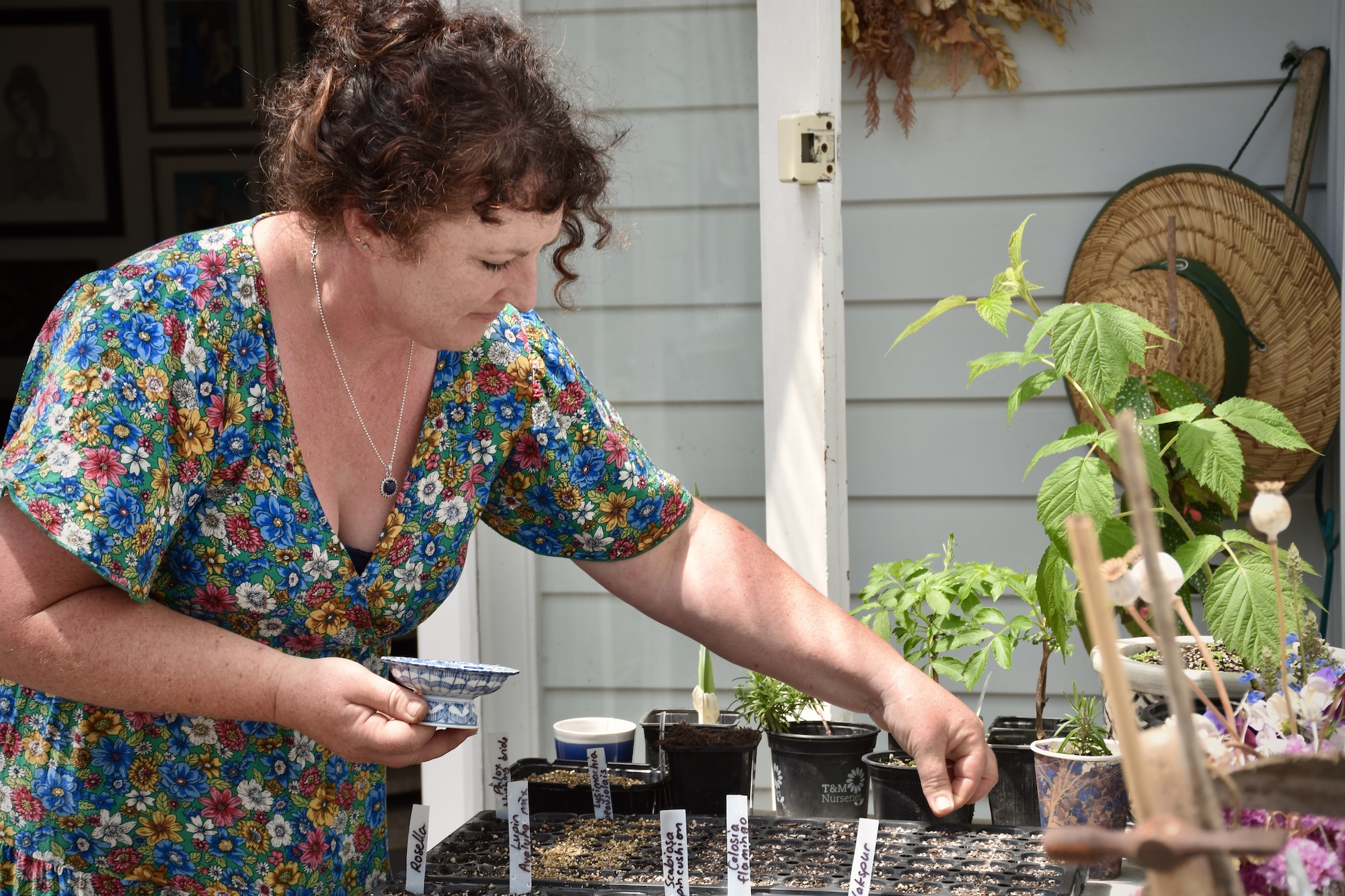
She drew plans for twelve raised macrocarpa beds. When she came home, her husband built them. As she regained strength, she started seeds from a potting table on the deck, she planted and propagated cuttings. “The majority of the garden has grown as I’ve put my life back together.”
There were moments of deep uncertainty – sitting on the deck grieving the loss of her career, wondering what remained. Each time, the answer returned her to the soil. “In the garden, everything dissipates. It restores my sense of place. It gives me purpose.
“It’s such a spiritual connection and it’s so healing for me. It’s been a big journey over the last three years and the garden has really saved me.”


In harmony with nature
Victoria describes her gardening philosophy as centred on sustainability and harmony with nature. “I used to think gardening was about control – I’ll do this, I’ll shape that. The more I’ve gardened, the more I sit back and let nature lead.”
Her approach is grounded in no-dig and permaculture-based principles that foster biodiversity. Victoria speaks of naturalistic planting, of letting things self-seed, of gardens that feel alive rather than imposed. “I’m an artist. The garden is my palette.”


Sensory experiences
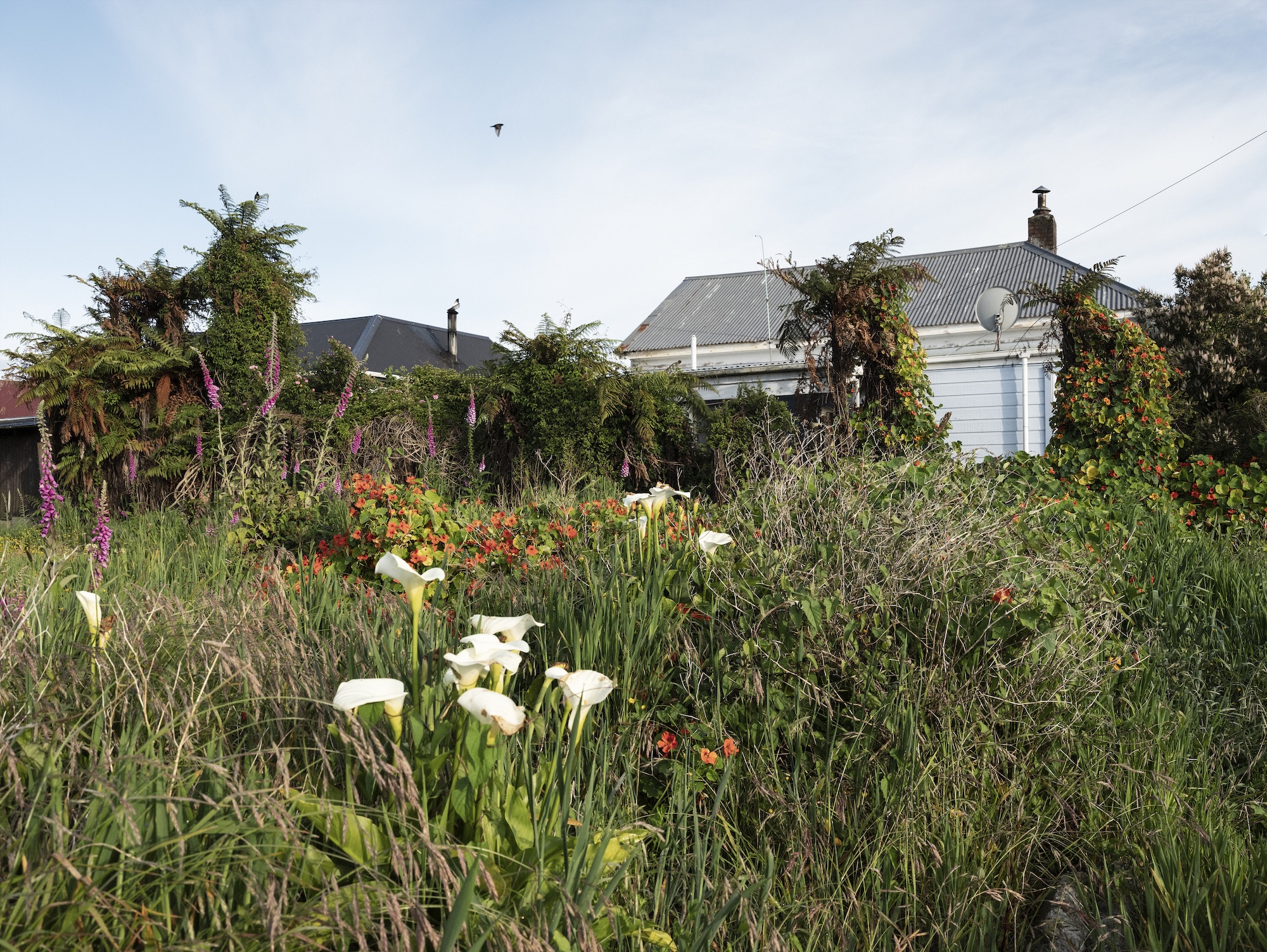
Paradise Botanica Garden is divided into five distinct zones, each offering a different sensory experience. Visitors are greeted by the Berm Garden at the entrance. Planted in wild flowers and cottage garden favourites such as hollyhocks, salvias, pentstemons, eryngium, dara and irises, the high-visibility berm has become a local talking point.
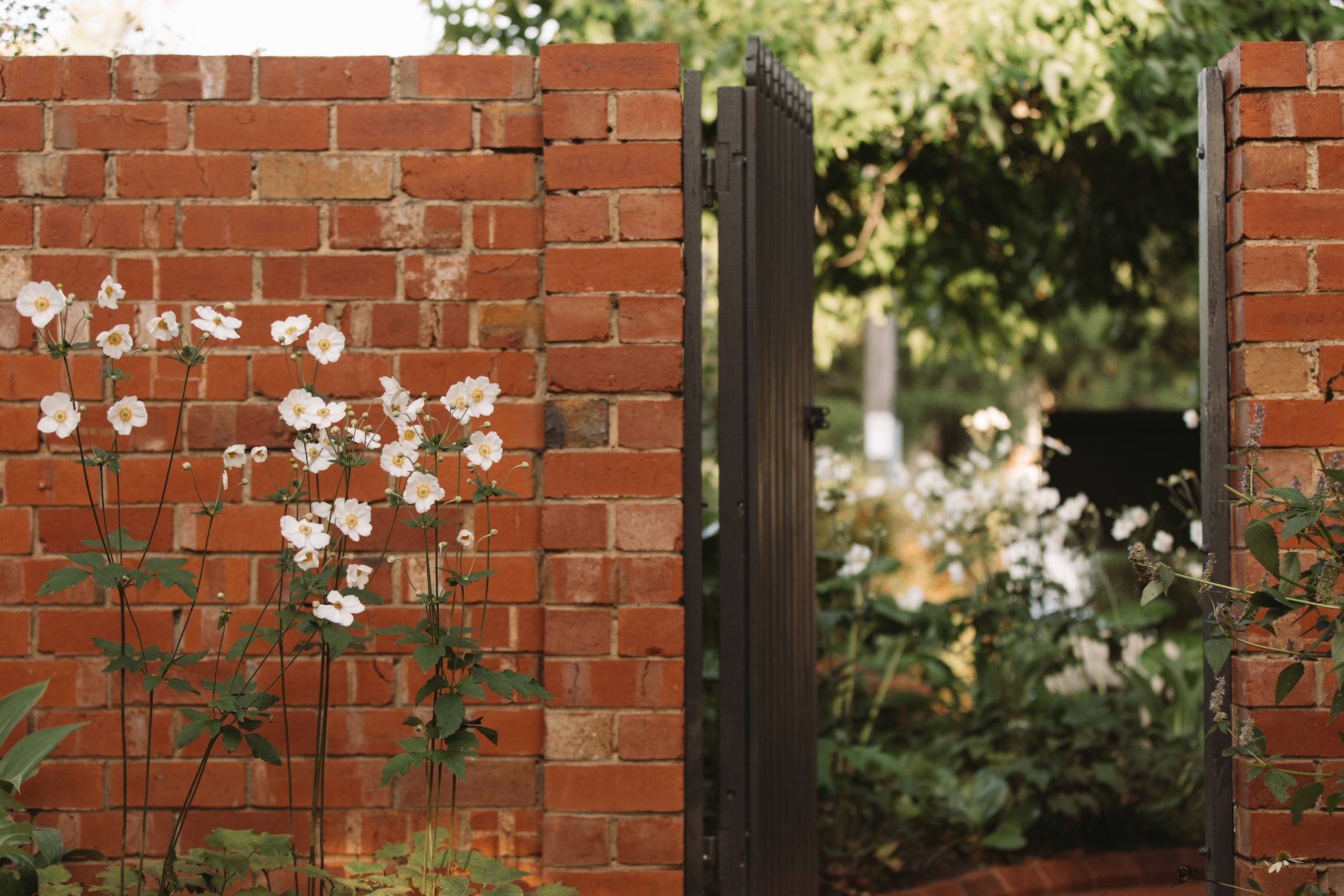
Through the gates is the Whimsical Garden, a joyful, colour-filled space that sets the tone for the property. Beyond lies the Mandala Garden, featuring the 12 raised macrocarpa beds with vegetables, dwarf fruit trees, and an impressive collection of dahlias and English cottage-style annuals and perennials.
The Hedged Paradise Garden – created in memory of Victoria’s mother – is designed for contemplation and meditation, offering a circular sitting area where one is surrounded by a kaleidoscope of flowers. The journey continues into the experimental Tropical Garden, which includes a thriving banana circle, guavas and Thai aubergine trees.
When visitors walk onto her deck and pause, Victoria says she notices the slowing down; the recalibration. “It’s about creating sanctuaries. Spaces that nurture plants, insects, birds – but also the hearts and souls of the people.”



To visit this garden, book a visit at: www.secretgardens.co.nz