
Looking. Making. Questioning. A Life in Design. This piece is an extract from Meditations of a Landscape Architect by David Irwin – a new collection of essays that brings the thinking behind four decades of design practice into view.
Big things & little things
There are big things and there are little things. That is a phrase I use to try to explain the things we, as designers, need to understand and get on top of. What matters and what does not? What really matters in design?
One of the most common problems I see is a misunderstanding of what is big and what is little. In response, designs often try to do everything. And in doing so, they treat everything as equal — when it is not.
What matters, and what does not, is critical. Not all things are equal. If we aim to hold the pen more lightly, not everything needs to be drawn, and not every line needs to be of equal weight. There is depth in the gaps. In the space between things, there is breath. Or, as Leonard Cohen said in his song Anthem, “There is a crack in everything — that’s how the light gets in.” It’s worth exploring this idea through abstraction and simplification — by thinking of a concept as a drawing.
The five-line drawing.
The idea is that a concept, or a framework for a possible solution, can be summarised in five lines. The five most important lines we might draw to explain what we are conceptually trying to do. The key lines that establish structure and priority. Asking ourselves:
What five lines?
What are the attributes of these lines?
What thickness are they?
What orientation do they have?
What order are they in?
What gives way to what?
And perhaps — what colour are they?
Of course, is it really five lines — and is a concept ever a single move? But abstracting and simplifying helps draw out what matters and what does not. What is critical to success, and what is not. The actions intended by design are often more universal than we first think. Here are a few:
Clearing something out — removing stuff, making space.
Making an intervention — adding something into a space.
Formalising or ordering — or deliberately undoing that.
Creating a place for others to gather and add to — setting the scene, increasing the fertility of a space.
Drawing attention to a place — or deliberately ignoring it.
There are many ways of doing these things. But whatever the approach, there is power in simplifying the design intent to five lines or so. It makes the thinking easier to communicate, and it tests it.
Design is about showing a possible future.
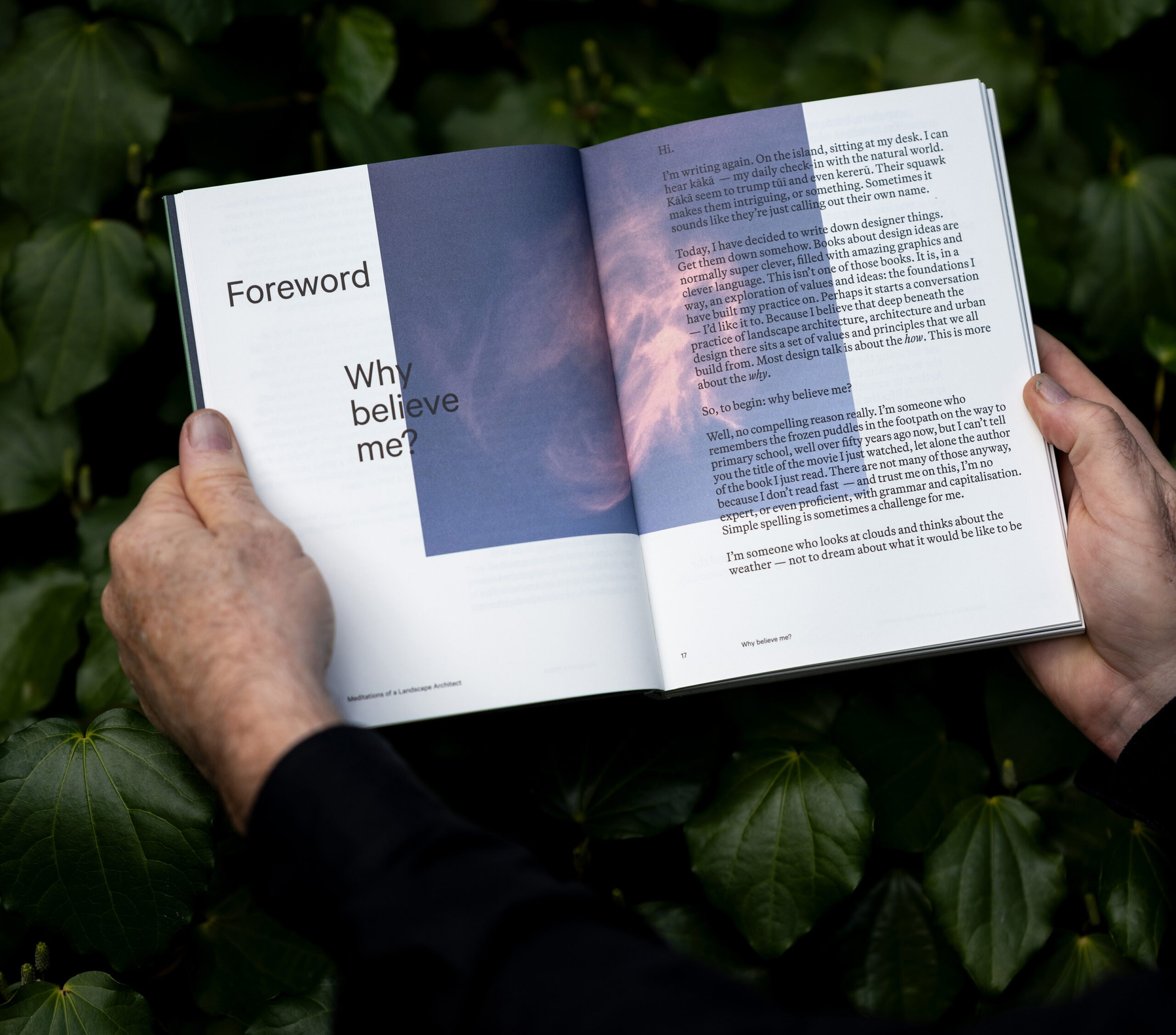
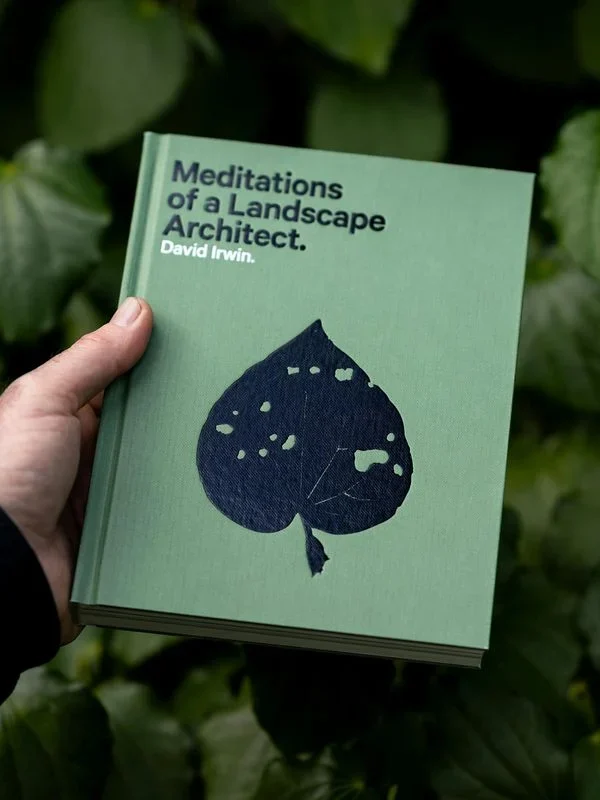
Meditations of a Landscape Architect by David Irwin
Published by Six Point Press. Stocked by Sage Journal.