
When architect Aaron Paterson and his wife Kate renovated their Auckland villa, reworking the garden was always in the plan. Together with landscape designer Xanthe White, they shaped an abundant, accessible space – designed with wheelchair movement in mind – that prioritises colour, flow and connection to the house.
This story was first told Sage Vol. 1: Life among plants
Pac Studio architect Aaron Paterson took a turn at being his own client, designing the renovation of his family home – a 1910 transitional villa in Mt Eden – alongside his wife, Kate. The couple and their two teenage children, Oscar and Ira, had moved from a much smaller house. Kate uses a wheelchair, so one of their non-negotiables was an outdoor space that could be moved through with ease and enjoyed as part of daily life.
Designing the flow
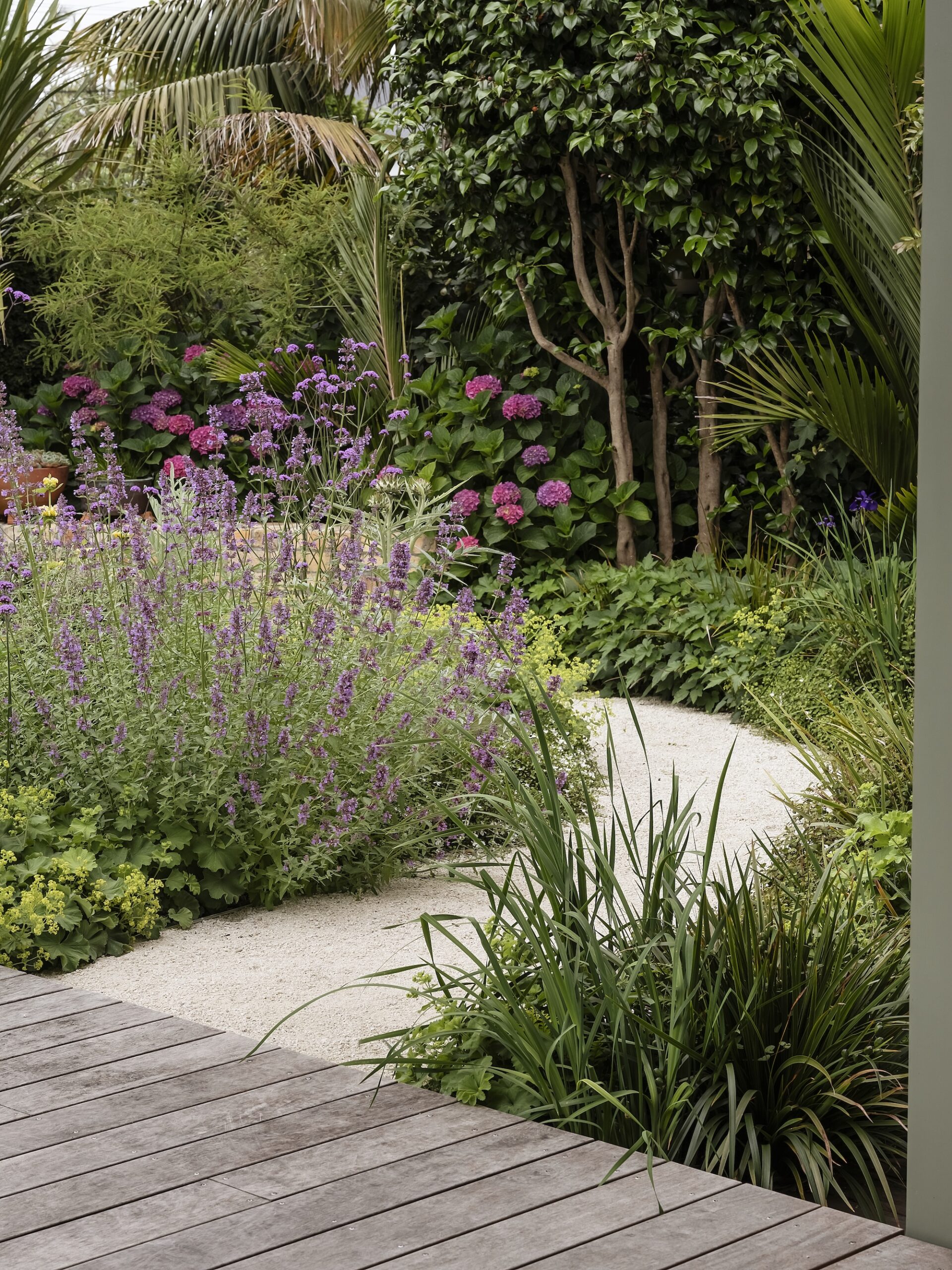
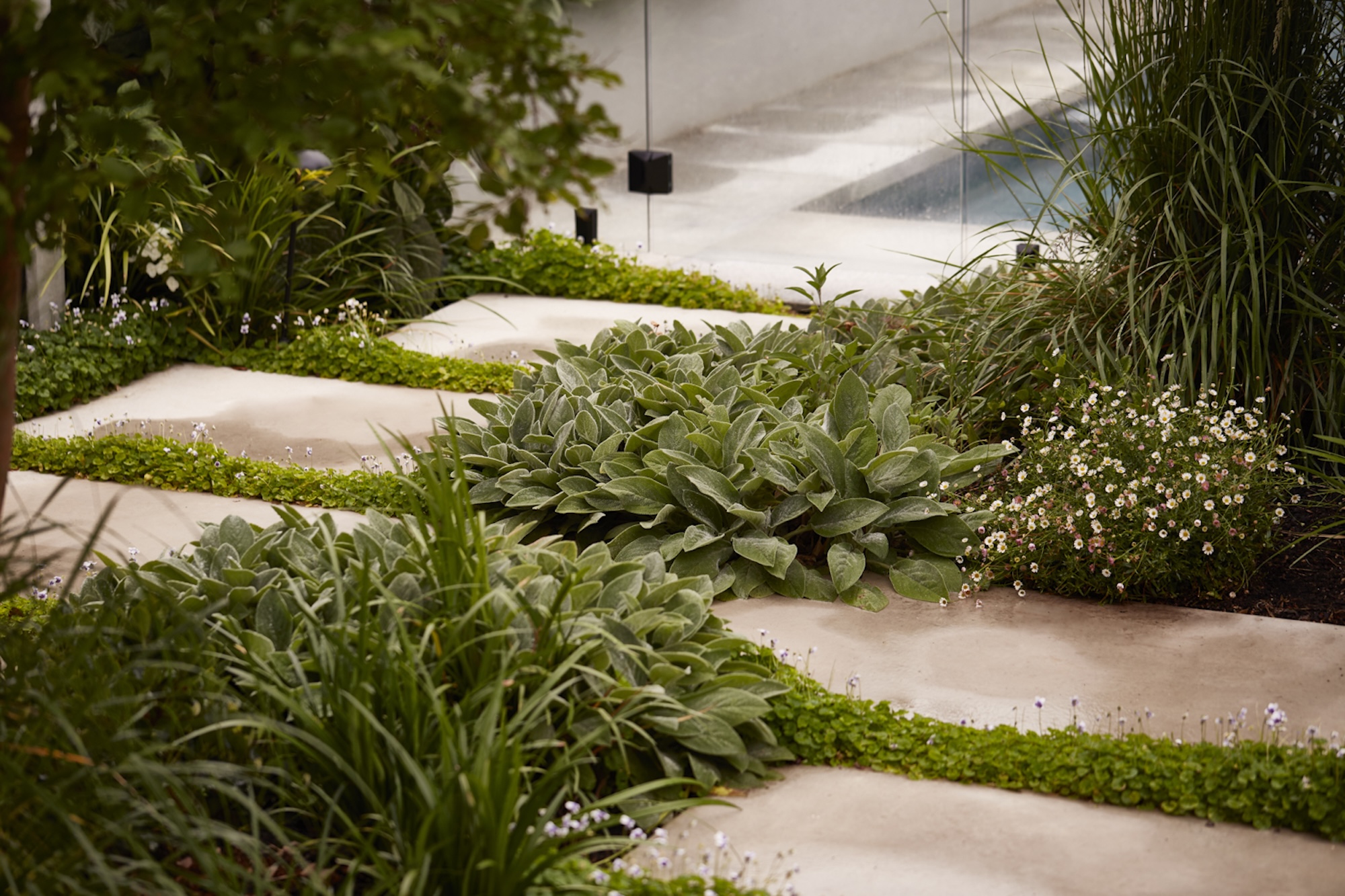
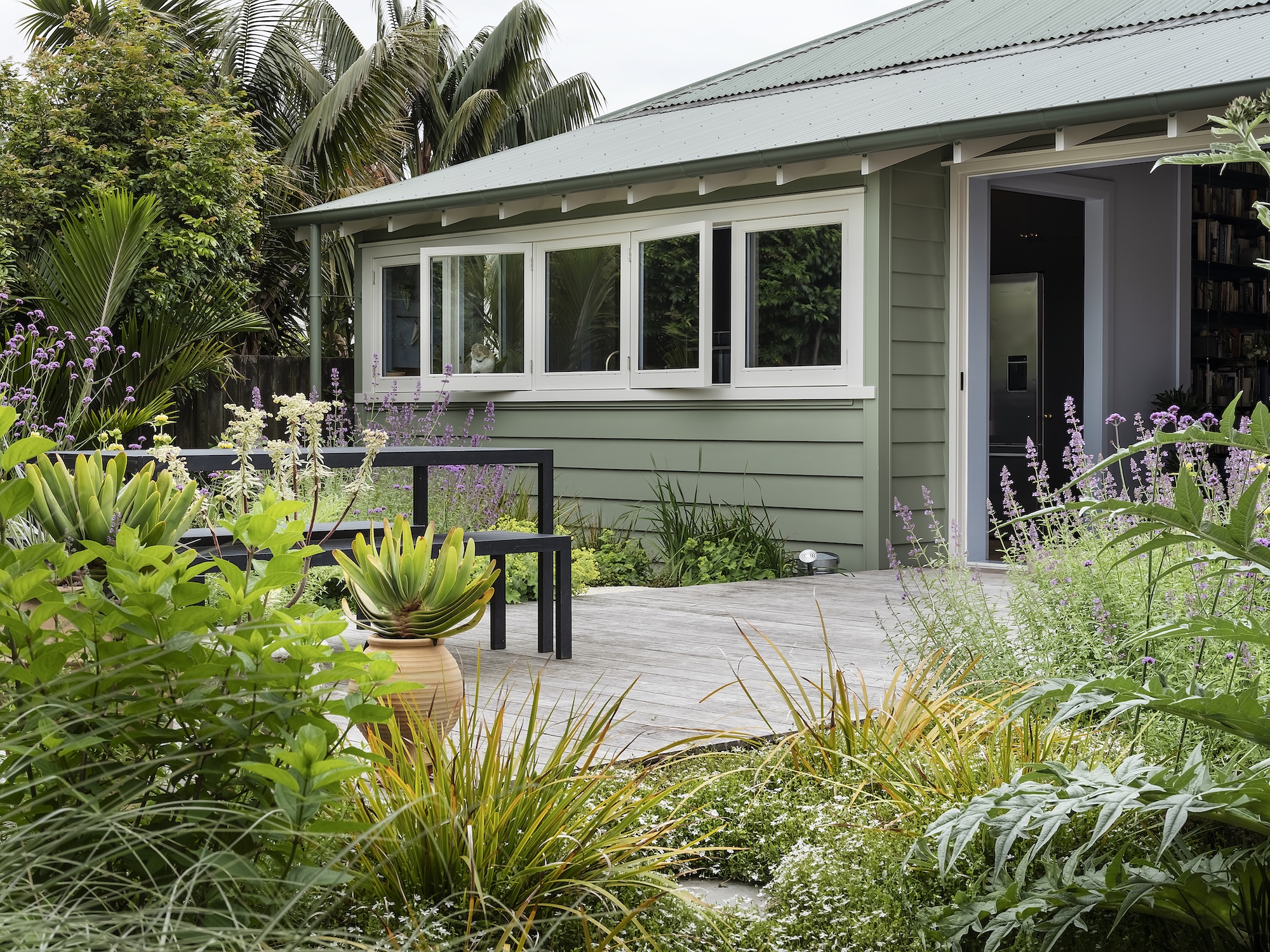
The section was flat and modest – originally just lawn and fencing – but offered great potential for transformation. With the help of landscape designer Xanthe White of Xanthe White Design, the site was reshaped into a garden with raised planters and layered planting to bring colour and diversity, and wide, sweeping hoggin-paved paths shaped for the movement of a wheelchair.
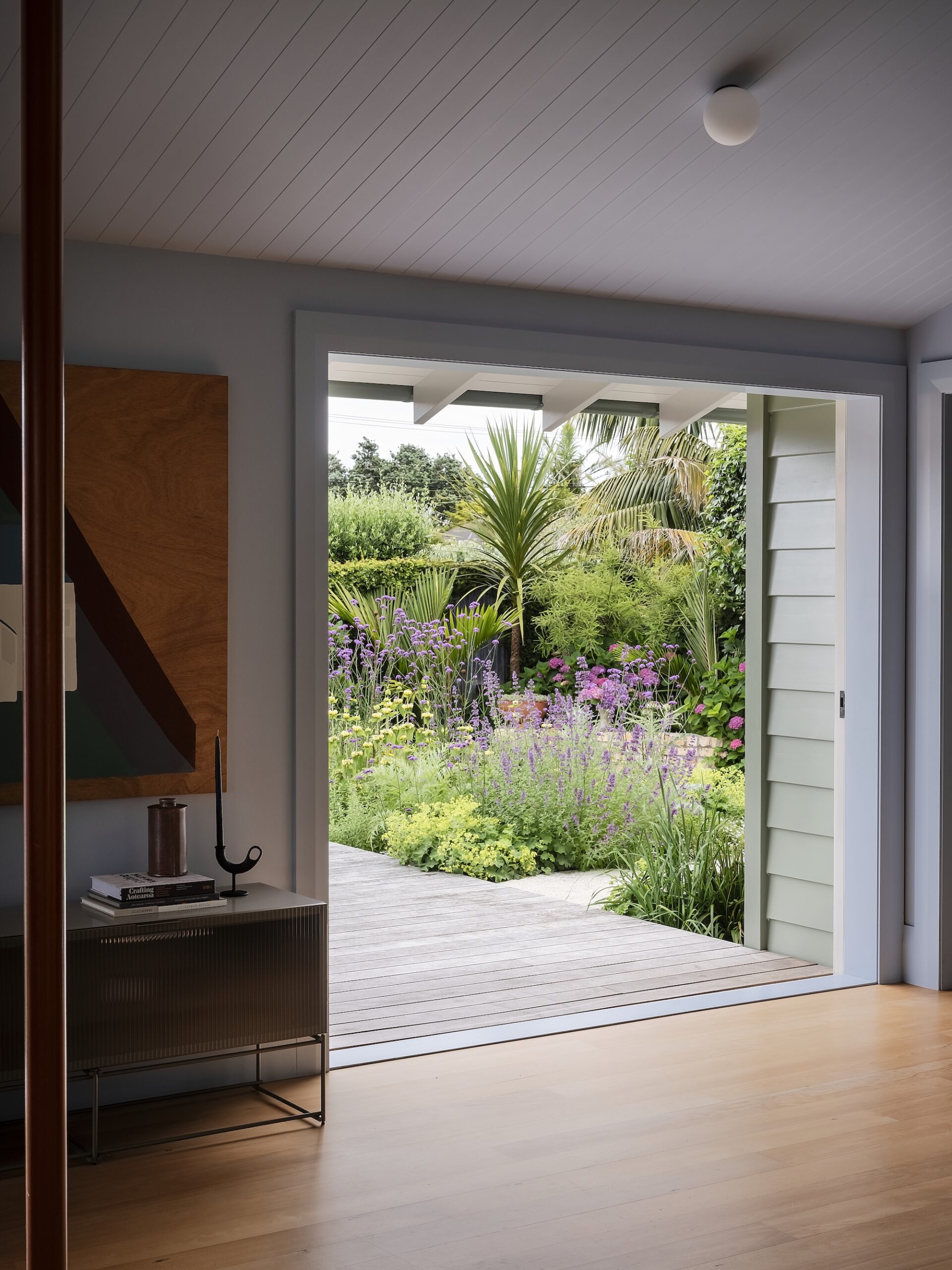
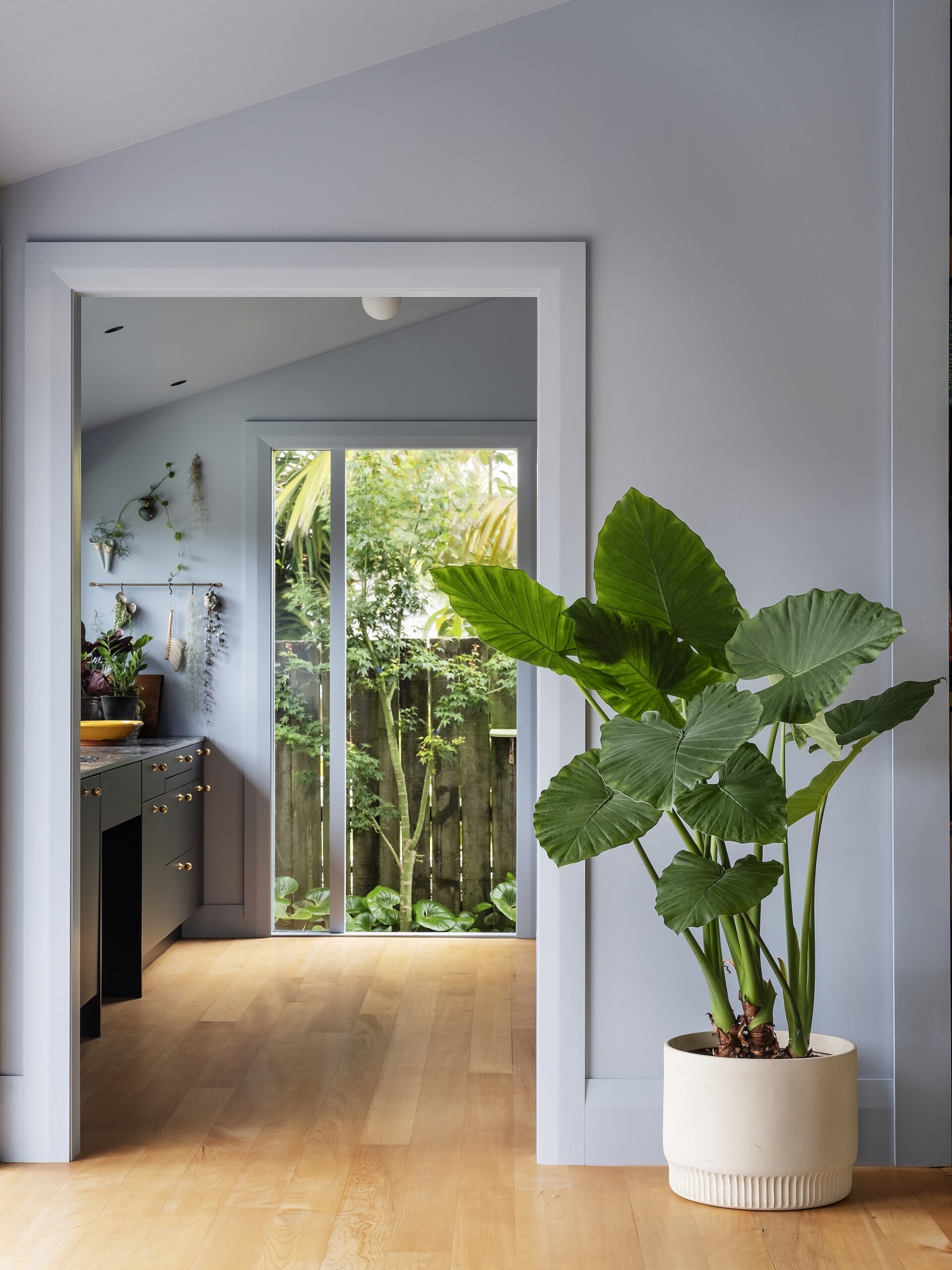
As part of the renovation, Aaron reconfigured the house so the kitchen and living space opened to the back garden. From the living area, a sliding door leads to a flush timber deck, which slopes into the garden. The path moves through the area in a loop, designed for turning, pausing and enjoying the garden along the way.
Raised beds line the route, allowing for closer interaction with the plants – Kate wanted to be immersed in the garden, rather than just observing it from afar. Elements of the home’s historical bones are also weaved through the garden, with bricks from the villa’s original fireplace repurposed as garden seating and planter walls. Where the outdoor area once felt separate from the house, it now feels integrated – a natural extension of the interior.
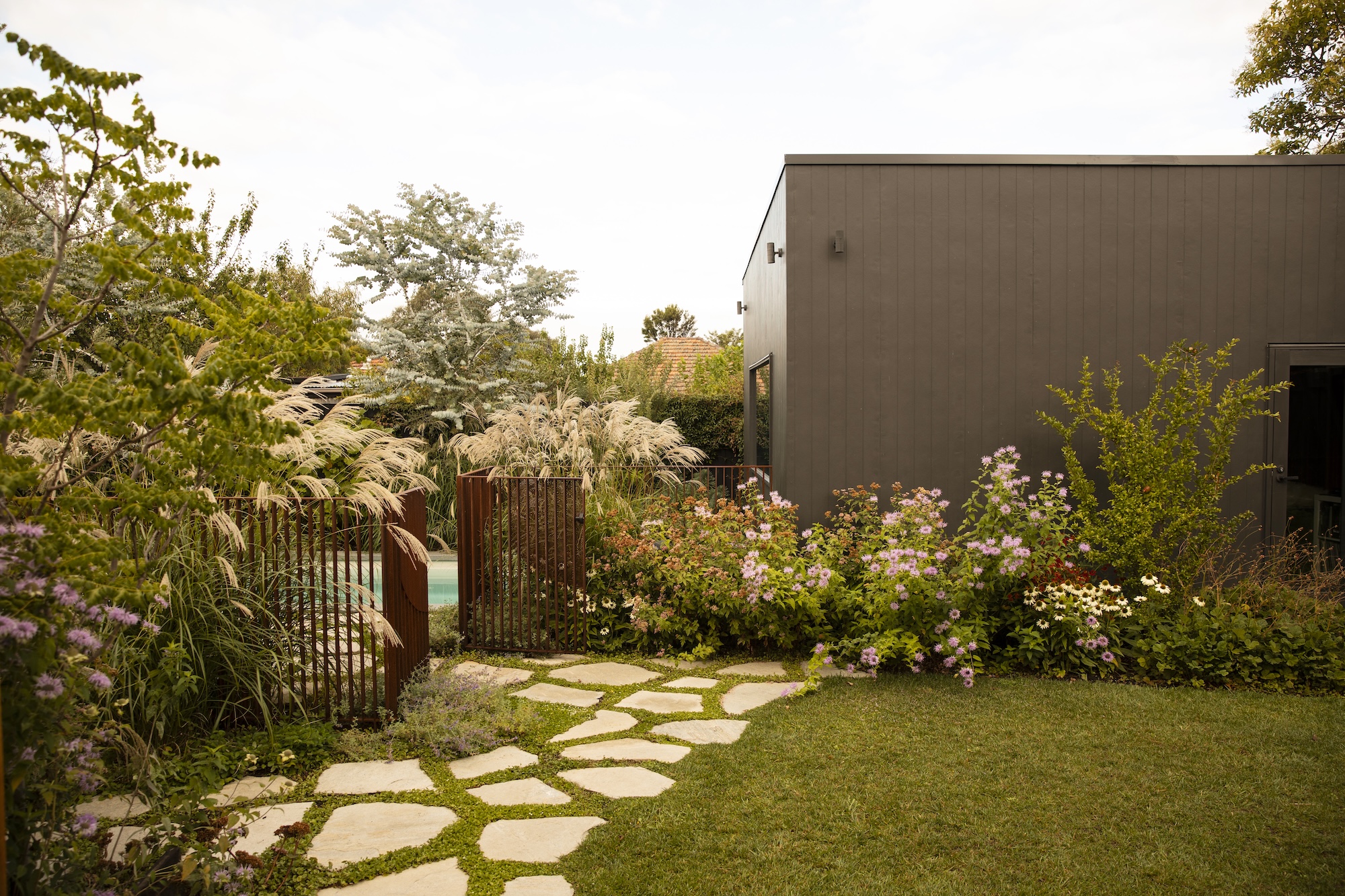
Balancing structure with softness was key. The hard landscaping needed to be functional and accessible, but also sit comfortably within the architectural language of the house. Planting was used to soften the edges, helping the home feel more integrated in the surrounding landscape.
Working with colour
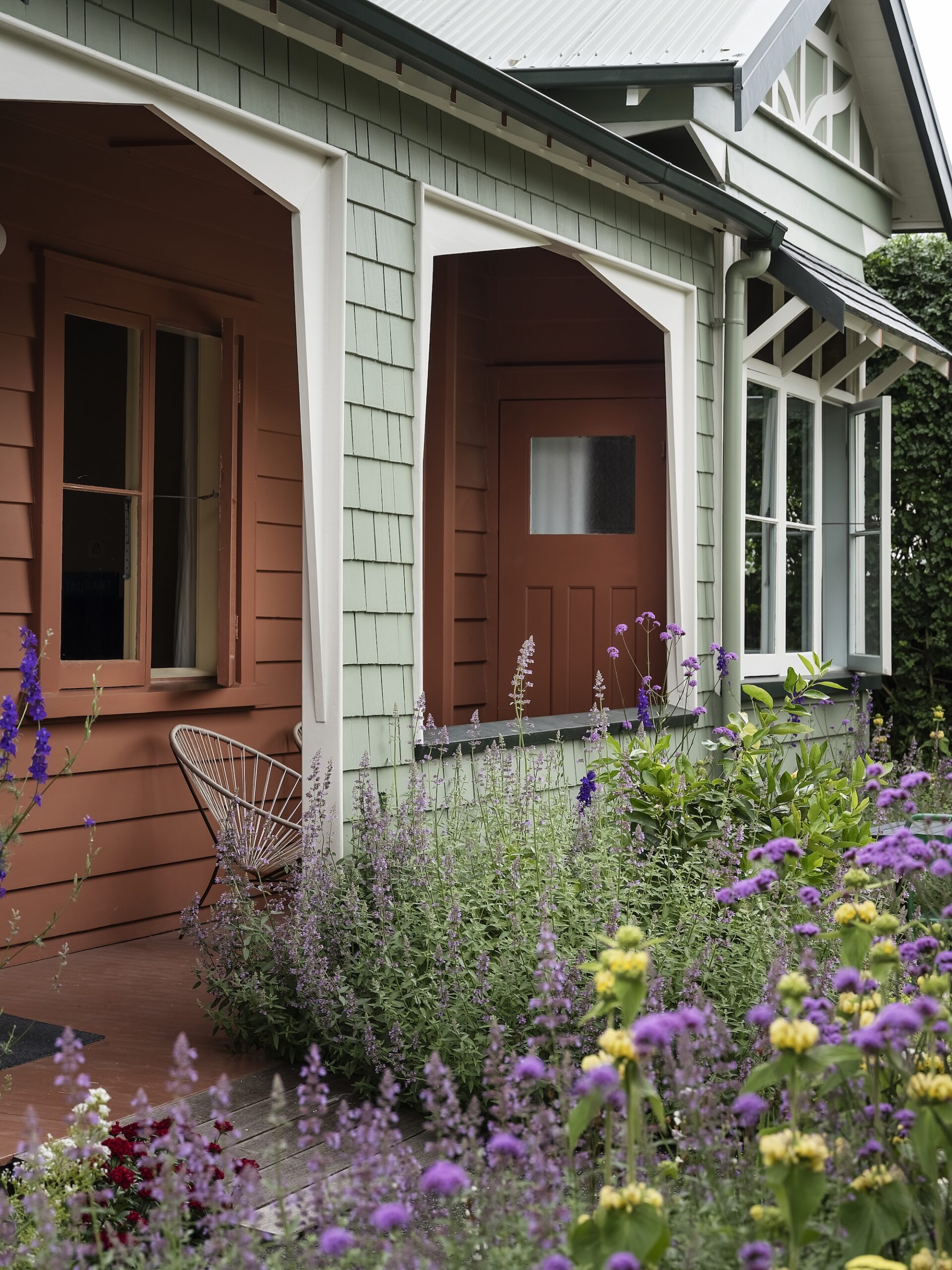
Defying the trend towards neutral palettes, bold colour is central to both the home and the garden. More than 20 different paint colours appear throughout the house (the choices being driven by the many colours of the garden), with artworks, furnishings and book-laden shelves throughout, giving each room layers of depth.
Garden variety
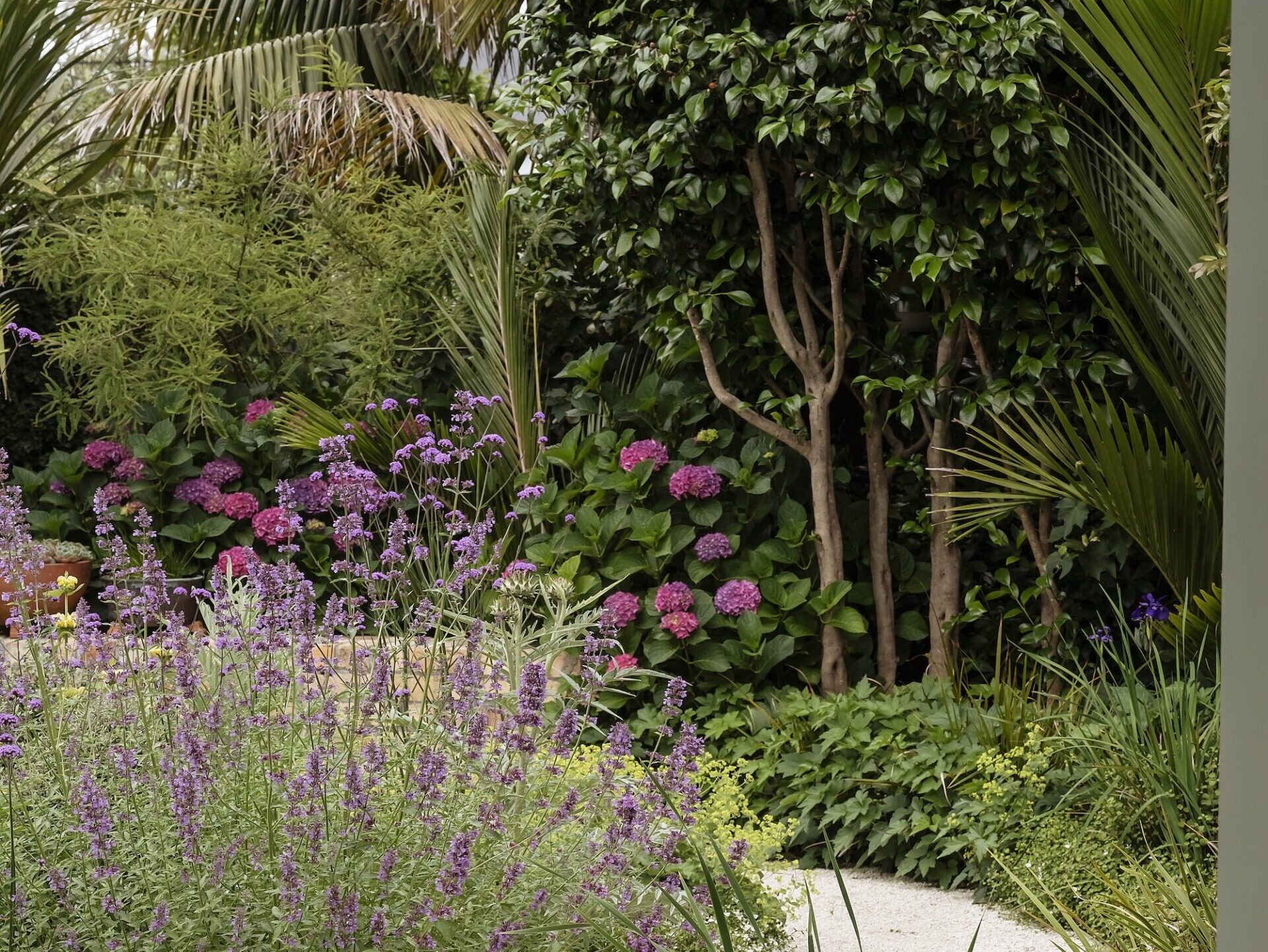
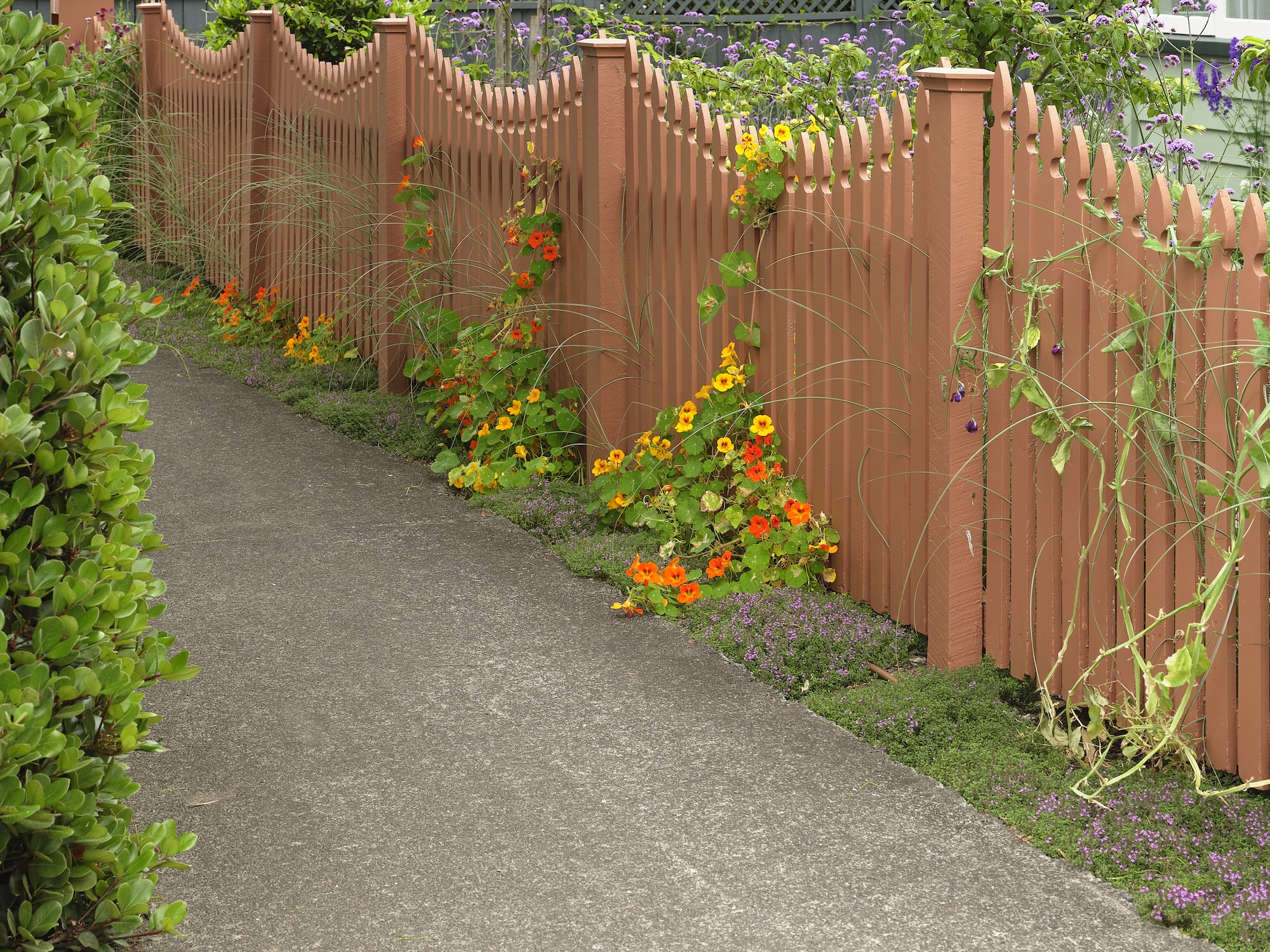
In the absence of a lawn, the garden focuses on seasonal interest and biodiversity, with a mix of flowering perennials, grasses and fruit trees. Miscanthus flanks the front fence to provide structure and privacy. Fruit trees and herbs near the front gate offer something to share with neighbours.
The garden is full of life, with frequent visits from birds and bees. The interesting array of colourful perennials offer plenty of texture and height through the warmer months, while the garden holds its own in winter with some shade-tolerant natives.
Five years on, the garden is well established and full of life. As the planting has matured, so too has its relationship with the house. There’s an effortless indoor-outdoor connection, with the colourful, textural garden sitting comfortably alongside the home’s vibrant design. The garden is constantly used, thanks to a design tailored to Aaron and Kate’s needs, and closely aligned with the daily rhythms of their home.
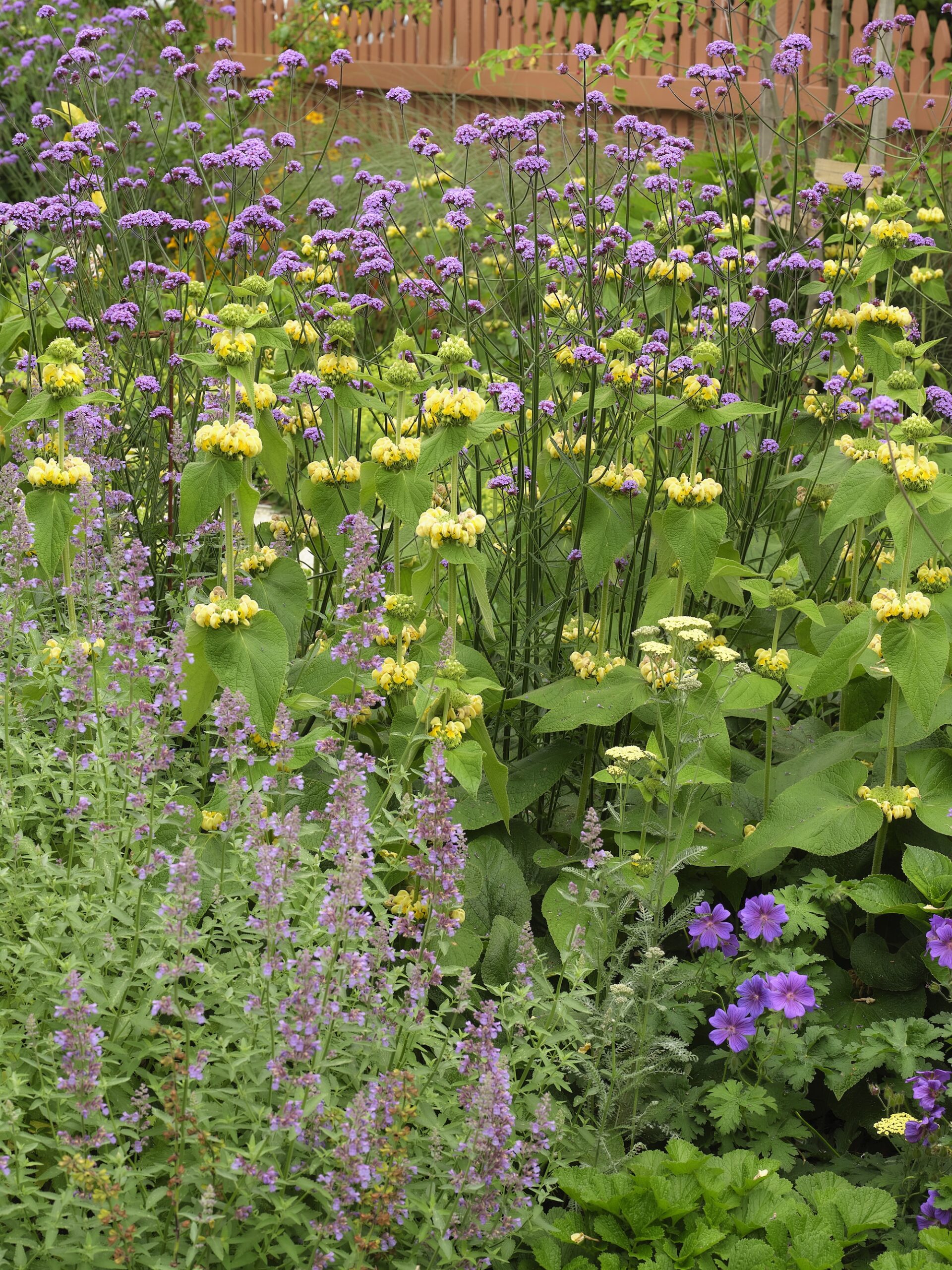
Plant palette
Perennials & border plants
- Achillea millefolium ‘Moonshine’ (yarrow)
- Alchemilla mollis (lady’s mantle)
- Cynara cardunculus (cardoon)
- Echinacea purpurea
- Nepeta ‘Six Hills Giant’ (catmint)
- Phlomis russeliana (Turkish sage)
- Tropaeolum majus (nasturtium)
- Verbena bonariensis ‘Meteor Shower’
Grass-like plants
- Astelia chathamica ‘Silver Spear’ (Chatham Island astelia)
- Libertia ixioides (New Zealand iris)
- Miscanthus sinensis ‘Gracillimus’ (maiden grass)
Groundcover
- Lobelia angulata