
— From The Plant Book by Tammy Huynh
Have you ever been given prescriptive advice on watering your plants? It sounds helpful to know that you need to ‘water once weekly’ or ‘water every fortnight with half a cup of water’, but this may not be the best advice. In fact, it could be detrimental to your plants’ health.
Your home’s conditions can vary from those found in other houses – for example, you might keep windows open more often or have the heater or air conditioner running constantly. These factors can dry out your plants faster, meaning that you may need to water them more often than the prescribed schedule. Plus, the general advice doesn’t account for seasonal changes. As temperatures drop in autumn and winter, your plants will need less water because of slower growth and reduced evaporation.
When and how to water your houseplants
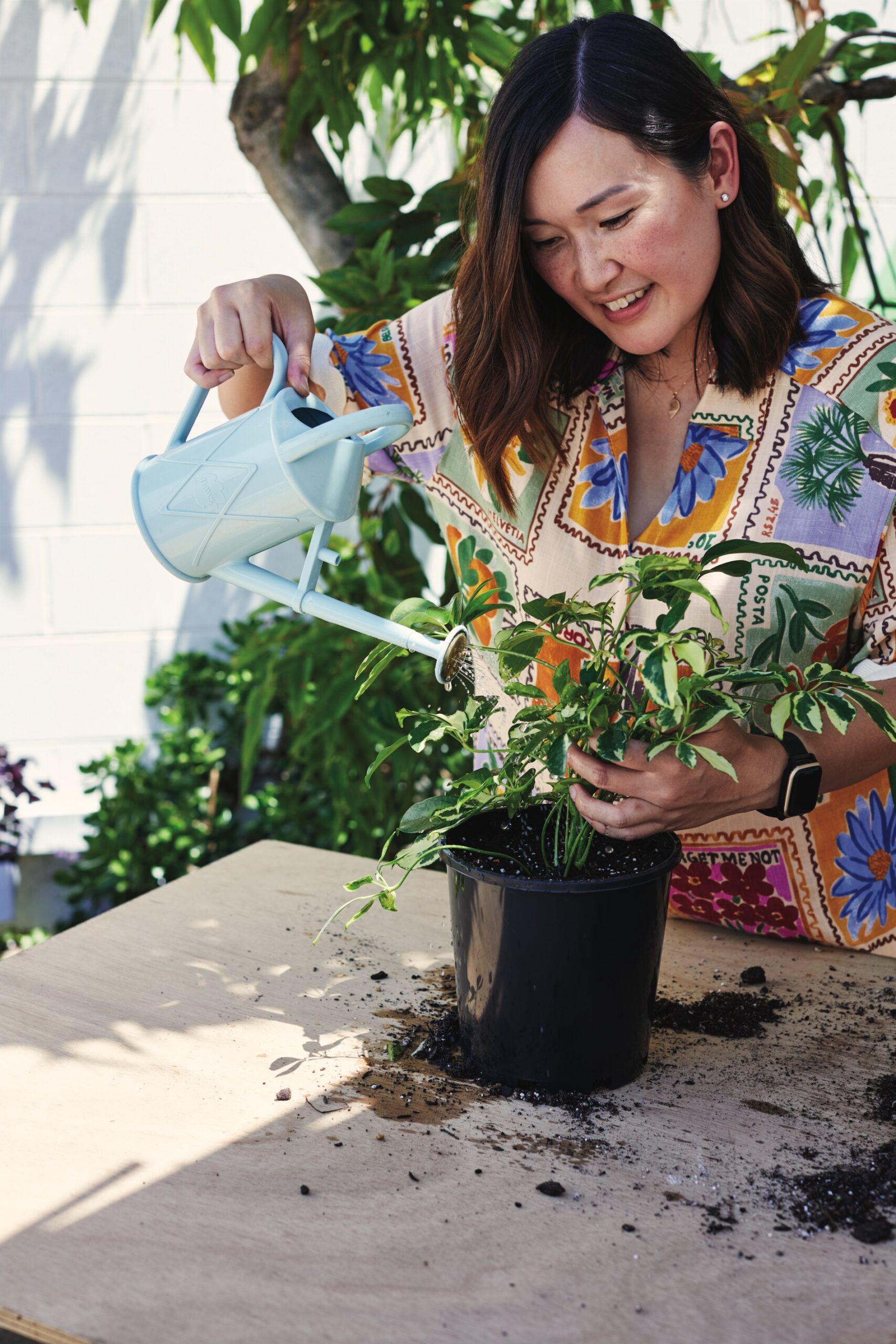
What’s the best way to work out when to water? Rely on your trusty index finger. Simply insert it into the top of the potting mix, down to about the second knuckle, or 2.5–5 centimetres (1–2 inches). If the potting mix feels dry at that depth, then it’s time to water. If it still feels moist, then wait a few more days and check again.
This method helps to prevent overwatering and ensures that your plants get the right amount of moisture. You can use a moisture meter to determine if the potting mix is moist or dry. However, I’ve found that they aren’t always reliable. Issues such as poor calibration, inconsistent readings or hitting a dry pocket in the potting mix can give the impression that the entire pot is dry, leading to unnecessary watering. I’d recommend the finger test or gauging the moisture by lifting the pot – a dry pot will feel noticeably lighter.
When watering, ensure that the water runs through the drainage holes at the bottom of the pot. This will confirm that the entire root ball is adequately saturated, and your plant has had a sufficient drink. However, this can sometimes be misleading. Over time, potting mix can become compacted and hydrophobic (water repellent), causing water to run down the inside of the pot instead of soaking into the potting mix. As a result, it may appear that the plant is being properly watered when, in fact, the roots are not receiving enough moisture. If you notice that your plant is constantly wilted or that the leaves are yellowing and drying despite your best watering efforts, then this may be a sign that your potting mix is hydrophobic.
Bottom watering
You may have come across terms such as ‘bottom watering’ or ‘butt chugging’. Both describe a method of watering plants where the water is applied to the bottom of the pot, rather than the top of the potting mix. The process involves placing a pot plant in a shallow bucket filled with water, allowing the water level to reach about one-third to halfway up the pot, and leaving it for 20–30 minutes. The theory is that the dry potting mix absorbs the water through the drainage holes; the water is then taken up by the plant roots, effectively watering the plant. However, this can lead to a build-up of minerals in the potting mix and also raise the pH, which makes certain nutrients unavailable to the plant. These factors can negatively affect plant health. Therefore, it’s best to water from the top. This ensures that minerals in the water are moving down through the potting mix; if they’re not taken up by the plant, then they’re washed out through the drainage holes.
Bottom watering does have its place if your potting mix has become hydrophobic (water repellent) because it has been left too long without watering. However, I prefer to submerge the whole pot, up to the level of the potting mix, in a bucket of water to remedy this. If you don’t have the space to do this, then you can fill a saucer or shallow tub with water, place the plant (pot and all) in it, and continue to top up the water once it has been absorbed, until the surface of the potting mix becomes wet. Once it’s wet, remove the plant from the saucer or tub and start watering as normal from the top to help flush out any minerals that may have accumulated in the potting mix due to bottom watering.

Curling leaves
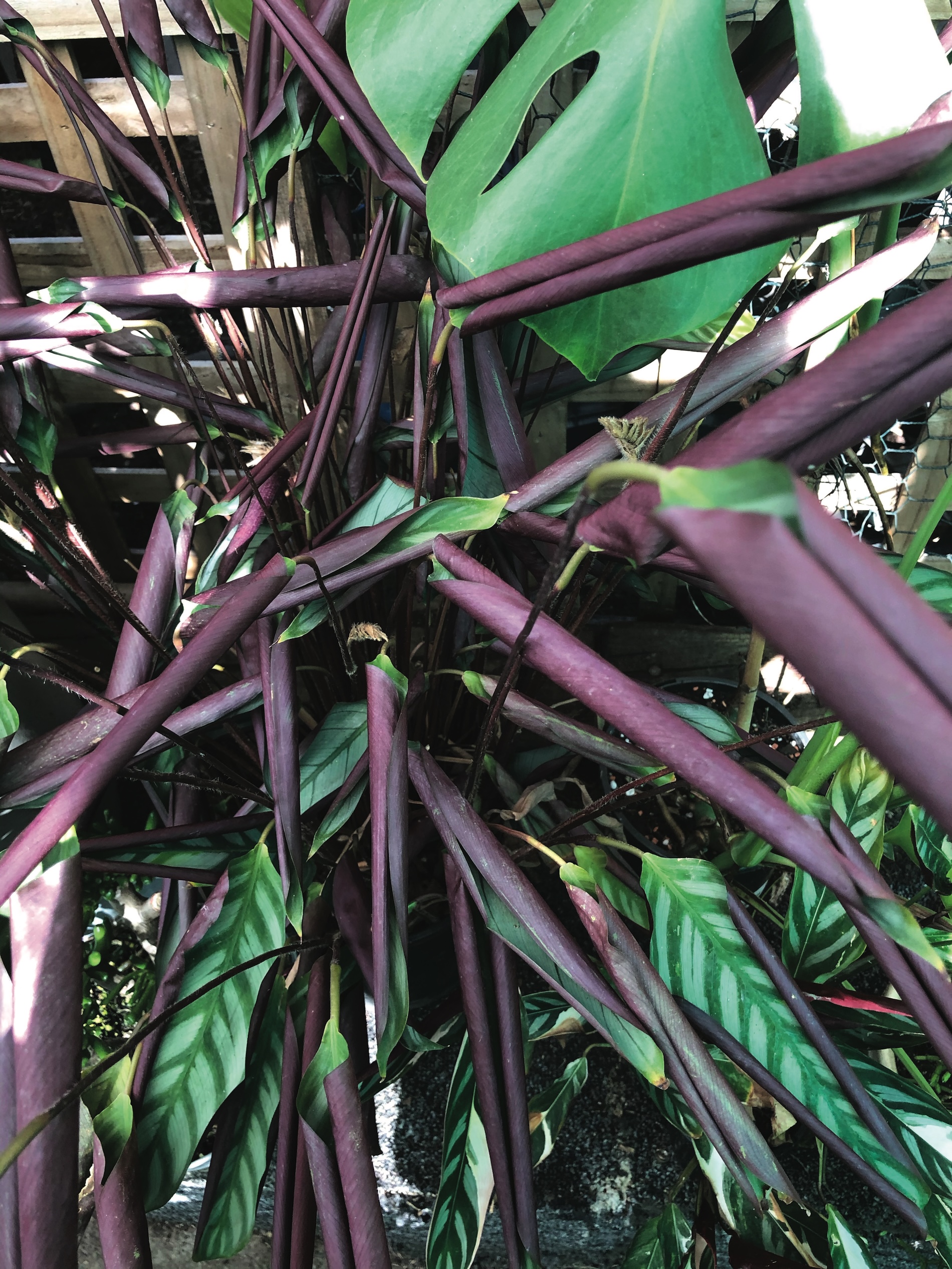
Leaves that are rolled up or curled tightly are often signs of moisture stress. Extreme temperatures can cause leaves to curl as a protective mechanism to prevent rapid water loss. Similarly, underwatering can cause leaves to curl to minimise water loss. Give the plant a good drink, ensuring that the water runs through the drainage holes at the bottom of the pot.
If leaf curling continues to happen, then other factors may be affecting how quickly the potting mix dries out. Large changes in temperature and light intensity can increase the plant’s water consumption, requiring you to either water more frequently – always check the potting mix moisture before watering – or relocate the plant to a different area. Additionally, compacted potting mix may prevent adequate water absorption, and root-bound plants will require repotting into fresh potting mix.
The Plant Book by Tammy Huynh
Images and text from The Plant Book by Tammy Huynh, photography by Chris Chen. Murdoch Books RRP $50.00.
Buy Now