
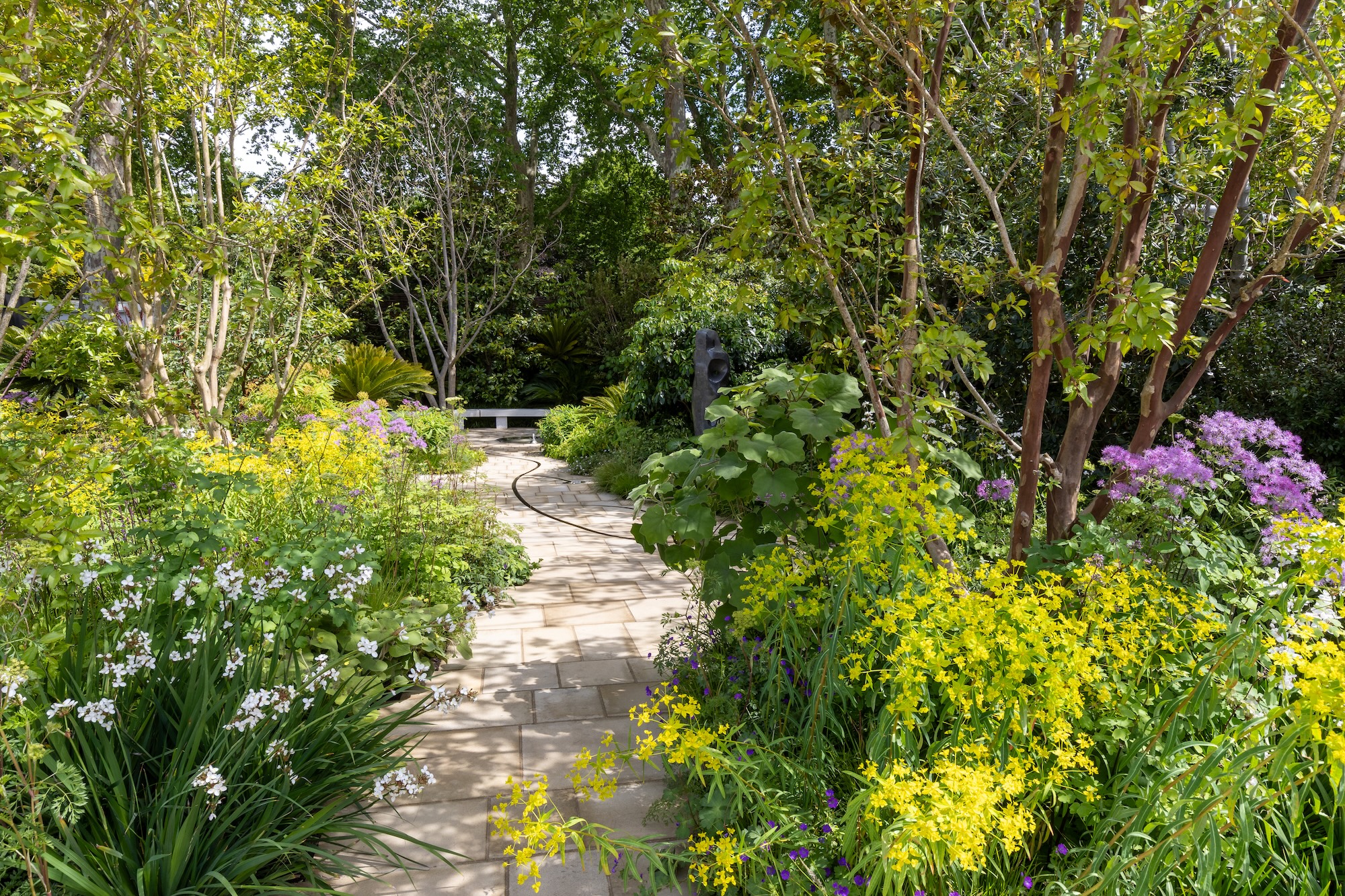
The Tate Britain Garden was designed by nine-time RHS Chelsea gold medal winner Tom Stuart-Smith Studio. Funded by the Clore Duffield Foundation and Project Giving Back, it won a gold medal at this year’s Show.
Landscape architecture by Tom Stuart-Smith
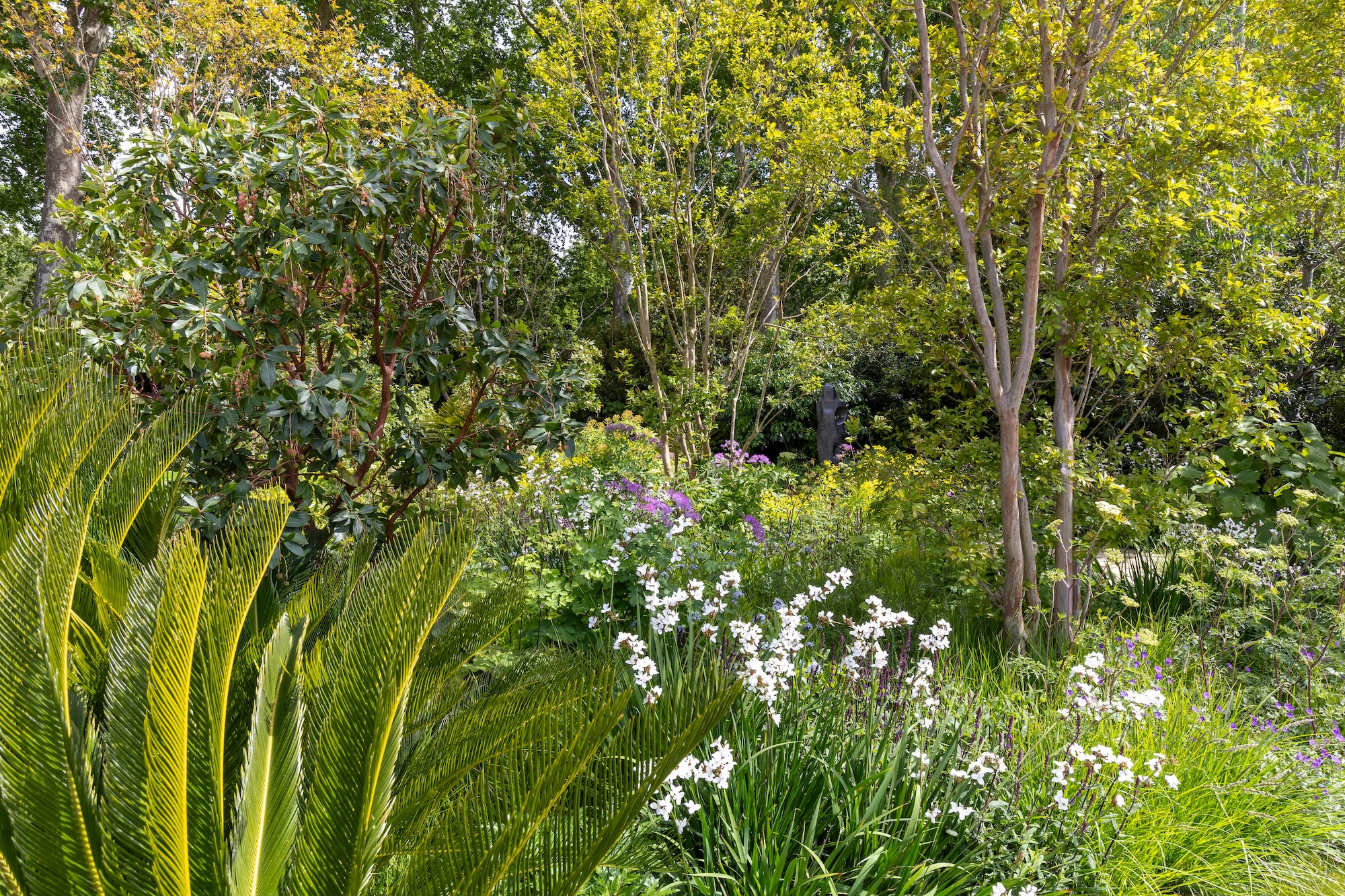
For Tate Britain’s first garden at the RHS Chelsea Flower Show, landscape designer Tom Stuart-Smith brought together art, planting and public space in a garden shaped by sustainability and biodiversity. The gold medal-winning design offered a preview of the museum’s forthcoming Clore Garden, with a major Barbara Hepworth sculpture at its centre, climate-resilient planting and materials reclaimed from Tate’s existing grounds.
A garden for people
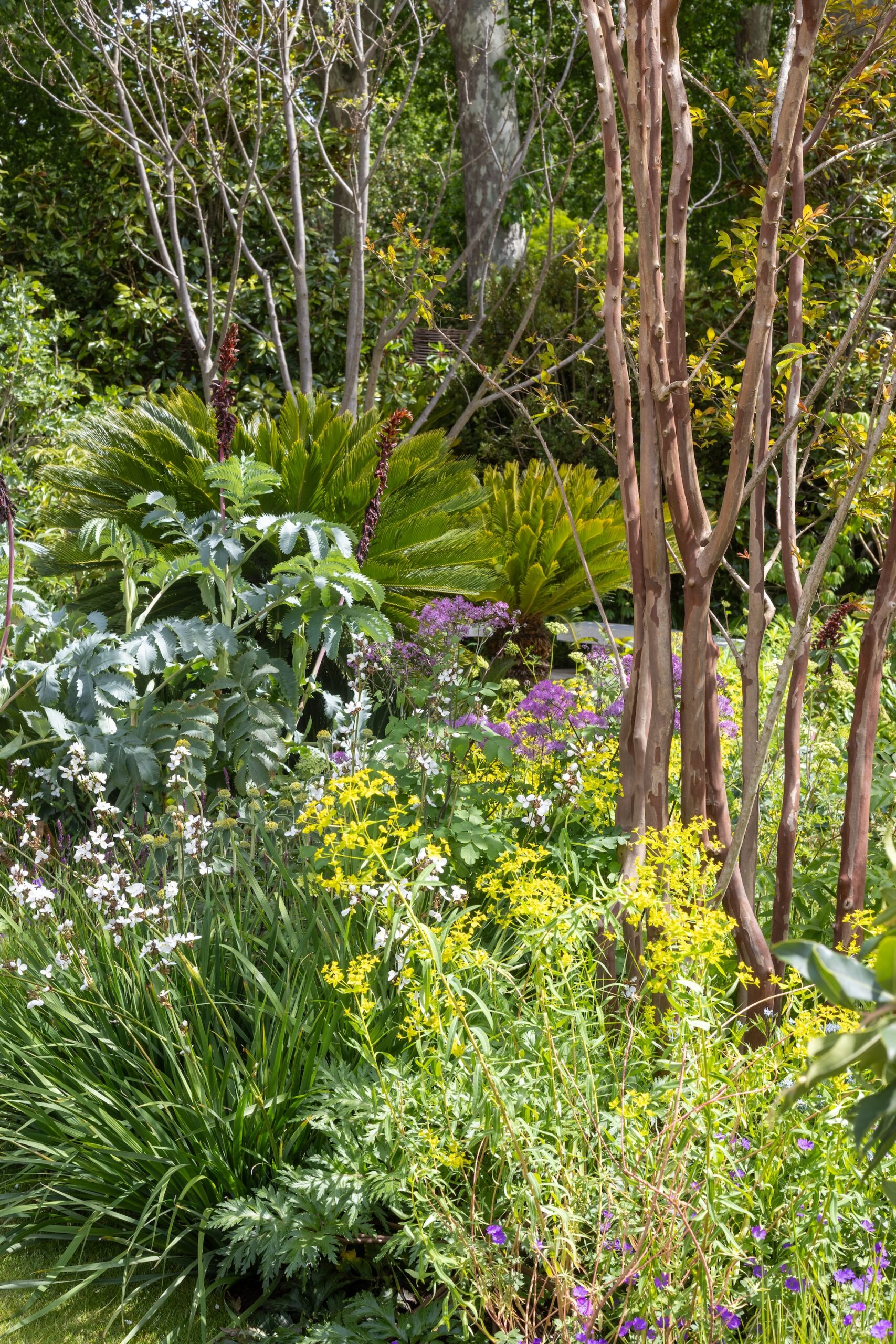
The design considered how museum gardens could be used – as places to meet, support biodiversity, spend time and experience art beyond the gallery walls.
The Chelsea garden took cues from the forthcoming Clore Garden at Tate Britain’s Millbank site, due to open in 2027, as well as Victor Pasmore’s The Green Earth 1979–80 from Tate’s collection.
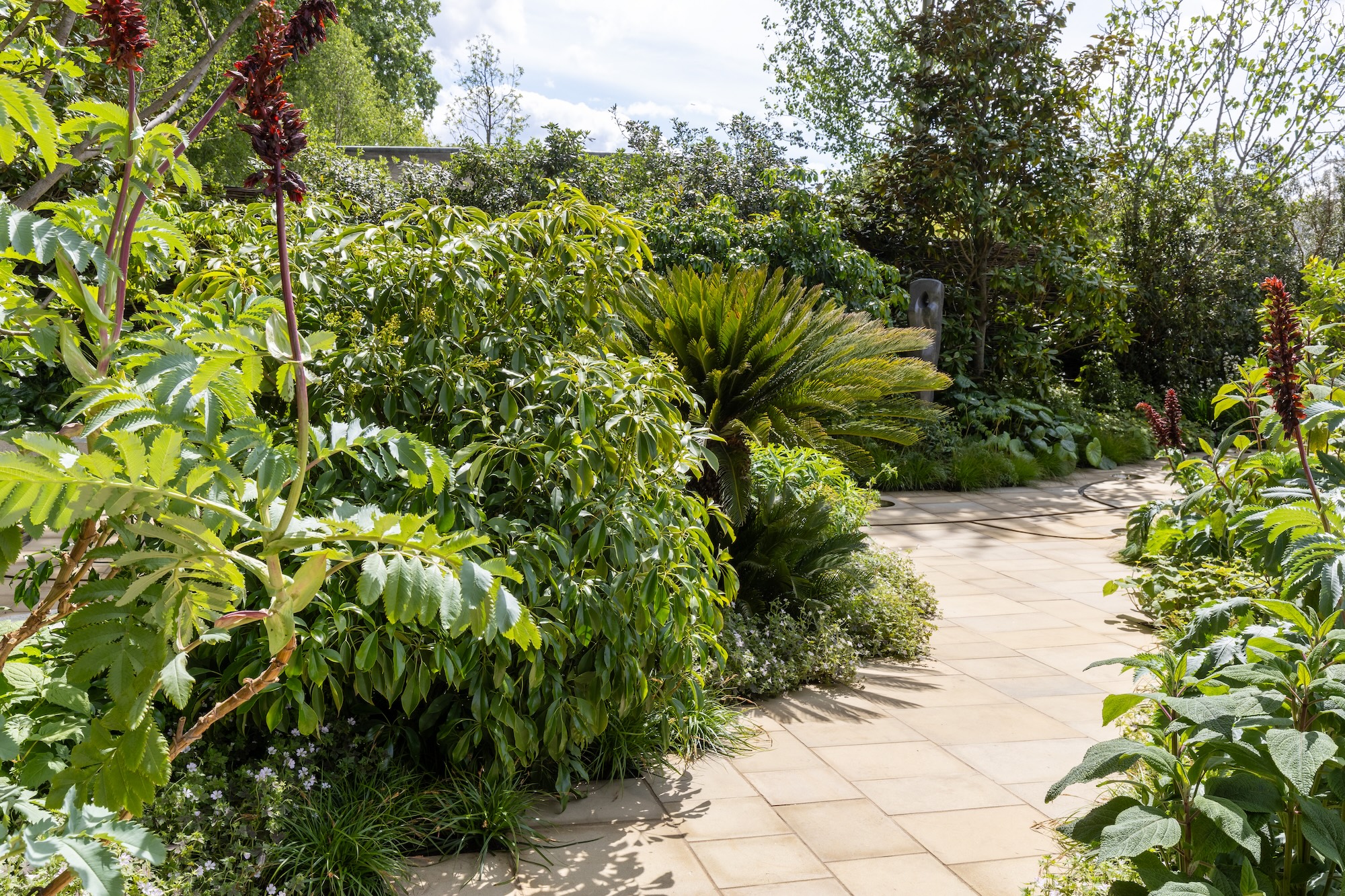
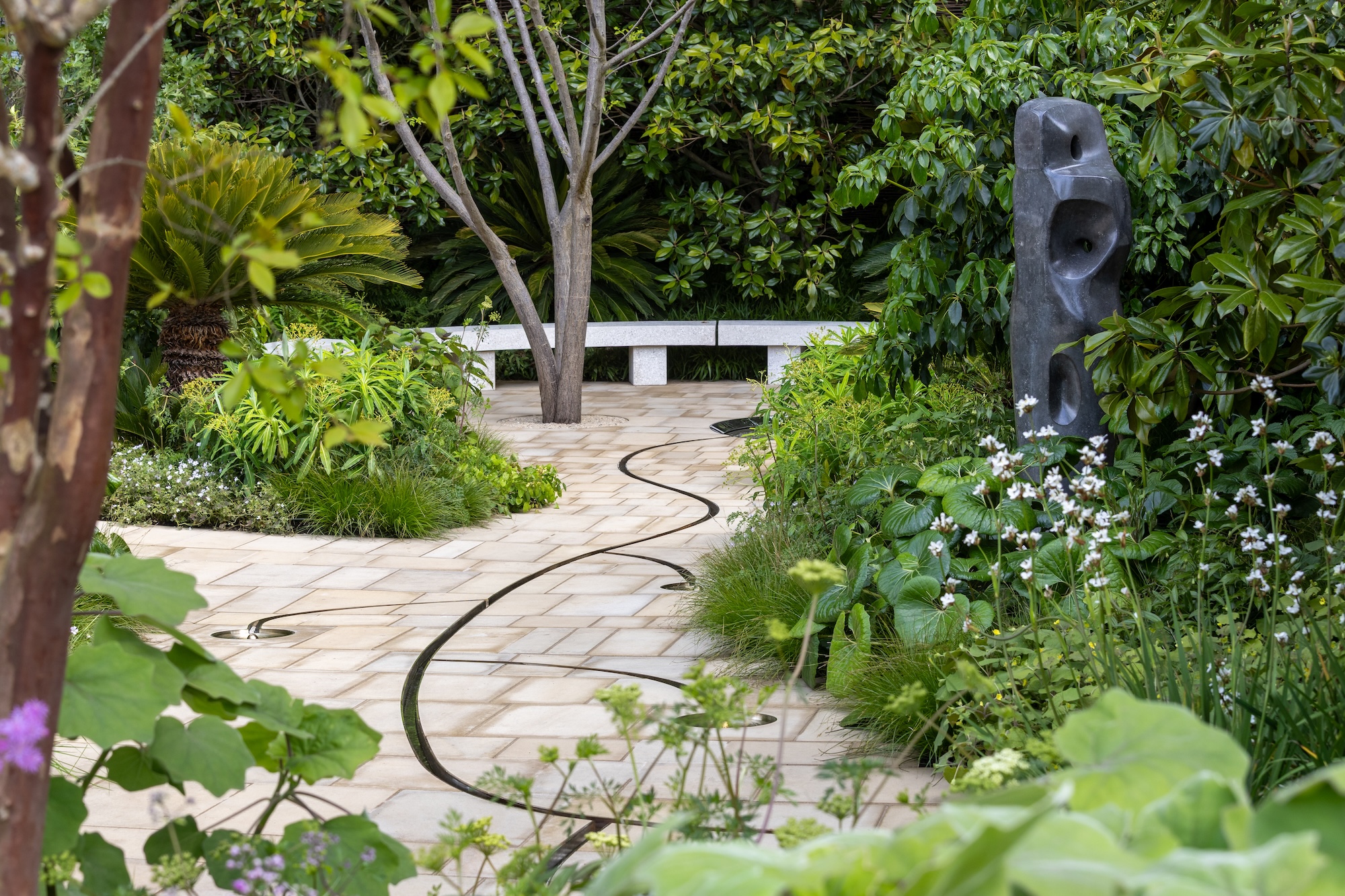
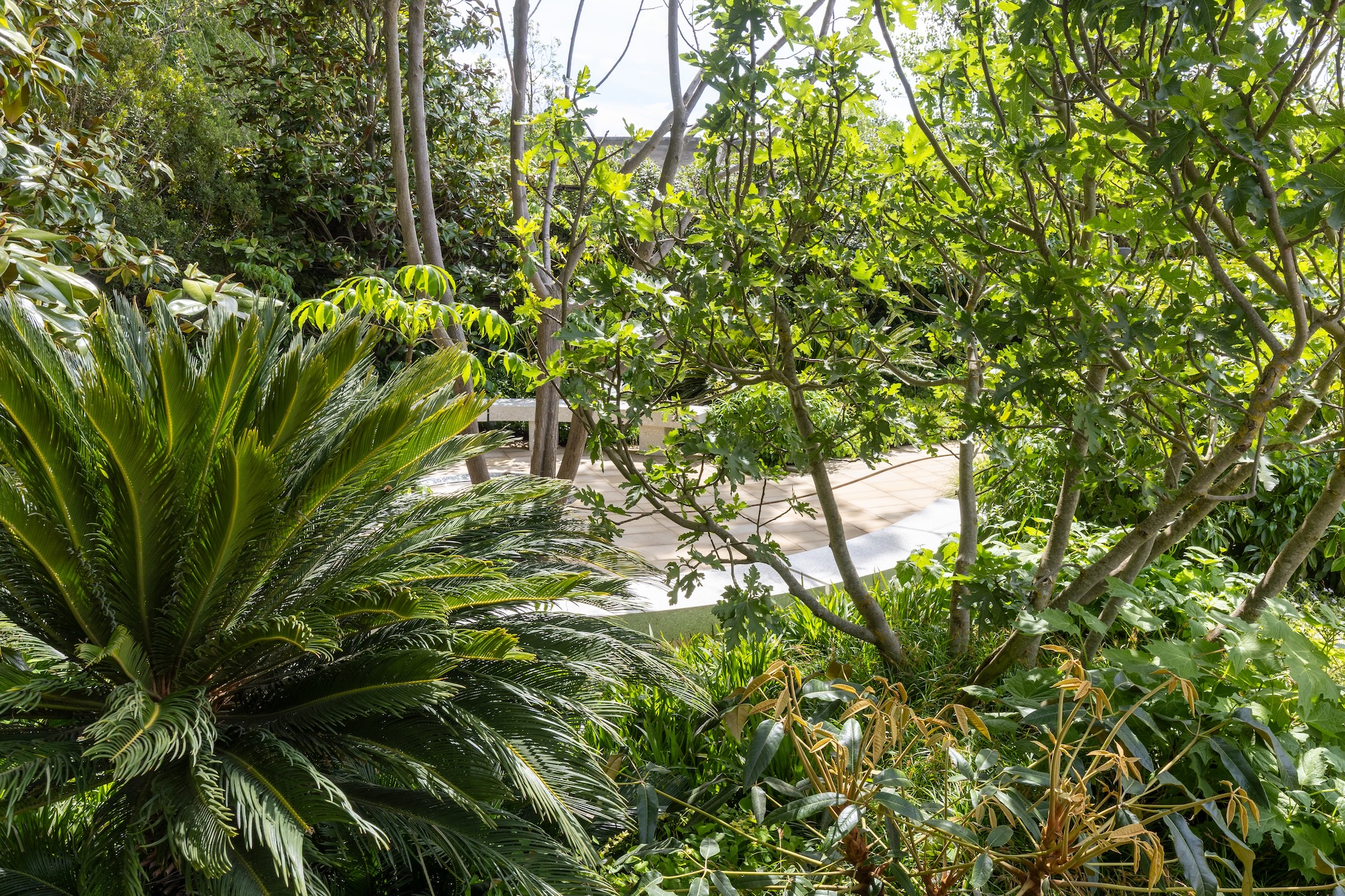
A gently curving path ran through the garden, made from stone reclaimed from Tate Britain and recut for its new purpose. It led to a circular seating area designed as a learning space, where visitors could gather within the planting.
The bench itself continued the material story. Cast in low-carbon concrete, it incorporated reused paving from Tate Britain alongside locally sourced cockleshells, a by-product from the Thames Estuary. In the permanent Clore Garden, the circle will be expanded to accommodate a class of 30 schoolchildren.
Art at its centre
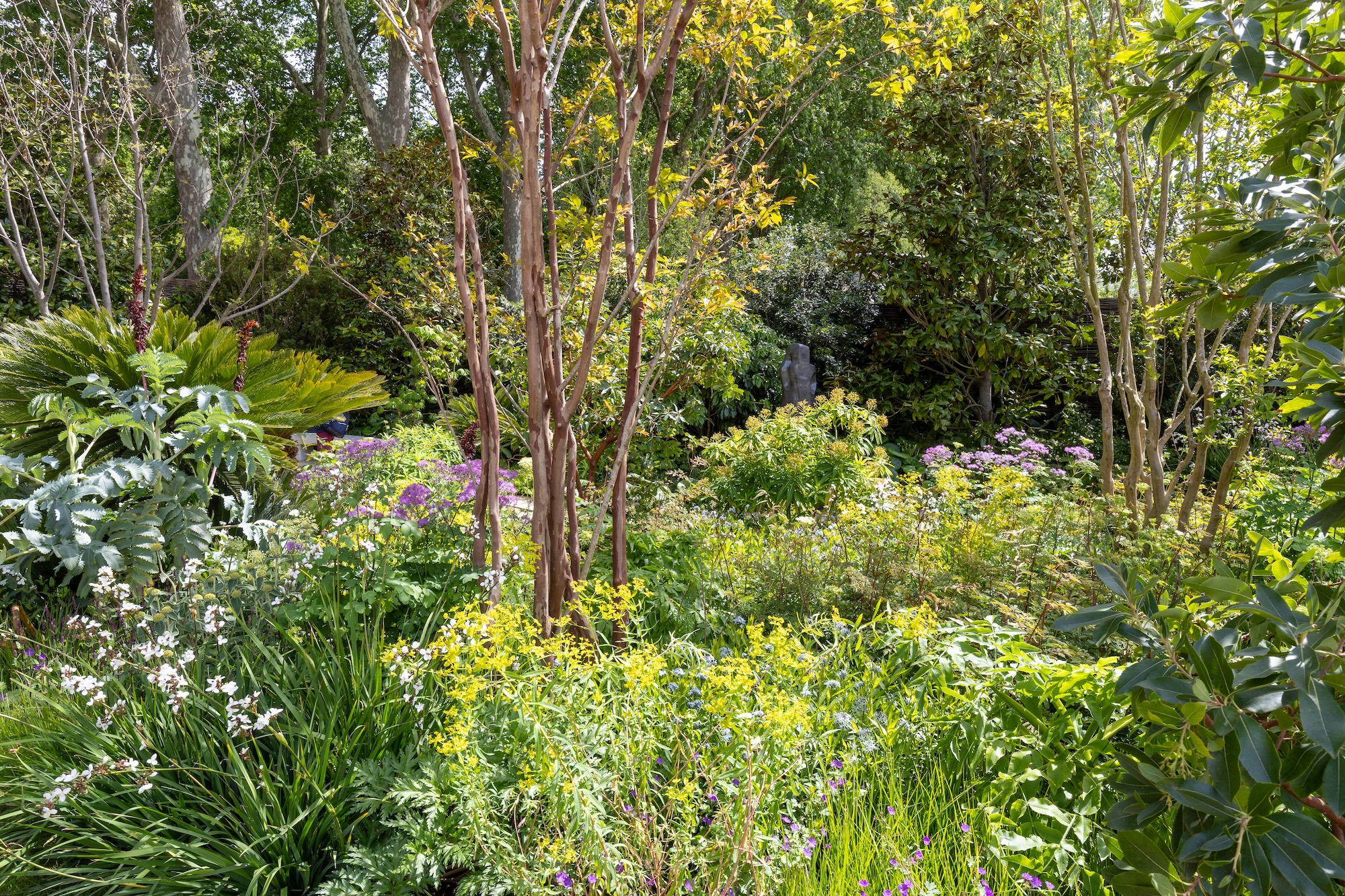
At the heart of the garden was Dame Barbara Hepworth’s Bicentric Form 1949, marking the first time a work from the national collection was shown within a garden at RHS Chelsea.
The dark limestone sculpture was the first Hepworth work acquired by Tate and began a long relationship between the artist and gallery. Its placement among dense foliage also felt particularly appropriate for an artist who regularly showed sculpture outdoors and understood the relationship between objects and landscape.
Bicentric Form is now moving to the Clore Garden, where it will sit alongside other works by modern and contemporary British artists from Tate’s collection.
Beneath the surface
Water provided another connection between art, ecology and the wider design. A golden channel ran through the path and into a series of dishes, with forms inspired by microscopic images of mycorrhizal fungi. These underground fungal networks play an important role in healthy soils and plant communities, making them an apt reference in a garden centred on biodiversity.
The water brought sound and movement through the planting – one of several elements designed to encourage visitors to slow down and engage with the garden at different levels.
Planting for a changing climate
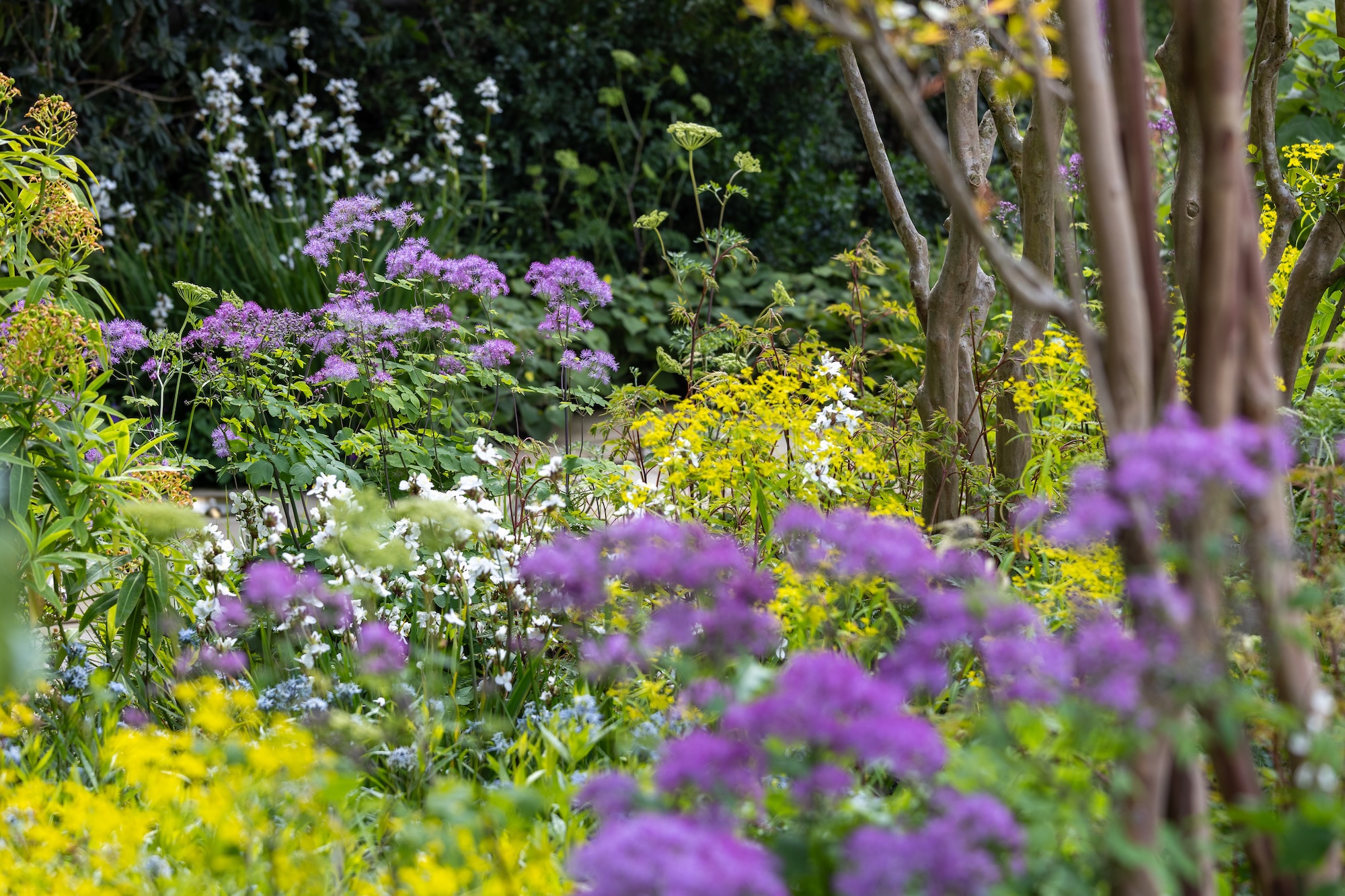
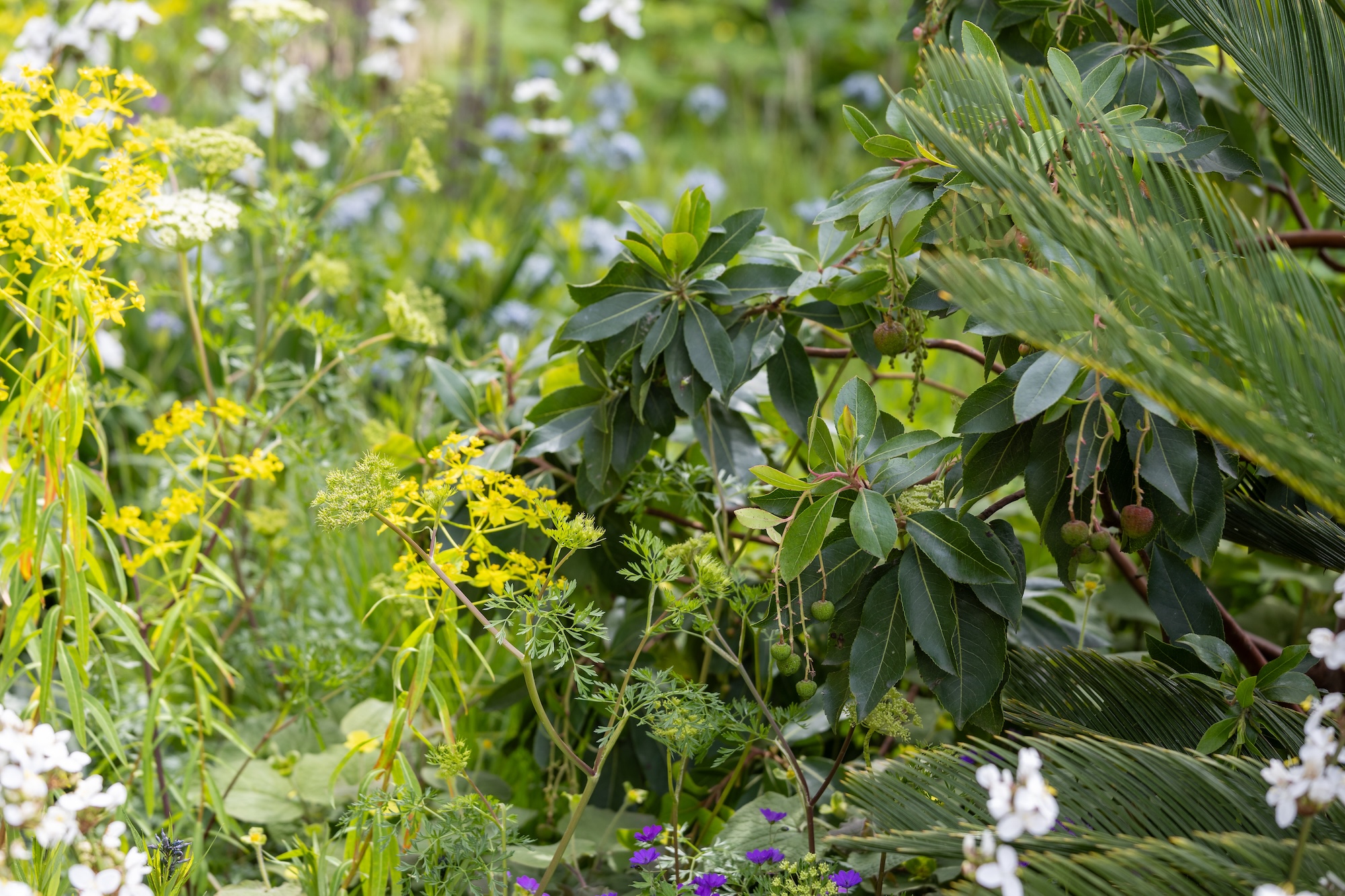
The planting looked as much to the future as the architecture and materials. Taking cues from East Asian woodlands, bold foliage was combined with drought-tolerant species. The palette reflected the increasingly mild conditions of central London and previewed plants that will also appear at Tate Britain.
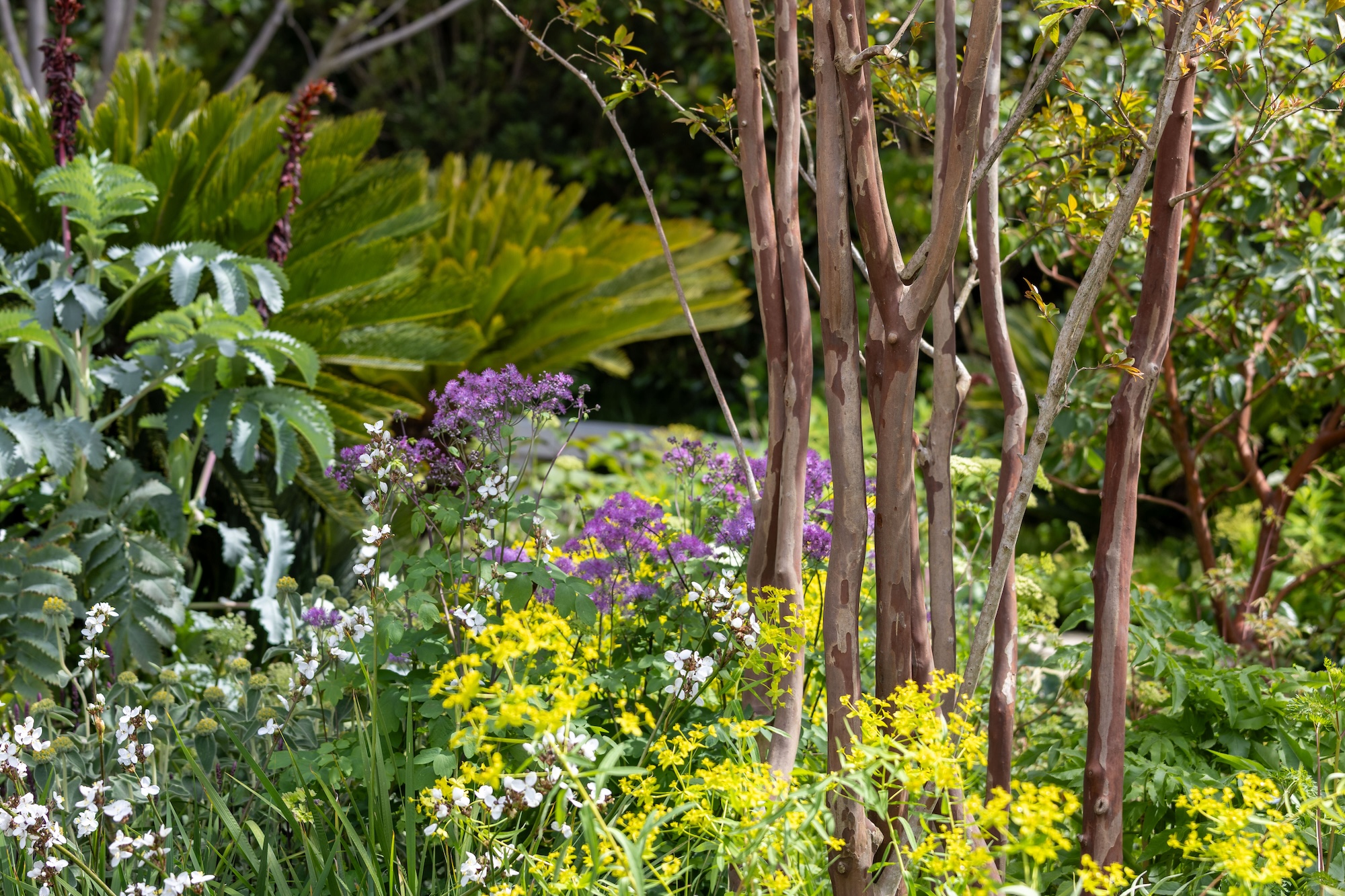
Mediterranean figs sat alongside Schefflera shweliensis, native to the Eastern Himalayas, while Lagerstroemia ‘Natchez’ provided overhead structure and Cycas revoluta brought a strongly architectural form at ground level.
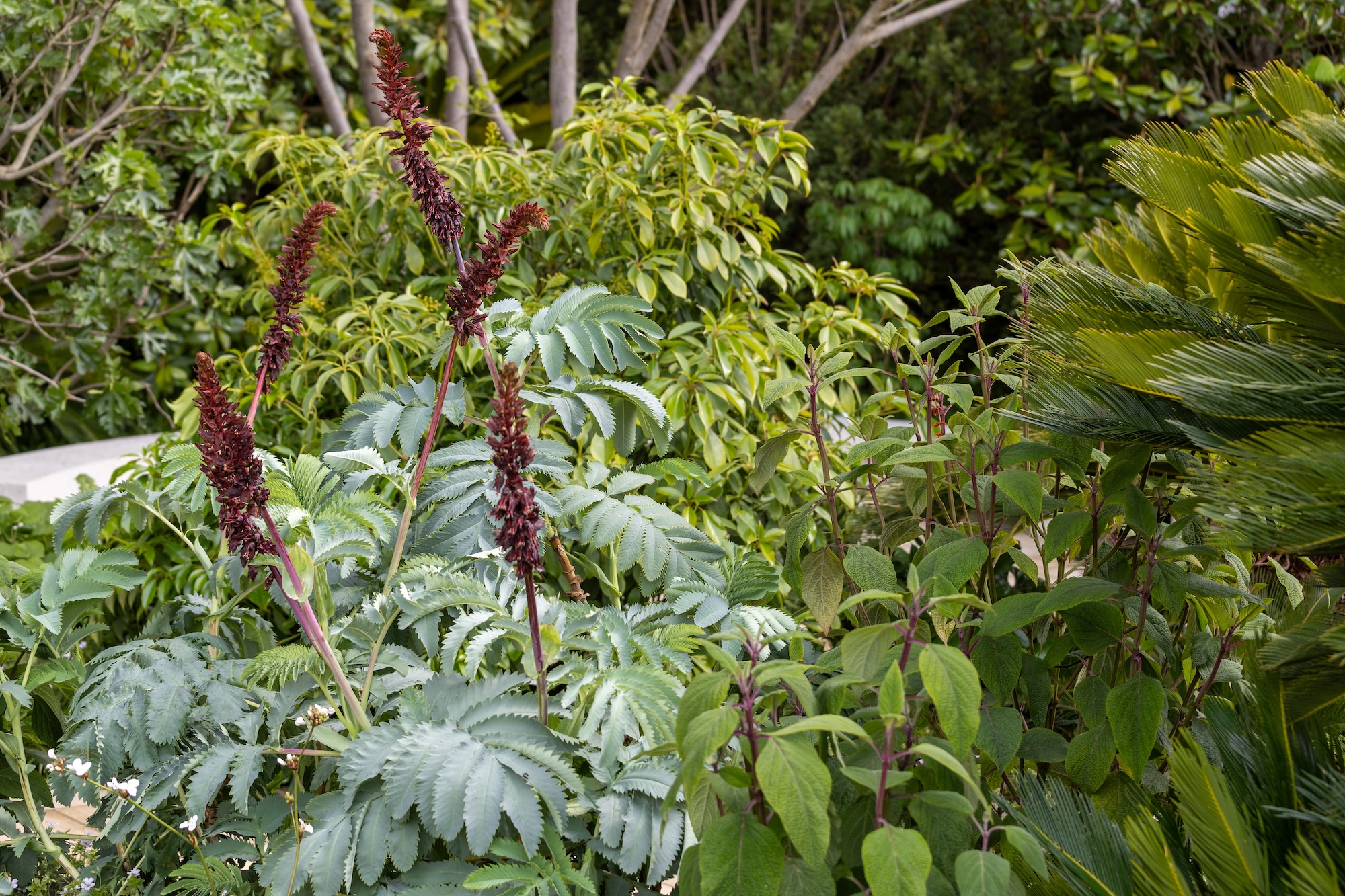
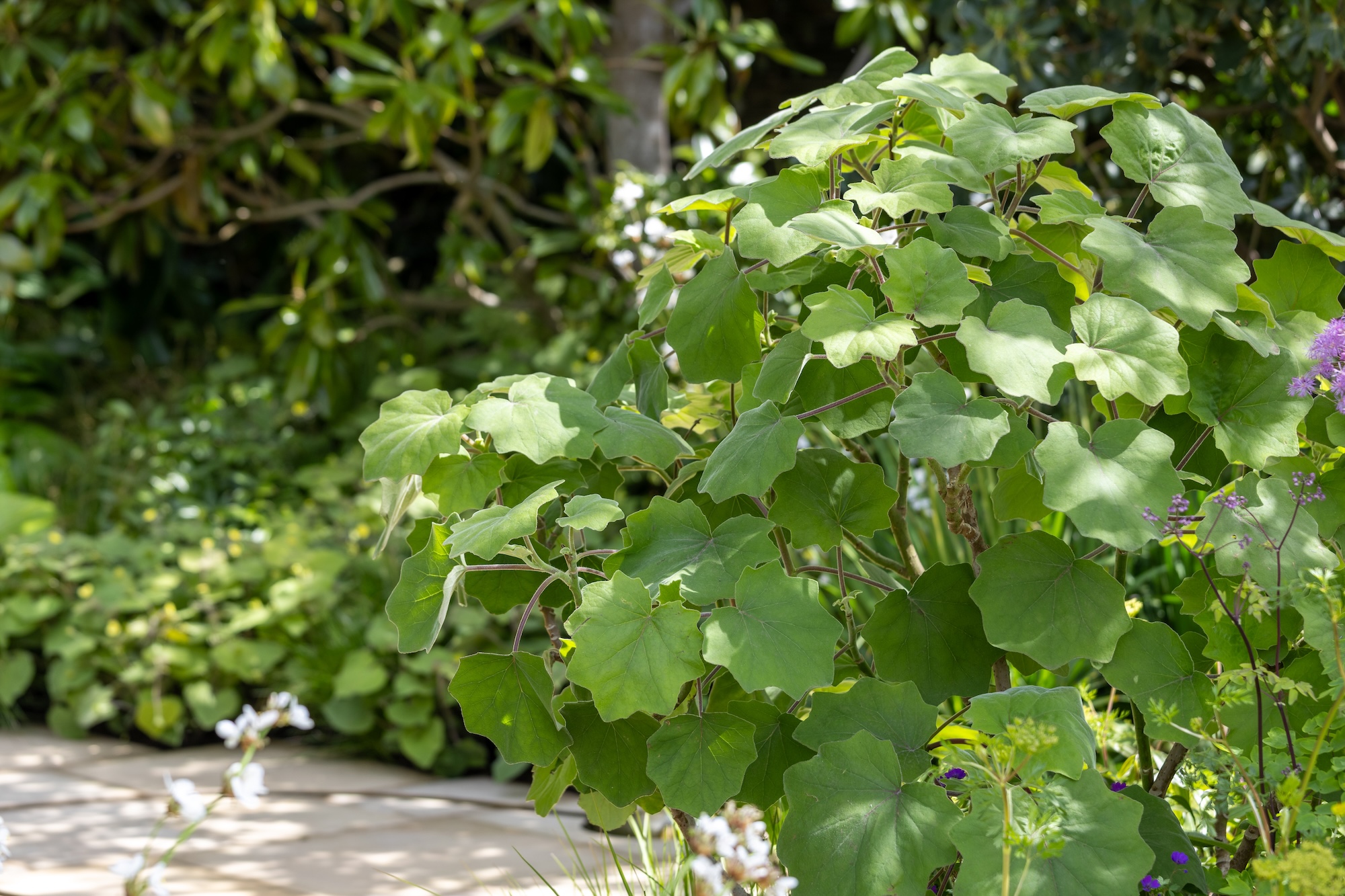
Foliage was central to the composition. The large leaves of Roldana petasitis and glossy Farfugium japonicum contrasted with the finer movement of Hakonechloa macra, while Melianthus major added deep burgundy flower spikes.
The planting was also selected to provide interest across the seasons rather than reaching a single peak. Melia azedarach flowers in late spring, while evergreen Magnolia grandiflora carries the display into early autumn.
This emphasis on longer-lived, resilient species was part of a wider approach to increasing biodiversity while reducing the demands placed on urban gardens as temperatures rise.
Its materials and planting will now be transferred to Tate Britain and incorporated into the Clore Garden, creating a museum landscape in which sculpture, horticulture, learning and everyday public life occupy the same ground.
Plant palette
- Amsonia hubrichtii
- Amsonia tabernaemontana var. salicifolia
- Arbutus × andrachnoides
- Aruncus ‘Horatio’
- Aspidistra elatior
- Boehmeria sieboldiana
- Carex ‘Kyoto’
- Carex oshimensis ‘Evergreen’
- Cenolophium denudatum
- Cnidium silaifolium
- Cycas revoluta
- Daphniphyllum macropodum
- Disporopsis pernyi
- Disporum longistylum ‘Green Giant’
- Elsholtzia flava ‘Dzukou Choc’
- Epimedium ‘Spine Tingler’
- Epimedium × versicolor ‘Sulphureum’
- Euphorbia ceratocarpa
- Euphorbia mellifera
- Euphorbia × pasteurii
- Farfugium japonicum
- Fascicularia bicolor
- Ficus carica
- Ficus carica ‘Ice Crystal’
- Geranium maderense
- Geranium nodosum ‘Tony’s Talisman’
- Geranium pyrenaicum ‘Bill Wallis’
- Geranium × oxonianum ‘Katherine Adele’
- Gillenia trifoliata
- Kirengeshoma palmata
- Lagerstroemia ‘Natchez’
- Libertia grandiflora
- Ligusticum lucidum
- Luzula sylvatica
- Magnolia grandiflora
- Melia azedarach
- Melanoselinum decipiens
- Melianthus major
- Myrtus communis
- Phlomis fruticosa
- Pistacia lentiscus
- Pittosporum tobira
- Polystichum polyblepharum
- Polystichum setiferum ‘Herrenhausen’
- Roldana petasitis
- Salvia confertiflora
- Salvia nemorosa ‘Caradonna’
- Saruma henryi
- Schefflera delavayi
- Schefflera shweliensis
- Schefflera taiwaniana
- Sesleria autumnalis
- Sonchus fruticosus
- Thalictrum ‘Black Stockings’
- Trochodendron aralioides
—
After being showcased at the RHS Chelsea Flower Show, this garden The garden will be incorporated into a new, larger garden at Tate Britain, on London’s Millbank. This new Clore Garden is due to open in 2027.
—
Designed by Tom Stuart-Smith
Built by Crocus
—
Tom Stuart-Smith is a nine-time RHS Chelsea gold medal-winning landscape designer. He designed both The Tate Britain Garden for RHS Chelsea Flower Show 2026 and the forthcoming Clore Garden at Tate Britain, which is due to open in 2027.
—
More RHS Chelsea Flower Show Gardens here