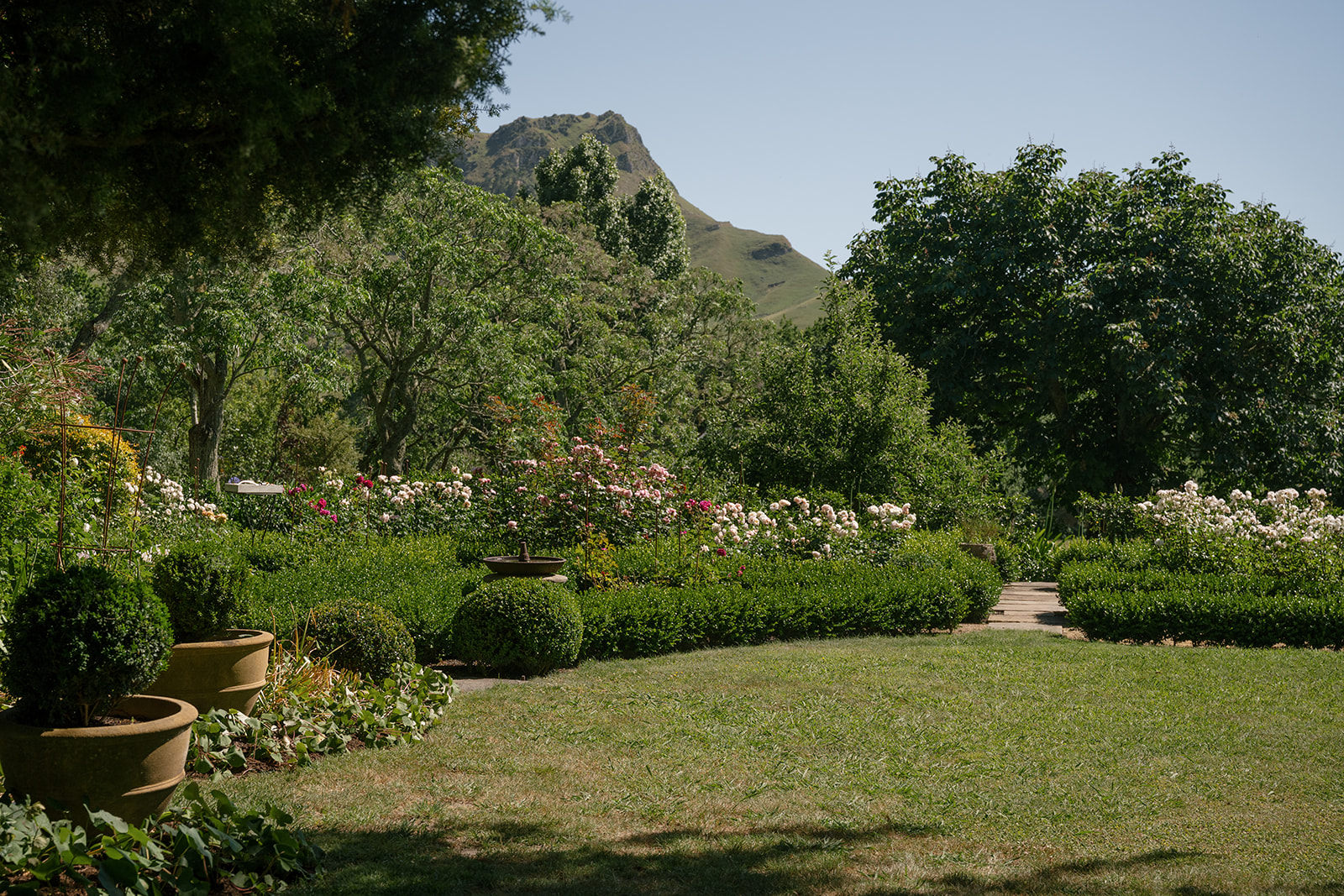

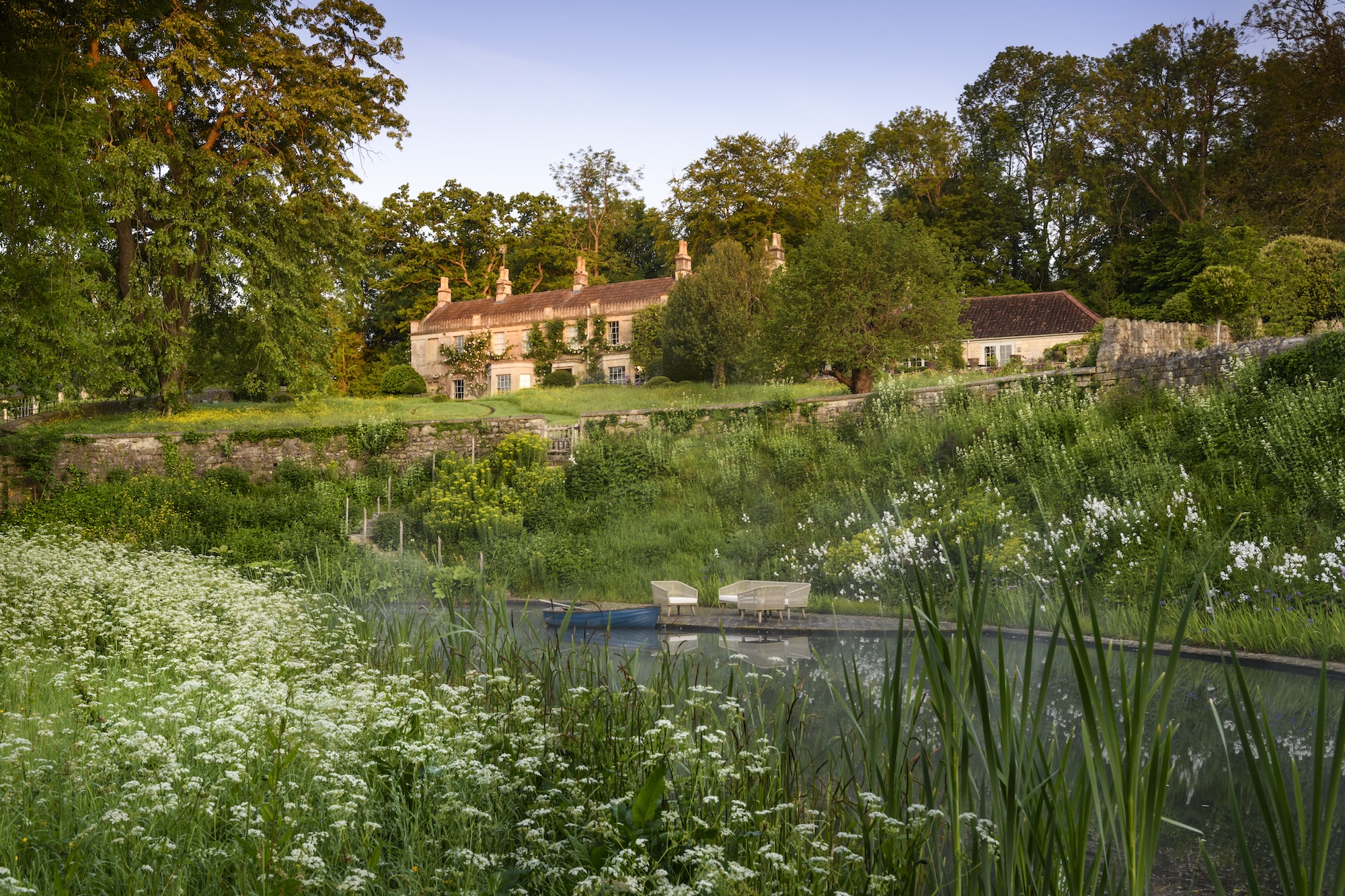
Located in Bath, United Kingdom, Caisson Gardens has been lovingly restored and nurtured by Phil and Amanda Honey, whose vision has created a sustainable landscape rich in beauty and thriving wildlife.
In the valley at Combe Hay, just south of Bath, Caisson Gardens has been reshaped over the past 15 years by Phil and Amanda Honey into a landscape that balances historic structure with ecological intent. The gardens are the result of steady, long-term work rather than quick transformation.
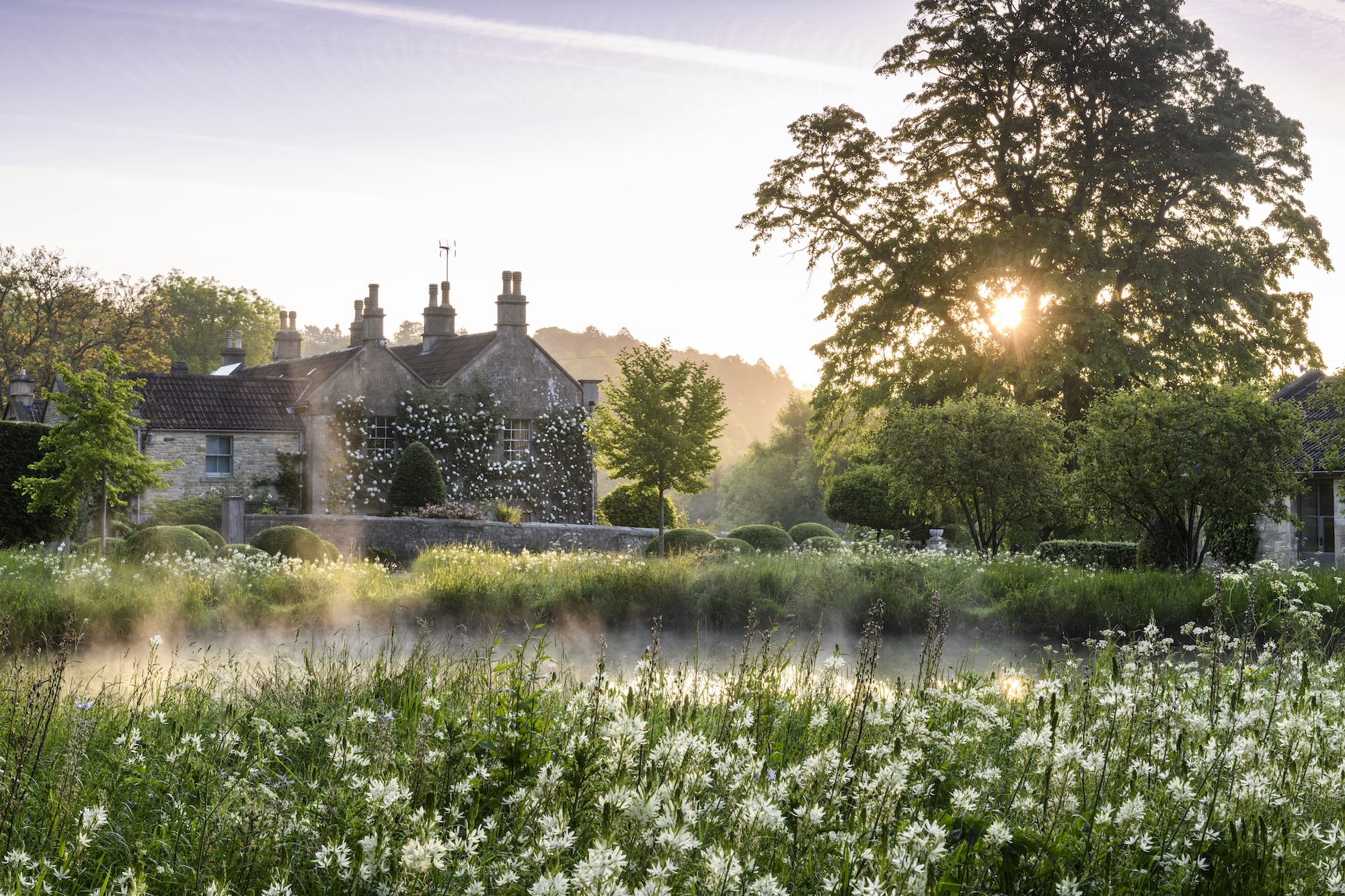
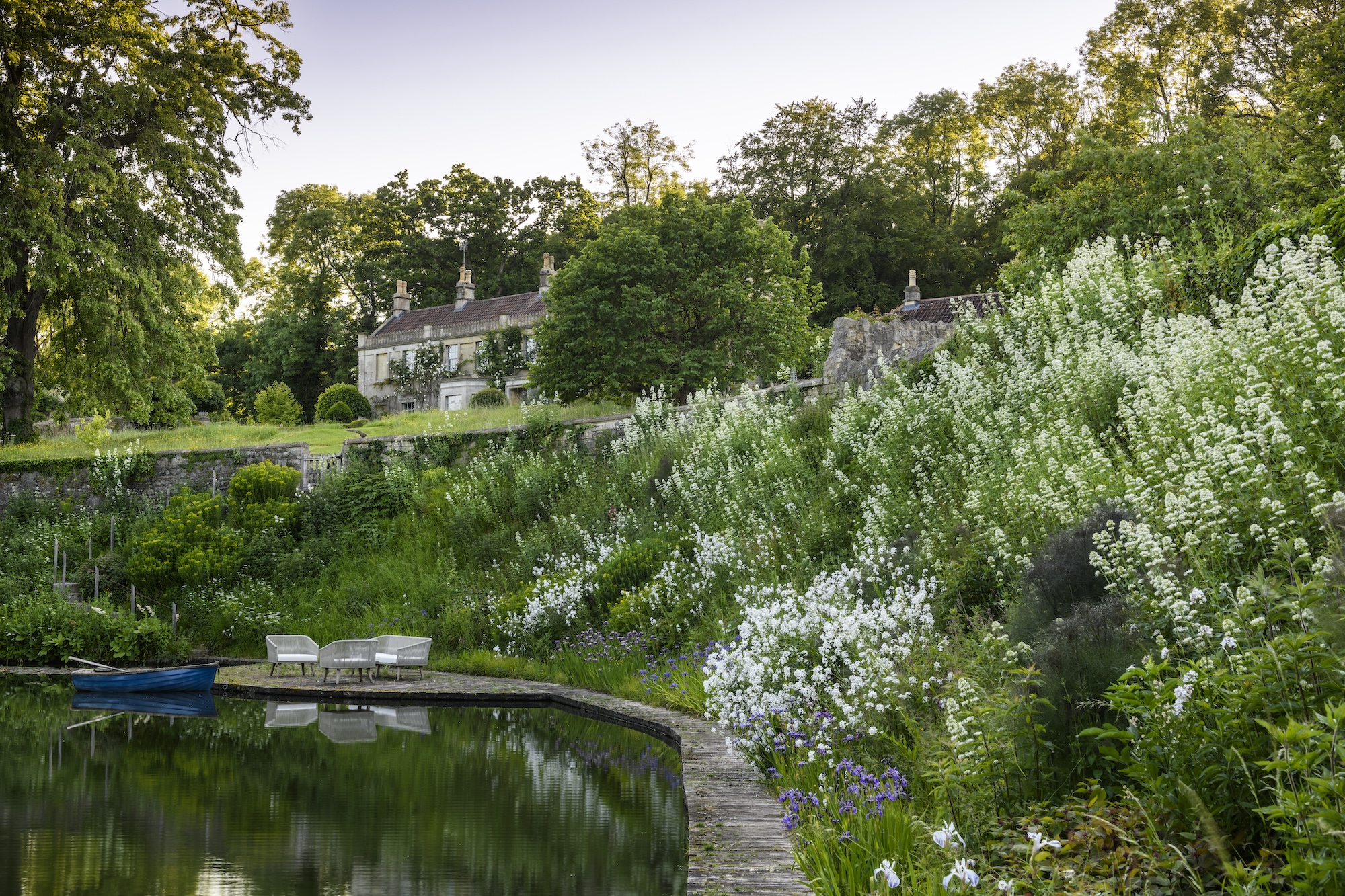
When the couple purchased Caisson House in 2010, the property included 40 surrounding acres with a fascinating industrial history. The Grade II listed house, built in 1815 as the head office of the Somerset Coal Canal Company, once oversaw a network of Georgian and Victorian canals and locks. The property takes its name from the “caisson” – an ambitious experimental lock system that ultimately failed and was replaced by conventional engineering.
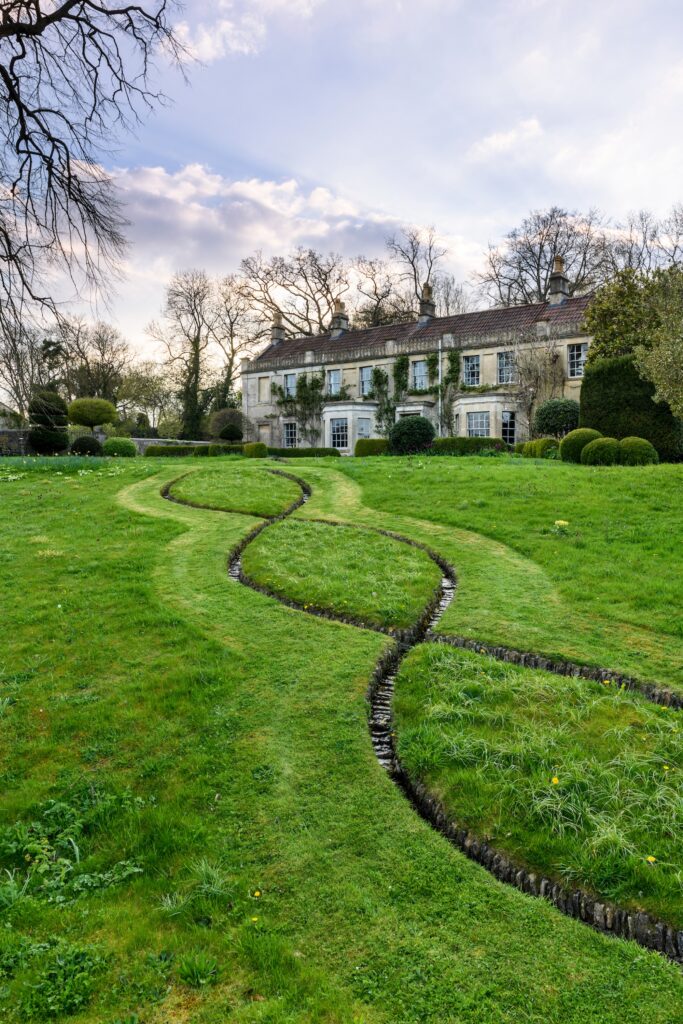
The now dry and derelict canals and lock chambers still trace through the grounds. They bring a unique sculptural quality to the land, and are a haven for all kinds of flora and fauna. Rather than erase this inherited framework, Phil and Amanda have worked with it.
When they arrived, they faced the challenge of a neglected and overgrown property, including very rundown buildings. Work started with the land, as they slowly uncovered the hidden trees, locks and garden features, battling with 12-foot-high brambles and other scrub.
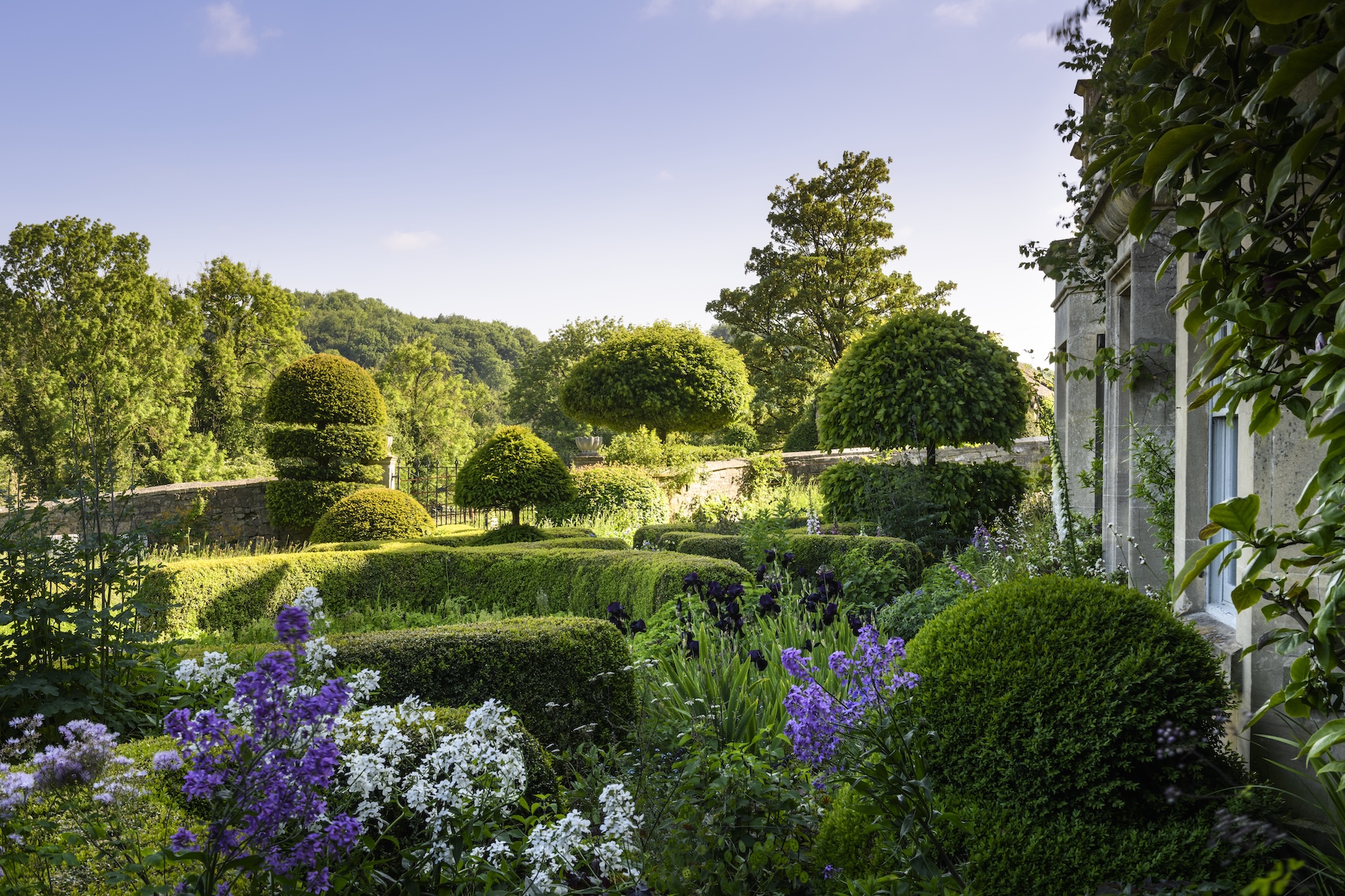
They then set out to repair stonework, build pathways and water features. An enormous amount of structural planting followed: topiary hedging, multi-stem trees, espalier and pleached trees; and all the climbing roses were newly planted. Every building on the property was extensively renovated.
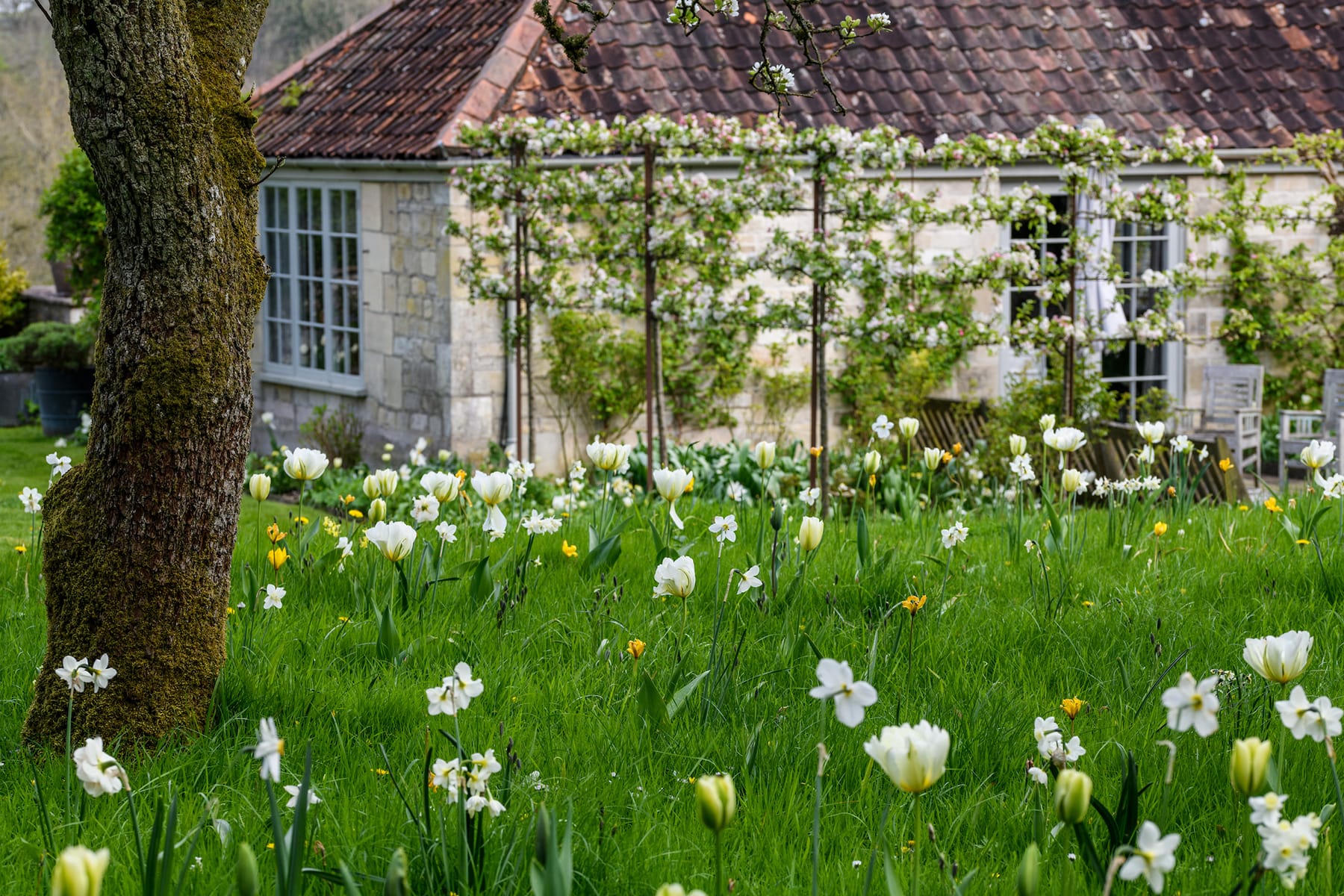
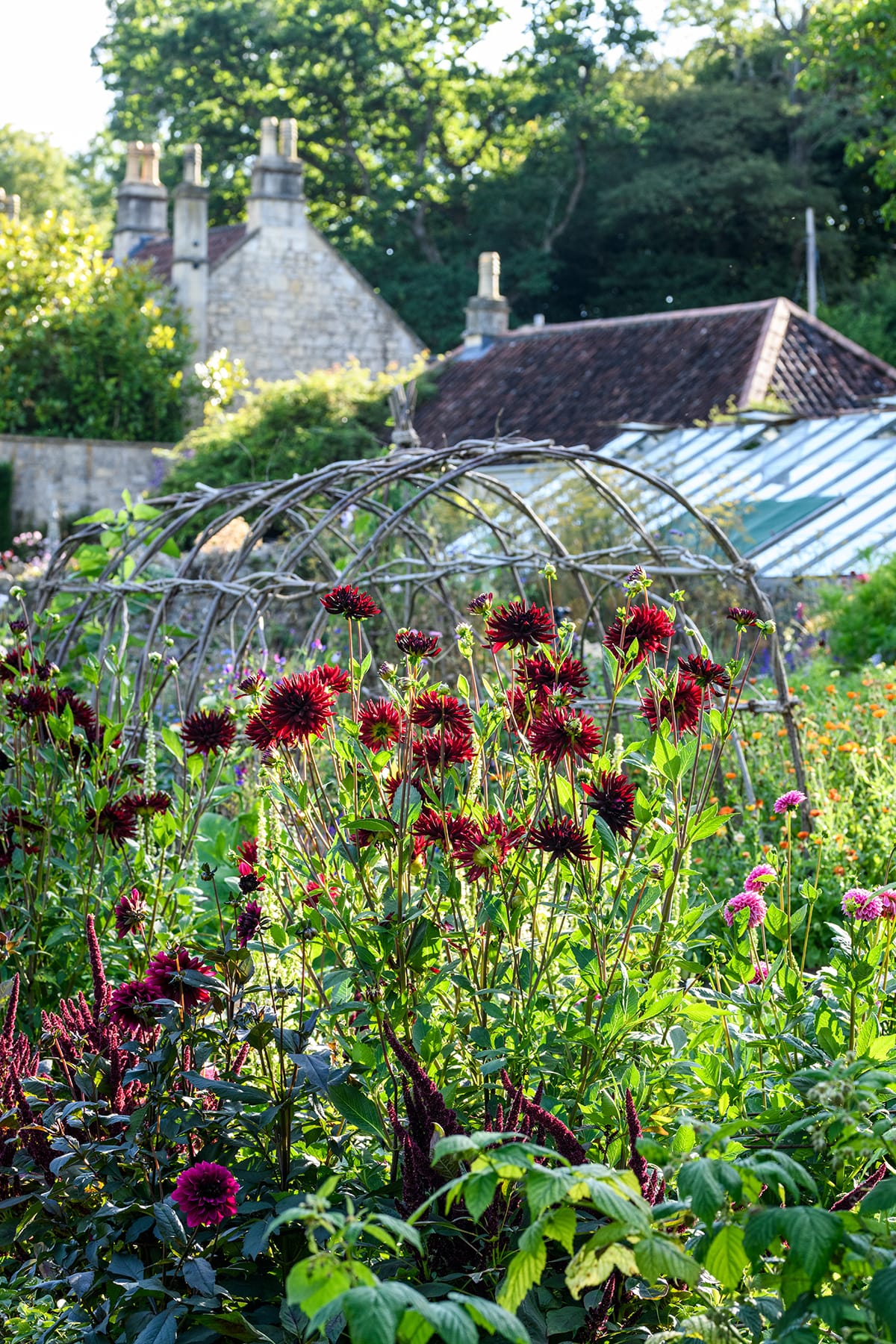
Within the garden, mown pathways meander through wild flower meadows, studded with topiary, ponds, rills, a formal parterre near the house, and a sloping front lawn of spring bulbs, wild flowers and wild orchids. A wonderfully asymmetrical walled kitchen garden features an orchard, greenhouses, and steel-edged potager beds with edible ornamentals interwoven with colourful annuals and biennials.
Near the kitchen is a mulberry terrace with white herbaceous planting, the front lawn sports a vibrantly colourful border, and the shade terrace has rooftop espalier Malus trees.
The planting is designed to encourage biodiversity and seasonal variation. Their main aim is to encourage and inspire people to garden for wildlife and to show them cost effective, eco-friendly design ideas they have created, such as:
— A beetle corridor. A ribbon of long tufted grass either side of the rill is left for winter hibernating insects.
— Natural hazel plant support structures for climbers such as sweet peas and beans.
— Eco habitats and bug hotels.
— Areas within the garden where grass is left to grow long from spring to late summer, allowing wild flowers and insects to flourish, and letting spring bulbs naturalise in these areas.
—
The property develops year by year, and is an ongoing project, and the pair will continue to share their interest in art, craft and regenerative land practice through their garden tours and programme of workshops.
Plant palette
Highlights for April
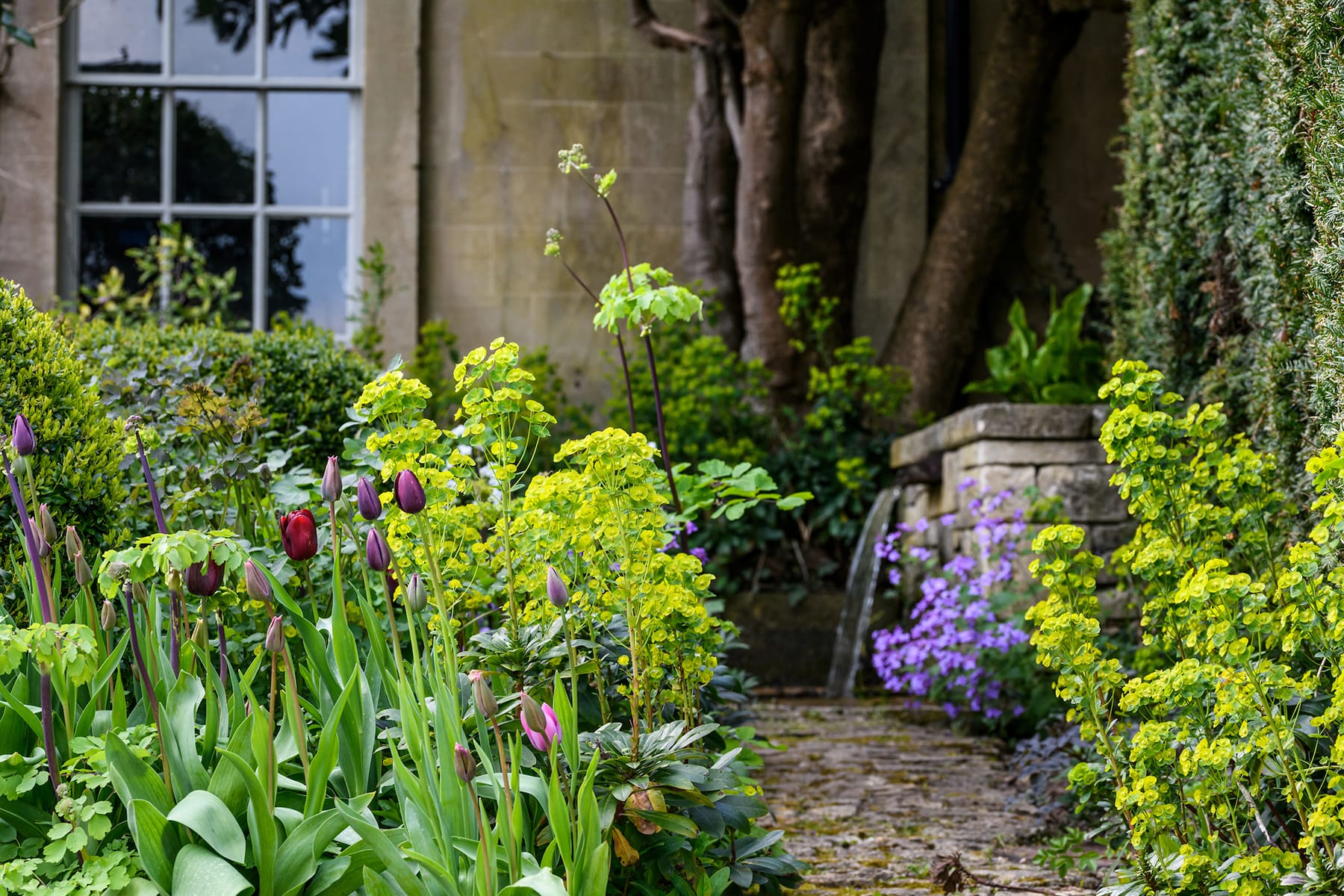
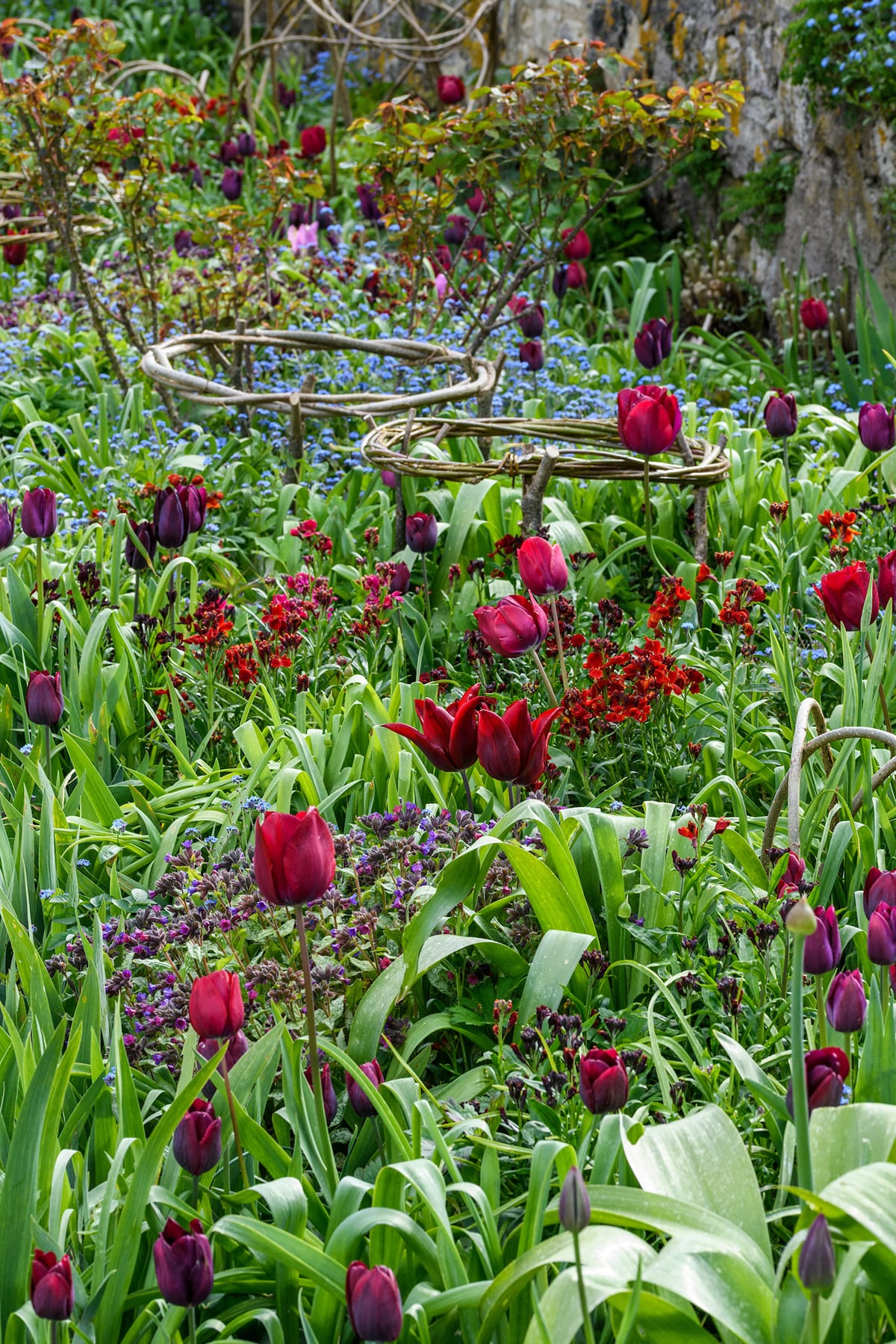
April (mid spring) at Caisson Gardens showcases an abundance of tulips (Tulipa spp.) and other spring bulbs throughout the garden, flowing through herbaceous borders, pots and planters, vegetable and cutting beds and the wilder grass areas.
Tree blossom
Fruit trees such as:
- Malus domestica (apple)
- Pyrus communis (pear)
- Cydonia oblonga (quince)
- Malus sylvestris (crab apple)
- Prunus domestica (plum)
- Prunus domestica subsp. insititia (damson)
- Prunus armeniaca (apricot)
Spring herbaceous plants
- Euphorbia spp. (spurge)
- Lunaria annua (honesty)
- Pulmonaria officinalis (lungwort)
- Erysimum cheiri (wallflower)
- Myosotis sylvatica (forget-me-not)
Highlights for May
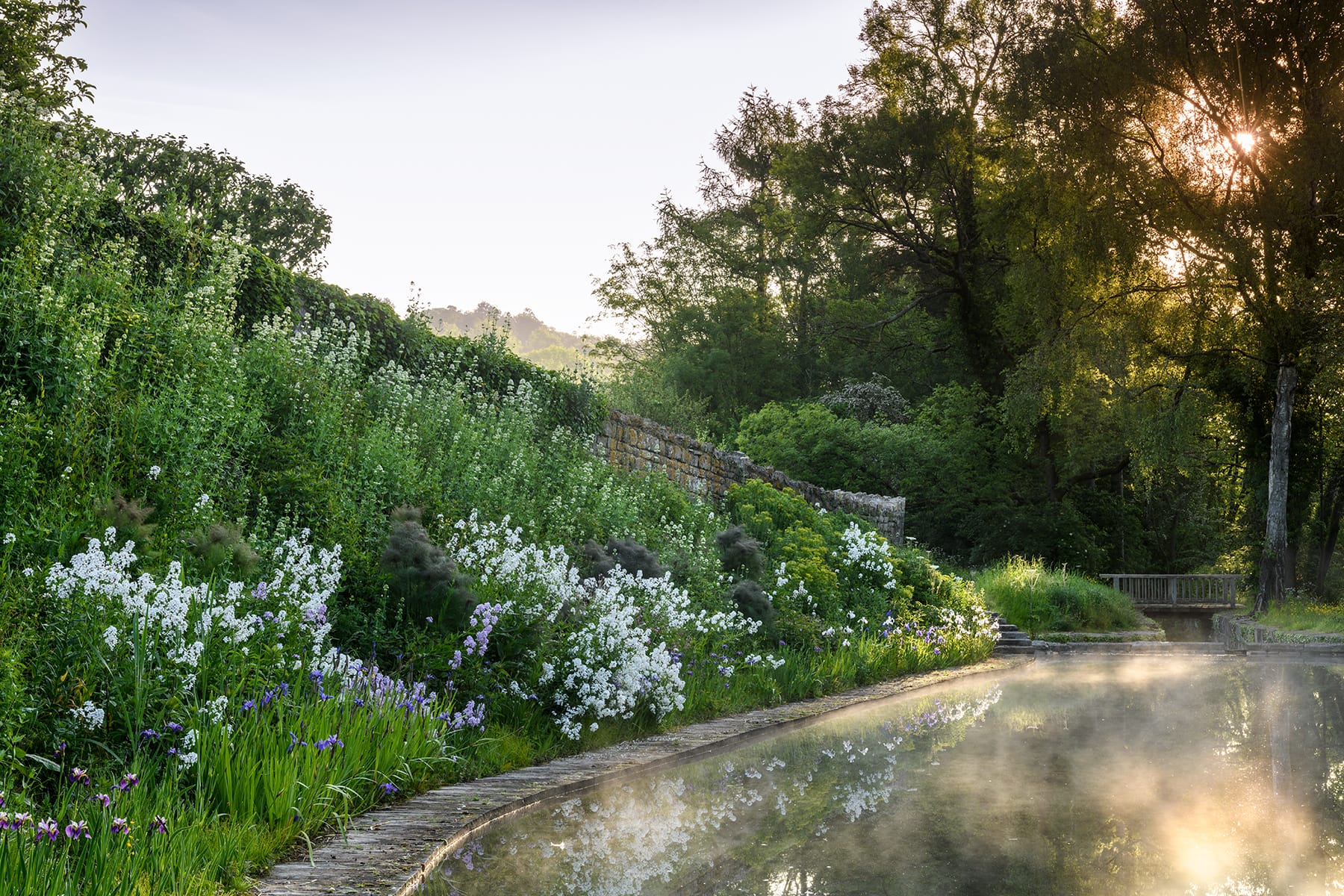
In May (late spring), Camassia leichtlinii (giant camas) surrounds the round pond, beginning in shades of blue and gradually transitioning to white.
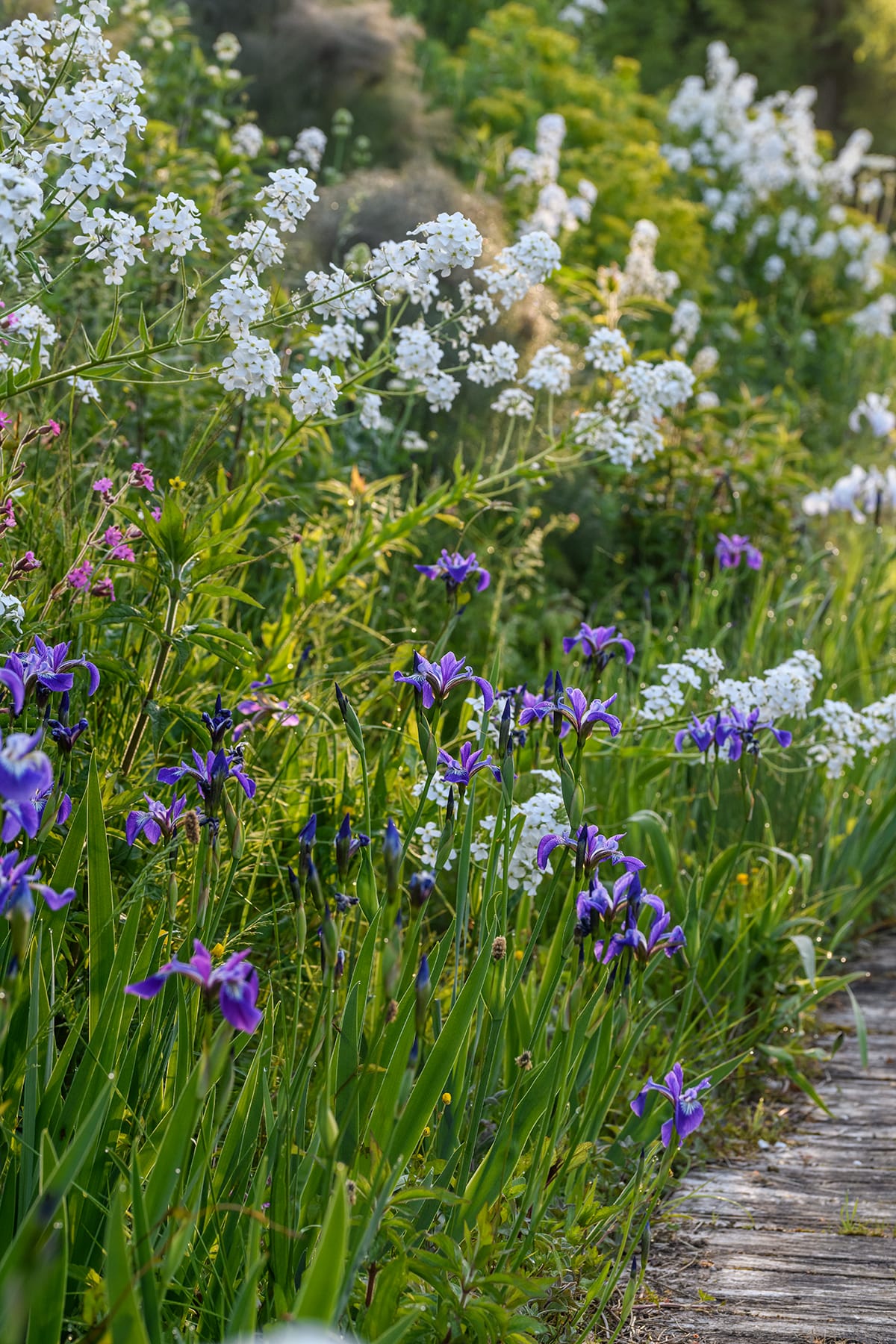
The bank to the lower pond is particularly vibrant at this time, featuring:
- Foeniculum vulgare (fennel)
- Euphorbia palustris (marsh spurge)
- Hesperis matronalis (dame’s violet)
- Lamium orvala (Balkan clary)
- Centranthus ruber ‘Albus’ (white valerian)
Marginal planting of Iris versicolour ‘Regal Surprise’ and Iris sibirica ‘Tamberg’(siberian iris) and Mentha aquatica (water mint) lines the edge of the boardwalk and Anthriscus sylvestris (cow parsley) softens the edges of the garden in the wilder areas during this month.
Herbaceous borders
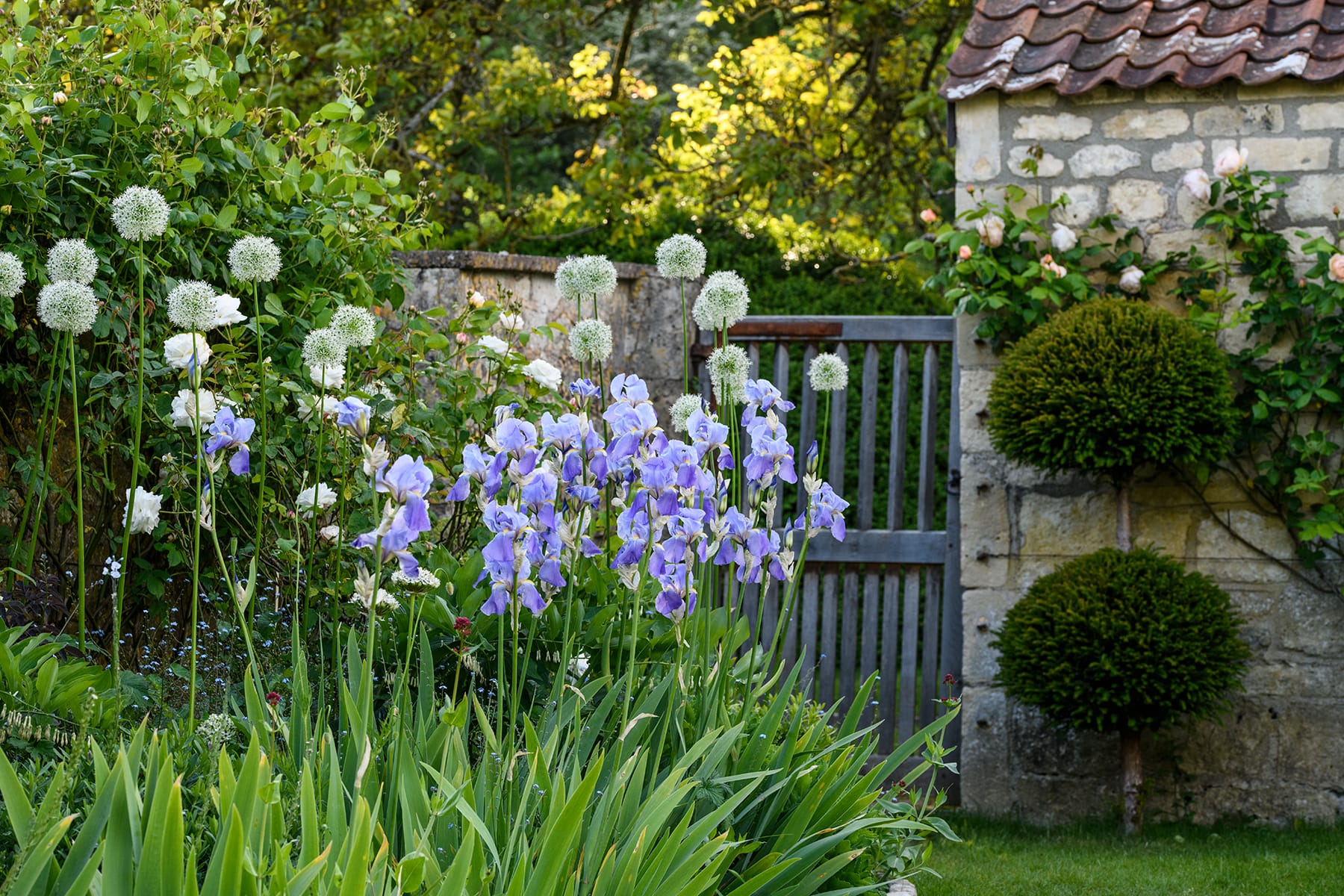
- Iris spp. (bearded iris)
- Allium spp. (ornamental onion)
- Digitalis purpurea (foxglove)
- Paeonia spp. (peony)
- Papaver spp. (poppy)
- Lupinus spp. (lupin)
- Dianthus barbatus (sweet william)
- Geranium spp. (hardy geranium)
- Rosa spp. (rose)
Highlights for June
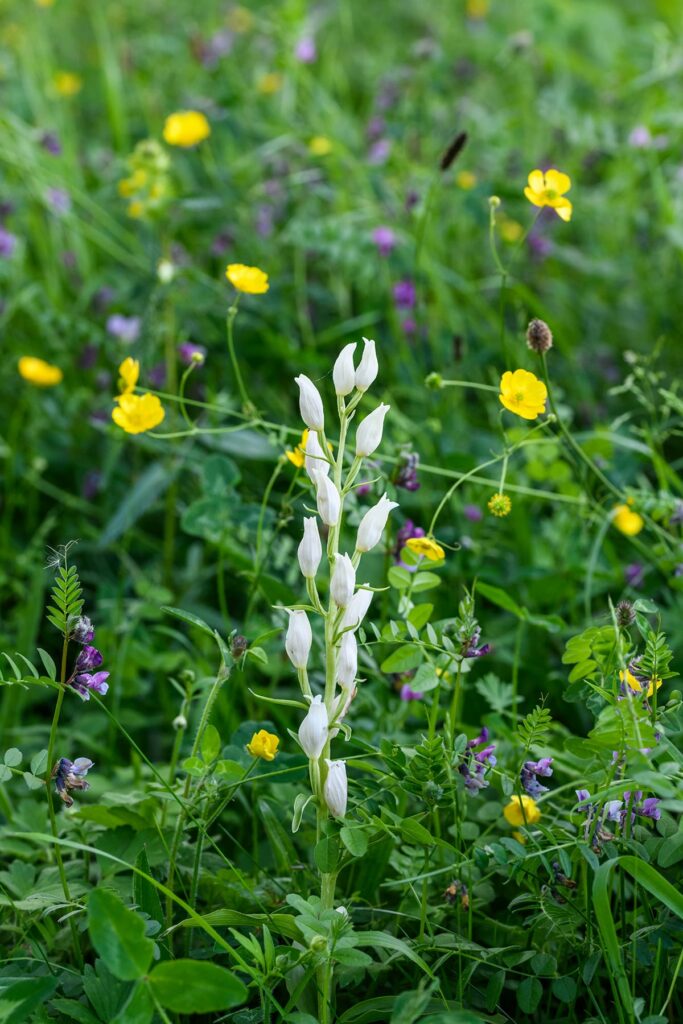
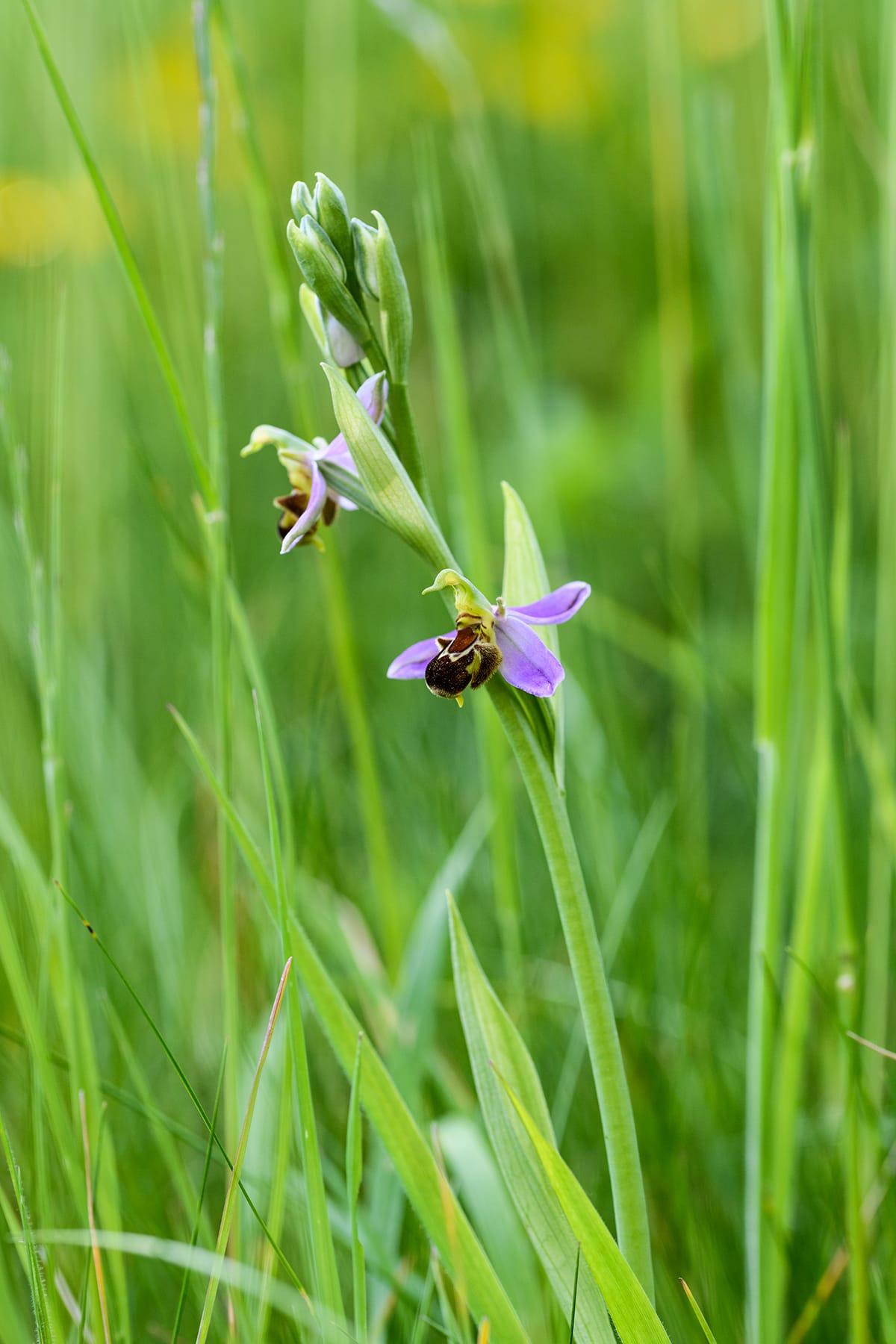
June (early summer) is a celebration of flowers. The wildflower meadows are ablaze with colour and alive with thousands of wild orchids, including these six indigenous species:
- Orchis spp. (wild orchid)
- Dactylorhiza spp. (marsh orchid)
- Anacamptis spp. (pyramidal orchid)
- Ophrys spp. (bee orchid)
- Leucanthemum vulgare (oxeye daisy)
- Centaurea nigra (common knapweed)
Sheep graze these meadows during the winter months, reflecting a commitment to organic and regenerative gardening practices.
Other plants to note:
- Narcissus ‘Petrel’ (triandrus daffodil)
- Narcissus ‘Starlight’ (large-cupped daffodil)
- Thalictrum ‘Black Stockings’ (meadow rue)
- Cephalanthera damasonium (white helleborine)
- Dahlia ‘Nuit d’Été’
- Dahlia ‘Thomas A. Edison’
- Amaranthus caudatus (love-lies-bleeding)
- Fritillaria meleagris (snake’s head fritillary)
- Typha latifolia (bulrush)
- Taxus baccata (English yew)
- Acer campestre (field maple)
- Buxus sempervirens (box)
- Carpinus betulus (hornbeam)
- Asplenium scolopendrium (hart’s tongue fern)