
Landscape design by Simon Taylor of Simon Taylor Landscape Design
Set in Anglesea on Victoria’s Surf Coast, this was designed as a long-term home for Murray and Liz, who plan to eventually relocate here permanently.
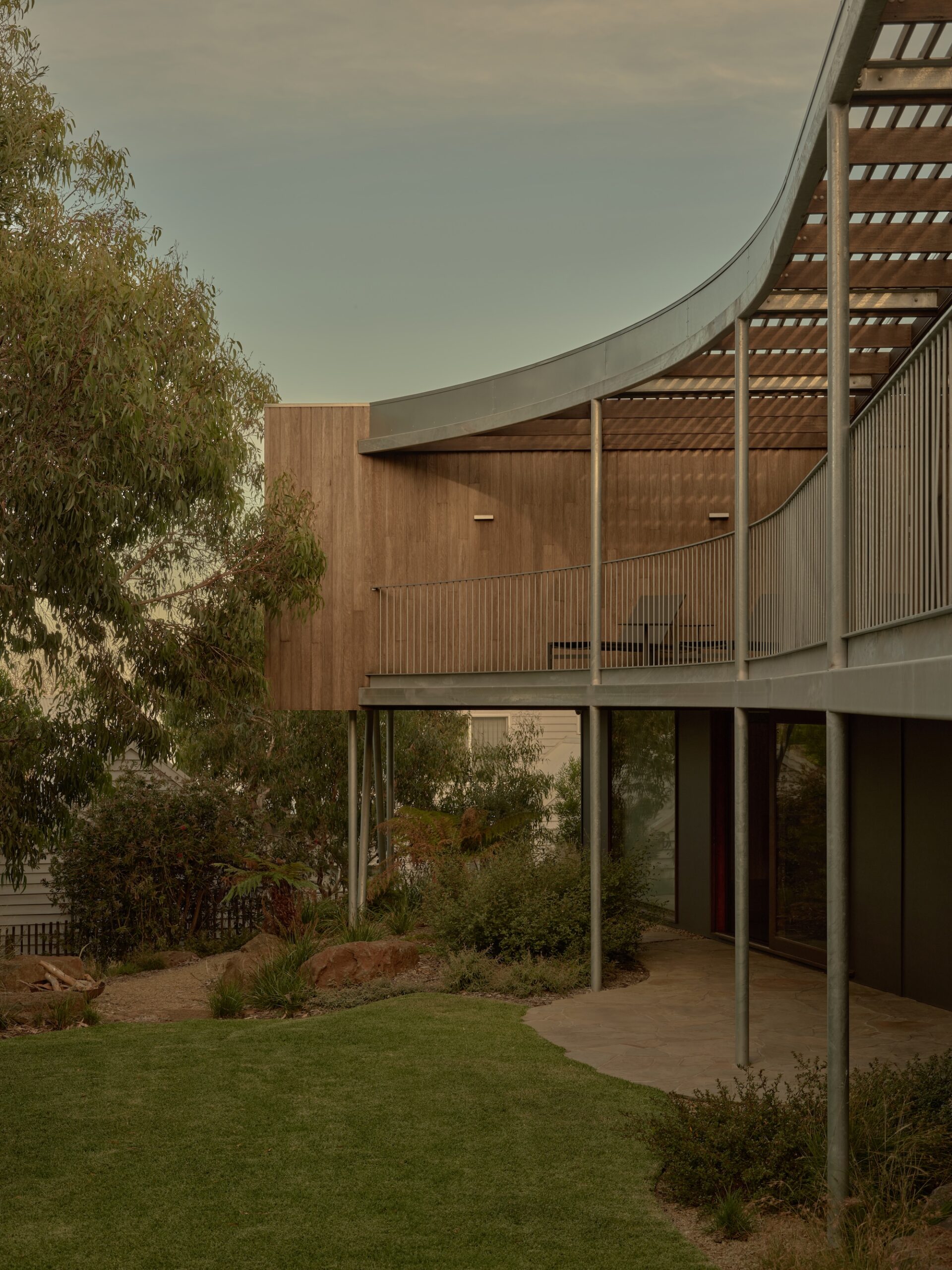
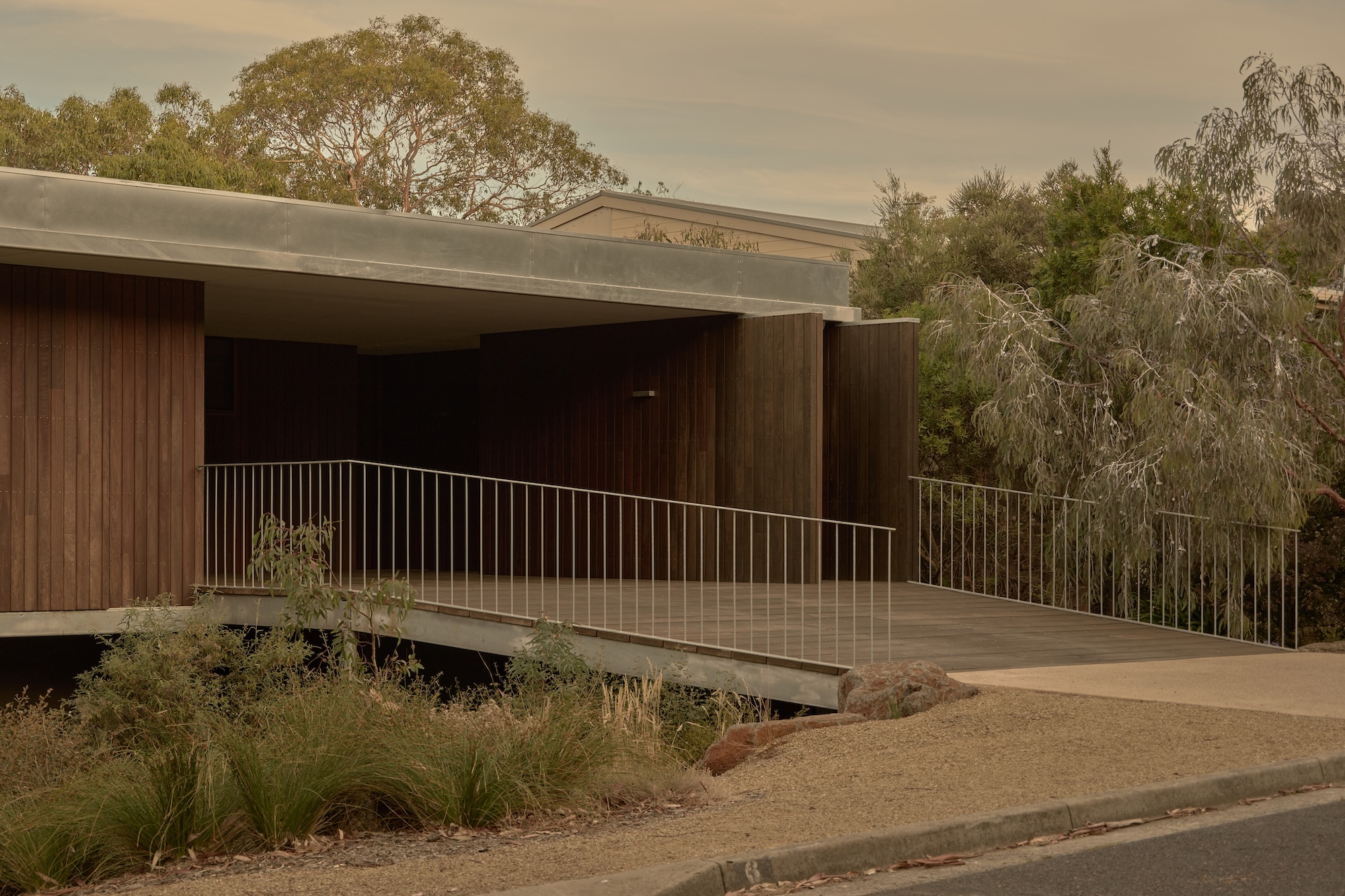
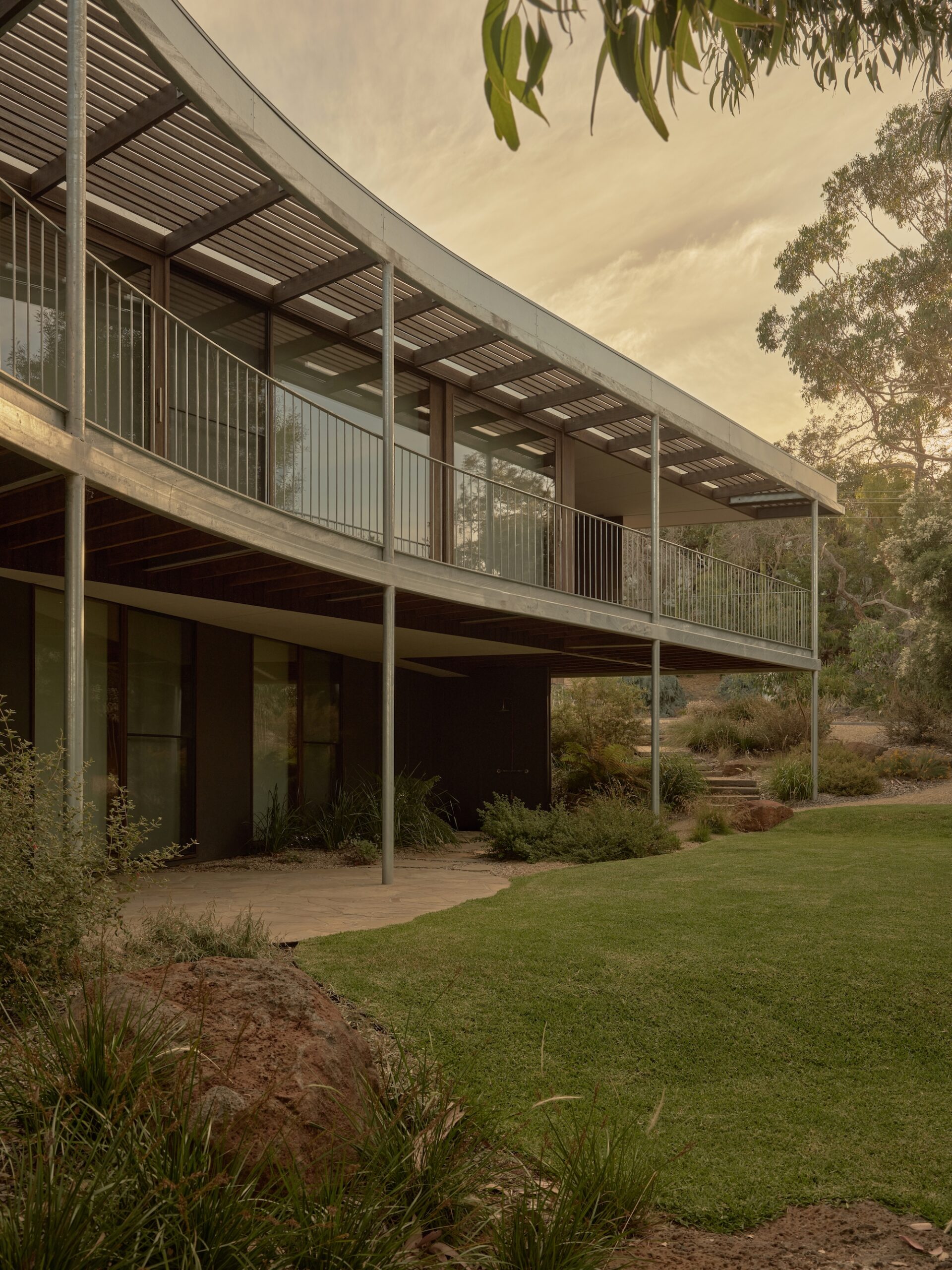
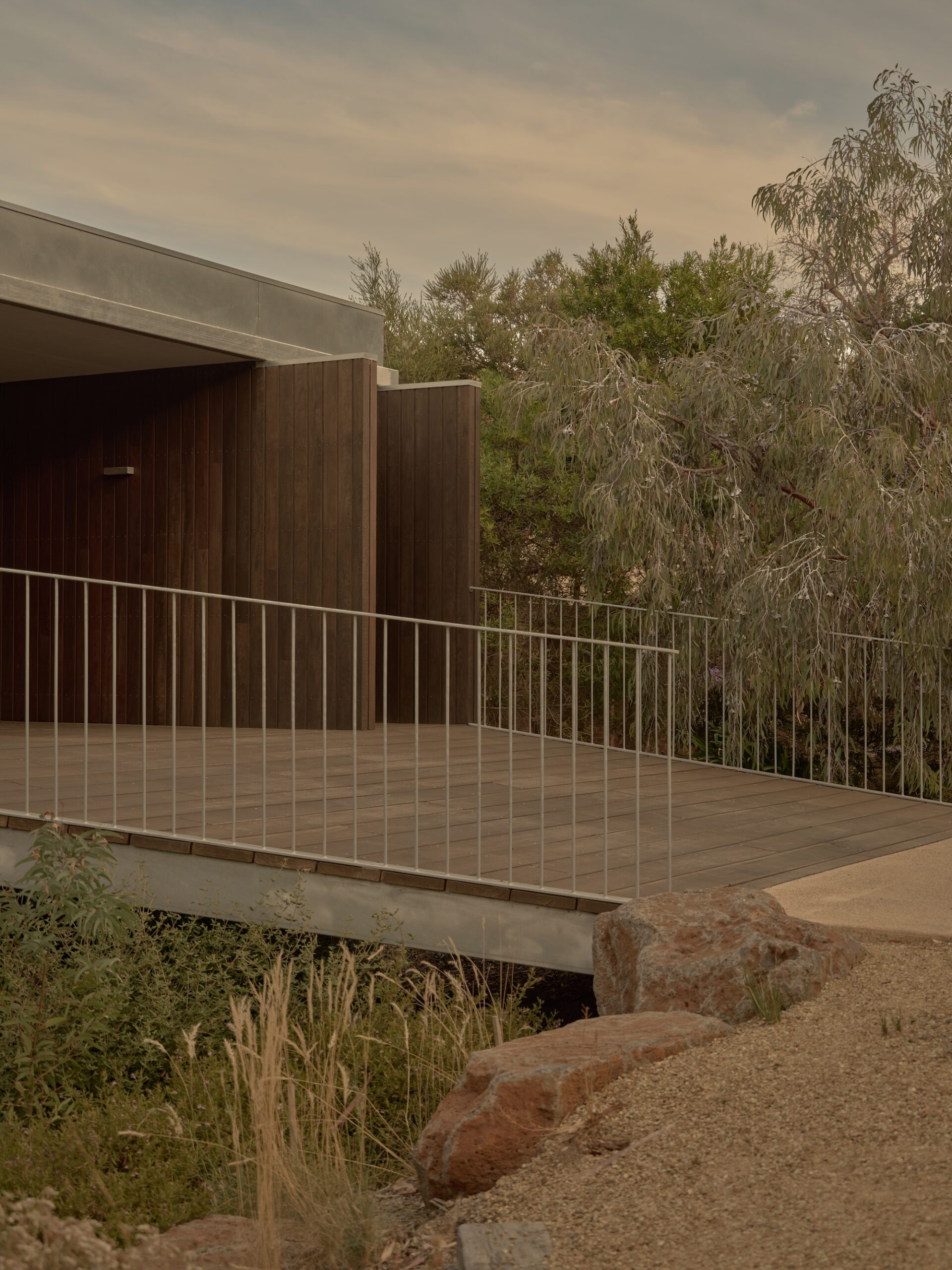
The house, known as Dusty Miller House, is arranged across two levels, with the main living spaces connected directly to an elevated entry deck, while the lower level accommodates visiting children and grandchildren.
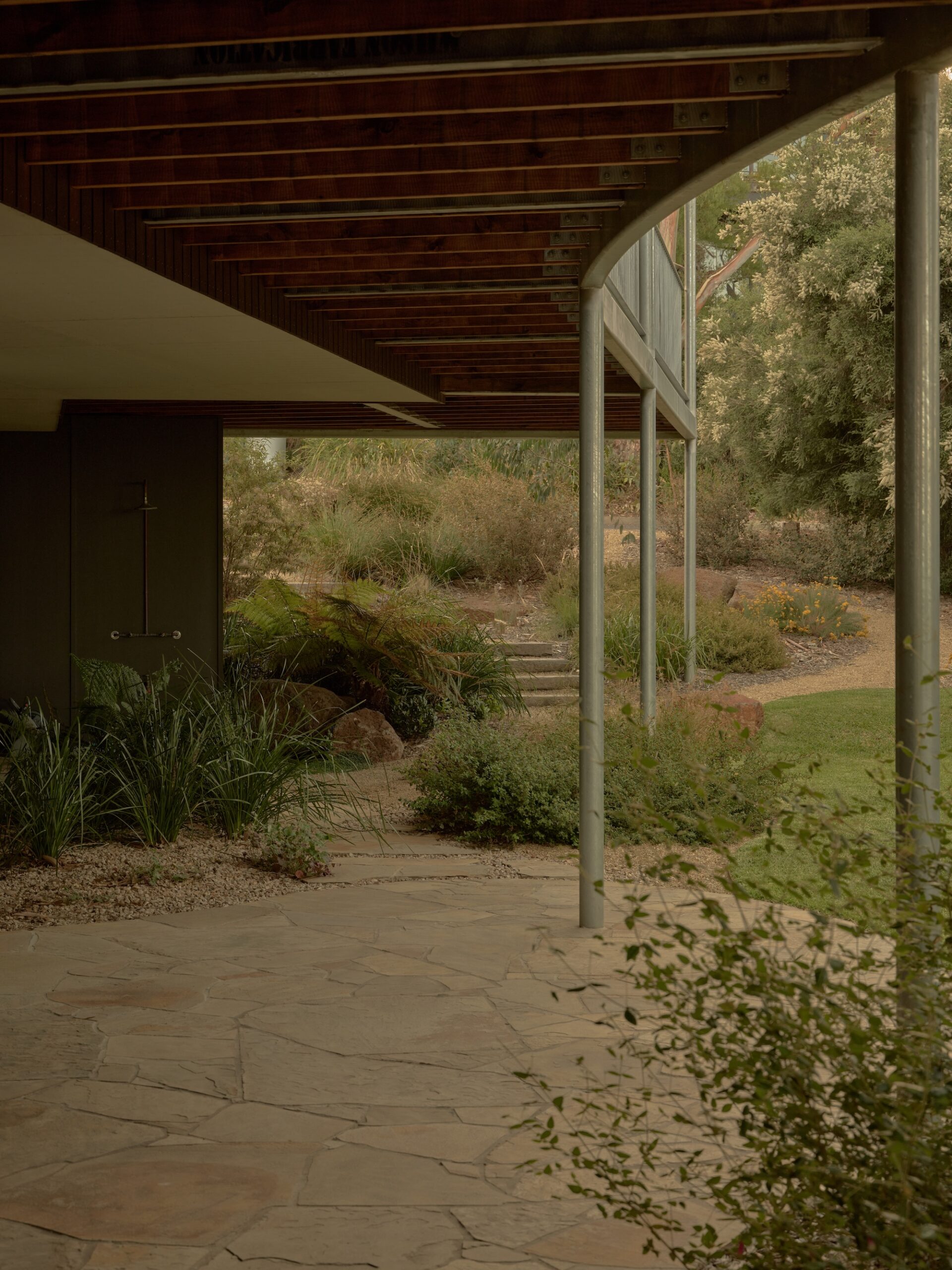
Simon Taylor Landscape Design was engaged to create a garden that felt closely tied to the surrounding coastal environment, using indigenous planting and locally sourced materials wherever possible.
Working with the slope
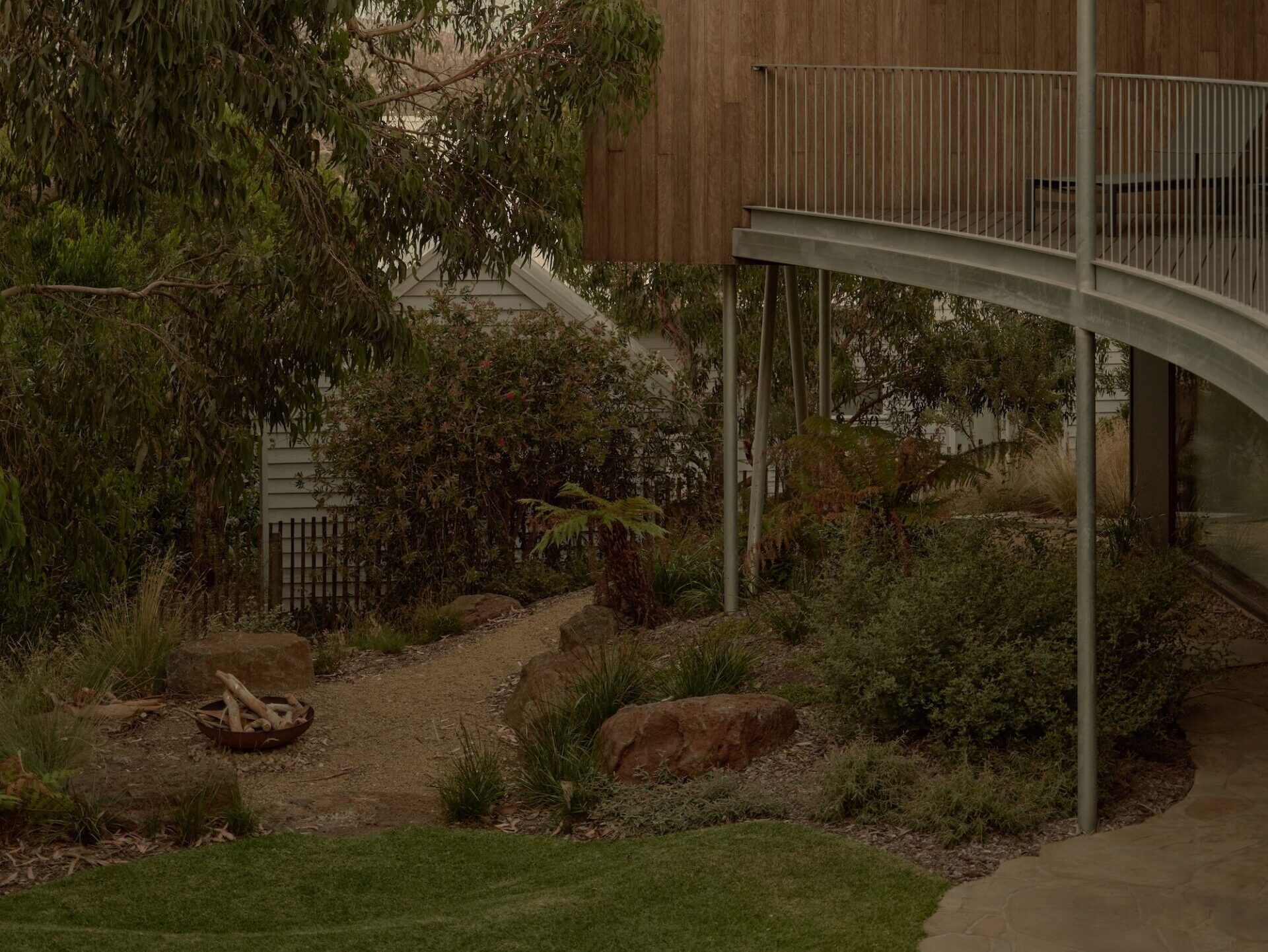
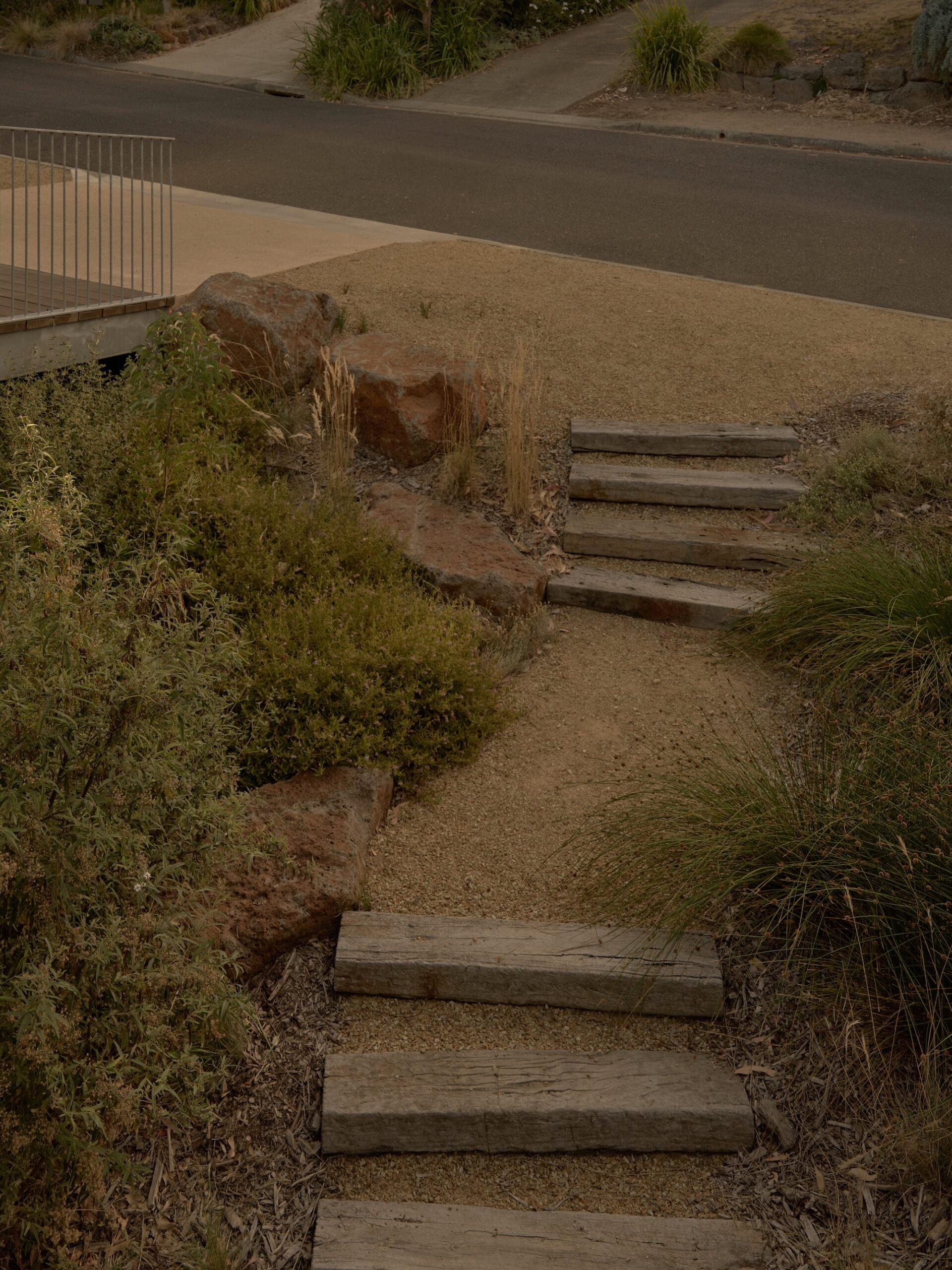
The steeply falling site shaped much of the design. From front to back, the block drops more than four metres, requiring careful earthworks to make the garden both functional and easy to move through.
Rather than heavily flattening the land, the site was gently terraced using basalt boulders, angled pathways and layered lawn areas that follow the natural contours. The softer grading was particularly important for everyday use, allowing bikes, prams and family traffic to move comfortably between levels with minimal steps.
Much of this shaping happened on site rather than strictly from plan, with the final form evolving through close collaboration between the designer and landscaper during construction.
Grounded in the local landscape
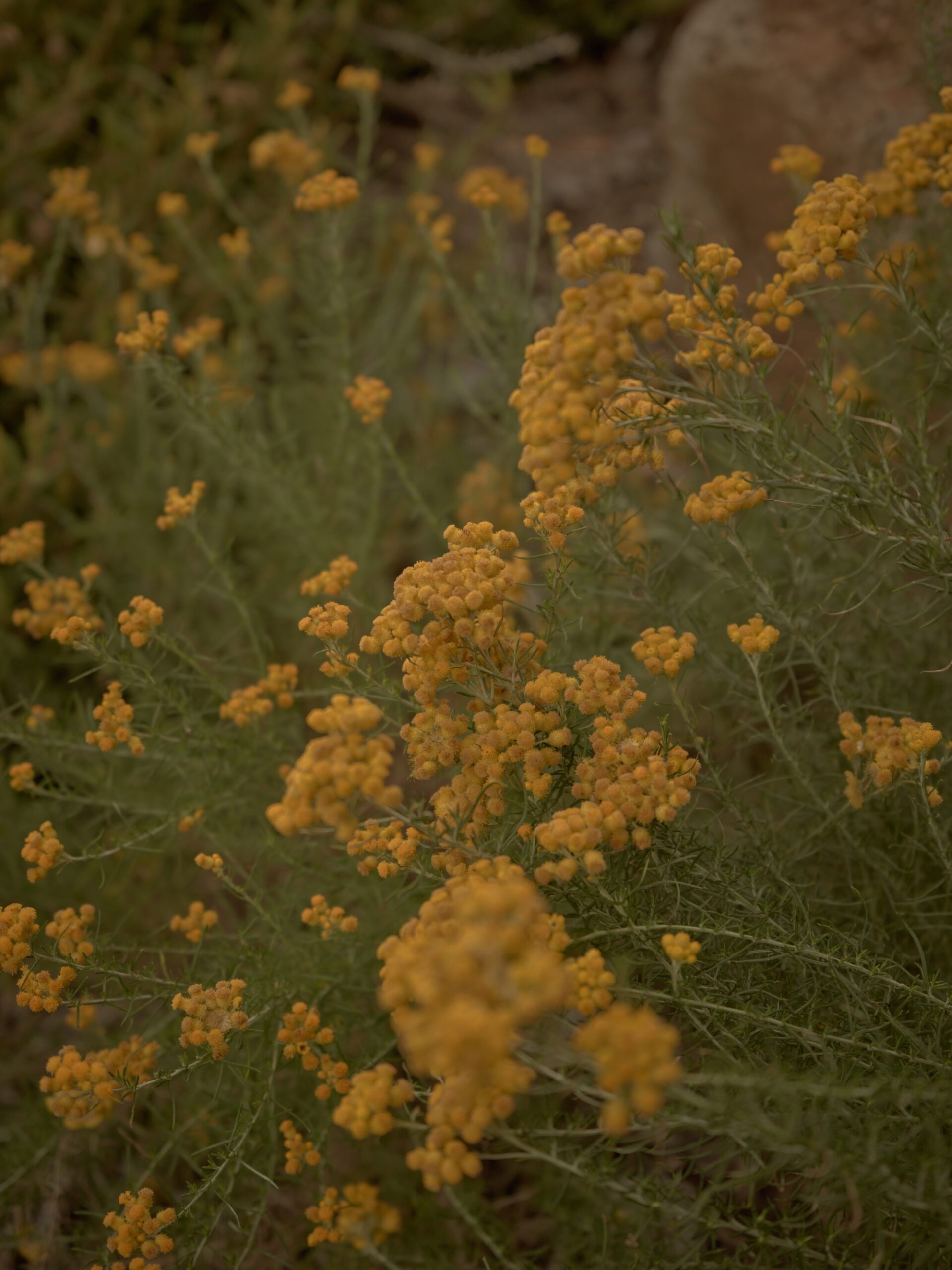
Murray and Liz were strongly committed to using indigenous species and materials sourced from the local area. Apart from several existing mature trees, the entire planting palette consists of indigenous species propagated from locally collected seed and cuttings through Otway Indigenous Nursery.
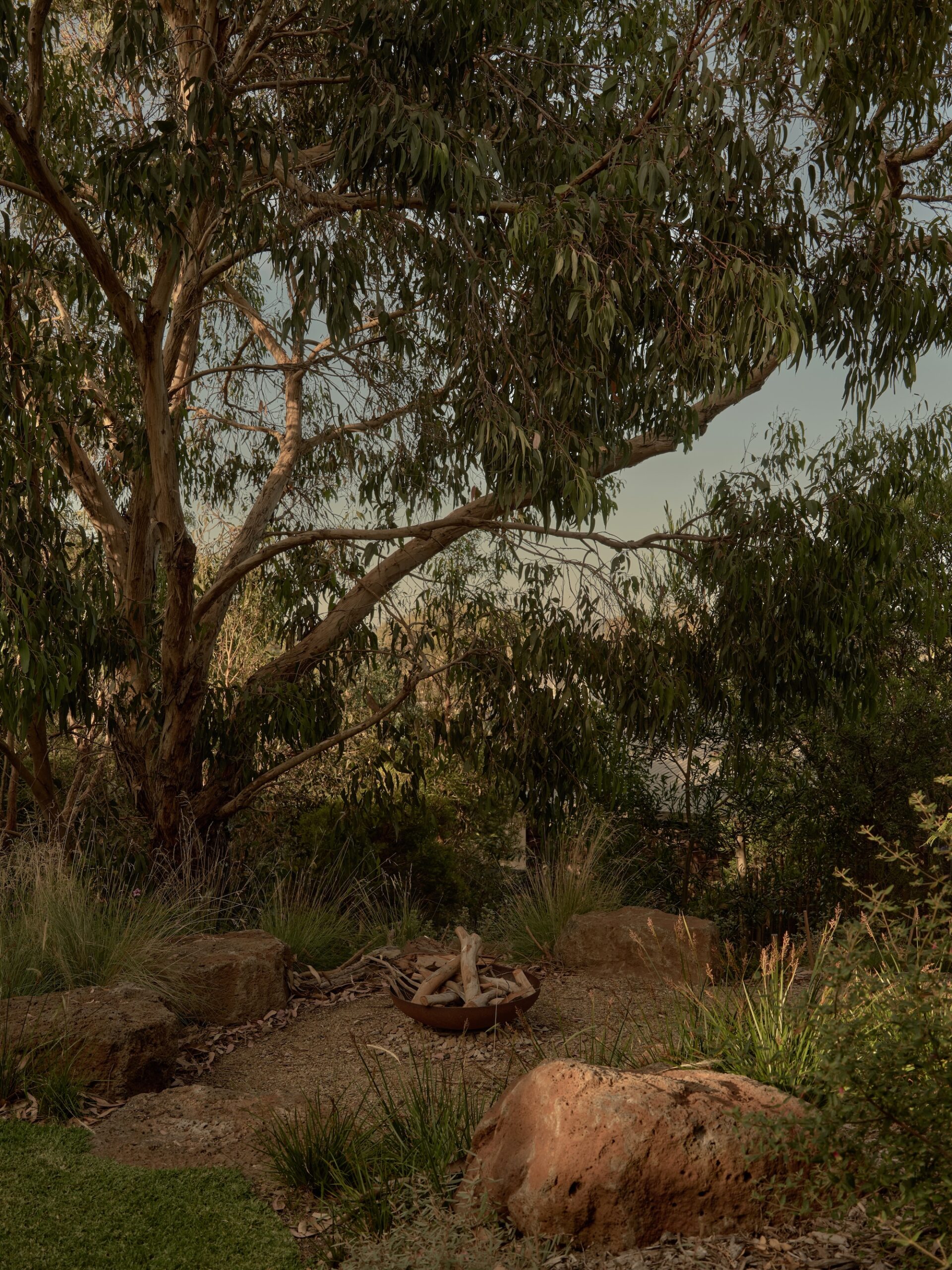
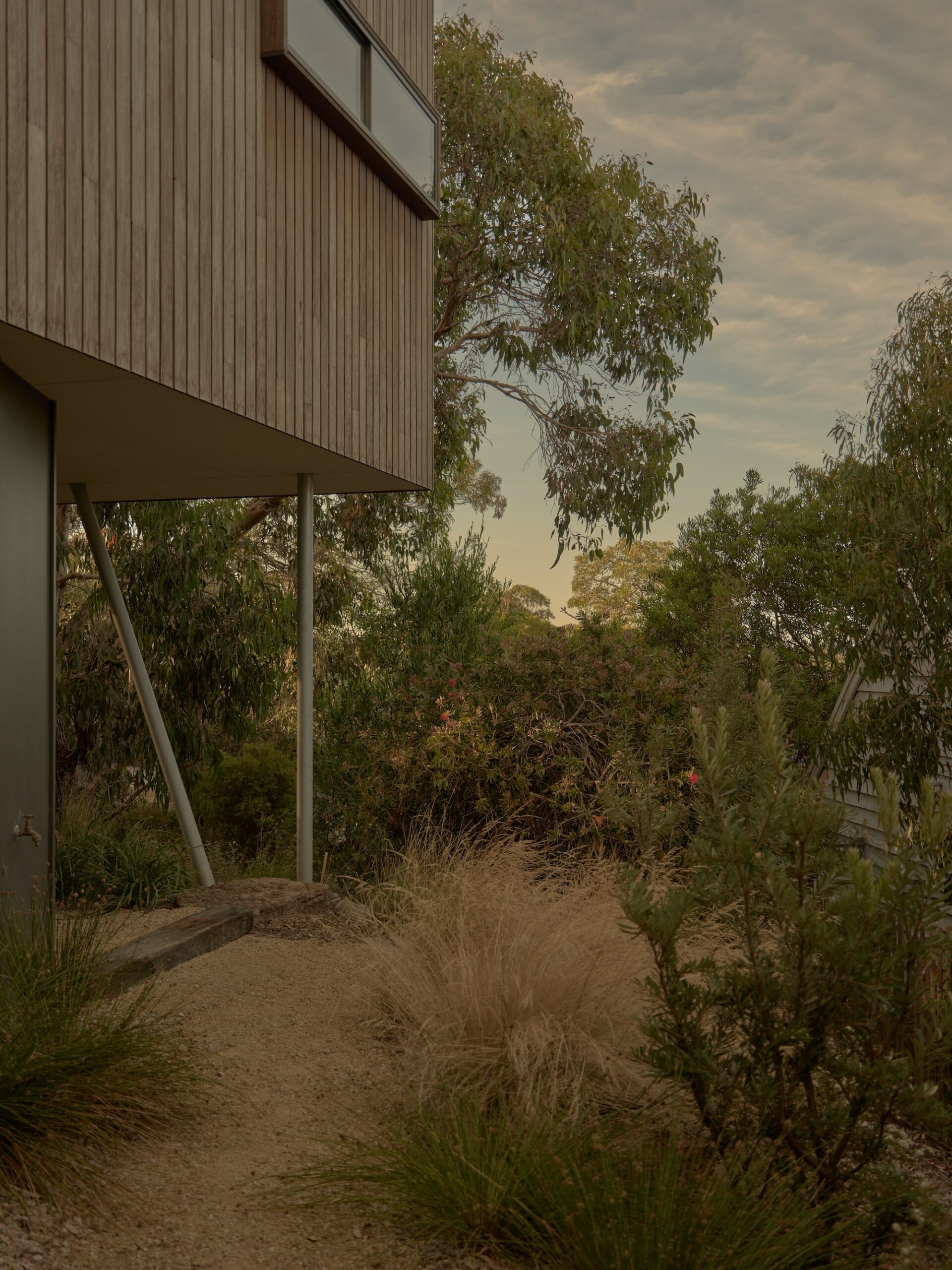
Existing swamp gums and manna gums surrounding the property form part of the broader borrowed landscape. Closer to the house, denser shrub planting creates privacy and enclosure around the lower level.
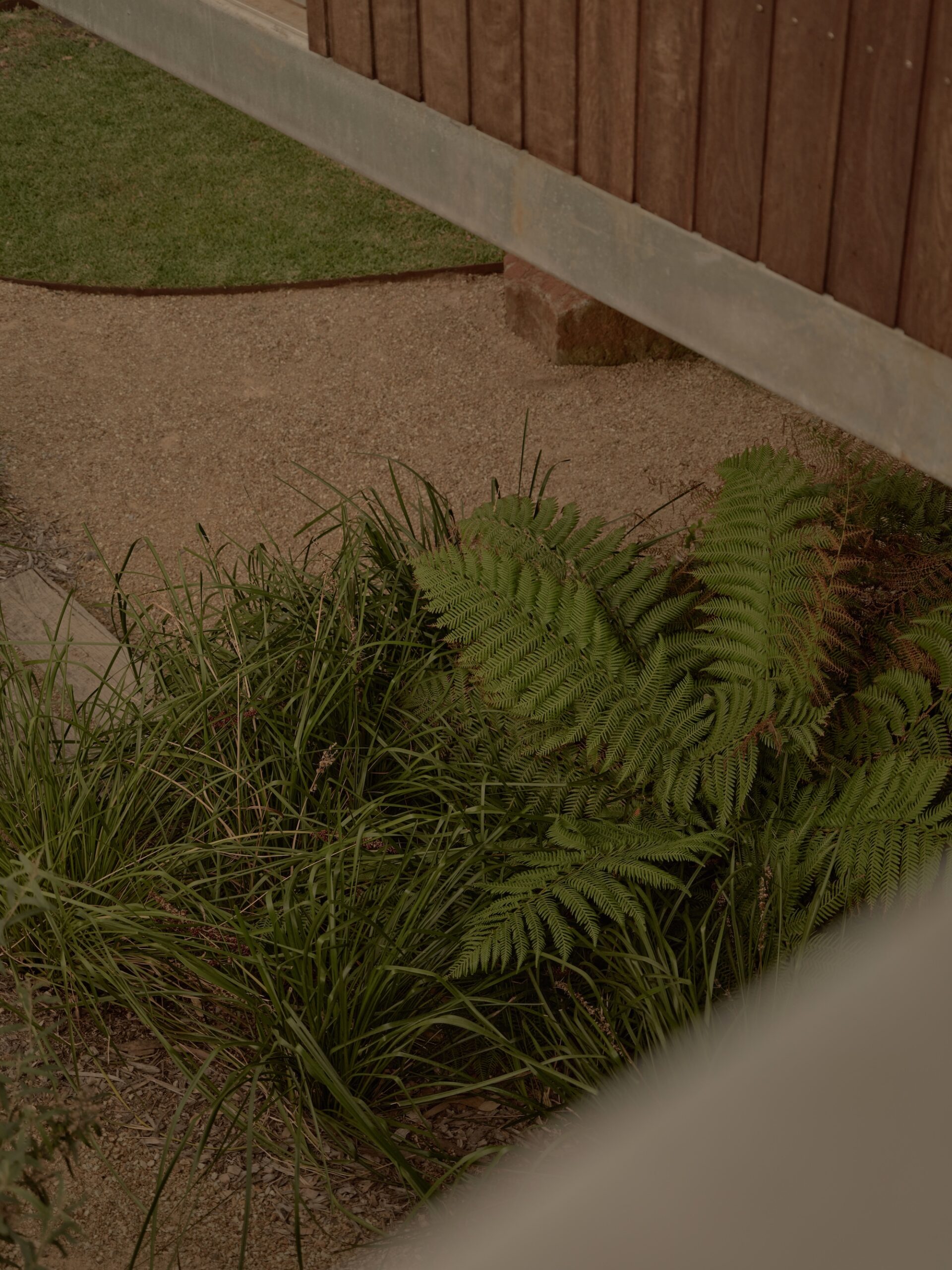
The architecture also influenced the planting. Dappled shade from mature gums, combined with the shelter of cantilevered decks above, created a cooler microclimate suited to ferns and understory planting. From the upper level, the crowns of the tree ferns create a layered green outlook that references the nearby Otway ranges.
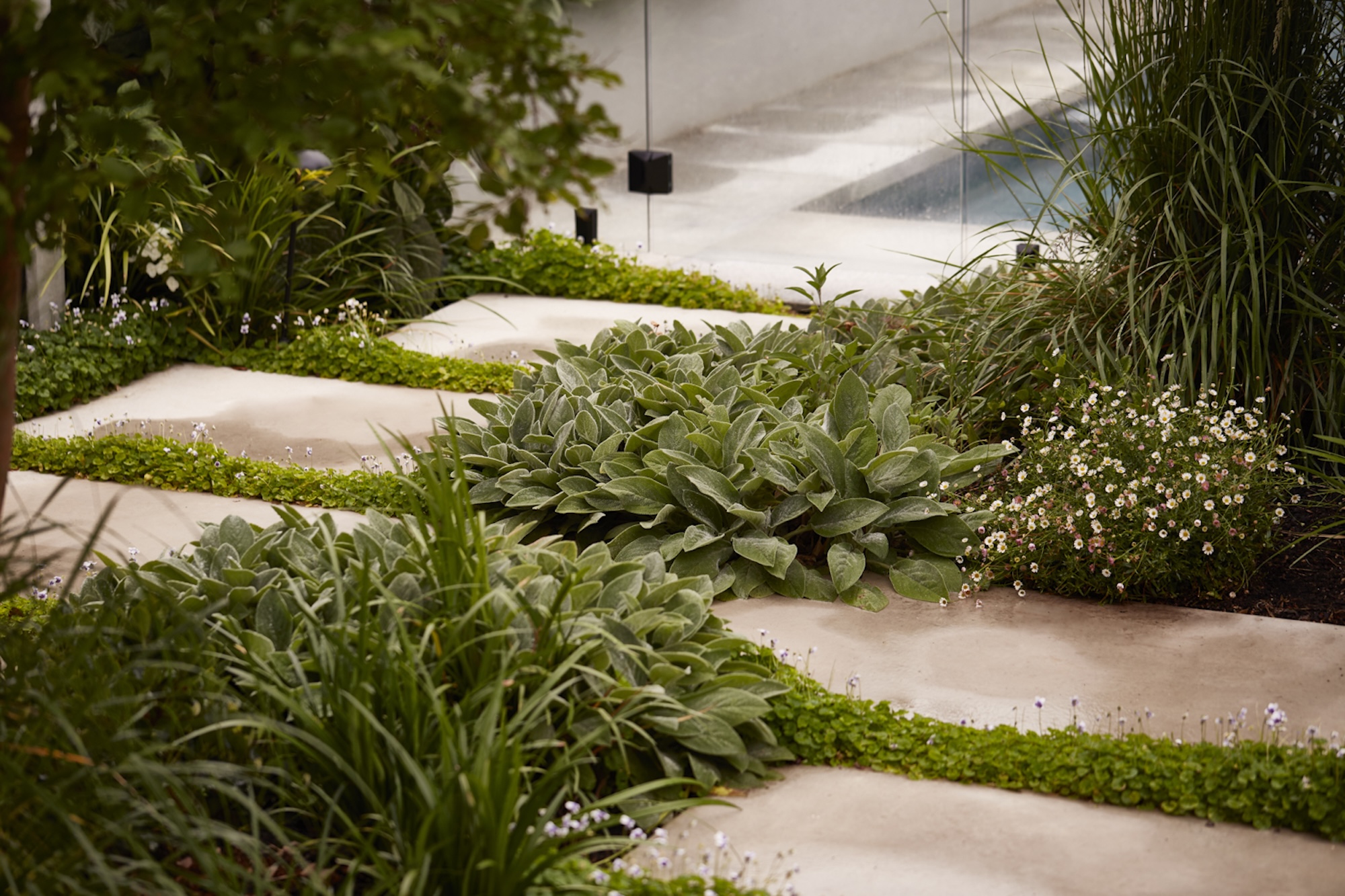
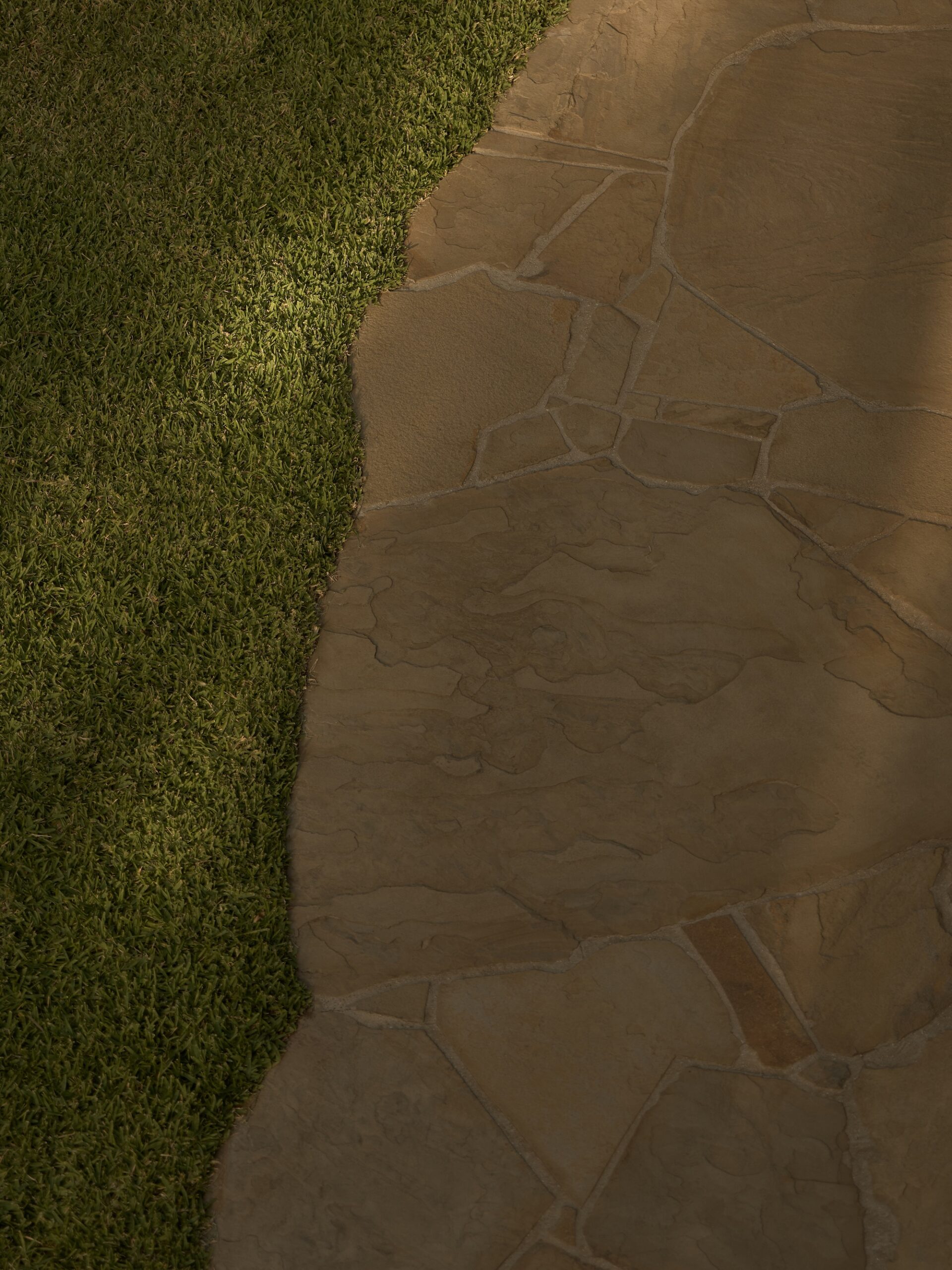
Local materials reinforce that connection to place. Castlemaine slate was used throughout the project, while the basalt boulders were salvaged from nearby development sites within the region.
Settling into the site
What began as small tubestock plantings two years ago has gradually grown into a dense coastal garden that wraps around the house. The planting is beginning to soften the built form and create a stronger sense of immersion within the landscape.
Today, the garden functions as a retreat for Murray and Liz – a place that feels connected to the surrounding Anglesea environment while remaining practical for large family gatherings and future generations to enjoy.
Plant palette
Trees
- Eucalyptus ovata (swamp gum)
- Eucalyptus falciformis (shining peppermint)
- Banksia marginata (silver banksia)
Grasses
- Ficinia nodosa (knobby club rush)
- Lomandra filiformis (wattle mat rush)
- Lomandra longifolia (spiny mat rush)
- Rytidosperma setaceum (bristly wallaby grass)
- Themeda triandra (kangaroo grass)
Shrubs
- Spyridium parvifolium (dusty miller)
- Pomaderris panniculosa (coast pomaderris)
- Thomasia petalocalyx (paper flower)
- Lasiopetalum baueri (slender velvet bush)
- Pelargonium australe (stork’s bill)
- Olearia phlogopappa (dusty daisy bush)
- Indigofera australis (austral indigo)
Ground covers
- Viola hederacea (native violet)
- Dichondra repens (kidney weed)
- Calocephalus lacteus (milky beauty heads)
Ferns
- Dicksonia antarctica (soft tree fern)
- Polystichum proliferum (mother shield fern)
- Microsorum diversifolium (kangaroo fern)